The joy of the Lord is our strength…

The first mention of this subject on “The joy of the Lord” is mentioned in Nehemiah 8:10…

Here’s the backstory:

Nehemiah instructed the people to, “Go your way, eat the fat, drink the sweet, and send portions to those for whom nothing is prepared; for this day is holy to our Lord.”

And “Do not sorrow, for the joy of the Lord is your strength.”

____

Chapter 8, in Nehemiah, starts out by talking about Ezra.

Ezra was an ancient Israelite priest and scribe who led a group of Jewish exiles back from Babylon to Jerusalem, where he worked to restore religious life and adherence to God’s law during the Second Temple era.

His work involved reintroducing the Torah, teaching the Law of Moses, and addressing issues like mixed marriages among the returning exiles, leading a significant spiritual revival.

He is credited with writing the Book of Ezra, which, along with the Book of Nehemiah, chronicles this period of post-exilic restoration.

In Nehemiah 8:10-11. the people were told, “Go and enjoy choice food and sweet drinks, and send some to those who have nothing prepared.”

This day is sacred to our Lord.

While the reading of the law produced genuine remorse, sacred days were meant as celebrations of God’s benevolence.

Ezra instructed the people to enjoy a feast and to eat the best they had.

In addition, they were to share with others.

Both of these instructions come from the Deuteronomic writings (see Deut. 26).

The commemoration of God’s goodness was to result in joyous festivities, and no sacred food was to be eaten while in mourning.

It was a day to delight in being part of God’s covenantal people.

Once again we see that this assembly was not a spontaneous get-together but a planned event since the people had already prepared their foods.

The instruction to share with those who had nothing prepared probably refers to the poor and the foreigners among them.

And Ezra concluded, “Do not grieve, for the JOY of the LORD is your strength.”

The primary Hebrew word for joy is simcha (שִׂמְחָה), a noun meaning gladness or mirth, derived from the verb samach (שָׂמֵחַ) (to rejoice).

In Hebrew thought, especially within the biblical context, simcha often represents a deep, meaningful joy that is not merely an abstract feeling but a concrete, active experience rooted in fulfilling divine purpose, celebrating God’s blessings, and expressing an inner state through visible actions like singing, dancing, or clapping.

In verse 9 we read that the people wept openly when they heard God’s laws and realized how far they were from obeying them.

But Ezra told them they should be filled with JOY because the day was sacred.

It was time to celebrate and to give gifts to those in need.

Celebration is not to be self-centered.

Ezra connected celebration with giving.

This gave those in need an opportunity to celebrate as well.

Often when we celebrate and give to others (even when we don’t feel like it), we are strengthened spiritually and filled with joy.

Enter into celebrations that honor God, and allow Him to fill you with His joy.

Celebrate out of joy for what He has done, and you will want to give freely.

Ezra, not Nehemiah, was the official religious leader, and It is significant that Nehemiah was a layman, not a member of the religious establishment or a prophet.

He was motivated by his relationship with God, and he devoted his life to doing God’s will in the world.

Such people are crucial to God’s work in all aspects of life.

No matter what your work or role in life, view it as God’s special calling to serve Him.

God can accomplish His purposes through you, beginning right where you are.

So what is the joy of the Lord?

The joy of the Lord is a deep, supernatural gladness that comes from knowing God, abiding in Christ, and being filled with the Holy Spirit.

This joy is not dependent on external circumstances and is a source of strength, even during trials.

In John 15:11-16 (The Message Bible) Jesus tells us,

11-15 “I’ve told you these things for a purpose: that My joy might be your joy, and your joy wholly mature.

This is my command: Love one another the way I loved you.

This is the very best way to love.

Put your life on the line for your friends.

You are my friends when you do the things I command you.

I’m no longer calling you servants because servants don’t understand what their master is thinking and planning.

No, I’ve named you friends because I’ve let you in on everything I’ve heard from the Father.

16 “You didn’t choose Me, remember; I chose you, and put you in the world to bear fruit, fruit that won’t spoil.

As fruit bearers, whatever you ask the Father in relation to Me, He gives you.”

____

Jesus spoke these words during His last discourse with His disciples at the Last Supper to explain His teachings were for them to experience His joy and to prepare them for the challenges ahead, assuring them that their eventual sorrow would be transformed into joy.

SELAH (let us pause and calmly think about these things)

Come join the Adventure!

Skip 🕊️
Abraham: the father of our faith… l

Abraham: The Father of All Who Have Faith (Romans 4:9-25)…

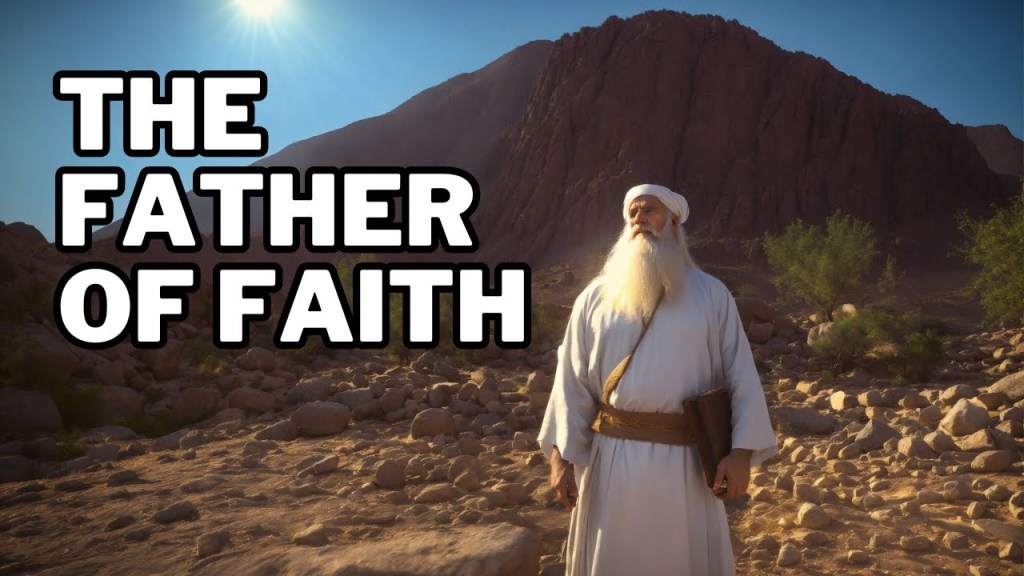
Abraham is often referred to as the “father of faith” because he is seen as a model of belief in God, whose faith was credited to him as righteousness.

Romans 4:16-25

New Living Translation

16 So the promise is received by faith. It is given as a free gift. And we are all certain to receive it, whether or not we live according to the law of Moses, if we have faith like Abraham’s. For Abraham is the father of all who believe.

17 That is what the Scriptures mean when God told him, “I have made you the father of many nations.” This happened because Abraham believed in the God who brings the dead back to life and who creates new things out of nothing.

18 Even when there was no reason for hope, Abraham kept hoping—believing that he would become the father of many nations. For God had said to him, “That’s how many descendants you will have!”

19 And Abraham’s faith did not weaken, even though, at about 100 years of age, he figured his body was as good as dead—and so was Sarah’s womb.

20 Abraham never wavered in believing God’s promise. In fact, his faith grew stronger, and in this he brought glory to God.

21 He was fully convinced that God is able to do whatever He promises.

22 And because of Abraham’s faith, God counted him as righteous.

23 And when God counted him as righteous, it wasn’t just for Abraham’s benefit.

It was recorded 24 for our benefit, too, assuring us that God will also count us as righteous if we believe in Him, the one who raised Jesus our Lord from the dead.

25 He was handed over to die because of our sins, and He was raised to life to make us right with God.

____

First off we can know that because Abraham was called and credited with righteousness while a Gentile, it is clear that both Gentiles and Jews are justified the same way: by faith.

Paul explains that Abraham had pleased God through faith alone before he had ever heard about the rituals that would become so important to the Jewish people.

We, too, are saved by faith plus nothing.

We are not saved by loving God and doing good; neither are we saved by faith plus love or by faith plus good deeds.

We are saved ONLY through faith in Jesus Christ—trusting Him to forgive all our sins.

The promise (covenant) God gave Abraham stated that Abraham would be the father of many nations (Genesis 17:2-4) and that the entire world would be blessed through him (Genesis 12:3).

This promise was fulfilled in Jesus Christ.

Jesus was from Abraham’s line, and truly the whole world was and continues to be blessed through Him.

Abraham never doubted that God would fulfill His promise.

Abraham’s life was marked by mistakes, sins, and failures as well as by wisdom and goodness, but he consistently trusted God.

His faith was strengthened by the obstacles he faced, and his life was an example of faith in action.

If he had looked only at his own resources for subduing Canaan and founding a nation, he would have given up in despair.

But Abraham looked to God, obeyed Him, and waited for God to fulfill His Word.

When we trust in Jesus Christ as Savior, an exchange takes place.

We give Christ our sins, and He gives us His righteousness and forgiveness (see 2 Corinthians 5:21).

There is nothing we can do to earn this. Only through Christ can we be made right in God’s eyes.

What an incredible bargain this is for us! But sadly, many still choose to pass up this gift and continue to live their own way, apart from God.

Faith requires that we cast the whole of our trust and reliability upon God and His Word, regardless of any and all negative / contradictory feelings and /or circumstances.

SELAH (let us pause and calmly think about these things)

____

Wednesday, Sept 10

WALKING IN SUPERNATURAL HOPE

by Keith Butler

“Who against hope believed in hope, that he might become the father of many nations, according to that which was spoken, So shall thy seed be” (Romans 4:18)

In the absence of all natural hope, Abraham continued to believe. How did he do that?

He had the promise. He had the Word of God. God told him that he would have a son.

So his name must be changed from Abram to Abraham, meaning father of a great multitude.Well, if you are going to receive what Jesus has done for you, seed of Abraham, then you must first find out what the Word says on the subject.

Then every time you run up against something, you must read what God said about it.

Do it even when all natural hope is gone. This is how you will find supernatural hope from the Word when natural hope is gone.

Don’t consider the circumstances. Don’t consider the bankbook. Don’t consider the doctor’s report. Don’t consider what people say, because people talk junk all the time.

But they don’t have any authority behind it.

Jesus gave the authority to you.

Don’t be shaken by what you are looking at. Don’t allow it to get to you.

Be strong in faith and prove it by giving God the glory that your need is already met.

Give God the glory that you are blessed in the city and blessed in the field.

Praise God that all your needs are met.

Praise is an expression of faith in God.

Praising God builds your faith. Praising God shuts the devil’s mouth.

Praising God causes others to praise God too.

When you praise God you cannot lose. The devil has to run, because he gets confused.

So, never forget who you are.

Through faith in Jesus you are the one who possesses the enemy’s gate.

You are the one through whom all families of the earth shall be blessed, as you share the good news that the price has already been paid.

You have the message of reconciliation, which is that God was in Christ restoring the world to favor with Himself.

He is not counting against men their trespasses, but has cancelled them, and committed to us the word of reconciliation to favor with God.

Abraham received his miracle – a son. And when you operate in supernatural hope, you shall see your miracle as well.

[From: Keith Butler Ministries]

Come join the Adventure!

Skip 🕊️

Praying for rest and peace…

Jesus bids us come to Him…

“Come to Me, all you who are weary and burdened, and I will give you rest.”

(Matthew 11:28)

When life feels overwhelming, we can lean on God to renew our strength and bring us peace.

(From Max Lucado – Jesus the Coming King)

Jesus Through the Bible

Jesus: The Invitation

You are tired. You are weary.

Weary of being slapped by the waves of broken dreams.

Weary of being stepped on and run over in the endless marathon to the top.

Weary of trusting in someone only to have that trust returned in an envelope with no return address.

Weary of staring into the future and seeing only futility.

What steals our childhood zeal?

It is this weariness that makes the words of the carpenter so compelling. Listen to them.

“Come to Me, all you who are weary and burdened, and I will give you rest” (Mt 11:28).

Come to Me. . . The invitation is to come to Him (to Jesus).

Why Him?

He offers the invitation as a penniless rabbi in an oppressed nation.

He has no connections with the authorities in Rome.

He hasn’t written a best seller or earned a diploma. Yet, He dares to look into the leathery faces of farmers and tired faces of housewives and offer rest.

He looks into the disillusioned eyes of a bartender and makes this paradoxical promise:

“Take My yoke upon you and learn from Me, for I AM gentle and humble in heart, and you will find rest for your souls” (Mt 11:29).

The people came. They came out of the cul-de-sacs and office complexes of their existence. And He gave them, not religion, not doctrine, not systems, but rest.

As a result, they called Him Lord.

As a result, they called Him Savior.

Not so much because of what He said, but because of what He did.

What He did on the cross during six hours, one Friday.

SELAH (let us pause and calmly think about these things)

Prayer Confession:

Lord, we pray for Your Shalom-peace to surround your Covenant People… everyone who is feeling weary or burdened.

Give them strength, comfort, and a sense of Your presence.

Remind them that You are their refuge and rest.

In Jesus’ name. Amen.

Come join the Adventure!

Skip 🕊️

When we honor God, then God promises to honor us…

The fall of Eli’s house…

1 Samuel 2:27-30

The Message Bible

27-30 A holy man came to Eli and said: “This is God’s message: I revealed myself openly to your ancestors when they were Pharaoh’s slaves in Egypt.

Out of all the tribes of Israel, I chose your family to be my priests: to preside at the Altar, to burn incense, to wear the priestly robes in my presence.

I put your ancestral family in charge of all the sacrificial offerings of Israel.

So why do you now treat as mere loot these very sacrificial offerings that I commanded for my worship?

Why do you treat your sons better than me, turning them loose to get fat on these offerings, and ignoring me?

Therefore—this is God’s word, the God of Israel speaking—I once said that you and your ancestral family would be my priests indefinitely, but now—God’s word, remember!—there is no way this can continue.

I honor those who honor me; those who scorn me I demean.

____

Here’s the backstory:

Eli was the high priest and judge of Israel, and the Bible says, “his sons were wicked,” and while Eli makes a feeble attempt to correct them, they are undaunted. It wasn’t until Eli heard reports of immorality that he finally reproved his sons.

But it was far too late for his mild verbal reproof to have any effect.

They hardened their hearts and so were judicially hardened, like Pharaoh of old, for God had determined to destroy them.

During this time Samuel was quietly growing, his purity and goodness pleasing both … the LORD and men.

If we remember that these events took place during the time of the judges, it is not surprising that the priesthood failed to escape the moral decadence of the period.

Anyway, as a result of the wickedness of Eli’s Sons, a prophet comes to the temple and prophesies judgment against Eli and his family.

Eli was guilty of honoring his sons above God by letting them continue their sinful actions.

Is there a situation in your life, family, or work that you allow to continue even though you know it is wrong?

If so, you may become as guilty as those engaged in the wrong act.

Honor God more highly than anything else, and don’t wait for Him to intervene for you.

SELAH (let us pause and calmly think about these things)

____

Monday, Sept 8

The Cutting Edge

by Larry Ollison

WHEN WE HONOR GOD, GOD HONORS US

The Bible tells us in 1 Samuel 2:30 that God honors those who honor Him and that He lightly esteems those who despise Him.

By this scripture, we know what we must do, but the question is

“How do we esteem and honor God?”

Of course, we esteem and give Him honor when we worship Him and tithe.

But there is another way to give Him honor that is often overlooked.

Jesus said, “If you have done it unto the least of these, you have done it unto Me.”

When the disciples attempted to keep the children away from Jesus, Jesus rebuked them.

The children are considered least by some, but according to Jesus, they are valuable.

We can give honor to Jesus and we honor God by giving honor to the little ones.

But that raises the question again, “How do we honor the children?”

We honor our children at home and at church by giving them the Word of God and by training them in the ways of the Kingdom.

As Christian adults, we should supply the very best teaching materials for our children.

We must give them quality time and understanding.

We must be an example to them of peace and wisdom.

Too many parents will control their tongue and their anger in public, but release it in an ungodly way privately in front of their children. This should not be.

When we do this, we are not giving honor to our children. And according to Jesus, what we do to the least, we are doing to Him.

So how do we honor God?

We honor God by giving honor to children and we despise God by not esteeming our children.

Therefore the LORD God of Israel says:

‘I said indeed that your house and the house of your father would walk before Me forever.’

But now the LORD says:

‘Far be it from Me; for those who honor Me I will honor, and those who despise Me shall be lightly esteemed. (1 Sam 2:30).

____

Come join the Adventure!

Skip🕊️

Why do we pray?…

Prayer is the power that moves the hand of God…

Prayer is a way to communicate with God, helping to develop a personal relationship with Him and align our hearts with His will. It also provides comfort, guidance, and peace during various life situations.

For the Christian, praying is supposed to be like breathing, easier to do than to not do.

We pray for a variety of reasons.

For one thing, prayer is a form of serving God (Luke 2:36-38) and obeying Him.

We pray because God commands us to pray (Philippians 4:6-7).

Prayer is exemplified for us by Christ and the early church (Mark 1:35; Acts 1:14; 2:42; 3:1; 4:23-31; 6:4; 13:1-3).

If Jesus thought it was worthwhile to pray, we should also.

For the Christian, praying is supposed to be like breathing, easier to do than to not do. We pray for a variety of reasons. For one thing, prayer is a form of serving God (Luke 2:36-38) and obeying Him. We pray because God commands us to pray (Philippians 4:6-7). Prayer is exemplified for us by Christ and the early church (Mark 1:35; Acts 1:14; 2:42; 3:1; 4:23-31; 6:4; 13:1-3). If Jesus thought it was worthwhile to pray, we should also.

Another reason to pray is that God intends prayer to be the means of obtaining His solutions in a number of situations.

We pray in preparation for major decisions (Luke 6:12-13); to overcome demonic barriers (Matthew 17:14-21); to gather workers for the spiritual harvest (Luke 10:2); to gain strength to overcome temptation (Matthew 26:41); and to obtain the means of strengthening others spiritually (Ephesians 6:18-19).

We come to God with our specific requests, and we have God’s promise that our prayers are not in vain, even if we do not receive specifically what we asked for (Matthew 6:6; Romans 8:26-27).

He has promised that when we ask for things that are in accordance with His will, He will give us what we ask for (1 John 5:14-15).

Sometimes He delays His answers according to His wisdom and for our benefit.

In these situations, we are to be diligent and persistent in prayer (Matthew 7:7; Luke 18:1-8).

Prayer should not be seen as our means of getting God to do our will on earth, but rather as a means of getting God’s will done on earth. God’s wisdom far exceeds our own.

From: Kenneth E. Hagin

In teaching on prayer for so many years, I always take two particular Bible texts.

The reason I choose these two for my main texts is because I don’t believe there are any better.

These two texts will cover anything you want to teach on the subject of prayer.

The first text I use is Ephesians 6:18, in which Paul is writing to the believers at Ephesus.

The second text is John 15:7, which says, “If ye abide in me [Jesus], and MY WORDS abide in you, ye shall ask what ye will, and it shall be done unto you.”

This verse is all-inclusive, because Jesus said “My words.”

Therefore, any word the Bible teaches on the subject of prayer is covered by John 15:7.

If Jesus had just said, “If you abide in Me,” we Christians would automatically have it made because we all abide in Him as believers.

But Jesus added, “And My words abide in you.”

Have you ever noticed that many of God’s promises are conditional?

If you want answers to your prayers, follow the instructions that have been given to you: If you abide in Jesus, and His Words abide in you, you shall ask what you will and it shall be done unto you.

I believe in receiving answers to prayer, all right. But there are conditions that have to be met in order for our prayers to be answered: “If you abide in Me, and My words abide in you…”

I want to look at a passage in the Old Testament that teaches us something further on prayer.

Isaiah 43:25 and 26 gives us insight into the authority we have in prayer. to be like breathing, easier to do than to not do.

We pray for a variety of reasons. For one thing, prayer is a form of serving God (Luke 2:36-38) and obeying Him.

We pray because God commands us to pray (Philippians 4:6-7).

Prayer is exemplified for us by Christ and the early church (Mark 1:35; Acts 1:14; 2:42; 3:1; 4:23-31; 6:4; 13:1-3).

If Jesus thought it was worthwhile to pray, we should also.

God is not ruling in this world. He is not ruling on the earth.

Thank God, He will one day! But right now His will is not being carried out on the earth—except in the lives of those who surrender to Him.

Years ago I read a statement John Wesley made and it stayed with me. Wesley said,

“It seems God is limited by our prayer life—that He can do nothing for humanity unless someone asks Him.”

A while later, in 1949, I was reading after another writer who made that same statement.

But this fellow added, “Why this is, I do not know.”

We Need To Know More About It

“Why doesn’t he know?” I asked.

Then I found out I didn’t know either.

Yet if Wesley’s statement is correct—and it seems to be as you read through the Bible—then we who are to pray should know more about it.

If God wants to do something for humanity, I thought I should begin to examine the Bible to find out why God cannot do anything unless somebody asks Him.

I found the answer through study of God’s Word.

You see, though some people have built up “spiritual air castles” that God is running everything in this world, He is not.

During the Vietnam War a nationally syndicated newspaper columnist began one column by stating that he was not a Christian.

He also said that he was not an atheist because the atheist says there is no God.

“I suppose you would classify me an agnostic,” he wrote.

“The agnostic says there may be a God, but if there is, I don’t know it.

Actually, I am prone to believe there is a Supreme Being.

I do not believe that everything here just happened. I believe there is a Creator somewhere.

“But I have never read the Bible. I do not attend church.

One reason I don’t is that what the Christians say about God doesn’t agree with what I think a Creator should be, nor with what I can see of Him in nature.

Even ministers say, ‘God has everything under control.

He’s running everything.’

Well, if He is, He sure has things in a mess.

People are killing each other. Little children are dying. Little children are hungry. Women are suffering.

There are wars everywhere. If God has everything under control, do you mean God is running those wars?”

Even an unregenerate columnist knew that wasn’t right.

A Change Of Dominion

God is not ruling in this world. He is not ruling on the earth.

Thank God, He will one day! But right now His will is not being carried out on the earth—except in the lives of those who surrender to Him.

That is easy to see if you will accept what the Bible says.

The Bible says that God is not willing that any should perish, but that all should come to repentance (2 Peter 3:9).

It is obvious that His will concerning the salvation of all men is not being carried out.

When individuals accept the Lord Jesus Christ as their Savior, it is carried out in their lives.

But if God were running things and pushing His will off on people—and since He is not willing that any should perish—then it is logical to say that He would make everybody get saved today and then go directly into the Millennium tomorrow.

But that’s not the way it works.

As I examined God’s Word for the “why” behind John Wesley’s statement, I saw a truth I had never seen before, though I had been in the ministry many years.

As I asked the Lord about it, He said to me, “Go back to the Book of Beginnings.”

I knew He meant the Book of Genesis.

I reread it. I had read it many times.

I had heard it taught as a Sunday School boy. But this time, I saw it in a different light.

I saw that God made the world and the fullness thereof.

He made His man, Adam. Then He said, “Adam, I give you dominion over all the work of my hands” (Gen. 1:26-27; Ps. 8:6).

God did not say, “I am going to dominate through you.”

He said, “I give you dominion over all the work of my hands.”

Therefore Adam had dominion upon this earth and in this world.

He was originally, in a sense, the god (small “g”) of this world.

But Satan came and lied to Adam. Adam committed high treason and sold out to Satan.

When that happened, Satan became the god of this world.

Second Corinthians 4:4 calls Satan “the god of this world.”

As such, he has dominion. Where? In this world.

He will have that dominion and remain the god of this world until Adam’s lease runs out.

God cannot legally and justly move in and take away that dominion from the devil.

The devil has dominion here. He has a legal right because he has Adam’s lease.

And God cannot do anything unless somebody down here asks Him.

That is why prayer is so important.
____

We know from the Bible that the devil was defeated at calvary’s Cross and the Bible tells us that Jesus took from him the keys of death, hell and the grave.

It may not show up on Christian motivational posters, but Colossians 2:15 is one of the great verses of victory in the New Testament.

“He disarmed the rulers and authorities and put them to open shame, by triumphing over them in him.”

Our great captain has won the contest.

The seed of the woman has bruised the head of the seed of the serpent (Gen. 3:15).

While not as familiar to us, Colossians 2:15 was beloved in earlier periods of Christian history.

It is also regularly invoked in academic theology to support a certain understanding of Christ’s atonement known as the “Christus Victor” model, which argues that Christ’s saving work consists in defeating the evil powers that afflict and enslave humanity.

Satan has already been defeated at the cross and since has lost all of his legal authority to operate in this world.

How be it, for the time being (until Christ returns and sets up his kingdom on Earth) the authority to overcome the power of the enemy is only given to those who are born-again, filled with the Holy Spirit and are operating in faith, in Christ!

The Bible also tells us that through Christ we have been given ALL POWER in HEAVEN AND EARTH to overthrow all the power of the enemy, but we have to learn how to use that power and that’s why we need to study the Bible, to learn the Rules of Engagement in spiritual warfare.

Come join the Adventure!

Skip 🕊️

Jesus is our True Vine…

And our Source in every area of life…

Read John 15:

This is a chapter filled with divine love and instructions, and it shines a light on the believer’s journey.

The vivid analogy of the vine and branches underscores our absolute need for a relationship with Jesus to live fruitful lives.

Moreover, the commandment of love sets the standard for relationships, while the promise of the Holy Spirit and warning of persecution provide comfort and preparation for the trials to come.

Requirements for a Fruitful Life

“What does love look like? It has the hands to help others. It has the feet to hasten to the poor and needy. It has eyes to see misery and want. It has the ears to hear the sighs and sorrows of men. That is what love looks like.” —Augustine

In the Old Testament, God spoke of the vine as a symbol of Israel (Ps. 80:8; Isa. 5:1-2,7; Jer. 2:21).

In John 15 Jesus expanded the analogy. As the fulfillment of the Lord’s purpose for Israel, the great Son of David identified Himself as the Vine and His followers as branches.

No More Slaves…

We are all on a mission, all sent by our Lord and empowered by the Holy Spirit to carry out that mission.

In the eighteenth century, many American Quakers were affluent, conservative slave holders, totally oblivious to the horror and anti-biblical nature of that role.

A young Quaker, John Woolman, set a lifetime goal—to rid his beloved Society of Friends of this terrible practice.

Woolman lived to the age of fifty-two and spent nearly all his adult years in his efforts to extinguish slavery among his Christian friends.

By 1770, nearly one hundred years before the Civil War, no Quakers held slaves.

This chapter of John does not deal with social justice, but it does teach righteousness and the kind of social virtues that result from the indwelling Holy Spirit.

John 14 has already talked to us about practicing the presence of the Holy Spirit.

As the Lord’s teaching continued, quite possibly out in the garden now, He emphasized how we can avoid inclusion in the ranks of those who sin regularly.

The key words are abide and fruit, the latter used eight times.

An understanding of the purpose of the New Testament is crucial to the understanding of the metaphors and warnings of this chapter.

Almost every book in the New Testament was written to professing believers. Even though their content was controlled by the guiding hand of the Holy Spirit, biblical authors could not discern the spiritual condition of those who would read their writings.

Among the vast number of people receiving and reading this Gospel, there would have been those who had no experience of regeneration.

John had more than half a century to observe the behavior of people who claimed to be Christians before he wrote this chapter.

The Old Testament referred to Israel as the vine.

The Jews in Jesus’ day believed that because they belonged to Israel, they were connected to God. But Israel often failed to produce the fruit God looked for.

Jesus made a radical statement by claiming to be the Vine.

Jesus emphasized that Christians must produce fruit.

He expected that of His followers then and He expects that of His followers now.

God loves to find anything that impedes our growth.

Jesus portrays Him as the Good Gardener who cuts and trims the vine.

“I am the true vine, and my Father is the gardener. He cuts off every branch in me that bears no fruit, while every branch that does bear fruit He prunes so that it will be even more fruitful. You are already clean because of the word I have spoken to you”
(15:1–3).

Jesus likely spoke these words while walking from the upper room to the Garden of Gethsemane.

Perhaps He saw a vine hanging over a fence or draped along the wall.

He lifted up a section of the plant and explained the chain of command in the universe.

God is the Gardener. Jesus is the Vine. We are the grapes.

Vines grew abundantly in Palestine.

Carefully pruned, they produced sweet grapes. But left unkept, they crept everywhere and into everything.

The gardener trimmed the vines. Why?

So they could bear more fruit.

God trims us. Why?

For the same reason. “I chose you and appointed you so that you might go and bear fruit—fruit that will last” (15:16).

A good gardener will do what it takes to help a vine bear fruit.

What fruit does God want?

Love, joy, peace, patience, kindness, goodness, faithfulness, gentleness, and self-control (see Gal 5:22–23).

These are the fruits of the Spirit. And this is what God longs to see in us.

And like a careful gardener, He will clip and cut away anything that interferes.

A good track coach looks into the face of the runner and says, “We can break the record, but this is what it will take.”

And then the coach lists a regimen of practice and discipline.

A good editor reads the manuscript and says, “This work has potential, but here is what we need to cut.”

And the writer groans as the red ink flows.

God lifts up a branch of His vine and says, “You can be fruitful, but I’m going to have to clip some diseased leaves.”

And though the process is painful, we can see on the soil below us the spotted greenery He has clipped. Arrogance. Vain ambitions. Bad relationships. Dangerous opportunities. Revenge.

Does God take this process lightly?

I don’t think so.

Listen to this serious statement.

“Every branch that does bear fruit He prunes so that it will be even more fruitful” (Jn 15:2).

The verb “prunes” is from the Greek word airo. It has at least two meanings; one is to “cut off,” and the other is to “pick up” or “lift up.”

I believe both are implied.

Before God cuts a fruitless branch, He lifts it up.

A gardener does this. He repositions the fruitless branch so it can get more sun or more space.

Grapes are not like squash or pumpkins. They don’t develop while lying on the ground.

They grow better hanging free.

A good vine dresser will stretch the vine on the arbor to afford it more air and sun.

You’ve seen gardeners realign a plant, and you’ve probably seen God realign a life.

The family uprooted and transferred to another city—was it so they could learn to trust God?

The person so healthy, suddenly sick—was it to remind him to rely on the Gardener?

The income stream dried up—was it God’s way of lifting you out of the soil of self and drawing you closer to himself?

Leaders with questionable motives and morals are elected.

Is it God’s way of stirring people to revival?

God is up to something. He is the busy, active Gardener who clears the field and removes the stones.

He constructs the trellises and plants the seeds.

He inspects the plants and pulls the weeds. And, most of all, He is good.

He is the Good Gardener who cares for His vine.

What fruit do you see in your life?

Do you see how God may be pruning you so that you can bear more and better fruit?

Grow closer to Jesus. Yield your life to Him, and allow Him to do anything in your life if it will lead to bearing more fruit.

(From Max Lucado – Encouraging Word)

SELAH (let us pause and calmly think about these things)

Come join the Adventure!

Skip 🕊️

Let us learn from history…

The reason is…

“Those who fail to learn from history are doomed to repeat it”

—George Santayana (1863-1952)

Let’s not take our Liberty for granted.

The Liberty we enjoy in our nation today did not come cheap, it was paid for by the men and women who put themselves in harm’s way, with great sacrifice and the shedding of their blood.

Here is one example of what modern day injustice could look like:

This is where we all are living today and the answer is Jesus.

The Bible tells us at times like this the first thing we need to do is humble ourselves, get on our knees and pray, to seek God’s face (relationship and communion), and then we are told to turn from our wicked ways and then God’s promise is that He will hear our prayers and heal our land. (see 1 Chronicles 7:14)

And I would add to the above, after having prayerfully sought God’s wisdom and guidance, get up and trust the Holy Spirit to lead you into whatever God would have you to do.

SELAH (let us pause and calmly think about these things)

Skip 🕊️

All born-again Believers have been bought with a price and our lives no longer belong to us, because of the Cross of Calvary…

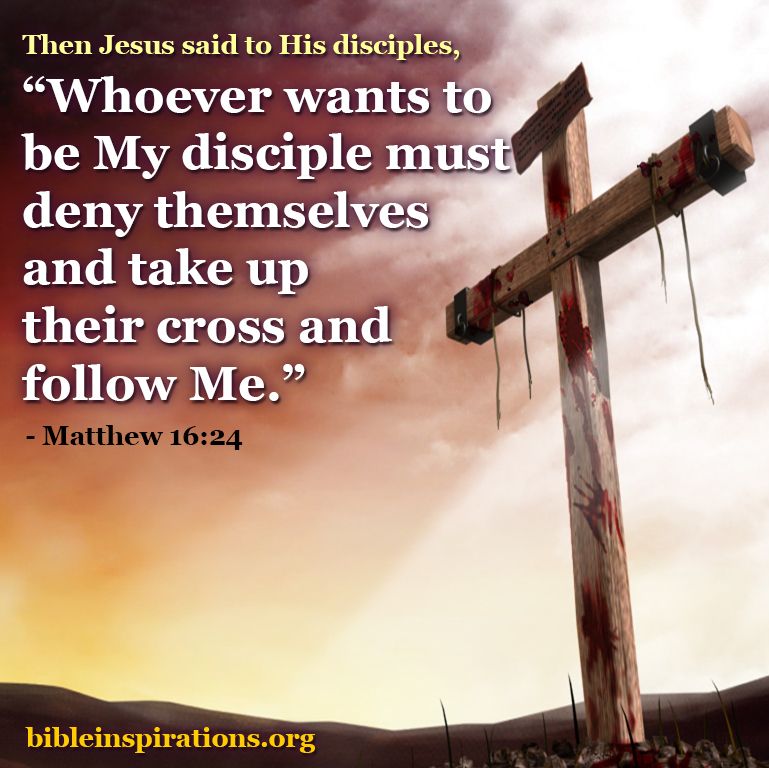
When Jesus tells us to pick up our cross daily and follow Him , the cross becomes the symbol of our death to self, in that our lives no longer belong to us

(Translated, this means that as followers of Christ, we must learn to surrender our ALL to GOD!)

1 Corinthians 6:19-20
Good News Translation

19 Don’t you know that your body is the temple of the Holy Spirit, who lives in you and who was given to you by God? You do not belong to yourselves but to God; 20 he bought you for a price. So use your bodies for God’s glory.
____

The Christian’s body is a temple of the Holy Spirit.

When we are born-again, the Holy Spirit takes up residence in our bodies and they become a holy place for the dwelling of God’s special presence.

That the Holy Spirit resides in believers points to the new nature of believers’ bodies.

Believers’ bodies are sanctified and holy, being in union with Christ.

Paul also reminded the Corinthians that they did not have rights to their own bodies.

They were not free to use their bodies any way they wished.

He insisted that Christ bought them at a price—His own blood.

As a slave was bought in the ancient world, Christ bought His followers, body and soul, through the price of His own death.

Because they belong to Him, believers do not have the right to rebel against Him by using their bodies in ways the Lord has prohibited.

Further, because this purchase results in redemption and salvation, it ought to inspire grateful obedience, not rebellion.

In this reminder, Paul chastised the Corinthians and pleaded with them to obey Christ eagerly and thankfully.

Verses 20 tells us that we are the Lord’s both by creation and redemption.

Here the latter is particularly in view. His ownership of us dates back to Calvary.

We were bought at a price. At the cross, we see the price tag which the Lord Jesus put on us.

He thought us to be of such value that He was willing to pay for us with the price of His own precious blood.

How greatly Jesus must have loved us to bear our sins in His body on the cross!

That being the case, I can no longer think of my body as my own.

If I am to take it and use it in the way I desire, then I am acting as a thief, taking that which does not belong to me.

Rather I must use my body to glorify God, the One to whom it belongs.

SELAH (let us pause and calmly think about these things)

____

Monday, February 24
The Winning Walk
by Dr Ed Young

GIVE YOURSELF FIRST

Paul held up the Christians at Macedonia as an example to his Corinthian friends.

The Macedonians (who had little) had given liberally to the Jerusalem church…and the Corinthians (who had much more) had promised aid, but done nothing.

But Paul’s most convicting description of these generous believers was not about money, but about heart. “They first gave themselves,” he said.

God is not honored when we “tip” Him with our money but withold from Him our selves.

The gift without the giver is bare. Those Macedonian givers climbed into the offering plate with their gift.

They didn’t just nod at God with a few coins…they put their very lives at His disposal.

What a radical act of faith! Jesus illustrated this best when He instructed His disciples to “render unto Caesar the things that are Caesar’s…and to God the things that are God’s.” Well, what is God’s? We are!

Jesus picked up a coin to drive home His point, saying, “Whose picture is on this coin?”

They answered the obvious: “Caesar’s.”

What has God’s picture on it? You and I do. We are made in the image of God, and His picture is etched on your life and mine in an indelible way.

When we give ourselves along with our gifts, our offering is sacrificial, spontaneous and spiritual. And we can be sure that God is honored by it.

Memory Verse

II CORINTHIANS 8:5
And this, not as we had expected, but they first gave themselves to the Lord and to us.

____

Come join the Adventure!

Skip 🕊️

Bob Dylan once wrote a song that said everybody gotta serve someone… the question is who are you serving today?

The Gospel Expects Sacrifice…

The problem with living sacrifices is that they keep crawling off the altar!” (Author Unknown)

Romans 12:1-2
J.B. Phillips New Testament

We have seen God’s mercy and wisdom: how shall we respond?

12 1-2 With eyes wide open to the mercies of God, I beg you, my brothers, as an act of intelligent worship, to give him your bodies, as a living sacrifice, consecrated to him and acceptable by him.

Don’t let the world around you squeeze you into its own mould, but let God re-mould your minds from within, so that you may prove in practice that the plan of God for you is good, meets all his demands and moves towards the goal of true maturity.
____

At the end of Romans 11, Paul completes his exposition of the gospel of Jesus Christ.

It was certainly the most thorough and systematic presentation of Christian truth up to that time in the church, and most would agree since that time as well.

Romans 1-11 forms the basic outline, or framework, on which a Christian understanding of sin, salvation, sanctification, and sovereignty have been based for nearly two thousand years. But now Paul turns his attention to the implications of the truth he has just presented.

Romans 12 is where Paul says, “In light of what God has done, here is how we should live.”

The primary theme is sacrifice—its expression and evidence in the life of the Christian and the church. Ministry to one another through spiritual gifts and love for one another form the two major emphases of Paul in this chapter.

Max Lucado puts it this way:

Paul told the Roman Christians how to live so that their behavior would be worshipful to God.

God desires you to surrender EVERY part of your life to Him.

Would you buy a house if you were only allowed to see one of its rooms?

Would you purchase a car if you were permitted to see only its tires and a taillight?

Would you pass judgment on a book after reading only one paragraph?

Nor would I.

Good judgment requires a broad picture. Not only is that true in purchasing houses, cars, and books, it’s true in evaluating life.

One failure doesn’t make a person a failure; one achievement doesn’t make a person a success.

“The end of the matter is better than its beginning,” penned the sage (see Ecc 7:8).

“Be patient when trouble comes,” echoed the apostle Paul (see Ro 12:12).

We only have a fragment. Life’s mishaps and horrors are only a page out of a grand book.

We must be slow about drawing conclusions. We must reserve judgment on life’s storms until we know the whole story.

“Do not worry about tomorrow, for tomorrow will worry about itself” (Mt 6:34).

He should know. He is the Author of our story. And He has already written the final chapter.

(From Lucado Encouraging Word)

Paul summarizes Christian living in a sentence:

“Take your everyday, ordinary life — your sleeping, eating, going-to-work, and walking-around life — and place it before God as an offering” (Romans 12:1).

God doesn’t throw out the past and tell us to forget about it. He uses all the material, but He rearranges it, and in His hands it becomes new.

The vocabulary in Romans 12:1 uses the same words from the sacrificial system of the past: life and offering. But each of those words is given a radically new orientation.

Substitute sacrifices will no longer do. It’s your life God wants, and it’s mine!

We are to offer our lives daily in service to Him!

Throughout chapter 12, Paul discusses what our faith looks like with “one another,” a phrase he uses four times here. But before we can have a dynamic, personal involvement with one another, we need a dynamic involvement with God.

Step one is responding to the mercies of God (explained in chapters 1–11) by presenting our bodies as a LIVING SACRIFICE, holy and pleasing to God.

That means complete and total surrender.

It’s the difference between what a chicken and a pig bring to a bacon-and-egg breakfast.

The chicken makes a contribution; the pig gives everything.

What we often try to do with God is give an egg here and an egg there, but God wants sacrifice—the ham and bacon.

Only total surrender can be called true worship.

12:2 Once we offer ourselves to God, our relationship to the world is altered.

Paul urges us not to be conformed to this age, meaning the world system that leaves God out, but to be transformed by the renewing of [our] mind.

Notice that both commands are passive.

We aren’t conforming or transforming our minds.

Someone else is.

When God has all of us, and when the world has none of us, God does the work of renewing our confused minds.

He brings our thoughts in line with His own so that we think God’s thoughts after Him (see 1 Cor 2:16).

God has a goal in renewing our minds. This renewal allows Him to merge His thoughts with our thoughts so that He can bring His plans into our lives.

He calls it the good, pleasing, and perfect will of God.

God has a purpose and a plan for each of our lives—one that finds us when we are fully surrendered.

SELAH (Let us pause and calmly think about these things!)

Come join the Adventure!

Skip 🕊️

Jesus teaches His disciples to pray…

From the Sermon on the Mount…

Read Matthew 5:5-15

When we seek God’s kingdom first, we don’t need to worry. We can be sure that He’ll take care of us.

Matthew 6 Notes

GOD, Father—This chapter makes frequent references to God as Father.

God is not the caricature of a doting grandfather. His loving compassion for His children is genuine, but not blind indulgence.

The Father’s love can be a tough love, a love that withholds blessings that we want and do not deserve.

God will not be manipulated, for He is a good Father, with our best interests at heart.

Some try to draw a contrast between the NT emphasis on God as Father and the OT emphasis on God as Lord as though one is the image of love (NT) and the other is the image of stern justice (OT).

Such a contrast does justice to neither expression for God.

The sovereign justice of God may be a little more prominent in the OT and the loving warmth more prominent in the NT.

There is certainly no conflict or contradiction. God as Father not only sees what is said or thought in public.

He also sees what is said, done, or thought in secret and responds accordingly.

He blesses or punishes, as may be appropriate. God invites the believer into a relationship of intimacy (6:9-13).

We express that intimacy in prayer as we address God as Father.

Standing as a sinner before our Creator and Judge, we would never dare be so bold except that we are invited to this intimacy.

God encourages us to address a wide range of petitions to our Father: praise, forgiveness of our sins, daily needs, the coming of God’s eternal will for time and eternity, relationships with one another, and our relationship with God himself.

We can rest in the assurance that God as our heavenly Father will faithfully provide for all our basic needs in life if we are properly related to serving Him in our lives (6:25-34).

SELAH (let us pause and calmly think about these things)
____

Thursday, Dec 26
cFaith

Faith Food Devotions
by Kenneth E. Hagin

OUR FATHER

“…For your Father knoweth what things ye have need of, before ye ask him. After this manner therefore pray ye: Our Father…” (Matt. 6:8-9)

Although God had given to Israel as clear a revelation of Himself as it was possible to give spiritually dead men, they still didn’t really know Him.


They didn’t recognize God manifested in the flesh when Jesus stood in their midst.


(Under the Old Covenant, God’s Presence was shut up in the Holy of Holies.)


Thus, it was into a hard, harsh atmosphere of Justice that Jesus Christ came.


And the Jews of His day could not understand Him. He talked about God as His Father. He told of the Father’s love and care for His own!


It mystified them.


When Jesus introduced God as a Father God of love, His words, for the most part, fell upon unresponsive ears.


Yet we must admit, as we meditate on Jesus’ words about the love of God, that even born-again children of God sometimes fail to see the love side of God.


Israel never grasped it. They didn’t understand who it was Jesus was talking about. It was new to them.


To tell the truth, it’s new to most church members today!


They have been taught to fear God, and to shrink from a God of Justice.


They’ve never really seen the love side of God that Jesus came to reveal.


Confession:
I hereby make a quality decision to see and know the love side of God that Jesus came to reveal.


I will meditate on Jesus’ revelation of God until I really know Him as my Father God of love.


[Source: Faith Food Devotions by Kenneth E. Hagin]
____

Come join the Adventure!

Skip 🕊️