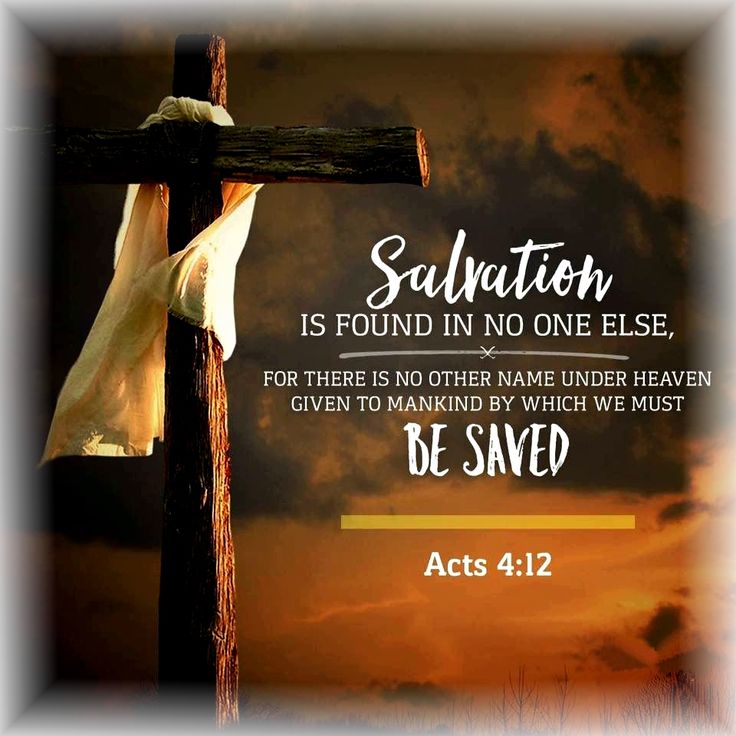
Learning to apply God’s Truth to our lives…

This journey of Truth starts with our studying of the Bible…

Peter’s first epistle examines the Believer’s Privileges and Duties…

Book Profile: 1 Peter

• A circulating letter to first-century Christians scattered over the northern part of modern Turkey

• Delivered or recorded by Silas (5:12), a friend and coworker of the apostle Peter

• Sent from Rome identified by the code name Babylon (5:13)

• Written shortly before the outbreak of the Neronian persecution in A.D. 64

• Addressed an audience made up of both Jewish and Gentile Christians, with the majority Gentile Written during a time of political, social, and personal persecution

• Emphasizes the reality of suffering in the lives of Christians, but also offers words of encouragement and challenge
Has suffering as a primary theme, mentioning it sixteen times by using eight different Greek terms

1 Peter 1:1-25
Suffering Strengthens

In verse 2
“See how Peter says that he was called to be an apostle of Jesus Christ by the foreknowledge of God the Father.

Furthermore, he explains what his apostleship is like by saying that it is in the sanctification of the Spirit, for obedience and sprinkling with the blood of Jesus Christ.

Moreover, we who believe in [Jesus] have also been sanctified by the Spirit, and he sprinkles us too with his blood in order to cleanse us.

For how can we not know that God sanctifies us by his own Spirit and cleanses us believers with his own blood?
For Christ was God in human flesh.”

(Andreas of Caesarea – AD 563–614)

Peter’s initial desire was to give the believers a lift, an encouraging word.

His emphasis in the first two verses should most likely be translated:

“To the chosen ones who are strangers in the world, scattered. . . according to the foreknowledge of God the Father.”

Peter linked their scattering to the foreknowledge of God.

In other words, the difficulties God’s people face do not surprise God.

God the Father knows about everything His chosen people face.

He works it all out as part of His plan.

According to the foreknowledge of God the Father also suggests that all we go through is “according to God’s fatherly care.”

God knew our circumstances of pain before the world began and cares for us in accordance with His fatherly care.

This occurs through the sanctifying work of the Spirit.

Even in the midst of pain, the Holy Spirit is molding, shaping, and growing believers.

The Holy Spirit is turning every circumstance, every sorrow, every hardship into a tool of spiritual maturing.

In the same sentence Peter spoke of being obedient to Jesus Christ.

Obedience conveys the idea of listening and submitting to what is heard.

It involves a change of attitude in the believer.

In the midst of pain, it is difficult to listen to God, let alone obey Him.

Yet, since we are chosen of God and are objects of His fatherly care, we are never out of His plan.

He is designing our sanctification, our spiritual growth. Knowing that, we can continue, with the assistance of the Holy Spirit, to obey the commands of Jesus Christ.

That obedience begins with accepting Jesus as personal Lord and Savior and continues by living life each day just as Jesus told us and leads us to live it.

We obey the call of Jesus to salvation, the word of Jesus in the Bible, and the encouragement of Jesus found in personal relationship with Him each day.

Sprinkling by His blood reflects the language of Numbers 19 and the red heifer purification rites (cf. Exod. 24:4-8; Heb. 9:13-21; 10:22,29).

For Christians, the blood of Christ on the cross covers our sins and brings us salvation.

To people sprinkled with Christ’s blood and obedient to Christ, Peter gave the typical Christian greeting.

Peace reflects the Hebrew greeting shalom, wishing wholeness and meaningful life.

Grace is the explicitly Christian greeting, placing believers under the blood of Christ to receive God’s free, undeserved grace and hope for living each day.

God the Father has given us who believe a living hope as a result of the resurrection of Jesus Christ.

Peter piled up expressions in verses 3-5 to talk about a believer’s relationship with God through salvation.

His opening words are those of worship and praise, reminding us that salvation did not come because of who we are or because of what we have accomplished.

Salvation came as a gift of mercy.

Salvation represents a new birth (see John 1:13), a changing of who we are.

Salvation makes us dead to sin and alive to righteousness in Christ.

Peter linked our salvation relationship to what he termed “a living hope.”

Peter is without question the apostle of hope.

The hope that he had in mind is the eager, confident expectation of life to come in eternity.

Hope in the New Testament always relates to a future good!

Amid present and difficult dangers we are justified in viewing the future with optimism because we are securely attached to the God who deals in futures.

Furthermore, our hope is a living hope because it finds its focus in the resurrection of Jesus Christ from the dead. Our living hope comes from a living, resurrected Christ.

Do you need encouragement?

Peter’s words offer joy and hope in times of trouble, and he bases his confidence on what God has done for us through Christ Jesus.

We live with the wonderful expectation of eternal life (1:3).

Even more, our inheritance—eternal life—begins immediately when we trust Christ and join God’s family.

God will help us remain true to our faith through whatever difficult times we must face.

The “last day” is the Judgment Day of Christ described in Romans 14:10 and Revelation 20:11-15.

No matter what trials or persecution you may face, your soul cannot be harmed if you have accepted Christ’s gift of salvation.

You will be protected by His power and receive the promised rewards.

The term born again refers to spiritual birth (regeneration)—the Holy Spirit’s act of bringing believers into God’s family.

Jesus used this concept of new birth when He explained salvation to Nicodemus (see John 3).

This term is a wonderful metaphor of new life from God.

A person cannot be a Christian without a fresh beginning based on the salvation Christ brings.

When we receive God’s magnificent gift, He brings us new freedom, a new identity, and a new family.

The Jews had looked forward to an inheritance in the Promised Land of Canaan (Numbers 32:19; Deuteronomy 2:12; 19:8).

Although the nation had received that right of inheritance, eventually they defiled their faith under the influence of foreign nations.

The people’s sins had caused the promise to become only a fading memory.

Christians now look forward to another inheritance, a priceless inheritance—eternal life in the eternal city of God.

God has reserved the inheritance; it will never fade or decay; it will be unstained by sin.

The great news is that you have this inheritance now if you have trusted Christ as your Savior.

How many times during the last week have you praised God because of the new life and inheritance He has promised you?

SELAH (let us pause and calmly think about these things)

_________________________________

Monday, March 20
Worthy Brief

TURN THE WORLD UPSIDE DOWN!

“Blessed be the God and Father of our Lord Jesus Christ! According to his great mercy, he has caused us to be born again to a living hope through the resurrection of Jesus Christ from the dead, to an inheritance that is imperishable, undefiled, and unfading, kept in heaven for you, who by God’s power are being guarded through faith for a salvation ready to be revealed in the last time.”
— 1 Peter 1:3-5

Watching Yeshua (Jesus) lay down His life to die on the cross was not what His disciples were expecting, but rather a shocking, perplexing, and apparently hopeless ending to what had seemed like a promising fulfillment of Messianic hope.

The shattering ordeal of Yeshua’s trials, torture, and horrific death must have left them all feeling bereft, miserable, and uncertain of the future.

What would they do now? What would their future hold?

As deep and depressing as their shock was, Yeshua’s disciples had only to wait three days for the restoration of their vision, hope, and joy.

A massive inversion of their reality, exactly what He had predicted, His bodily resurrection, was another shock, but this time…indescribable joy, wonder, and phenomenal relief; and a restoration of meaning, purpose, and vision which carried them the rest of their lives.

As His disciples, our life often follows this pattern: trial, testing, perplexity, suffering, despair, etc…..which then yields to the opposite feelings and experiences of hope, healing, restoration, relief, and the faith and character which emerge along with vision and renewed purpose.

As our Lord knew before He died that He would rise again, He also knows the good things which He portends for the future of His disciples, that is, us, who have been passing through a season of stress and uncertainty.

He really, truly wants us to believe in the rest of this wild story; to really and truly accept the fact that He will, again, turn the world upside down as “all things work together for good for them that love God and are the called according to His purpose”!

Witnessing and being exposed to the serious and nasty things that are happening around us now, how can we imagine that anything good can emerge from it all?

The future seems bleak and downright frightening. But let us remember the Lord’s cross — His disciples’ shock and despair…and the predicted, inevitable resurrection which followed!

Be at peace, remembering the unalterable pattern God has given us in the revelation of His Son.

Enter the new year assured in your faith foundation —and the secure expectation that once again, with Him, as the Apostles did 2000 years ago…..we too, will “turn the world upside down”.

Your family in the Lord with much agape love,

George, Baht Rivka, Obadiah and Elianna (Going to Christian College in Dallas, Texas)
Baltimore, Maryland
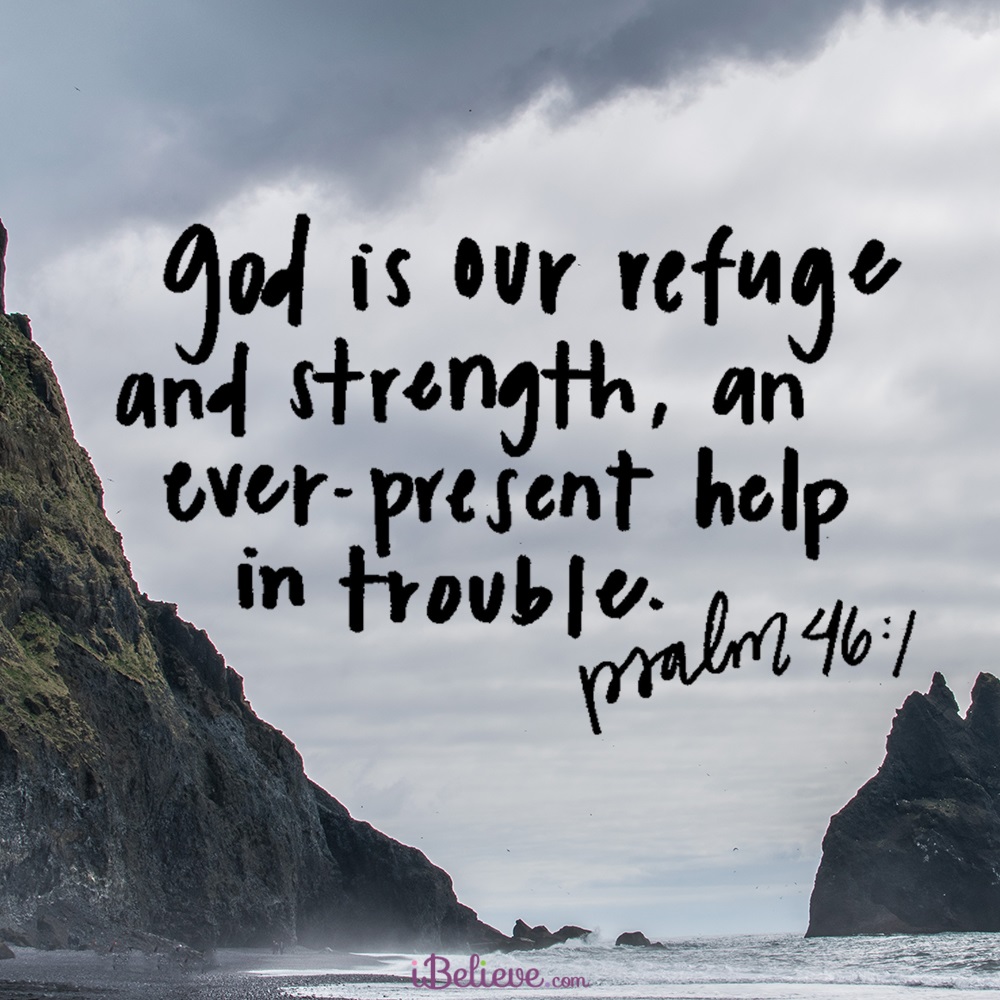
A Mighty Fortress Is Our God (is based on Psalm 46)…

The history behind this great hymn, by Martin Luther, is interesting…

Martin Luther is one of the key figures in church history, a man mightily used by God to bring reformation to the church.

The year 1527 was the most difficult of his life.

After ten demanding years of leading the Reformation, a dizzy spell overcame him in the middle of a sermon on April 22 of that year, forcing him to stop preaching.

Luther feared for his life.

On July 6, while eating dinner with friends, he felt an acute buzzing in his ear and lay down, again convinced he was at the end of his life.

He partially regained his strength, but a debilitating discouragement set in as a result.

In addition, heart problems and severe intestinal complications escalated the pangs of death.

Of this ordeal, Luther wrote, “I spent more than a week in death and hell.

My entire body was in pain, and I still tremble.

Completely abandoned by Christ, I labored under the vacillations and storms of desperation and blasphemy against God.”

What was worse, the dreaded black plague had entered Germany and spread into Wittenberg.

Many people fled, fearing for their lives.

Yet Luther and his wife Katy remained, believing it was their duty to care for the sick and dying.

Although Katy was pregnant with their second child, Luther’s house was transformed into a hospital where he watched many friends die.

Then without warning Luther’s one-year-old son Hans became desperately ill. With death surrounding him on every side, Luther was driven to seek refuge in God as never before.

Psalm 46 became the strength of his soul.

As a result, Luther expanded its truths into the hymn for which he is most famous, “A Mighty Fortress Is Our God.”

Its majestic and thunderous proclamation of God who is our all-sufficient refuge in our weakest moments has become the enduring symbol of the Reformation.

Like Martin Luther, the author of Psalm 46 found solace and refuge in God during difficult times.

The background for this song of praise is unknown, but it was probably written after a military victory over a foreign power that attempted a siege against Jerusalem.

It may have been written after the destruction of the armies of Ammon, Moab, and Mount Seir (2 Chr. 20:1-30).

Or perhaps it was recorded after the destruction of King Sennacherib and the Assyrian army during the reign of Hezekiah (2 Kgs. 18-19).

According to the superscription, it was written by one of the “sons of Korah” and was “for the director of music.”

Psalm 46:1-11

It is generally thought that the historical background of the Psalm is the miraculous deliverance of Jerusalem when it was besieged by the Assyrian wolf, Sennacherib (2 Kgs. 18:13—19:35; Isa. 36:1—37:36).

At this time the people of Judah were tremendously conscious of God’s presence with them in a unique way.

And so the Psalm celebrates the praises of Him who is Immanuel—God with us.

The word “Alamoth” in the title may refer to the pitch of the music, denoting that it was to be high for the treble and soprano voices, or it may have been implored to refer to certain shrill-sounding instruments (cp. 1 Chr. 15:20).

46:1–3 It starts off by telling us that “God is our refuge and strength, a very present help in trouble.”

(He is also “abundantly available for help in tight places” – NASB marg.)

Blessed are we when we realize that our safety and protection lie not in riches or armies but in Jehovah alone!

Imagine the worst that can happen!

Suppose the earth itself should melt as if caught in the flow of a gigantic volcano.

Suppose an earthquake should toss the mountains into the midst of the sea.

Suppose a flood of water should roar and foam over the land, or that the mountains should stagger with wild convulsions of nature.

Or think of the mountains as symbols of empires or cities, and the waters as nations.

The very foundations of society are crumbling; kingdoms are toppling and disintegrating.

The nations of the world are churning with political, economic, and social confusion and trouble of unprecedented intensity is enveloping the world.

But God … !

The worst that can happen is no cause for fear. God Himself is still with us!

46:4 He Himself is the river whose streams shall make glad the city of God.

Actually the city of Jerusalem has no river. But everything that a river is to an ordinary city, God is to His holy habitation—and more, for He is the fountain of life and refreshment, the river of mercy and goodness!

There the majestic Lord will be for us a place of broad rivers and streams, in which no galley with oars will sail, nor majestic ships pass by (Isa. 33:21).

46:5 It is because God is enthroned in Jerusalem that she shall never be moved.

God shall help her, just at the break of dawn.

It has been a long dark night for God’s people, but soon the morning will dawn and Christ will take His rightful place, showing Himself strong on behalf of His own.

46:6 The nations of the earth may rage in fury; the kingdoms may totter.

When God speaks in His wrath, the earth will melt in subservience to Him.

46:7 These words look forward in a special way to the Great Tribulation when the earth will be racked with violent disturbances of nature, with political upheaval, with wars and pestilences, and with inconceivable distress.

Then the Lord will appear from heaven to crush all insubordination and rebellion and reign in righteousness and peace.

At that time the believing remnant of the nation of Israel will say,

“The LORD of hosts is with us; the God of Jacob is our refuge.”

The assurance of this verse is inexpressibly sweet.

The LORD of hosts is with us, that is, the LORD of the angelic armies of heaven.

But He is also the God of Jacob.

Now Jacob means “cheat” or “supplanter.” Yet God speaks of Himself as the God of Jacob.

Put the two thoughts together and you learn that the God of the angelic hosts is also the God of the unworthy sinner.

The One who is infinitely high is also intimately nigh. He is with us in every step of our way, our unfailing refuge in all the storms of life.

46:8 By the time we get to verse 8 the tumult and cataclysms have ended.

Man’s day is over. Now the King is seated upon His throne in Jerusalem.

We are invited to go out and examine the field of His victory.

Everywhere we look we see the wreckage of His defeated foes.

Everywhere lies the evidence of the awful judgments which have descended on the world during the Tribulation and at His glorious appearing.

46:9 But now that the Prince of Peace is enthroned, wars have ceased throughout the world.

What councils and leagues and summits have been helpless to achieve, the Lord Jesus brings about by His iron rod.

Disarmament has passed from discussion to actuality.

Weaponry is scrapped, and the funds formerly spent on munitions are now diverted into agriculture and other productive channels.

46:10 The voice of God rings out to all the inhabitants of the earth in accents of assurance and supremacy.

“Be still, and know that I am God; I will be exalted among the nations, I will be exalted in the earth!”

Every fear is stilled, every anxiety quieted.

His people can relax. He is God. His cause is victorious.

He is supreme among the nations, supreme over all the earth.

It is from verse 10 that Katharina von Schlegel, the author of the hymn “Be Still, My Soul” drew inspiration:

“Be still, my soul; thy God doth undertake To guide the future as He has the past.

Thy hope, thy confidence let nothing shake; All now mysterious shall be bright at last.

Be still, my soul: the winds and waves still know His voice who ruled them while He dwelt below.”

46:11 No matter what may happen or how dark the hour may be, the believer can still say with confidence and fearlessness,

“The LORD of hosts is with us; the God of Jacob is our refuge.”

____

If the One who directs the armies of heaven is on our side, who can be successfully against us?

The God of the unworthy worm Jacob is a fortress in which we can all take refuge from the storms of this uncertain life!

Be still, the morning comes, The night will end; Trust thou in Christ thy Light, Thy faithful Friend. And know that He is God,

Whose perfect will Works all things for thy good: Look up—Be still. (Florence Wills)

Nothing occurs beyond the reach of God’s power!

Awareness of God’s power provides rest and encouragement to all Christians.

Are you weary? Look to the protection and strength of God.

The world can be overwhelming at times AND OUR PROBLEMS AND TRIBULATIONS CAN BE OVERBEARING, but remember that God has everything under control.

So RELAX and find your REST in Him.

SELAH (let us pause and calmly think about these things)
________________________________

Wednesday, March 15
God Calling
by Two Listeners

GUIDANCE IS GUIDANCE

Be still before Me. How often in a crisis man rushes hither and thither.

Rush is a sign of weakness. Quiet abiding is a sign of strength.

A few quiet actions, as you are led to do them, and all is accomplished wisely and rightly, more quickly and more effectually than could be done by those who rush about and act feverishly.

Guidance IS Guidance, the being led, the being shown the way. Believe this.

Softly across life’s tumult, comes a gentle Voice, “Peace, be still.”

The waves of difficulty will hear. They will fall back. There will be a great calm.

And then the Still Small Voice of Guidance.

Now unto Him who is able to keep you from stumbling, and to make you stand in the presence of His glory blameless with great joy, to the only God our Savior, through Jesus Christ our Lord, be glory, majesty, dominion and authority, before all time and now and forever. Amen.
(Jude 1:24-25)
_____

Come join the Adventure!

Skip 🕊️

Walking in wisdom is all about our learning to put on the mind of Christ daily…

The Wisdom from above…

James 3:13-18

WISDOM: THE TRUE AND THE FALSE

In these verses, James is discussing the difference between true wisdom and false.

When he speaks about wisdom, he is not thinking of how much knowledge a man has, but how he lives his life from day to day.

It is not the possession of knowledge but the proper application of it that counts.

We have here a portrait of the truly wise man.

Basically, this man is the Lord Jesus Christ; He is wisdom incarnate (Matt. 11:19; 1 Cor. 1:30).

But also the wise person is one who manifests the life of Christ, one in whom the fruit of the Spirit is evident (Gal. 5:22, 23).

We have also a portrait of the worldly-wise man. He acts according to the principles of this world.

He embodies all the traits that men glorify.

His behavior gives no evidence of divine life within.

As in the previous chapters, James began his discussion of human speech with a practical exhortation and continued to deal with increasingly basic issues.

He spoke of the importance of controlling one’s mind next to enable his readers to understand how to control their tongues.

Wisdom in the mind affects one’s use of his or her tongue.

Note the key words “wise” and “wisdom” (vv. 13, 17), which bracket the thought of this section, as well of the prominence of “peaceable” and “peace” that conclude it (vv. 17, 18).

The real qualifications of a teacher (v. 1) are wisdom (the ability to view life from God’s perspective) and understanding (mental perception and comprehension).

James probably had the Old Testament sage in mind.

We can perceive understanding in others quite easily, but wisdom is more difficult to identify.

James said to look at a person’s behavior if you want to see if he or she is wise.

The wisdom James had in mind did not result so much in what one thinks or says but in what one does.

One of the marks of wisdom is gentleness, meekness, humility. The Greek word prauteti (“gentleness”) occurs in non-biblical literature to describe a horse that someone had broken and had trained to submit to a bridle.

It pictures strength under control, specifically the Holy Spirit’s control.

Psalm 32:8-9
Expanded Bible

8 The Lord says, “I will ·make you wise [instruct you] and ·show [teach] you ·where to [the way you should] go.

I will ·guide [counsel] you and ·watch over [my eye will be on] you.

9 So don’t be like a horse or donkey,
that doesn’t understand.

·They must be led […whose temper/or gallop must be restrained] with bits and reins,
or they will not come near you.”
____

The evidence of this attitude is a deliberate placing of oneself under divine authority.

The only way to control the tongue is to place one’s mind deliberately under the authority of God and to let Him control it (have His way with it; cf. Matt. 11:27; 2 Cor. 10:1).

James’ concept of wisdom was Hebraic rather than Greek, moral more than intellectual (cf. 1:5).

“The problem seems to be that some self-styled chief people, thinking they were endowed with superior wisdom and understanding, had divided the church because of their teaching, which betrayed a misuse of the tongue.”

“It is very difficult to be a teacher or a preacher and to remain humble; but however difficult it is, it is absolutely necessary.”

Bitter jealousy” and “selfish ambition” are motives that must not inhabit the heart of a teacher or he will find himself saying things he should not.

These are attitudes toward others and self that are the antithesis of graciousness that seeks the welfare of others before self.

Jealousy and ambition are manifestations of arrogance, and they result in promoting self rather than the truth the teacher is responsible to communicate.

Lying against the truth means teaching untrue things, things that oppose the truth.

Those who boast of wisdom are not following God because humility does not mark their lives.

This is as true of Christians as it is of non-Christians.

This type of so-called “wisdom,” which springs from jealousy and ambition, does not have its source in the fear of the Lord.

It comes from the spirit (philosophy) of this world (cf. 2:1-7).

It consists of only what is natural, excluding the supernatural influence of God’s Spirit.

Furthermore it is demon-like in its deception, hypocrisy, and evil.

“Wisdom is not measured by degrees but by deeds.

It is not a matter of acquiring truth in lectures but of applying truth to life.”

God is not the God of disorder but of order and peace (Gen. 1; 1 Cor. 14:33).

He opposes every evil thing (1 John 1:5).

Therefore ungracious jealousy and personal ambition are not part of the wisdom He provides.

“There is a kind of person who is undoubtedly clever; he has an acute brain and a skilful tongue; but his effect in any committee, in any Church, in any group, is to cause trouble, to drive people apart, to foment strife, to make trouble, to disturb personal relationships.

It is a sobering thing to remember that the wisdom that that man possesses is devilish rather than divine, and that such a man is engaged on Satan’s work and not on God’s work.”

In contrast, the wisdom God gives has several characteristics.

It is pure, meaning free of the defilements mentioned.

It is peaceable, namely, peace-loving, peace-practicing, and peace-yielding.

It is gentle or considerate of others.

It is reasonable, that is, open to reason and willing to yield to reasonable requests.

It is full of mercy in that it is actively sympathetic to the needy, and it is full of good fruits (good works).

It is unwaveringly single-minded in its devotion to God rather than double-minded.

It is, finally, without hypocrisy, namely, true to appearances.

“Thus ‘purity’ is not just one quality among others but the key to them all.”

People committed to preserving peace must teach the Word of God peacefully to reap a harvest of righteousness (cf. 1:20).

That good fruit will not come if teachers sow it in words and ways that inflame and antagonize people (cf. 1 Tim. 5:1-2; 2 Tim. 2:14, 24-26).

“To ‘raise a harvest of righteousness’ demands a certain kind of climate.

A crop of righteousness cannot be produced in the climate of bitterness and self-seeking.

Righteousness will grow only in a climate of peace.”

“Winsome speech comes from a wise spirit. A controlled tongue is possible only with cultured thought. A mouth filled with praise results from a mind filled with purity.”

To restate James’ thought in this chapter, our words are very important as we seek to carry out the ministry God has called us to fulfill.

We cannot control our tongues easily.

Therefore we should not be too quick to take on a teaching ministry.

The only One who can control our tongues is God, who can give us wisdom.

The marks of the wisdom He provides are humility, graciousness, and peace.

James warns against anything that does not bear the fruit of good works: unfruitful religion (1:25-26), unfruitful faith (2:26), and unfruitful wisdom (3:17-18).

The Apostle Paul instructed the Philippian church that the solution is that we should put on the mind of Christ.

Philippians 2:2-11
The Message

He Took on the Status of a Slave
1-4 If you’ve gotten anything at all out of following Christ, if his love has made any difference in your life, if being in a community of the Spirit means anything to you, if you have a heart, if you care—then do me a favor:

Agree with each other, love each other, be deep-spirited friends.

Don’t push your way to the front; don’t sweet-talk your way to the top.

Put yourself aside, and help others get ahead.

Don’t be obsessed with getting your own advantage.

Forget yourselves long enough to lend a helping hand.

5-8 Think of yourselves the way Christ Jesus thought of himself.

He had equal status with God but didn’t think so much of himself that he had to cling to the advantages of that status no matter what.

Not at all. When the time came, he set aside the privileges of deity and took on the status of a slave, became human!

Having become human, he stayed human.

It was an incredibly humbling process. He didn’t claim special privileges.

Instead, he lived a selfless, obedient life and then died a selfless, obedient death—and the worst kind of death at that—a crucifixion.

9-11 Because of that obedience, God lifted him high and honored him far beyond anyone or anything, ever, so that all created beings in heaven and on earth—even those long ago dead and buried—will bow in worship before this Jesus Christ, and call out in praise that he is the Master of all, to the glorious honor of God the Father. Amen

SELAH (let us pause and calmly think about these things)
_________________________________

Thursday, March 16
The Winning Walk
by Dr Ed Young

FROM ABOVE

“But the wisdom from above is first pure, then peaceable, gentle, reasonable, full of mercy and good fruits, unwavering, without hypocrisy.”
— James 3:17

How easy it is for us, in today’s culture, to be swallowed by it all – bigger, better, more.

How important it is that we get still and know that we can receive the wisdom from above that God promises to His children.

Notice that this wisdom is – first of all – pure. That means it is without mixture or alloy.

It calls us to be holy, to be separate, and to swim upstream against the current of our world.

With wisdom from above, we are able to interpret things from a divine dimension, and we understand something of the way God works.

We can go with the crowd, or we can act on the basis of wisdom from our Living God.

Choose correctly, and you will receive the ability in any situation, and in any relationship, to understand how God would have you live – and what He would have you do.
____

Come join the Adventure!

Skip 🕊️

There is only one name under heaven whereby we may be saved…

Israel Needs the Gospel…

Romans 10:1-21

Romans Chapter 10 signals a shift in Paul’s emphasis from God’s dealings with Israel in the past, specifically, before Christ’s death, to His dealings with them in the present.

Paul’s teachings were most distasteful to the unconverted Jews.

They considered him a traitor and an enemy of Israel. But here he assures his Christian brethren to whom he was writing that the thing that would bring the greatest delight to his heart and the thing for which he prays to God most earnestly for Israel is that they may be saved.

Romans 9:31-33

31 “…but Israel, pursuing a law of righteousness, did not attain that law.

32 Why? Because they did not pursue it by faith, but as though it were by works.

They stumbled over the stumbling stone,

33 just as it is written,
‘BEHOLD, I AM LAYING IN ZION A STONE OF STUMBLING AND A ROCK OF OFFENSE,
AND THE ONE WHO BELIEVES UPON HIM WILL NOT BE PUT TO SHAME.’ ”

The reason for Israel’s failure mentioned in 9:31-33, namely, is her rejection of Christ; and so this led Paul to develop that subject further in this section.

These verses open up with Paul expressing his feelings of compassionate concern (“my heart’s desire and my prayer”) for his fellow Israelites’ salvation (9:1-3).

Paul’s mention of their deliberate rejection of Christ (9:32-33) evidently triggered this emotional expression.

“The reality of his love is seen in the fact that he prayed for them.”

Ironically it was Israel’s “zeal” that set her up for failure.

Zeal also characterized Paul’s life, which in many ways duplicated Israel’s experience as a nation.

It had also kept him from believing on Christ too (cf. Acts 22:3; Gal. 1:14).

Paul and Israel both had zeal for God, but it was zeal that lacked (was “not in accordance with”) “knowledge,” knowledge that Jesus is the Messiah (1 Tim. 1:13).

The Jews were ignorant of “the righteousness” that comes from “(of) God” as a gift (1:17).

They sought to earn righteousness by keeping the Law (“to establish their own”).

Instead, they should have humbly received (submitted to) the gift of righteousness that God gives to those who believe on His Son (cf. Phil. 3:9).

Israel as a whole, excluding the believing remnant, failed to gain a righteous standing before God because she tried to win it “with (by) works.”

A “stumbling stone” on the racetrack over which she “stumbled” impeded her progress.

Intent on winning in her own effort, Israel failed to recognize the “Stone” prophesied in Scripture, who was sent to provide salvation for her.

The following quotation, from Isaiah 8:14 and 28:16 (cf. 1 Pet. 2:6-8), sums up the problem.

God intended the Messiah to be the provider of salvation.

However, the Jews did not allow Him to fulfill this function for them.

Consequently this Stone became a stumbling block for them (cf. 1 Cor. 1:23).

Israel’s rejection of Jesus Christ did not make God unfaithful or unrighteous in His dealings with the nation.

What it did do was make it possible for Gentiles to surpass the Jews as the main recipients of salvation.

The truth is for all of us that there are times when we all fall into the trap of trying to get right with God by doing certain things or obeying certain rules.

We may think that attending church, doing church work, giving offerings, helping people who are poor, or being nice will earn God’s favor and be enough to grant us eternal life with him.

After all, we’ve played by the rules, haven’t we?

But Paul’s words sting—this approach never succeeds.

Paul explains that a true relationship with God doesn’t come by trying to earn His favor or by being good enough.

It comes by realizing that we can never be good enough.

We must depend on Jesus Christ to rescue us from sin’s eternal consequences and introduce us to God by bringing us into His very presence as a forgiven and righteous people.

Only then will God look at us as though we have never sinned and welcome us into His presence (Colossians 1:21-22).

This is the whole reason for the Cross of Calvary, that necessitated that Christ pour out His life’s blood as a propitiation for OUR sins.

Consequently we can be saved only by putting our faith in what Jesus Christ has done.

If we do that, then we will not be disappointed.

Have you ever been asked, “How do I become a Christian?”

These verses in Romans 10:8-12
will give you the answer:

Salvation is as close as your own lips and heart.

People think it must be a complicated process, but it is not.

Romans 10:8-12

8 …“THE WORD IS NEAR YOU, IN YOUR MOUTH AND IN YOUR HEART”—that is, the word of faith which we are preaching,

9 that if you confess with your mouth Jesus as Lord, and believe in your heart that God raised Him from the dead, you will be saved;

10 for with the heart a person believes, leading to righteousness, and with the mouth he confesses, leading to salvation.

11 For the Scripture says, “WHOEVER BELIEVES UPON HIM WILL NOT BE PUT TO SHAME.”

12 For there is no distinction between Jew and Greek, for the same Lord is Lord of all, abounding in riches for all who call on Him.”

So then if we sincerely believe in our hearts and profess that Jesus Christ is the risen Lord, we will be saved!

SELAH (let us pause and calmly think about these things)

_________________________________

Sunday, March 12
Inspiration Ministries
Daily Devotional

THE WORD OF FAITH

“The word of faith which we are preaching, that if you confess with your mouth Jesus as Lord, and believe in your heart that God raised Him from the dead, you will be saved.”
— Romans 10:8–9 (NASB)

Even mature Christians can find themselves depending on their reputations and experiences, relationships and abilities, and position or status. But Paul taught that before God, none of these things matter. He made it clear: We are not saved because of anything we do or justified because of our works. The key is faith alone.

We must act on faith. We must confess with our mouths and declare that Jesus is Lord. We must believe in our hearts that “God raised Him from the dead.”

When Paul talked about the “word of faith,” he used the Greek word rhema, indicating a specific word God gives at specific times. Paul was saying that God has a particular word for each situation we face. It is a word He has prepared before the foundation of the world. It is the exact word we need.

We will need to speak the word of faith at some point and, for the first time then, declare that Jesus is Lord! We will also need wisdom or guidance, deliverance or healing, discernment or salvation at other moments. God has a word of faith in each situation.

As the Bible promises, the word of faith is near you. Declare that Jesus is your Lord. Trust Him. Declare His Word to be true. Let Him give you the word of faith. Be ready to speak His Word and act in faith.

Reflection Question: What special word has God been whispering in your heart recently?
____

Come join the Adventure!

Skip 🕊️

Standing in the Gap, praying for another Great Awakening in America…

The Moravian Revival of 1727…

One of the greatest revivals of God’s people occurred at the Saxony estate of Count Zinzendorf.

The young, Christian noblemen offered many Christians safety on his property.

Many at the time were fleeing imprisonment, death, banishment, and torture for their beliefs.

They fled to Zinzendorf’s and called their new home Herrnhut, ‘the Lord’s Watch’.

There on August 13, 1727 a great revival started.

According to Oswald Smith, “They made the discovery that the Church could not save them; that there was no salvation in its creeds, doctrines or dogmas; that good works, moral living, commandment keeping, praying and Bible reading, could not avail; much less culture, character or conduct.

They found that Christ alone could save; that He was willing and able to receive sinners at a moment’s notice; that justification, the forgiveness of sins, the new birth, etc. were instantaneous experiences received the very moment a sinner believed on Christ; that salvation was through grace and by faith, apart from the deeds of the law; that when a man is saved he has peace with God, and that he receives the assurance of salvation by the witness of the Holy Spirit in his heart.”

History of the Moravian Church

A MODERN PENTECOST

“Lord God, the Holy Ghost,
In this accepted hour,
As on the day of Pentecost,
Descend in all Thy power.

We meet with one accord,
In our appointed place,
And wait the promise of our Lord,
The Spirit of all grace.

The young, the old inspire
With wisdom from above;
And give us hearts and tongues of fire,

To pray, and praise, and love.”
____

THUS sang the Scotch Moravian poet and hymn writer, James Montgomery, more than a hundred years ago.

His prayer for another Pentecost was undoubtedly inspired by the experiences of his spiritual fathers on August 13, 1727 in Herrnhut, Germany.

We are now (in 1927) celebrating the Bi-Centennial of what our Moravian Text Book calls the “Signal outpouring of the Holy Spirit experienced by the congregation of Herrnhut.”

We do well to join in Montgomery’s earnest prayer for another Pentecost in our own day.

D.L. Moody in one of his last sermons in Boston, his spiritual birthplace, spoke thus of the Holy Spirit:

“See how He came on the day of Pentecost! It is not carnal to pray that He may come again and that the place may be shaken.

I believe Pentecost was but a specimen day. I think the Church has made this woeful mistake that Pentecost was a miracle never to be repeated.

I have thought too that Pentecost was a miracle that is not to be repeated.

I believe now if we looked on Pentecost as a specimen day and began to pray, we should have the old Pentecostal fire here in Boston.”

A Moravian historian writes in a similar vein as follows:

God says; “It shall come to pass I will pour out My Spirit.”

This was His promise through the prophet Joel.

The first fulfillment of this promise was on the day of Pentecost.

There is nothing in the New Testament to indicate that this was to be the one and only fulfillment of this promise.

On the contrary we read in the book of Acts of many outpourings of the Holy Spirit, as in Samaria (8:14-17) as in Ephesus (19:1-7) and even in the case of the Gentiles (10:44-46).

Church History also abounds in records of special outpourings of the Holy Ghost, and verily the thirteenth of August 1727 was a day of the outpouring of the Holy Spirit.

We saw the hand of God and His wonders, and we were all under the cloud of our fathers baptized with their Spirit.

The Holy Ghost came upon us and in those days great signs and wonders took place in our midst.

From that time scarcely a day passed but what we beheld His almighty workings amongst us.

A great hunger after the Word of God took possession of us so that we had to have three services every day, at 5:00 and 7:30 A.M. and 9:00 P.M.

Everyone desired above everything else that the Holy Spirit might have full control. Self-love and self-will as well as all disobedience disappeared and an overwhelming flood of grace swept us all out into the great ocean of Divine Love.”

Psalms 14:2

The Lord has looked down from heaven upon the sons of men
To see if there are any who understand,
Who seek after God.

God’s warning to Israel…

Deuteronomy 4:27-31
The Message

25-28 When the time comes that you have children and grandchildren, put on years, and start taking things for granted, if you then become corrupt and make any carved images, no matter what their form, by doing what is sheer evil in God’s eyes and provoking his anger—I can tell you right now, with Heaven and Earth as witnesses, that it will be all over for you.

You’ll be kicked off the land that you’re about to cross over the Jordan to possess.

Believe me, you’ll have a very short stay there. You’ll be ruined, completely ruined.

God will scatter you far and wide; a few of you will survive here and there in the nations where God will drive you.

There you can worship your homemade gods to your hearts’ content, your wonderful gods of wood and stone that can’t see or hear or eat or smell.

29-31 BUT EVEN THERE, IF YOU SEEK GOD, YOUR GOD, YOU’LL BE ABLE TO FIND HIM IF YOU’RE SERIOUS, LOOKING FOR HIM WITH YOUR WHOLE HEART AND SOUL.

When troubles come and all these awful things happen to you, in future days you will come back to God, your God, and listen obediently to what he says. God, your God, is above all a compassionate God.

In the end he will not abandon you, he won’t bring you to ruin, he won’t forget the covenant with your ancestors which he swore to them.

Jeremiah 29:13

You will seek Me and find Me when you search for Me with all your heart!
____

That offer still stands and is available to us today, to WHOMSOEVER will call upon His name, with all their heart, mind and strength!

The question is, are we thirsty enough yet?

The Amazing Story of the Moravian Falls Portal

God is still extending this invitation to us today:

Isaiah 55:1-7
The Message

Buy Without Money
55 1-5 “Hey there! All who are thirsty,
come to the water!

Are you penniless?
Come anyway—buy and eat!

Come, buy your drinks, buy wine and milk.

Buy without money—everything’s free!
Why do you spend your money on junk food,
your hard-earned cash on cotton candy?

Listen to me, listen well: Eat only the best,
fill yourself with only the finest.

Pay attention, come close now,
listen carefully to my life-giving, life-nourishing words.

I’m making a lasting covenant commitment with you,
the same that I made with David: sure, solid, enduring love.

I set him up as a witness to the nations,
made him a prince and leader of the nations,
And now I’m doing it to you:

You’ll summon nations you’ve never heard of,
and nations who’ve never heard of you
will come running to you

Because of me, your God,
because The Holy of Israel has honored you.”

6-7 Seek God while he’s here to be found,
pray to him while he’s close at hand.

Let the wicked abandon their way of life
and the evil their way of thinking.

Let them come back to God, who is merciful,
come back to our God, who is lavish with forgiveness. Amen

SELAH (let us pause and calmly think about these things)
______________________________

From Wednesday, March 01
Worthy Brief

THE ENEMY WANTS TO KILl … BEFORE IT’S EVEN BIRTHED!

“…for you are still fleshly. For insofar as there is jealousy, strife, and factions among you, aren’t you fleshly, and don’t you walk in the ways of men? For when one says, “I follow Paul,” and another, “I follow Apollos,” aren’t you fleshly?
— 1 Corinthians 3:3-4

During the Catholic inquisitions, as millions of Christians were being killed by the Jesuit Priests for apostasy, throughout Europe, Christians were fleeing.

In Bohemia alone, there were an estimated 4,000,000 Christians before the Jesuit inquisition, and ten years later, only 800,000 people remained in Bohemia – all of whom were Catholic.

These terrible events prepared the ground for one of the greatest moves of God that have ever been recorded, the Moravian Revival, which lasted for over 100 years.

Gustav Warneck, the German Historian of Protestant Missions, testified,

“This small church in twenty years called into being more missions than the whole Evangelical Church has done in two centuries.”

It began with a young man, Count Zinzendorf, who was 27 years old when he opened his estate to welcome believers escaping persecution and inviting them to settle there.

There were different groups, Bohemian Brethren, Moravian Christians, Reformed Christians, and unsatisfied Catholics.

After a few years, this fragmented community of some 300 individuals with differing spiritual convictions and loyalties was so rife with conflict and disunity it seemed destined to fail.

One of the village founders, Christian David, got so caught up in apocalyptic fanaticism that he referred to Zinzendorf as the “Beast of the Apocalypse,” while the estate manager of the village, Johan Andreas Rothe was termed the “False Prophet.”

In this impossible environment, Count Zinzendorf devoted himself full-time to reconciliation and conflict resolution, visiting each home for prayer and exemplifying the persevering love of Christ.

Amazingly, this personal attention and devotion to unity and reconciliation opened the way for an awakening that would come in just a few weeks.

Yet what would have happened if Count Zinzendorf had lost patience and, in justified frustration, thrown everyone off his estate?

Instead of a 100-year spiritual awakening…NOTHING of spiritual significance would have happened.

The enemy, working through the carnal attitudes of believers [1 Corinthians 3:3-4], continually slandered this young man and one another, but his response was to disarm those persecuting him with the love of Christ.

The result was a genuine revival.

Disunity, and slander are deadly to spiritual life and will absolutely kill any hope of enjoying God’s presence.

This is true in the smallest company of two or three, or in a local church community, or in any size gathering at all.

When the Lord is moving, He will bring humility and love as Zinzindorf did.

Let this humble Count be your example in any sphere of responsibility God places you. God is always desiring to birth something supernatural!

From Thursday, March 02
PART II

SEEK UNITY … NOT CONFORMITY!

“…with all lowliness and gentleness, with longsuffering, bearing with one another in love, endeavoring to keep the unity of the Spirit in the bond of peace. There is one body and one Spirit, just as you were called in one hope of your calling; one Lord, one faith, one baptism; one God and Father of all, who is above all, and through all, and in you all.”
— Ephesians 4:2-6

Yesterday we wrote about one of the greatest moves of God … the Moravian Revival.

When the community was in complete disarray, Count Zinzendorf focused on how they could live together in love despite their differences.

He called all the men together for an intense study of the Scriptures to focus on how Christian life in community was portrayed.

These studies combined with intense prayer convinced many of the believers that they were called to live together in love and that their disunity and conflict were contrary to the clear calling of Scripture.

Zinzendorf’s dream was to see the differences among the community’s many traditions become secondary to a corporate unity in love.

In the history of the Moravian revival, we read:

“Zinzendorf was not aiming at organizational unity and uniformity among Christians and did not desire the dissolution of particular traditions, but rather their binding together in fraternal charity, mutual respect, communication and communion within a sort of loose federation.”

Thus they learned to agree to disagree on certain subjects – the one thing they agreed upon was the emphasis on love – and this was necessary in order to fulfill the “great commission.”

The complexities of God’s truth will make uniformity in all doctrines impossible for all believers.

It is even probable that secondary issues may be used of God to test our hearts.

The essential truths of the faith, however, are indisputable among true brethren and they form the truth basis for our unity.

The Moravian Revival motto was, “in essentials unity, in non-essentials liberty, but in all things love!”

Revivals always reveal the veracity and power of this motto, and their fruit is the result of God’s wonderful unifying presence.

We will not compromise on the essentials (though some may even disagree on what they are); and we will peacefully discuss our convictions about secondary issues, agreeing to disagree and preserving the unity of the spirit in the bond of peace.

Your family in the Lord with much agape love,

George, Baht Rivka, Obadiah and Elianna (Going to Christian College in Dallas, Texas)
____

Come join the Adventure!

Skip 🕊️