The Suffering Servant Saves…

The Transforming Power of Sacrificial Love…

Isaiah 52:13 – 53:12

Isaiah 52-53 brings to a climax the teaching about God’s servant.

God calls Jerusalem to wake up and be ready for His redemption.

No longer will peoples and nations blaspheme His name.

Instead, they will know that He is the only one who foretells historical events.

The messengers of good news, peace, and salvation are praised as they come to proclaim God’s victory over the nations.

He calls Israel to leave exile and return home under God’s protection.

Then God introduces anew His Servant who was so scarred and ugly that His appearance was appalling.

God promises to exalt Him.

The insignificant, rejected Servant knew human sorrow and suffering. But His suffering had purpose, because He bore punishment for our sins to bring us peace.

Every one of us strayed off like sheep, but God put our punishment on Him.

He endured it all without complaint.

He endured the death penalty even though He was innocent.

All of this fulfilled God’s purpose, making the Servant an offering to cover our guilt.

Death and burial do not complete the story. He will live anew and receive a magnificent portion from God.

Why?

Because he bore the sins of many and made intercession for transgressors.

When we consider all that Christ has done for us, what should be our reasonable response?

Paul answers that question in…

Romans 12:1-2
J.B. Phillips New Testament

We have seen God’s mercy and wisdom: how shall we respond?

1-2 With eyes wide open to the mercies of God, I beg you, my brothers, as an act of intelligent worship, to give Him your bodies, as a living sacrifice, consecrated to Him and acceptable by Him.

Don’t let the world around you squeeze you into its own mould, but let God re-mould your minds from within, so that you may prove in practice that the plan of God for you is good, meets all His demands and moves towards the goal of true maturity.

And so, let us put on the mind of Christ every day…

Philippians 2:1-11
New King James Version

Unity Through Humility
1 Therefore if there is any consolation in Christ, if any comfort of love, if any fellowship of the Spirit, if any affection and mercy, 2 fulfill my joy by being like-minded, having the same love, being of one accord, of one mind.

3 Let nothing be done through selfish ambition or conceit, but in lowliness of mind let each esteem others better than himself.

4 Let each of you look out not only for his own interests, but also for the interests of others.

The Humbled and Exalted Christ

5 Let this mind be in you which was also in Christ Jesus, 6 who, being in the form of God, did not consider it robbery to be equal with God,

7 but made Himself of no reputation, taking the form of a bondservant, and coming in the likeness of men.

8 And being found in appearance as a man, He humbled Himself and became obedient to the point of death, even the death of the cross.

9 Therefore God also has highly exalted Him and given Him the name which is above every name,

10 that at the name of Jesus every knee should bow, of those in heaven, and of those on earth, and of those under the earth,

11 and that every tongue should confess that Jesus Christ is Lord, to the glory of God the Father.

SELAH (let us pause and calmly think about these things)
____

Monday, May 27
Worthy Brief

LEARN SACRIFICIAL LOVE!

“For He shall grow up before Him as a tender plant, And as a root out of dry ground.

He has no form or comeliness; And when we see Him, There is no beauty that we should desire Him.

He is despised and rejected by men, A Man of sorrows and acquainted with grief.

And we hid, as it were, our faces from Him;

He was despised, and we did not esteem Him.

Surely He has borne our griefs And carried our sorrows;

Yet we esteemed Him stricken, Smitten by God, and afflicted.

But He was wounded for our transgressions, He was bruised for our iniquities;

The chastisement for our peace was upon Him, And by His stripes we are healed.

All we like sheep have gone astray; We have turned, every one, to his own way; And the Lord has laid on Him the iniquity of us all.”
— Isaiah 53:2-6

This pivotal passage of scripture, Isaiah 52 and continuing into Isaiah 53, profiles a suffering servant whom the nation of Israel would not recognize. The spiritual leaders of Yeshua’s (Jesus) day were blinded to the messianic passages which pointed to the messiah’s role as a humble servant and bearer of sins.

Expecting a conquering king who would vanquish the Romans and set up a restored Davidic kingdom, they completely missed and ultimately rejected the lowly servant that God sent, an unpretentious carpenter’s Son from a not-so-respectable town who was virtually unknown until He was about thirty.

Yeshua of Nazareth did perfectly fulfill God’s messianic qualifications even though He arrived in Jerusalem riding on a donkey and not a majestic horse. [Zechariah 9:9; Matthew 21:7]

One wonders what might have happened if he had been recognized and received, since He did come proclaiming that the Kingdom of God was at hand.

Since it was absolutely necessary that the Son of God would die for sins to restore the spiritual plight of the entire world which was separated from God, before He could restore the Kingdom to Israel, Yeshua came preaching repentance and righteousness.

He drew large crowds, demonstrating His uniqueness among all of Israel’s prophets by performing many amazing miracles and signs by the power of the Spirit, and delivering unprecedented, authoritative teaching which surpassed everything that had ever been heard before.

Yet while His ministry was growing, so was His opposition, and His awareness that He was destined for suffering and death.

This suffering also surpassed anything we can begin to imagine as the iniquity of the entire world was laid upon Him and He bore it willingly.

Yeshua exemplified and revealed the profound connection between serving and suffering by becoming a suffering servant to all mankind.

Later testifying that there was no greater love than that a man lay down his life for his friend,

He made it clear that love, the deepest love, involves sacrifice.

We say that we want to be like Him.

If so, we will be learning and practicing a lifestyle of sacrifice, not caring who sees or knows what we are going through for His sake, because we really just want to make Him happy, because we love Him and are infinitely grateful and full of admiration for Him.

It’s true for most of us that we naturally seek the spotlight, and are hungry for attention.

But if we’re truly honest we must admit that the praise of men is a hopelessly futile addiction that we need deliverance from.

God’s praise is the best praise, and His pleasure in us, the only really lasting kind.

Yeshua pleased His Father by suffering for us. We can afford a little discomfort to make Him happy. Don’t you think?

Shabbat Shalom and have a blessed weekend!

Your family in the Lord with much agape love,

George, Baht Rivka, Obadiah and Elianna (Missouri)
(Baltimore, Maryland)
____

Come join the Adventure!

Skip 🕊️
The biggest obstacle we face every day is what we see first thing in the morning, when we look in the mirror…

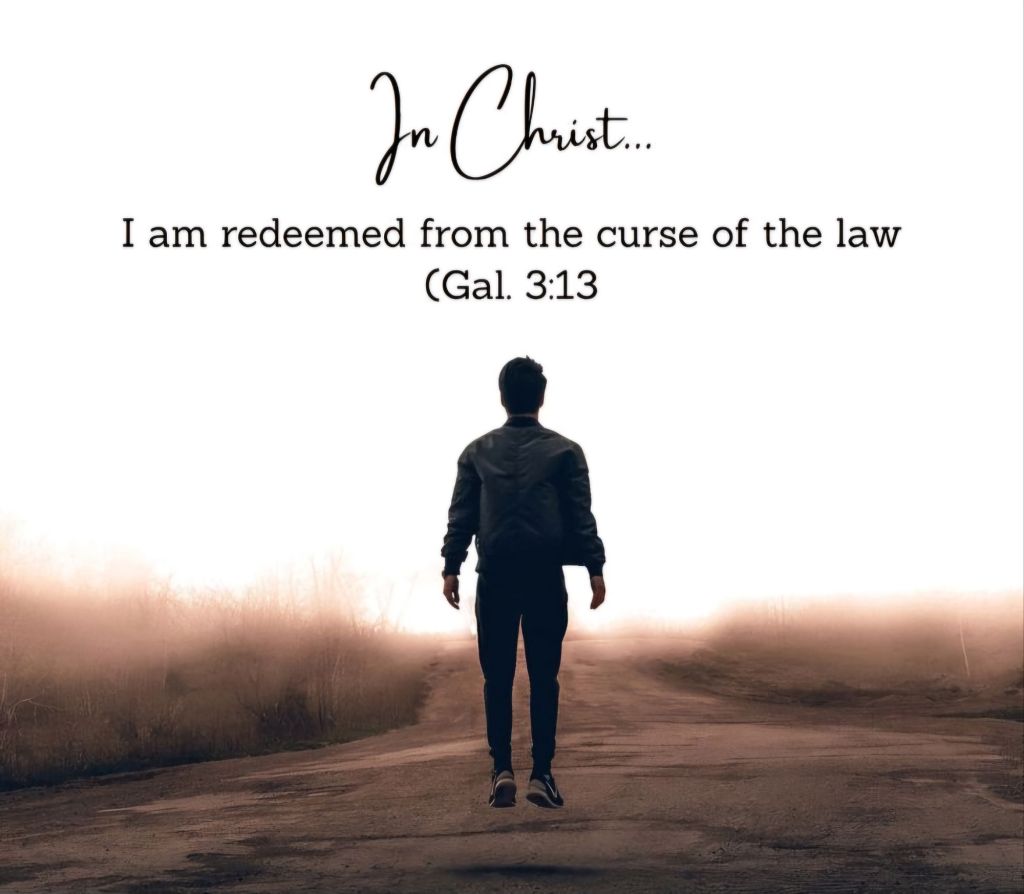
The Gospel delivers us from the Curse of the Law

“When it is a question of our justification, we have to put away all thinking about the Law and our works, to embrace the mercy of God alone, and to turn our eyes away from ourselves and upon Jesus Christ alone.” — John Calvin

In Romans 6, Paul proved that grace is not a license to sin.

In chapter 7, he proves that law is not a synonym for sin.

To the contrary, law is a good thing as it reveals the sinfulness of the capacity that resides in every person.

Deliverance from the sinful condition that the law reveals is found in Jesus Christ.

Paul taught the Romans that the law could never guarantee eternal life.

He proved again that ONLY our faith in Jesus’ in His propitious sacrifice and shed blood on Calvary’s Cross could save us!

The Bible teaches us how sinful we are, but that only Jesus Christ and the Holy Spirit can provides us the power for us to overcome sin.


In chapter 7, Paul shows that the law is powerless to save a sinner (7:7-14), someone who diligently keeps the law (7:15-22), or even the person with a new nature who has begun to follow Christ (7:23-25).

The sinner stands condemned by the law; the lawkeeper ultimately can’t live up to it; and the person with the new nature finds his or her obedience to the law sabotaged by the effects of the old nature.

Once again, Paul declares that salvation cannot be found by obeying the law.

No matter who we are, only Jesus Christ can set us free.

Paul uses marriage to illustrate our relationship to the law.

When a spouse dies, the law of marriage no longer applies.

Because we have died with Christ, the law can no longer condemn us.

Since we are united with Christ, his Spirit enables us to produce good fruit for God.

We now serve God, not by obeying a set of rules, but out of renewed hearts and minds that overflow with love for him.

When a person dies to the old life and now belongs to Christ, a new life begins.

Those who don’t follow Christ have only their own self-determination as their source of power.

By contrast, God becomes the center of a Christian’s life.

God supplies the power for the Christian’s daily living.

Believers find that their whole way of looking at the world changes when they come to know and depend on Jesus.

Some people try to earn their way to God by keeping a set of rules (obeying the Ten Commandments, attending church faithfully, or doing good deeds), but all they earn for their efforts is frustration and discouragement because they can never do any of those things perfectly.

However, Christ’s sacrifice has opened the way to God, and we can become his children simply by putting our faith in him.

No longer trying to reach God by keeping rules through our own efforts, we can become more and more like Jesus as we live for him day by day.

Let the Holy Spirit turn your eyes away from your own performance and toward Jesus.

He will free you to serve him out of love and gratitude.

This is “living in the Spirit.”

Keeping the rules, laws, and customs of Christianity doesn’t save us.

Even if we could keep our actions pure, we would still be doomed because our hearts and minds are perverse and rebellious.

Like Paul, we can find no relief in the synagogue or church until we look to Jesus Christ himself for our salvation—which he gives us freely.

When we do come to Jesus, we are flooded with relief and gratitude.

Will we keep the rules any better?

Most likely, but we will be motivated by love and gratitude, not by the desire to get God’s approval.

We will not be merely submitting to an external code, but we will willingly and lovingly seek to do God’s will from within.

God’s law makes people realize that they are sinners doomed to die, yet it offers no long-term remedy.

Sin is real, and it is dangerous.

Imagine a sunny day at the beach. You plunge into the surf; then you notice a sign on the pier:

No swimming. Sharks in water.

Your day is ruined.

Is it the sign’s fault?

Are you angry with the people who put it up?

The law is like the sign. It is essential, and we are grateful for it—but it doesn’t get rid of the sharks.

Sin deceives people by misusing the law.

The law is holy, expressing God’s nature and will for people and showing them how to love God and treat each other.

In the Garden of Eden, the serpent deceived Adam and Eve by taking their focus off the freedom God had given them and putting it on the one restriction God had made (Genesis 3).

Ever since then, we have all been rebels.

Sin looks good to us precisely because God has said it is wrong.

When we are tempted to rebel, we need to look at the law from a wider perspective—in the light of God’s grace and mercy.

If we focus on his great love for us, we will understand that he only restricts us from actions and attitudes that ultimately will harm us.

Paul shares three lessons that he learned in struggling with his sinful desires:

(1) Knowledge of the rules does not make it easier to obey them (7:9).

(2) Self-determination and self-improvement cannot change our hearts (7:15).

(3) Becoming a Christian does not stamp out all sin and temptation from a person’s life (7:22-25).

Being born again happens in a moment of faith, but becoming like Christ is a LIFELONG process.

Paul compares Christian growth to a strenuous race or fight (1 Corinthians 9:24-27; 2 Timothy 4:7).

Thus, as Paul has been emphasizing since the beginning of this letter, no one in the world is innocent; no one deserves to be saved—not the pagan who doesn’t know God’s laws, nor the person who knows them and tries to keep them.

All of us must depend totally on what Jesus Christ has done for our salvation.

We cannot earn it by our good behavior.

This is more than the cry of one desperate man—it describes the experience of anyone struggling against sin or trying to please God by keeping rules and laws without the Spirit’s help.

We must never underestimate the power of sin.

We must never attempt to fight it in our own strength.

Instead of trying to overcome sin with human willpower, we must take hold of the tremendous power of Christ that is available to us.

Satan manipulates and deceives.

As a crafty tempter, he arrogantly tried to tempt Jesus.

He succeeded with Adam and Eve, and he tries with us.

We have an amazing ability to make excuses, so be alert to temptation.

This is God’s provision for victory over sin:

He sends the Holy Spirit to live in us and give us power.

And when we fall, he lovingly reaches out to help us up.

We may say,

“The devil made me do it.”

Which sounds like a lame excuse, but there is some truth in it.

Without Jesus’ help, sin is stronger than we are, and sometimes we are unable to defend ourselves against its attacks.

That is why we should never try to stand up against sin on our own.

Jesus Christ, who has conquered sin once and for all, promises to fight by our side. If we look to him for help, we do not have to give in to sin.

SELAH (let us pause and calmly think about these things)
____

Sunday, May 26
The Winning Walk
by Dr Ed Young

IT’S EASY AND…

“For the good that I wish, I do not do; but I practice the very evil that I do not wish.”
— Romans 7:19

I don’t know about you, but when I became a Christian I said, “This is the easiest thing in the world.

What a deal!” I walked down the aisle of our country church, said “I believe in Jesus,” was baptized, and hence, my Christian life began.

I somehow had the idea that I could live just as I had been living, and when (not if!) I did something wrong, I could ask God to forgive me, and all would be well.

If I died prematurely, as a member of God’s family, I would most certainly go right to heaven.

I had this Christianity thing licked!

But then a Bible study teacher named Mr. Alexander exploded my ease.

He taught the Bible to us straight and clear.

He ran a shoe store, but he was an anointed teacher who made me realize that receiving Christ was easy, but living the Christian life was not.

In fact, many times it was downright hard.

Finally, as I began to study the word on my own, I came to the conclusion that the Christian life was not hard…it was impossible!

I could completely identify with Paul when he said he did what he did not wish to do, and did not do what he wished to do!

If Paul struggled, what hope was there for me?

Then I discovered I could not live the Christian life under my own power any more than I could get right with God on my own merit.

I began to understand the work of the third person of the Trinity, the Holy Spirit.

As He fills my life, He enables me to live and walk in victory.

So I came full circle.

The Christian life is easy. The Christian life is hard. The Christian life is impossible.

The empowered Christian life is exciting…and that power comes from the Holy Spirit Himself.
____

Come join the Adventure!

Skip 🕊️