A call to National Repentance…

Jesus alone is our True North and we must learn to call upon His name!

2 Chronicles 7:14
New King James Version

“If My people who are called by My name will humble themselves, and pray and seek My face, and turn from their wicked ways, then I will hear from heaven, and will forgive their sin and heal their land.”

Father Abraham is the father of our faith:

The apostle Paul said “that it is those who are of faith who are sons of Abraham.” (Gal. 3:7).

We are the children of Abraham, because we have the same quality of faith that Abraham had.

Abraham believed that God was able to fulfill His promises, vows, and oaths, and so his faith was reckoned to him as righteousness (Romans 4:21, 22).

We too understand His promises, and we believe that God is able.

Our faith is in His ability to fulfill His vows, not merely in His ability to help us fulfill our vows to Him.

As children of Abraham, our overall calling is to bless all nations (Genesis 12:3).

The true interpretation of this is found in Acts 3:25-26…

25 It is you who are the sons of the prophets and of the covenant which God made with your fathers, saying to Abraham,

“And in your seed all the families of the earth shall be blessed.”

26 For you first, God raised up His Servant [Jesus] and sent Him to bless you by turning every one of you from your wicked ways.
____

Biblically speaking, then, to bless means to turn people from their wicked ways.

When we ask God to bless someone, it does not mean that we ask God to condone their wicked ways.

Rather, we ask God to cause them to repent.

We have faith that He is able to do this, because He has promised to fill the whole earth with His glory.

That cannot happen apart from turning everyone from their wicked ways.

Wickedness will not be glorified, nor will it endure forever.

Repentance precedes glory!

Isaiah received his calling as a prophet…

Isaiah 6:1-10
New Living Translation

Isaiah’s Cleansing and Call
1 It was in the year King Uzziah died that I saw the Lord. He was sitting on a lofty throne, and the train of his robe filled the Temple.

2 Attending him were mighty seraphim, each having six wings. With two wings they covered their faces, with two they covered their feet, and with two they flew.

3 They were calling out to each other,

“Holy, holy, holy is the Lord of Heaven’s Armies!
The whole earth is filled with his glory!”

4 Their voices shook the Temple to its foundations, and the entire building was filled with smoke.

5 Then I said, “It’s all over! I am doomed, for I am a sinful man. I have filthy lips, and I live among a people with filthy lips. Yet I have seen the King, the Lord of Heaven’s Armies.”

6 Then one of the seraphim flew to me with a burning coal he had taken from the altar with a pair of tongs.

7 He touched my lips with it and said, “See, this coal has touched your lips. Now your guilt is removed, and your sins are forgiven.”

8 Then I heard the Lord asking,

“Whom should I send as a messenger to this people? Who will go for us?”

I said, “Here I am. Send me.”

9 And he said,

“Yes, go, and say to this people,

‘Listen carefully, but do not understand.
Watch closely, but learn nothing.’

10 Harden the hearts of these people.
Plug their ears and shut their eyes.

That way, they will not see with their eyes,
nor hear with their ears,
nor understand with their hearts
and turn to me for healing.”


In verse 8b, Isaiah responds to God’s request:

“Here am I. Send me!”

Isaiah’s calling as a prophet started at a time of great political unrest.

An imminent threat of invasion looms over the nation of Israel as the Assyrian army overtakes one nation at a time.

National leaders scrambled for political and military solutions, yet God has consistently pointed out the real cause of their problems: the spiritual decay of the nation.

God had revealed to Isaiah that He was behind all the political turmoil in the region.

And that it was at God’s direction that the feared Assyrian army had been summoned to punish the nation of Israel.

Why was God determined to bring judgment on His own people?

Israel was committing rebellion against God by its idolatrous practices, social inequality, injustice, corruption, and neglect of the poor, the fatherless, and the widows.

As a result, the LORD refused to accept their offerings.

He would not even acknowledge their prayers.

The LORD declared, “When you spread out your hands in prayer, I hide my eyes from you; even when you offer many prayers, I am not listening.

Your hands are full of blood!” (Isaiah 1:15)

History tells us that whenever God turns His face away from His people, judgment and punishment is sure to come!

The idea that God judges and punishes people and nations, has long been set aside by modern-day preachers as if these were heretical teachings.

Our age is easily reviled by the idea of divine judgment and finds this theme “politically incorrect,” when portraying the Christian God.

The problem with Christians today is in the way we read the Bible. We love to “cherry-pick” only the portions that we like and leave the rest of the truth behind.

And from those portions of Scripture we’ve collected, we paint a caricature of God that is more consistent with what we like than it is with the Bible.

In Isaiah chapter 21, God is speaking of the Judgment on Babylon, Dumah (Edom) and Arabia:

There are three oracles in chapter 21 that bring bad news for Babylon, Edom, and Arabia.

The Wilderness of the Sea is Babylon, perhaps that portion of Babylon adjacent to the Persian Gulf.

Destruction will roar upon it like whirlwinds … from the desert.

Because it still plunders and despoils, it will be laid low by the Persians (Elam) and the Medes (Media).

No more will Babylon cause others, like the Jewish captives, to groan.

The vision is so terrible that it causes Isaiah acute anguish.

While the rulers feast and carouse in supposed security, suddenly the call to arms rings out (“Anoint the shield!”).

The reference, of course, is to Belshazzar’s Feast (Dan. 5).

The Lord instructs Isaiah to appoint a watchman to describe the attacking hordes, especially the numberless cavalry units.

After waiting for days and nights, he reports the advance of riders in pairs.

This may suggest the Medes and the Persians.

Then, with a lion-like roar, he announces the fall of Babylon and of her idolatrous religion.

The announcement is a message of comfort to Israel, a nation that has been threshed and winnowed by Babylon.

It is good to remember that this prophecy was made about two hundred years before Babylon’s fall.

We too can be watchmen for God’s kingdom:

The watchman is one who stands in God’s counsels, knows what is coming and looks out for the event.

So now, he who learns from the completed Scriptures what God has foretold, discerning His purposes, not by speculative interpretation, but by comparing Scripture with Scripture, and accepting what is therein made plain, is able to warn and exhort others.

He stands upon the watch-tower (verse 7) in fellowship with God.

Judgment on Dumah (Edom) (21:11, 12)

Dumah is Idumea, or Edom. An anxious Edomite asks the watchman how far gone the night is, that is, if the Assyrian menace is almost over.

The answer is: The night of your present turmoil will end, and a new day will follow, but soon another night will come.

If you seek a comforting answer to your anxious inquiries, you must first “return,” a word which also means “REPENT.”

Only then will the answer be such as you hoped for; the night of your suffering will end, and a new bright morning of deliverance will dawn upon you.

Judgment on Arabia (21:13–17)

There is trouble ahead for Arabia, too.

The caravans will hide (lodge) in the forest from the Assyrian army, and those who escape from the carnage will suffer intense hunger and thirst.

The LORD has decreed that Arabia’s glory will fail in a year, and only a few of her famous warriors will survive.

The expression “the year of a hired man” means not one day longer than a year.

The message here is that God always has the last word, and God’s judgment day will ultimately bring defeat and destruction to every military power that misuses their strength to decimate and humiliate other peoples.
____

Isaiah reminded Israel not to make alliances with pagan nations.

If the people sought God, His strength would be adequate to protect them.

God promised to punish each neighboring country for their arrogance, rebellion, and immorality.

God expects His people as a group to stand up for truth.

God’s TRUTH (Who is Jesus – see John 14:6) never wavers.

We’ve learned to season our words with salt, because we eat them so often.

Our opinions change like Rodeo Drive fashion trends.

Weren’t your convictions about child rearing stronger before you had kids?

Do you know any Republicans who used to be Democrats and vice versa?

Our convictions tend to change.

It’s good to know that God never changes, but that He is the same yesterday, today and forever.

His view of right and wrong is the same with you and me, as it was with Adam and Eve.

“The word of our God stands forever” (Isaiah 40:8).

“Forever, O LORD, Your word is settled in heaven. . . . All Your commandments are truth. . . . You have founded them forever” (Psalm 119:89, 151, 152).

Your outlook may change. My convictions may sway, but “the Scripture cannot be broken” (John 10:35).

And since it can’t, since His truth will not waver, God’s ways will never alter.

He will always hate sin and love sinners, despise the proud and exalt the humble.

He will always convict the evildoer and comfort the heavy-hearted.

He never changes direction midstream, recalibrates the course midway home, or amends the heavenly Constitution.

God will always be the same.

(From It’s Not About Me by Max Lucado)
____

Monday, April 25
Inspiration Ministries

Be a Watchman

“Put a watchman on the city wall […] ‘Day after day I have stood on the watchtower, my lord. Night after night I have remained at my post. Now at last – look! Here comes a man in a chariot!'”
— Isaiah 21:6-9

The watchman performed critical functions for cities in biblical times.

In those days before electronics, people needed to rely on their natural senses and be good observers with discernment.

These watchmen were to be always on guard and alert, always at their post, always looking out for potential danger.

They observed everything around them, always ready to warn people of any threat.

Their function was important for the safety of towns and even nations.

They also played a spiritual role by warning of beliefs that could weaken their resolve and poison their faith.

They were alert to ideas that could creep into minds and hearts.

Our families and churches still need watchmen.

The Bible warns that we face a dangerous enemy who can appear as an angel of light (2 Corinthians 11:14), but whose goal is to kill and destroy (John 10:10).

We are in a spiritual war. As believers, we are called to be spiritual watchmen, constantly on guard.

We are to be people of prayer, filled with the Spirit, sensitive to the Spirit.

Are you being a watchman? Are you at your post “day after day” and “night after night”?

Or are you taking your safety for granted?

You need to be on guard. Seek God in dedicated prayer.

Ask Him about your role. Listen to His Spirit.

If you are sensitive to Him, He will help you be a watchman for your family and your church.

PRAYER
Father, help me to be a watchman, sensitive to attacks.

Show me how I can warn others and be ready myself. In Jesus’ name, amen.

Extended Reading
Isaiah 21
____

Come join the Adventure!

Skip 🕊️
God is our way maker through every storm that we face…

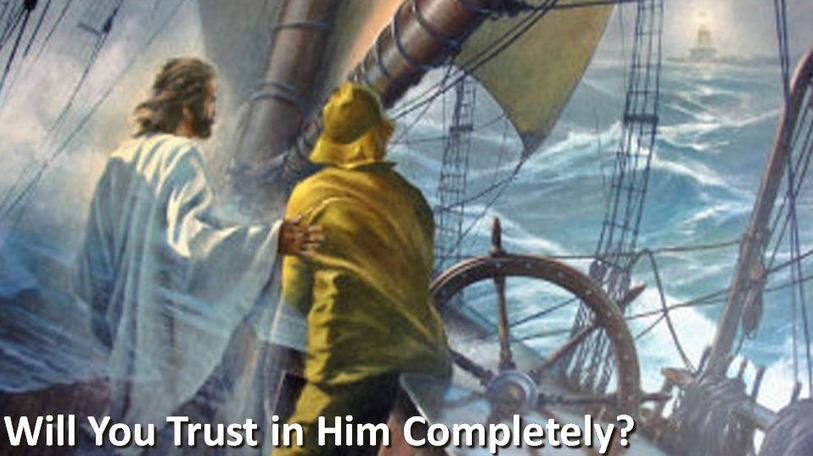
Trusting God to guide you through the storms of your life…

Where is God when everything falls apart?

If you’re human, then you’ve already been through a storm or two in your life.

A very wise pastor once said that we are either in the middle of one, just getting out of one or about to enter one.

None of us are immune to the storms of life.

They are guaranteed to come and you may even be in one right now.

Storms can come in many different forms such as the thunder and lighting of struggling to parent, to the sheets of rain in a really difficult partnership, to the tornado that ensues when you’ve lost a loved one.

Storms can happen at work, in relationships or even in ministry.

It is possible for ANY area of life to bring stress, frustration and emotional chaos at times.

I think we can all agree that it’s easier to praise God in the good times.

But what about the bad times — when the storm comes or the unexpected strikes, leaving you in a place of hurt, frustration, despair, and vulnerability?

We all struggle at times and I would guess that almost 100% of us have wondered a few things in the middle of the chaos.

When we are in the midst of a struggle we have a lot of questions…

We ask what the purpose is and why we have to go through it.

We wonder why we need to experience the pain.

We question how God can bring good out of this and, if so, when that will actually happen.

Perhaps the following devotion will give you some guidance and help you to navigate through the storms you’re currently going through.
____

Saturday, April 23
Beliefnet

7 WAYS TO WEATHER A CRISIS OF FAITH
Taking God at His word will transform your life.

By Lesli White

One of the biggest challenges we face on our spiritual journey is completely trusting in God’s Will, especially when our faith is being tested.

The Bible repeatedly tells us that God has promised to meet our needs:

“And my God will meet your needs according to the riches of His glory in Christ Jesus” (Philippians 4:19).

But this Bible promise comes with a condition.

We have to trust Him. The more we trust Him, the more God is able to meet needs in our life.

Given we communicate with God through prayer, it’s essential that we have great faith.

However, this can be difficult when we get sabotaged by our situations or our circumstances.

Many of us struggle with having faith when it comes to our walk with the Lord.

Fortunately, God does not leave any of us alone in our weakness. He has given us tools to help increase our faith – all we need to do is honor them with practice.

If your faith life is struggling, here are seven ways to weather a crisis of faith.

CAST YOUR CARES ON GOD

It is virtually impossible to not experience anxiety to some degree.

Even faithful Christians cope with daily anxieties triggered by old age, poor health, economic pressures, family strife and other issues.

While the Bible doesn’t teach that lack of faith is the cause of all anxiety, when our anxieties become our main focus and block us from being able to trust God, we’re in trouble.

The Bible tells us, “Do not be anxious about anything, but in everything by prayer and supplication and with thanksgiving let your requests be made known to God” (Philippians 4:6).

Cast your cares on God, for He cares for you.

When you completely trust in God, it will help build and increase your reliance on God.

There’s nothing you can’t get through or accomplish if you trust that God has it handled.

REMEMBER WHO GOD IS

Blaming God is a big sign that you’re dealing with a faith crisis.

We are no longer trusting in God’s ability to get us through our situation and are accusing Him of harm over good.

Though it may be hard to understand the purpose of your situation or circumstance, know that God is mindful of all that is on your heart and all He wants to do in our lives is to bring about His desired purposes.

Whether you’re dealing with a great loss, sickness, or poor health, God is there.

God knows every detail of your life. He hears every single prayer you lift up.

He sees every tear you shed.

It’s important that we remember that God sees our tears, and His word collects them in a bottle (Psalm 56:8).

God is present.

FOCUS ON GOD

One telltale sign your faith life is suffering is burnout.

Jesus has called us to enter His rest:

“Come to me, all who labor and are heavy laden, and I will give you rest.

Take my yoke upon you, and learn from me, for I am gentle and lowly in heart, and you will find rest in my souls.

For my yoke is easy, and my burden is light” (Matthew 11:28-30).

Burnout occurs when we feel overwhelmed and unable to meet constant demands.

It is also a sign that we are not walking in faith.

Burnout can keep us from communicating with God because we don’t feel like we have any energy left to do so.

We are so caught up in our own emotional, mental and physical exhaustion that we don’t focus on God and what He’s providing us.

READ THE WORD

One of the biggest reasons people struggle in their faith lives is because of a weak Scriptural foundation.

Read God’s Word or at least hear it.

Romans 10:17 says,

“So then, faith comes by hearing, and hearing by the Word of God.”

If no one had ever told you about Jesus and about God’s plan for your life, or you never read about Him yourself, you would be clueless about the need for faith.

Reading or hearing God’s Word is like planting a garden.

If you want to grow or “build” a garden, you must first plant the seeds, or the actual plant or flower.

God’s Word is the seed that grows the faith.

Knowing His promises, what God says about you, about life, and about Jesus’ plan for eternal life won’t transplant themselves in your brain by osmosis.

Become familiar with the Bible and what faith is all about by meditating on its contents.

This will give you the basis for growing and increasing your faith.

DON’T COMPARE YOUR PRAYER LIFE TO OTHERS

If you’re immersed in a community of people who pray, it’s easy to begin to take notes on how others pray and even question how you pray.

However, we can hurt our own prayer life when we are constantly immersed in the prayer life of others.

Our relationship with God is unique, so it’s not surprising that our prayer styles would be unique.

Don’t compare your prayer life to others.

Just because someone is praying longer or more frequently than you are doesn’t mean that God takes your concerns less seriously or that He loves you any less.

Sometimes, we may not have the words, but God knows what is on our hearts.

Let the prayers of others challenge you to pray more effectively and get closer to God.

TRUST YOUR PRAYERS WILL GET ANSWERED

When we’re trying to weather a faith crisis, we often lose hope.

We forget that God is the number one healer and has the power to change our situations.

We want God to answer our prayers when we ask them in the way we want them to play out.

Unanswered prayer can be disheartening.

It can make us doubt our relationship with God, even separate us from Him.

If we constantly believe that God isn’t answering our prayers, it reflects a lack of patience, trust and faith in God and His will.

It’s important to remember that just because a prayer hasn’t been answered doesn’t mean that God won’t answer it or that the answer is what we expect it to be.

Pastor Bill Johnson once said,

“Delayed answers to prayer are gaining interest.

But when God says ‘no’ it’s because a bigger ‘yes’ is to follow.”

His yes is in His time, not ours.

Be patient. God isn’t ignoring you.

SEEK GOD IN ALL CIRCUMSTANCES

Too often when things are going well in someone’s life, they turn away from God but when things are going wrong, they turn to God.

It’s important that we don’t only seek God during emergencies, but seek Him in all circumstances.

Prayer is an ongoing dialogue with God.

When we pray, we are practicing the presence of God.

It is the space where we abandon our pride, lift up our hopes and glorify God.

It is also the time where we admit our need and claim dependence on God.

Too often, when our prayer lives are weak, we only seek God when we have specific requests or needs.

But prayer is more than a wish list of requests.

We should be speaking to God often throughout our day, not only because you need Him to meet your needs.

If your faith life is struggling, you are not alone.

Many Christians are struggling with their faith and even though they know God has the power to make all things new, they doubt that God can bring them out of it.

But the truth is, there is hope with God.

You can take back control and access God.

Psalm 34:8 says,

“Taste and see that the LORD is good; blessed is the man who takes refuge in Him”.

Prayer has power and great things come when we take refuge in our Lord.

Taking God at His word will transform your life.
____

Come join the Adventure!

Skip 🕊️

One thing for sure, the wages of sin is death…

“Be sure your sins will find you out” (Num 33:23)…

“You have not got to the bottom of the blackness of sin until you see that it is a flat rebellion against God himself.” — Alexander MacLaren

Different Labels, Same Poison

J.Wilbur Chapman, noted Methodist evangelist of the nineteenth century, told of a distinguished minister in Australia who preached regularly on sin.

One of the church officers came to him after one sermon to talk with him.

He said to the pastor,

“We do not want you to talk so plainly as you do about sin.

If our boys and girls hear you talking so much about sin, they will more easily become sinners.

Call it whatever you will, but do not speak so plainly about sin.”

The minister arose from his desk, walked to a utility closet, and brought back a small bottle of strychnine that was marked “Rat Poison.”

He said, “I see what you want me to do. You want me to change the label.

Suppose I take off this ‘Poison’ label and replace it with some milder label, such as ‘Essence of Peppermint.’

The milder you make the label, the more dangerous you make the poison.”

Psalm 32, without changing the labels and minimizing the effect of sin, this psalm speaks directly to the devastating power of unconfessed sin in the life of a believer.

As seen in the life of David, sin committed against God led to sorrow and loss of vitality in his life.

But as also witnessed in David’s life, when he confessed his sin, there was a resurgence of great joy as well as a passion for living to the glory of God.

From this magnificent piece of inspired literature, we conclude that confessing our sin is a vital part of vibrant, victorious Christian living.

This psalm reflects the time when David was king over Israel.

He sent his troops into battle against the Ammonites while he remained behind.

During this time he fell into an adulterous affair with Bathsheba (2 Sam. 11:1-5).

To make matters worse, he tried to cover up his sin by having her husband, Uriah the Hittite, killed (2 Sam. 11:6-17).

For the next year David lived with his guilty conscience in deep agony of spirit.

He became emotionally distraught, physically ill, and mentally disturbed.

Nathan the prophet visited the king (2 Sam. 12:1-15) and told him a story of two men, one rich and one poor.

One had many flocks, the other just one little lamb.

Without warning, the rich man with many flocks took the poor man’s one little lamb.

When David heard this, he erupted, “As surely as the LORD lives, the man who did this deserves to die!”

To this Nathan said, “You are the man!”

Exposed, David confessed, “I have sinned against the LORD.”

When Nathan heard this, he said, “The LORD has taken away your sin.

You are not going to die.”

Although this psalm records the joy that David found through the confession of his sin to God.

There where further consequences of David’s sin:

After hearing the story, from Nathan, of the man who stole another man’s lone lamb, David’s response was as follows:

“As surely as the Lord lives, the man who did this deserves to die! Because he committed this cold-hearted crime, he must pay for the lamb four times over!” (2 Samuel 12:5-6 NET).

So said King David when Nathan told the story to convict David of his sin with Bathsheba.

I don’t think it is a coincidence that this is exactly the price David paid: he lost four of his children.

The first child to die was the one who had been conceived the night he spent with Bathsheba. God struck him with an illness and a week later the child died (2 Samuel 12:15-18).

The second child was his son Amnon. Amnon was the eldest of David’s sons, and as such should have been the next in line to the throne.

Amnon desired his half-sister Tamar and ended up raping her. David did nothing about this, possibly because he was the first-born.

David’s son Absalom was Tamar’s full-brother. He told her not to worry, that he would deal with it.

He waited for two years and then killed his half-brother, Amnon (you can read about this in 2 Samuel 13).

Two sons of David had now died.

The third son that died was Absalom himself.

David banished Absalom for killing Amnon, but he was a favorite of the people.

After David allowed him to return to Jerusalem he began to win the hearts of the people.

Eventually, he staged a coup and David had to flee for his life, leading to hostilities between the two men and their armies.

David’s men would not allow him to personally lead the army.

“So the king stayed beside the city gate, while all the army marched out by hundreds and by thousands.

The king gave this order to Joab, Abishai, and Ittai:

‘For my sake deal gently with the young man Absalom.’

Now the entire army was listening when the king gave all the leaders this order concerning Absalom” (2 Samuel 18:4-5).

During the battle that ensued, David’s men defeated the army of Israel which had backed Absalom – 20,000 died.

“Then Absalom happened to come across David’s men.

Now as Absalom was riding on his mule, it went under the branches of a large oak tree. His head got caught in the oak and he was suspended in midair, while the mule he had been riding kept going” (2 Samuel 18:9).

We often hear of Absalom’s long hair getting caught in the tree, although the Hebrew word is specific that it was his head.

He was hanging by his head in the tree.

David’s men reported it and Joab, the commander of David’s men, wanted him executed on the spot, despite David’s instructions.

When the men refused, Joab did it himself.

“He took three spears in his hand and thrust them into the middle of Absalom while he was still alive in the middle of the oak tree.

Then ten soldiers who were Joab’s armor bearers struck Absalom and finished him off” (2 Samuel 18:14-15).

Sin has consequences. The consequences of David’s sin with Bathsheba were immense.

Their first child died. Amnon was killed. And now Absalom was killed.

There will be one more son killed later.

The question must be asked, were those few moments of pleasure with Bathsheba worth all the pain and suffering that he suffered in his house afterwards?

I think not.

This psalm “of David” was written after his confrontation with Nathan the prophet.

It is a maskil, meaning that it was intended to instruct and teach.

Specifically, this psalm was written by David to teach the people of God to confess their sins to the Lord.

And also this whole story teaches us the consequences of sin, and that even though we can be forgiven, by God, once we confess our sins, nevertheless there are consequences to our sins that will still affect ourselves and those around us; and as happened with David, the ripple effect of his sin with Bathsheba all but destroyed his family.

Selah (let us pause and calmly think about these things)

Transparency and honesty is what God is looking for in all of His Covenant children.

I remember when I first got saved, the Lord told me to be honest with myself, and to be honest with Him.

The reason for these instructions, I believe, is because we can easily fool ourselves and thereby justify our sins.

Our Abba Father in Heaven desires to bless His children and even to grant us the desires of our heart; but we each need to learn the lesson of putting Him first in our life and walking by faith (meaning giving God our best effort) to walk according to His statutes and instructions, as found in the Holy Bible

David eventually wrote in Psalm 119:11 that, “I have hidden Your Word in my heart O Lord that I might not sin against You!

And so must we hide God’s Word in our heart.
____

Thursday April 21
From Faith to Faith
Daily Devotional

GOD OF YOUR TROUBLE,
GOD OF YOUR HEART
by Gloria Copeland

“Thou art my hiding place; thou shalt preserve me from trouble; thou shalt compass me about with songs of deliverance.”
— Psalm 32:7

In this day and time, trouble seems to surround us on every side. If it’s not a failing economy, it’s a failing business, a failing marriage or failing health.

Yet, in the midst of seemingly overwhelming problems, God has promised to deliver us.

Let me give you a word of advice though. If you want God to be God of your trouble, then you must let Him be God of your heart.

God honors those who honor Him. So, if you’re facing some problems today, don’t just start kicking and screaming and begging Him to save you from them.

Honor Him by going to His Word and doing what He says you should do.

Psalm 34 is a good place to start.

It says, for example, that you should seek God (verse 4).

As you seek Him, He will deliver you from the things that threaten you.

Secondly, it instructs you to cry out to the Lord.

He will save you out of all your troubles (verse 6).

Next it tells you to fear the Lord.

If you don’t know how to do that, verses 11-14 will tell you exactly what you need to know:

You must keep from speaking evil and deceit; depart from evil and do good; seek peace and pursue it.

Remember, if you want God to be God of your trouble, let Him be God of your heart.

When you do that, all of heaven will get involved in your deliverance—and your triumph will be guaranteed.

Scripture Reading: Psalm 34
____

Come join the Adventure!

Skip 🕊️

God’s all-encompassing love and concern for His children…

God’s love and concern for us is just beyond amazing…

Who am I that you are so mindful of me?

Psalm 139 is one of my favorite Psalms…

Psalm 139 is a wisdom psalm that is intensely personal, and was written by King David.

It reveals the awe and astonishment that he felt toward God, who created the heavens and the earth, yet who actually knew him and was intimately involved in the minute details of his life.

This beautifully poetic song describes some of the most incomparable attributes of God—His omniscience, omnipresence, omnipotence, and vengeance.

David sees them not as mere theological abstractions, but as dynamic realities that deeply impacted his life.

Here is a personal testimony by this beloved man of God that surveys four great divine attributes which should influence every believer’s life.

The occasion of this psalm is unknown, but its message is unmistakable.

In it David meditates upon the momentous truths that God is all-knowing, all-present, all-powerful, and all-holy.

GOD IS ALL-KNOWING

David is overwhelmed that God knows ALL about him.

Nothing in his life, David realized, was hidden from God’s all-seeing gaze.

He declared, O LORD, you have searched me, using a word meaning “to explore, spy out, to dig deeply into, to explore a country.”

God knew the very depths of his being, what no one else saw.

You know (yadah, “to know intimately, experientially”) me thoroughly (i.e., his character, being, his very heart).

You know when I sit and when I rise.

These two activities are intended to represent when David rests and rises to work during his day’s activities and everything in between.

He pondered how God knew his thoughts from afar.

Others saw his actions, but God saw into his heart.

God does discern—that is, “to sift through something, to winnow as grain, to sort out the good from the bad”—his life.

He sees through his going out to labor and his lying down to sleep.

God saw David’s morning departure to work, his evening retiring at home, and, implied, all the other events of the day.

God was deeply familiar with all his ways.

He even knew what he was going to say before he said it.

David could only conclude, You know it completely.

God surrounded David like a city being besieged with no way of escape.

There was no way for him to escape His all-knowing thoughts.

God had laid his hand upon him so that he was always near.

Under this kind of close scrutiny, God saw the entirety of his life up close, inside out.

David’s response to all this is, “Such knowledge is too wonderful and too high.”

God’s omniscience is both convicting and comforting.

For David, it was humbling, beyond his human capacity to grasp.

GOD IS ALL-PRESENT

David is overcome that God is always with him.

Further, David understood that God is all-present, and he could never escape the divine presence.

Where can I go from Your Spirit? or Where can I flee from Your presence?

These two rhetorical questions imply a negative answer.

There is nowhere God is not present.

God’s “Spirit,” a reference to the Holy Spirit, is omnipresent.

If I go up to the heavens, David declared, God is there.

Heaven above is God’s eternal dwelling place.

Or if I make my bed in the depths of hell, the other extreme, God is there.

David would never be more face-to-face with God than after he died.

If I rise on the wings of the dawn and fly to the east, or if I settle on the far side of the sea (i.e., the Mediterranean Sea),

God is there. North, south, east, and west are represented here.

No matter where he goes in life or after death, Your hand will guide me into the divine will and Your right hand will hold me fast.

God is always in touch with his life, which is never beyond the divine reach.

If David says, “The darkness will hide me, even then, God sees in the dark and is present there.”

This darkness refers to the dark nights of the soul (i.e., dark trials).

Even the darkness will not be dark to you.

Dark times are light to God. He is present in them, knowing perfectly all that is transpiring and what His eternal purposes are.

GOD IS ALL-POWERFUL

David is astounded that God precisely created him and ordained the number of his days.

Moreover, David knows that God is all-powerful.

This is proven in that the Lord has made him skillfully in his mother’s womb.

God created his inmost being (i.e., his kidneys, symbolic of his vital organs, his heart, liver, lungs, even his innermost emotions and moral sensitivities).

God knit him like a skilled artisan would weave a beautiful tapestry.

This work of creation was done in his mother’s womb, beginning nine months before he was born.

David could only praise God for this display of wonderful omnipotence. He understood he was fearfully and wonderfully made, producing awe and astonishment within him toward GOD, who created him so perfectly.

My frame (i.e., bones and skeleton) was not hidden from God but in full view to divine eyes.

God made David in the secret place, a euphemism for the womb, that unseen place concealed from human eyes.

There he was woven together like a multicolored piece of cloth or fine needlepoint.

All these threads picture his veins, arteries, muscles, and tendons.

God saw his unformed body before he was made.

All his days were sovereignly ordained for David before he came into the world.

In God’s book, all the days of David’s life were recorded by the divine Architect before that historic moment when David announced his arrival by that first lusty cry.

How amazing is it to think that, like David, God knew each of us before we were born, even before He laid the foundation of the Earth, and that He choreographed and scheduled each and every day of our life, and even wrote it in a book.

David goes on to say that the span of his life had already been written by God in His divine book, containing His eternal decree.

And the precise length of David’s life was determined by God before he was born.

There could be no changing the number of his days (Job 14:5).

These divine truths were precious to David, vast and beyond his human comprehension.

If he tried to list these truths about God, they would outnumber the grains of sand on the beaches of the world, far past his ability to understand.

When he awakens, his thoughts are still dominated with God.

He cannot remove such towering thoughts about God from his mind.

GOD IS ALL-HOLY

David appeals to God to destroy his wicked adversaries and search him for any hurtful way.

With holy zeal, David pledged his loyalty to this awesome God.

He desired that God would slay the wicked because they speak against him and oppose the Lord.

God’s enemies were his enemies.

They blasphemed God and abused the divine name.

David could not bear this. Nor could he be accepting of those who so despise God.

David said that he did hate those who hate God.

This means he rejects and refuses those who would rise up against God (cp. Ps. 1:1).

He cannot be neutral toward those who attack God:

“Count them my enemies.”

Strictly speaking, he had not made them his enemies, but they had made themselves his enemies.

To oppose God was to oppose David.

David was so burdened for God’s kingdom work to move forward that he asked for all obstacles to be removed, even these adversaries.

In dealing with sin, David was equally hard on himself.

He invited God to search and explore his own heart, a fact he had already acknowledged (v. 1).

He wanted God to know his heart so God could make it known to him.

He could not fully know his own heart because of the self-deceptiveness of sin (Jer. 17:9).

Test me, he asked God, as a refiner would test and purify metal.

Know intimately my anxious thoughts, he prayed.

David asked that God would see and reveal to him any offensive way in which his sin grieves the Lord.

Only then, once his own sin is confessed and removed, could God lead him in the way everlasting, the way of holiness.

David meditates upon the momentous truths that God is all-knowing, all-present, all-powerful, and all-holy.

How can God, who is infinite, be at the same time so intimate with us?

How can God be so transcendent and immanent?

So highly perfect and highly personal?

To be sure, God who knows all and controls all is directly involved with each one of us at the deepest level.

Not only does God operate on the macro-level, but on the micro-level as well.

God is all and in all. No creature is hidden from His sight.

No individual is away from His presence.

This great God has skillfully made us and ordained all our days.

This psalm invites every one of us to live humbly before our God.

Do you want to walk with God intimately?

Then respond appropriately to God at each level of this psalm.

Yield your life to Him, knowing that this God who knows you the best also loves you the most.

This God is with you wherever you go.

This God reveals your own heart to yourself.

May you grow to know this God more deeply each day.

In this psalm, David’s response to God must be our response to him.

As this man after God’s own heart pursued the Lord, so must each one of us.

How should we live out the message of this psalm?

The personal application and direct appropriation of this inspired psalm begin with an overwhelming sense of the infinite greatness of God.

Such an awareness should sweep over our souls, leaving us amazed and astonished.

As we ponder the immensity of His greatness, yet intimately involved in a personal relationship with us, our hearts should be awestruck, even dumbfounded, that He should be so mindful of and involved with us.

Can we respond in any way other than by worshipping Him?

The greater our vision of God’s attributes, the greater will be the wonder-filled love that will flood our hearts for Him.

We could never adore a God we could completely understand. The fact that He exceeds the limits of our human comprehension causes our hearts to be filled with even greater amazement toward Him.

That this infinite God would make Himself known to us is truly amazing.

That He would make Himself known to us in such an intimate relationship should confound us all our days.

PRAYER

God, great Creator of heaven and earth, how we praise you that you would choose to dwell within finite, fallible lives such as ours.

We are stunned that You would take such notice of us and be involved at such a deep level with us.

We invite You to search us and make known to us what you find that is hurtful to you.

We will repent and deal with it.

In Jesus’ name. Amen.
____

Tuesday, April 19
Worthy Brief

LET’S GET EXPOSED!

“Search me, O God, and know my heart: try me, and know my thoughts: And see if there be any wicked way in me, and lead me in the way everlasting.”
— Psalms 139:23-24

I recently read a story about a rather pompous-looking deacon who was endeavoring to impress upon a class of boys the importance of living the Christian life.

‘Why do you think people call me a Christian?’ the man asked.

After a moment’s pause, one youngster said, ‘Maybe it’s because they don’t know you.’

I don’t know if this is a true story — but I’m sure we’ve all experienced hypocrisy in our own lives.

Mark Twain said “We’re all like the moon, we have a dark side we don’t want anyone to see”.

Hypocrisy is a dangerous thing. It has turned a many a man away from the Lord to search elsewhere for answers.

It can ruin an entire generation and more after them. But we have the opportunity to change those generations for the good of God’s kingdom!

Those of us who know and love God must never stop allowing Him to search our “dark sides” so that we can more effectively be used as vessels to lead the hungry multitudes to Him.

Let’s come against the hypocrisy in our lives. During this season of Passover, let’s ask the Lord to search our hearts today and uproot the things that need uprooting. Let’s give our all to God again.

Your family in the Lord with much agape love,

George, Baht Rivka, Elianna & Obadiah
Bradenton, Florida
____

Come join the Adventure!

Skip 🕊️
The prayer of believing faith…

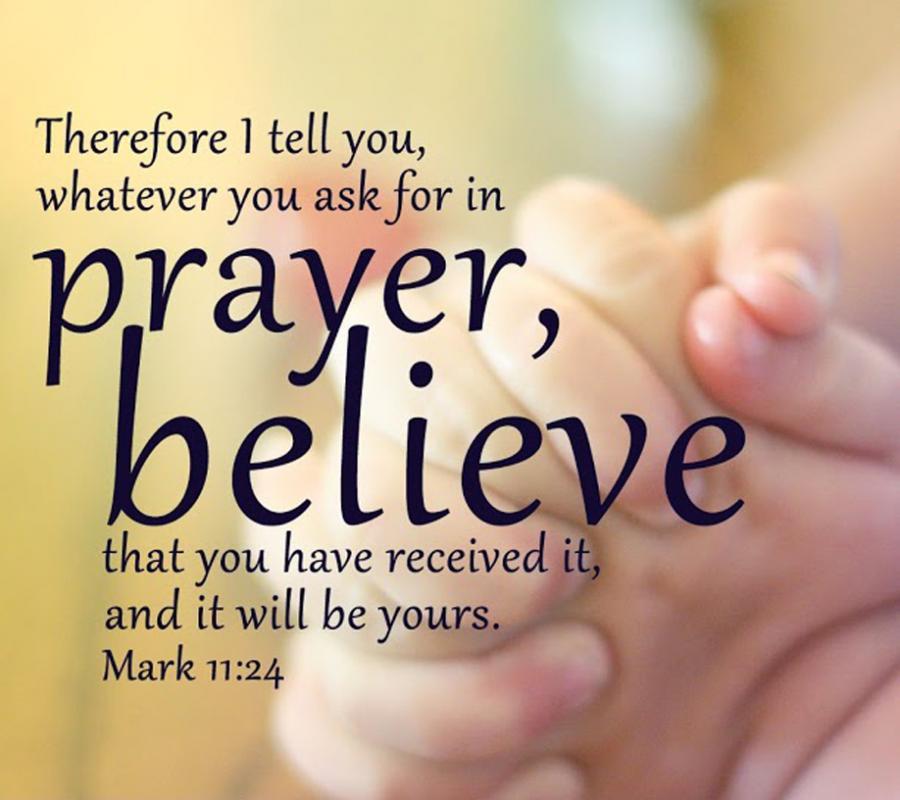
Jesus said, “When You Pray, You Must Believe!”…

The Bible tells us that we are not just to pray, but rather to pray believing.

If we are specifically told to believe when we pray, then it must be possible to pray and not believe.

Not all prayer brings results. Only believing prayer moves God and receives from Him.

“Prayer moves the arm that moves the world.”
— Charles Spurgeon

and…

“God has of His own motion placed Himself under the law of prayer, and has obligated Himself to answer the prayers of men.

He has ordained prayer as a means whereby He will do things through men as they pray, which He would not otherwise do.”
— E.M. Bounds

“But let him ask in faith, NOTHING wavering. For he that wavers is like a wave of the sea driven with the wind and tossed. For let not that man think that he shall receive any thing of the Lord. (James 1:6-7)

All of the world’s religions exhort men to pray, but it is only the Bible that requires men to believe what they pray.

This is the radical concept of the Bible – the requirement of actually trusting God.

This was first exhibited in the Old Testament, and further developed in the New Testament – the absolute necessity for one to believe when one prays.

Other religious systems are content with the motions of prayer, but the true Living God requires that we maintain a relationship with Him and that we trust Him.

Therefore, I say unto you, WHATSOEVER things you desire, when you pray, believe that you receive them, and you shall have them. (Mark 11:24)

Believing takes the emphasis off of prayer itself, and puts the emphasis entirely on God Himself.

It is all about Him and His FAITHFULNESS!

The Bible does not teach us to rely on prayer alone. It teaches us to rely on Jesus!

Only when we can fully rely on Him can we fully pray believing.

We are to believe Him first, and then express that belief in prayer.

The key to our getting answers to our prayers is our asking in accordance with God’s will, as it is revealed to us in Scripture.

God NEVER tells us to ask Him for things He doesn’t want us to have.

1 John 5:14-15 tells us,

“Now this is the confidence that we have in Him, that if we ask ANYTHING according to His will, He hears us. And if we know that He hears us, WHATEVER we ask, we know that we have the petitions that we have asked of Him.”

If you can find a promise of God in the Bible that’s related to your situation, then hang on to your confidence that what God promises He is well able to perform; and pray with that same confidence, casting your very life and all your life circumstances upon the reliability and trustworthiness of both God and His Word.

Point in fact, God tells us that if we can’t do that, then it’s impossible for us to please Him (see Heb 11:6).

The Greek word for faith is Pistis. When doing apologetics, you will find that many non-believers do not know that to really grasp some of the scripture, you need to return to the original language in which they were written. This is one reason why the concept of faith is misunderstood amongst non-believers; they try to use a modern English definition for “faith.”

What is faith?

When we go to the Greek, the word takes on a different meaning.

Pistis is a noun, it means to trust something/someone with great confidence.

One of the problems in our Bibles is that the translators used the word “believe” for a derivative of Pistis (noun), but the word Pistis requires action along with belief, and the verb for Pistis is Pisteuo (verb), which we don’t have a word for in English.

[Pisteúō (from 4102 /Pistis, “faith,”: to believe, entrust)
Original Word: πιστεύω
Part of Speech: Verb
Transliteration: pisteuó
Phonetic Spelling: (pist-yoo’-o)
Definition: to believe, entrust
Usage: I believe, have faith in, trust in; pass: I am entrusted with.]

Everyone should be able to see the same root there; Pistis is faith, and Pisteuo should be the verb form of faith; to faithe, faithes, faithing, etc…

Instead, the translators rightly chose a word in English that actually existed; however, in English “believe” does not get the point across as “faithe” would.

Faith always requires action, based on our obedience to God’s Word, as we find illustrated in the Hall of Fame chapter on FAITH, in Hebrews 11

Our faith must be in our heart before the prayer comes out of the mouth.

But what does it say? “THE WORD IS NEAR YOU, IN YOUR MOUTH AND IN YOUR HEART” — that is, the word of faith which we are preaching, that if you confess with your mouth Jesus as Lord, and believe in your heart that God raised Him from the dead, you will be saved; for with the heart a person believes, resulting in righteousness, and with the mouth he confesses, resulting in salvation. (Rom 10:8-10)

When you believe (Grk: Pisteuo) and are trusting in God with ALL your heart, mind and strength, you set a mighty force to work.

Like gravity, which is the strongest force in nature that can’t be seen, faith is a very strong force in the spirit.

Although it can’t be seen or explained, FAITH works.

So when you pray, believe, and when you truly believe, you shall receive!
____

Originally posted April 28, 2021
Faith-it Devotions

“I’M PRAYING FOR YOU”

11 Bible Verses That Teach Us How to Pray Like Jesus Did
by Kelsey Straeter

“I’m praying for you.”

It’s one of the most common phrases Christians blurt out in response to a friend or family member’s hardships—but how often do we actually follow through?

“I’m praying for you” has almost become a colloquial cliché as commonplace as the “How are you?” we say to passing colleagues in the hallway and the “I’m sorry for your loss” we offer to hurting friends at a funeral.

The difference, however, is that the latter two phrases do not require action, whereas “I’m praying for you” does.

So often, I believe we fail to follow up on this promise to pray because we are not equipped with the knowledge of how we are supposed to pray.

As believers who desire to live with intention and purpose, it’s important that we learn how to pray well, both for our own personal good and on behalf of our fellow brothers and sisters.

So who better to look to as an example than our own Lord and Savior Jesus, who set the gold standard for praying to God boldly, believingly, and fervently in the face of a wide array of afflictions.

Here are 11 Bible verses that reflect on how our Savior prayed and teach us how God commanded us to pray both in our daily walks and in response to hardship:

1.) Matthew 6:9-13
“This, then, is how you should pray: ‘Our Father in heaven, hallowed be your name, your kingdom come, your will be done, on earth as it is in heaven. Give us today our daily bread. And forgive us our debts, as we also have forgiven our debtors. And lead us not into temptation, but deliver us from the evil one.’”

2.) Mark 1:35
“Very early in the morning, while it was still dark, Jesus got up, left the house and went off to a solitary place, where he prayed.”

3.) Philippians 4:3-7
“Rejoice in the Lord always! I will say it again: Rejoice! Let your gentleness be evident to all, for the Lord is near. Do not be anxious about anything, but in every situation, by prayer and petition with thanksgiving, present your requests to God. And the peace of God which transcends all understanding will guard your hearts and your minds in Christ Jesus.”

4.) Romans 12:12
“Be joyful in hope, patient in affliction, faithful in prayer.”

5.) Luke 22:42
“He withdrew about a stone’s throw beyond them, knelt down and prayed, ’Father, if you are willing, take this cup from me: yet not my will, but yours be done.’”

6.) 1 John 5:14
“This is the confidence we have in approaching God: that if we ask anything according to his will, he hears us.”

7.) James 1:6
“Ask boldly, believingly, without a second thought. People who ‘worry their prayers’ are like wind-whipped waves.”

8.) 2 Chronicles 7:14
“If my people, who are called by my name, will humble themselves and pray and seek my face and turn from their wicked ways, then I will hear from heaven, and I will forgive their sin and will heal their land.”

9.) Ephesians 6:18
“And pray in the Spirit on all occasions with all kinds of prayers and requests. With this in mind, be alert and always keep on praying for all the Lord’s people.”

10.) Mark 11:24
“Therefore I tell you, whatever you ask for in prayer, believe that you have received it, and it will be yours.”

11.) Matthew 6:7
“And when you pray, do not keep on babbling like pagans, for they think they will be heard because of their many words.”
_____

Come join the Adventure!

Skip 🕊️
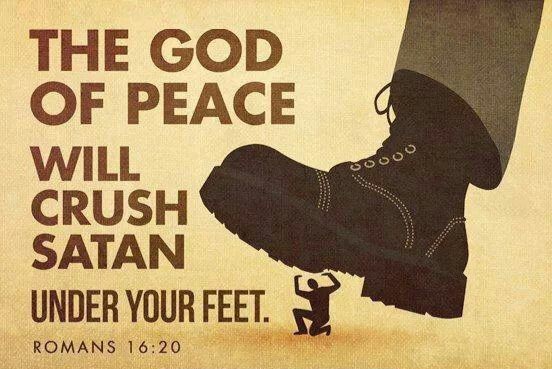
All the powers of Hell have already been defeated at Calvary’s Cross…

So don’t let the Devil intimidate you, or keep you in bondage to fear, doubt or discouragement; rather face your fears in Jesus’ name — and know who you are in Christ (2 Tim 1:7)…

Let God work His will in you; say NO to the Devil, resist him and watch the “Turkey” make himself scarce; say YES to God and He’ll be there to rescue and save you in no time.

The name of the Lord is sacred, it’s a name above all names in Heaven and in Earth.

It’s a holy name and it’s a name before which EVERY knee must bow – meaning every sickness, disease, or spirit of infirmity; every demon and every Fallen Angel, and anything and everything in Heaven or Earth that opposes the Most High!

At the name of Jesus angels bow down, demons tremble and Satan (the Turkey himself) has to flee!

Jesus made it very clear, before He left to go back to Heaven, that ALL power in Heaven and Earth has been given to Him so that we can go forth into this world and do the job He’s called us to do (Mat 28:18), so don’t ever let the Turkey intimidate you with his little peashooter, when God Himself is the One backing you up!

These are our Rules of Engagement in spiritual warfare:

James 4:7-8
Expanded Bible

7 So ·give yourselves completely [submit] to God. ·Stand against [Resist] the devil [1 Pet. 5:9], and the devil will ·run [flee] from you.

8 Come near to God, and God will come near to you.

You sinners, ·clean sin out of your lives [cleanse/purify your hands; a metaphor for cleaning up your behavior].

·You who are trying to follow God and the world at the same time [You double-minded ones], ·make your thinking pure [purify your hearts; a metaphor for cleaning up your interior life].

Let us put on the full armor of God every day, while taking every thought captive unto the Obedience of Christ!

Selah (let us calmly pause and meditate on these things)…

Come join the Adventure!

Skip 🕊️

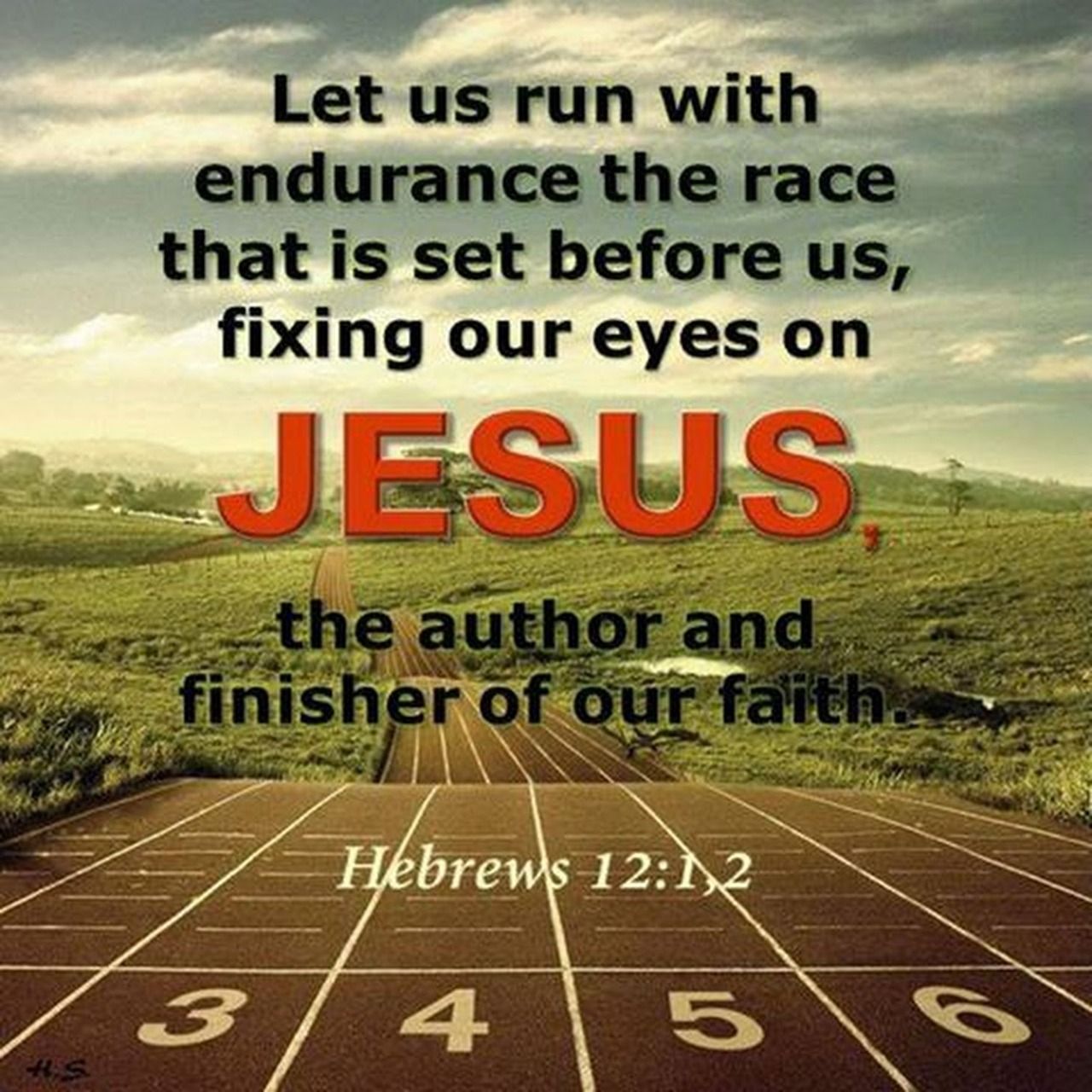
Finishing the race…

Let’s finish the race that is set before us…  and not quit!

Hebrews 12:1-2

The Voice

1 So since we stand surrounded by all those who have gone before, an enormous cloud of witnesses, let us drop every extra weight, every sin that clings to us and slackens our pace, and let us run with endurance the long race set before us.

[We may feel alone, but we aren’t. We are surrounded by an army of witnesses. They have run the race of faith and finished well. It is now our turn.] 

2 Now stay focused on Jesus, who designed and perfected our faith.  He endured the cross and ignored the shame of that death because He focused on the joy that was set before Him; and now He is seated beside God on the throne, a place of honor.

———

We must bear in mind that Hebrews was written to people who were being persecuted.

Because they had forsaken Judaism for Christ, they were facing bitter opposition.

There was a danger that they might interpret their suffering as a sign of God’s displeasure.

They might become discouraged and give up.

Worst of all, they might be tempted to return to the Old Covenant and their attempts at keeping the Law of Moses, in order to gain salvation and God’s approval.

Whereas under the New Covenant, we are now saved by grace, through faith alone, by our accepting and obeying the Gospel Message and Christ’s propitious work and shed blood on Calvary’s cross!

And it was for this very reason that they were now being persecuted.

But they were admonished not to think that their sufferings were unique.

Many of the witnesses described in chapter 11 suffered severely as a result of their loyalty to the Lord, yet they endured.

If they maintained unflinching perseverance with their lesser privileges, how much more should we to whom the better things of Christianity have come.

They surround us as a great cloud of witnesses. Could this actually mean that they are spectators of what goes on on earth?

They are certainly witnessing to us by their lives of faith and endurance, and by setting a high standard for us to duplicate.

This verse invariably raises the question, “Can saints in heaven see our lives on earth or know what is transpiring?”

One thing we can be sure they know is when a sinner is saved:

“I say to you that likewise there will be more joy in heaven over one sinner who repents than over ninety-nine just persons who need no repentance” (Luke 15:7).

The Christian life is a race that requires discipline and endurance.

We must strip ourselves of everything that would impede us.

Weights are things that may be harmless in themselves and yet hinder progress; they could include material possessions, family ties, the love of comfort, lack of mobility, etc.

In the Olympic races, there is no rule against carrying a supply of food and beverage, but the runner would never win the race that way.

We must also lay aside … the sin which so easily ensnares us.

This may mean sin in any form, but especially the sin of unbelief.

We must have complete trust in the promises of God and complete confidence that the life of faith is sure to win.

We must guard against the notion that the race is an easy sprint, that everything in the Christian life is rosy.

We must be prepared to press on with perseverance through trials and temptations.

Throughout the race, we should look away from every other object and keep our eyes riveted on Jesus, the foremost Runner.

“One stands out conspicuous above all the rest … the Man who first perfectly realized the idea of living by faith … , who undauntedly endured the bitter suffering of the cross, and despised the ignominy of it, sustained by a faith that so vividly realized coming joy and glory as to obliterate the consciousness of present pain and shame.

He is the author, or pioneer, of our faith in the sense that He has provided us with the only perfect example of what the life of faith is like.

He is also the finisher of our faith. He not only began the race but finished it triumphantly.

For Him the race course stretched from heaven to Bethlehem, then on to Gethsemane and Calvary, then out of the tomb and back to heaven.

At no time did He falter or turn back.

He kept His eyes fixed on the coming glory when all the redeemed would be gathered with Him eternally.

This enabled Him to think nothing of shame and to endure suffering and death.

Today He is seated at the right hand of the throne of God.
———

Tuesday, April 12
The Winning Walk
Dr Ed Young

A CLOUD OF WITNESSES

Anybody remember Derek Raymond?

His is not a household name, but few could forget the injured runner in the Barcelona Olympics who was helped around the track by his father as he struggled to finish the race.

No medals are given for bravery and love, but if they were, Derek Raymond and his father would have won the gold.

Click on link below:

The writer of Hebrews evokes just this sort of imagery when he describes the great “cloud of witnesses” that surrounds the Christian as he strives to finish the race of life.

Who are these witnesses?

They’re those believers who have gone before us, having completed the race.

They’re heavenly witnesses.

Abel is there, saying, “Nothing but the blood. You can make it.”

Moses, staff in hand, is saying, “You may feel cornered, but God’s power will see you through impossible situations.”

Gideon is saying, “You may be outnumbered, but keep running, stay in your lane.”

Samson is saying, “Even if you’ve been caught in sin and scarred, God can still use you. Keep on.”

David is saying, “Murder…adultery…God’s seen it all before. Seek His face again, and run your race.”

When we go to an athletic event today, we see 22 men on the field, surrounded by 70,000 armchair athletes who desperately need exercise.

Not these witnesses. They’re the real thing, not plastic saints.

They’ve run the race the same way we will…by grace. And they’re cheering us home.

Memory Verse

Hebrews 12:1
Therefore, since we have so great a cloud of witnesses surrounding us, let us… run with endurance the race that is set before us.
———

Come join the Adventure!

Skip 🕊️

Making the right choices…

In our journey of faith, often God’s will for our lives is revealed gradually, and the most difficult part of obedience can be our seeking His wisdom and waiting on Him for direction.

And the general rule is, after all things have been considered, that you follow your peace.

In the following Scriptures we can learn from Lot’s mistakes, as he chose poorly in the direction he took his family.

Genesis 13:7-11
The Voice

7 Arguments erupted between Abram’s and Lot’s livestock herders as they tried to graze their flocks side-by-side.

(During this time, the Canaanites and the Perizzites were living on this land too.)

Abram (to Lot): 8 Let’s not fight. I don’t want there to be any animosity between you and me, or between our herders.

After all, we’re family.

9 A vast land is out there and available to you. It is time for us to go our separate ways.

You choose your land. If you choose east, I’ll go west.

If you choose west, I’ll go east—it’s your call.

[Abram is an exemplary man of faith. Being older than Lot, he by custom has first choice of the property, but he waives his right and grants Lot the first choice.

Given their recent experiences in the famine, it is no wonder that Lot chooses the lush, fertile soils of the Jordan Valley for his new home.

But as Lot moves his family east, he moves farther from Abram and closer to danger.]

10 Lot looked around, and he noticed the grassy plains in the Jordan Valley looked well watered and fertile, just as he imagined the Eternal One’s gardens might be or as he knew the land of Egypt in the direction of Zoar to be.

(This all happened before the Eternal destroyed Sodom and Gomorrah.)

11 So Lot chose to settle his family on the plains of the Jordan Valley, and he journeyed eastward.

This is how Abram and Lot separated from each other and established two different households.
———

To start with, in verse 11 we’re told that, “Lot chose to settle his family on the plains of the Jordan Valley, and the text says he “journeyed eastward,” which leads us to an interesting observation that we can glean from the Bible.

Generally speaking, in every case in the Bible when the individual is headed in an Easterly direction he’s headed away from the Lord, and when he heads in a Westerly direction he’s headed towards the Lord.

Here is something you probably haven’t heard talked about before, regarding the significance of the direction “East” in the Scriptures

We can find this pattern is repeated throughout the Scriptures.

The direction East has great spiritual significance and is always associated with HOLINESS.

[Note that the Garden of Eden was planted in the eastern part of Eden.

This should also tell you that the Garden of Eden is NOT the same thing as the Land of Eden.]

The Garden of Eden was a separate piece of landscape with defined boundaries located inside the Land of Eden.

So whenever you encounter the direction East in the Scriptures your antennas should go on high alert because the direction East is almost always connected with holiness.

Here are some interesting examples.

1) As we just mentioned, the garden was planted in the east of Eden

2) Cherubim (celestial beings) were stationed on the east side of the Garden of Eden (this happened after Adam and Eve were kicked out)

3) Parts of the burnt offering were to be thrown to the east side of the altar (see the Book of Leviticus 1:15-16).

4) The tabernacles’s entrance faces east

Here’s another super interesting point.

Look at the statements below and see if you can decipher a logical pattern.

1) In Ezekiel’s vision God’s glory comes from the east and enters the temple from the east

2) The same temple faces east with a river flowing east from it

3) The Messiah is prophesied to come from the east

4) Cain was exiled to the east after murdering Abel.

5) People traveled to the east to build the Tower of Babel.

6) When Abraham and Lot separated from each other, Lot traveled east to the wicked cities of Sodom and Gomorrah

7) The Tribe of Judah was exiled to Babylon in the east.

Did you notice the pattern?

The scriptural pattern is this:

Positive, Godly things come FROM the east.

But traveling to the east is a bad thing.

Or another way to put it is, “Going west is positive while going east is negative.“
———

So starting in Genesis 13:7, we find the children of Israel surrounded by hostile neighbors, the herdsmen of Abram and Lot should have pulled together.

Instead, they let petty jealousy tear them apart.

Similar situations exist today.

Christians often bicker while Satan is at work all around them.

Rivalries, arguments, and disagreements among believers can be destructive in three ways:

(1) They damage goodwill, trust, and peace—the foundations of good human relations;

(2) They hamper progress toward important goals;

(3) They make us self-centered rather than love-centered.

Jesus understood how destructive arguments among brothers could be.

In his prayer on the night he was betrayed and arrested, Jesus asked God that his followers be “one” (John 17:21).

Lot’s character is revealed by his choices.

He took the best share of the land even though it meant living near Sodom, a city known for its sin.

He was greedy, wanting the best for himself, without thinking about his uncle Abram’s needs or what was fair.

Life presents a series of choices.

We, too, can choose the best while ignoring the needs and feelings of others.

But this kind of choice, as Lot’s life shows, leads to problems.

When we stop making choices in God’s direction, our only option is to make choices in the wrong direction.

Good pasture and available water seemed like a wise choice to Lot at first.

But he failed to recognize that wicked Sodom could provide temptations strong enough to destroy his family.

Have you chosen to live or work in a “Sodom?”

Even though you may be strong enough to resist the temptations, other members of your family may not.

While God commands us to reach people in the “Sodom” near us, we must be careful not to become like the very people we are trying to reach.
———

Tuesday, April 5
The Winning Walk
by Dr Ed Young

MAKING WISE CHOICES

When the time came for Abram and Lot to part company, Abram gave Lot his choice of land in which to dwell.

He gave Lot “first pick” so there would be no animosity between them.

But Lot did not choose well. He decided to homestead in a place called Sodom…a place that would become synonymous with sin and disaster.

How could Lot have made such a poor choice?

Easy. Lot looked with his eyes. He saw a lovely, well-watered valley.

He saw prosperity and riches and ease. Because generally speaking, we see what we love.

When I go to another town, I see churches. I look at their steeples, their grounds, their doors and windows.

That’s my love. I love the church. I have a good friend who sees cleaning businesses because that is his love.

He’ll drive through a small town and say, “Gosh, look at that, they’ve got a dry- cleaning operation.”

I wouldn’t see it…but he does.

Lot loved the easy life…and he saw a glimpse of it in Sodom. So he chose the valley. But in so choosing, he lost everything.

When we choose with only ourselves in mind, we mix together the deep drink of selfishness and godlessness with disregard for future consequences.

And the combination-as Lot discovered-can be deadly.

Memory Verse

Genesis 13:11
“So Lot chose for himself all the valley of the Jordan; and Lot journeyed eastward…”
———

Come join the Adventure!

Skip 🕊️

God’s Shalom-peace is the answer to all of our needs…

It’s in the Secret Place of the Most High (Ps 91) that this peace is available to us; and this peace that God gives is much different from that of the world…

We are to pray without ceasing (1 Thes 5:17) because, 

“When we pray, God’s presence grows and our problems seem smaller. 

It helps us determine God’s will for us and surrender our own agenda to Him. 

The fact is, God is always with us. 

Once we understand that, we experience His PEACE that surpasses all understanding.”

— Joyce Meyers

More Than Ever Before People Need God’s Peace (His Shalom)
by Nadine Drayton-Keen

There are hurting people all over the world who are praying for the promised peace (for their welfare: health, well-being, and/or prosperity).

In this sense, they are praying for the promise of physical, mental (emotional or psychological), financial, and/or spiritual healing (cf. Isaiah 53:5; 1 Peter 2:24b)—the promise that Jesus the Christ’s suffering has made believers whole . . . as well as set them free from errors and sins by bringing about their salvation.

Then too, there are people all of this world who, in their obedience to God’s Word, also are praying for the peace of Jerusalem (cf. Psalm 122:6)—they are praying that they will see safety, security, and tranquility in God’s holy city.

The sad truth is that even though people might experience having their body healed, their soul (mind) rehabilitated, their spirit rejuvenated, or their bank account enlarged, many of these people still have not been made WHOLE.

Likewise, even though people constantly pray for the peace of Jerusalem, they still do not see any long-lasting safety, security, or tranquility in God’s holy city.

Now, in the New Testament, according to Strong’s Greek Lexicon Number 1515, the Greek word “Eirene” means: a state of national tranquility; exemption from the rage and havoc of war; and peace between individuals (meaning harmony, concord, security, safety, prosperity, and felicity, because peace and harmony make and keep things safe and prosperous).

Eirene also denotes the Messiah’s peace (the personality and ministry of Christ; of the way that leads to peace [salvation]); Christians’ tranquil state of their soul being assured of its salvation through Christ, and that the soul fears nothing from God but is content with its earthly lot, of whatsoever sort that is; and the blessed state of devout and upright men after death.

Furthermore, the Strong’s Greek Lexicon says that Eirene corresponds to the Hebrew word Shalom.

According to Strong’s Hebrew Lexicon Number 7965, “Shalom” means: completeness, wholeness, perfectness, fullness, safety, soundness (in body), welfare (health, prosperity, and peace), peace (quiet, tranquility, and contentment), peace (friendship, of human relationships, and with God, as in a covenant relationship), peace (from war), the absence of agitation or discord, rest, and harmony.

Additionally, the Jewish people use Shalom idiomatically as a greeting (hello) or a farewell (goodbye), or as a pleasant expression of good wishes (similar to Americans’ “have a nice day”).

Shalom also means peace between man and God, and it means peace between two countries.

Lastly, Shalom means restitution, as in the person who has caused a deficiency being responsible for the restoration of everything that has been lost, stolen, or taken.

The various meanings of Eirene and Shalom make it clear that God wants His children to be made WHOLE!

The Apostle Paul definitely proves this last statement to be true when he prays:

“May God himself, the God of peace, sanctify you through and through.

May your whole spirit, soul and body be kept blameless at the coming of our Lord Jesus Christ”
(1 Thessalonians 5:23).

Now, although the primary focus of the apostle’s prayer is on believers being made entirely holy, which is the result of being made WHOLE through the Holy Spirit’s sanctification process, the truth is that this sanctification process is predicated on the need for God’s Shalom- peace to be working in believers’ lives.

That is to say, even though the Holy Spirit is inside believers, His indwelling doesn’t automatically mean that He is sanctifying them.

The Holy Spirit does not force Himself on anybody, which means believers have to submit to Him—they need to allow Him to do His work in them, which involves, but is not limited to, taking them beyond their positional justification.

Thus, those believers whose flesh still struggles with the Holy Spirit (cf. Galatians 5:16-17) will need to cease from their rebellion and totally surrender their lives to Christ’s Lordship and to the Gospel (Word) of Christ.

When this surrender happens, their sanctification process can proceed, for they now not only are living at peace with God (cf. Romans 5:1), but also they are functioning in the peace of God (cf. Philippians 4:7).

Indeed, it is only when believers are at peace WITH God that they can receive the peace OF God!

This last point is why the peace (in the Greek language, Eirene) of God that Apostle Paul speaks of in 1 Thessalonians 5:23 and Philippians 4:7 corresponds to the Hebrew word Shalom!

In particular, in 1 Thessalonians 5:23, the Apostle Paul is speaking to the church in Thessalonica about the supernatural tranquility of the soul that surpasses all understanding.

He makes it clear to these Christians that they must have the peace of God before their whole body, whole soul, and whole spirit can be entirely sanctified—before they can be totally healed, having nothing broken, nothing missing or lacking.

This peace of God, that is, every believer’s certainty about his or her eternal security, is not based on circumstances like Christians’ physical or mental health and world peace.

For sure, God’s peace is at its best in the midst of a believer’s trials and tribulations, as well as during global pandemonium.

This last reason is why it is the peace of God that must be functioning in every believer’s life before he or she can be fervent about participating in the Holy Spirit’s sanctifying process, which preserves each person’s whole body, whole soul, and whole spirit by keeping these three blameless (spotless, prepared) until he or she is ready to wear his or her glorified body when this individual meets Jesus the Christ in the air.

There is no doubt, then, that when the Apostle Paul speaks of the peace (Eirene) of God in 1 Thessalonians 5:23 he most definitely is using Eirene in the same sense that the Old Testament writers use the Hebrew word Shalom.

In fact, Eirene is almost Shalom’s exact equivalent in meaning.

A major difference is that unlike Shalom, Eirene describes what God has done for human beings through Jesus the Christ; for example, Eirene is defined by the good news or Gospel message, which often is about peace: peace with God; the peace of God; peace with others; and/or peace with death.

Once again, Eirene in 1 Thessalonians 5:23 is that peace of God that is necessary for keeping believers’ body, soul, and spirit blameless until the Second Coming of the Lord.

In other words, like Shalom, Eirene (from which the English word “irenic” [peaceful or conciliatory] is derived), means much more than the absence of the threat or act of war, or the absence of quarrels or contentions of any kind.

Like Shalom, Eirene (peace of God) is that peace by which believers’ past sins are forgiven; the peace by which believers’ present trials can be overcome; and the peace by which believers’ future is secured, eternally—it is healing that brings about wholeness, completeness, perfectness, fullness, prosperity, and well-being.

More than ever before, people all around the world are crying out for physical, mental (emotional or psychological), financial, and/or spiritual healing, and they are crying out for peace from wars and all kinds of conflicts.

Not only are people longing for a generic healing and for a nonspecific peace, but also the whole Earth groans for an unequivocal relief, consolation, healing, and peace from pain and suffering, as well as peace from global chaos and injustices.

God’s answer is that those in need of Shalom healing must first have Shalom peace WITH Him, which is found in total surrender to Jesus the Christ’s Lordship—found in complete trust and deliberate obedience to Jesus the Christ and His Word, not just at the moment believers receive salvation, but every moment of every day for the rest of their life.

As already mentioned, this trust and obedience make it possible for believers who are at peace WITH God to experience an ongoing sense of the peace OF God.

Lastly, this incomprehensible peace OF God is what causes believers, in the midst of all their problems and troubles, to rest in the strength of the Lord’s everlasting arms.

This peace OF God also is what causes believers to rely on His supernatural power to meet all of their needs, especially everything they need to keep their whole spirit, whole soul, and whole body blameless, with nothing broken, nothing missing or lacking!
———

The Definition of Shalom in Hebrew

The root word of Shalom is “shalam”. One of the first uses of the word shalam in the Torah is in Exodus 21 and 22.

In these 2 chapters, it is used 14 times.

Moses is giving instructions to the people about what to do when someone causes material loss or in the case of theft of property.

When that loss or injury occurs, the owner is considered lacking or not complete.

The one responsible was to make things right.

In the translation of Exodus 21-22, shalam is translated as “make it good”, “shall surely pay”, “make full restitution” or to “restore”.

The ancient Hebrew meaning of shalam was “to make something whole.”

Not just regarding practical restoration of things that were lost or stolen, but with an overall sense of fullness and completeness in mind, body and estate.

Wholeness and Well-being

This meaning of wholeness carries over into the word Shalom.

In Genesis 43:27-28, Joseph, still unrecognized by his brothers, is asking about their health and his father’s health.

“Then he asked them about their well-being, and said,

“Is your father well, the old man of whom you spoke? Is he still alive?”

And they answered, “Your servant our father is in good health; he is still alive.” (NKJV Gen 43:27-28)

In Hebrew, the word translated as “well-being”, “well”, and “in good health” is all one word – Shalom.

True biblical shalom means an inward sense of completeness or wholeness.

Although it can describe the absence of war, a majority of biblical references refer to Shalom as an inner completeness and tranquility.

Shalom is the God kind of Peace, nothing lacking or missing of ANYTHING you need, health wise, financially, spiritually, emotionally, or physically.

It also means the restoration of anything and everything that’s broken in our lives.

It’s more than just a greeting, when one says, “peace be unto you,” no
Shalom has a sacred ring to it,
as in the giving and receiving of the Blessing.

When we say, Shalom, just visualize the ram’s horn being blown by God’s anointed, and God’s holy presence filling the place; visualize the enemy
and his demons being put to flight
outnumbered, and in a dire plight…
overthrown and taken out of the fight!

Visualize the windows of Heaven being opened and God pouring out a blessing upon you that you have not
Room enough to receive.

Visualize healing taking place
in your body, your relationships,
and your EVERY need being fulfilled and your circumstances changing for the better.

Visualize the favor of God
at work in your life; His goodness and mercy, overtaking you, going before you, making a way for you, even when there doesn’t appear to be one in the natural.

Visualize God’s holy presence
descending like a dove, hovering around about you, showering you with His grace and love

Visualize God’s Shalom- peace at work in you and through you, as your constant companion.

Wherever you show up, God’s Shalom- peace goes before you.

Selah (let us pause and calmly think about that)
———

Come join the Adventure!

Skip 🕊️

The importance of our learning God’s ways and applying His principles in our everyday lives…

We’re going to start by looking at the Sermon on the Mount (in Matthew chapters 5-7), of which it has been said that it is the “Constitution for the Kingdom of Heaven”….

And next we’re going to learn the importance of our daily walking in the Shalom-peace of God, by doing what the above picture represents, and that is taking the time to pause, in between all the noise and distractions of life, and there to be still, in order to listen to what God is saying to us.

The Sermon on the Mount

It is no accident that the Sermon on the Mount is placed near the beginning of the NT.

Its position indicates its importance.

In it the King (Jesus) summarizes the character and conduct expected of His subjects.

This sermon is not a presentation of the plan of salvation; nor is its teaching intended for unsaved people.

It was addressed to the disciples (5:1-2) and was intended to be the constitution, or the system of laws and principles, which was to govern the King’s subjects during His reign.

It was meant for all—past, present, or future—who acknowledge Christ as King.

When Christ was on earth, it had direct application to His disciples.

Now, while our Lord reigns in heaven, it applies to all who crown Him King in their hearts.

Finally, it will be the code of behavior for Christ’s followers during the tribulation and during His reign on earth.

The Sermon has a distinct Jewish flavor, as seen in allusions to the council (i.e., the Sanhedrin) in 5:22, the altar (5:23, 24), and Jerusalem (5:35).

Yet it would be wrong to say that its teaching is exclusively for believing Israelites in the past or future; it is for those of every age who acknowledge Jesus Christ as King.

In Matthew 6:34, Jesus makes the point that planning for tomorrow is time well spent; whereas, worrying about tomorrow is time wasted.

However sometimes it’s difficult to tell the difference.

Proverbs 16:9 (AMP) tells us that,

“A man’s mind plans his way [as he journeys through life], But the LORD directs his steps and establishes them.”

For every Born Again Covenant child of God, our careful planning is when we’re thinking ahead about goals, steps, and schedules, and then trusting in God’s guidance along the way.

Proverbs 3:5-6 tells us to,

“Trust in the Lord with all your heart,
and lean not on your own understanding; in all your ways acknowledge Him, and He shall direct your paths.”

When done well, planning can help alleviate worry.

Worriers, by contrast, are consumed by fear and find it difficult to trust God.

They let their plans interfere with their relationship with God.

The key is that, as God’s Covenant children, we must learn to be anxious for nothing (Php 4:6); and not to let the worries about tomorrow affect our relationship with God today.

In Matthew 6:25-34, we find the word worry or worrying mentioned six times.

The word “Therefore” at the beginning of 6:25 is important in helping us understand the relationship between a kingdom servant and the king.

In 6:19-24, the king expounded on His demand for unreserved devotion.

Beginning in 6:25, Jesus began to say,

“Now, when you enter into this kind of total commitment to Me, “I AM that I AM” is going to take care of you, so “Do not worry.”

Our commitment to Jesus and His commitment to us go hand in hand.

They are part of the covenant relationship He has established with His people.

The person who is totally committed to the King has no need for worry.

This entire passage focuses almost exclusively on God’s provision of (and our anxiety over) food and clothing.

However, we must see these two items as simply two concrete examples used to teach a broader principle.

We could just as easily insert any other basic need (shelter, a community of belonging, and so on) that can be a source of anxiety, which is also provided by the Father, and this principle applies equally in each of those other areas.

It is because of the ill effects of worrying, that Jesus tells us NOT to worry about the needs that God promises to supply.

Worrying may,

(1) Damage your health,

(2) Disrupt your productivity,

(3) Negatively affect the way you treat others,

(4) Rob your day of joy, and

(5) Reduce your ability to trust in God.

Just how many ill effects of worry are you experiencing?

Here is the difference between worry and genuine concern:

Worry (or fear) immobilizes you, like a deer in the headlamps, or it will cause you to run in the opposite direction; whereas God teaches us to face our fears (see 2 Tim 1:7), with the wisdom and power that He gives to us and thereby overcome them.

The subject of the devotion below about the importance of our being “Fully Present,” reminds me of another book I read a while back, “The Sacrament of the Present Moment,” written by an 18th century French author/priest, named Jean Pierre de Caussade (1675-1751).

In the Introduction to that book, which was written by Richard Foster, he quotes brother Caussade,

“God speaks to every individual through what happens to them moment-by-moment”

He goes on to say that, “Cutting through the maze of religious obligations that so often encrust the gospel, he declared,

“There remains one single duty. It is to keep one’s gaze fixed on the Master one has chosen and to be constantly listening so as to understand and hear and immediately obey His will.”

This brings me to another point, and that is I believe that God’s intention has always been to have 24/7 365 – unending fellowship and communion with His Covenant children.

And in 1 Thessalonians 5:17, we are instructed to” pray without ceasing.”

Prayer is a two way conversation between us and God, and mostly it’s our listening to Him, indicating that God’s intention is that we keep that connection with Him all the time, day and night.

As we read of Jesus, from the Bible, (who is called “the last Adam” – 1 Cor 15:45),” He said that He only did what He saw the Father do; and He only spoke what He heard the Father speak – and then He said,” As the Father has called Me, I’m calling you.”

One other thing that the Lord showed me sometime ago, and that is in the name that He gave to Moses on Mount Sinai, “I AM that I AM” (which is called the Tetragrammaton).

The name “I AM that I AM” indicates, to me, that since God exists in Eternity, which is the absence of time and space as we understand it, if we are going to commune with Him then we have to get in the present moment where He is, in order to hear what He is telling us.

Jesus tells us that “God is a Spirit, and those who would worship Him must learn to do so in spirit and in truth.”

God created time and space for us, and enters into it, from time to time, to commune with us, but He doesn’t dwell there.

So this name “I AM that I AM” indicates to me that God is only available to us in the present moment, one moment at a time.

He was with us yesterday and He will be with us tomorrow, but if we’re going to have communion with Him and hear what He is saying, then we have to be in the present moment, with Him, in order for us to hear Him.

One of my favorite Psalms is Psalm 46, which starts out by saying, “God is an ever-present help in our time of trouble,” and then it goes on to describing everything around us going to hell in a handbasket, and in the midst of all of that it says, (in verse 10) “to be still and know that “I AM that I AM” is still God!

All too often I mine is divided, we’re either feeling remote remorseful and sorry for something that happened yesterday, or worrying and fretting over something we think might happen tomorrow; and if our mind is in either one of those two places, then we’re missing God, who is only available to us (to commune with us) in the present moment.

Learning the Rhythm of the Holy Spirit

French composer Claude Debussy said, “Music is the space between the notes.”

The space between notes allows them to resonate, reverberate, and reach their full measure of expression.

Without this space, noise and cacophony would result.

The same can be said of our lives: too much white noise, clutter and distractions can stifle our life, and make our lives chaotic and discordant.

Conversely, it’s in the spaces and rest stops, between the notes, that God often speaks to us.

It’s in those rest stops that we learn to sit quietly and see one’s self pass by – to listen for “the sound of the genuine” deep calling to deep within – it’s here, in these moments, that we experience God, who is at the same time vast and limitless, and intimate and personal to each one of us.
———

Thu, March 31
The Winning Walk
by Dr Ed Young

FULLY PRESENT

“Therefore, do not be anxious for tomorrow; for tomorrow will care for itself. Each day has enough trouble of its own.”
— Matthew 6:34

Years ago, Spencer Johnson wrote a popular book called

“The Present: The Secret to Enjoying Your Work and Life, Now.”

His premise was that, to have a life that is effective, you have to learn how to be “fully present.”

Most of us have trouble with that. We are too concerned about yesterday, even though we can’t do anything about it.

Or we are too apprehensive about tomorrow.

God provided a way for us to be “totally present” in every situation and every relationship.

It is the Sabbath Principle.

We need to set aside one day in seven in which we shut things down.

We don’t look backward; we don’t look forward.

We look around at our family – and we look up to God.

God provided this for us because we need it.

If you want to see the hand, and feel the touch, of Almighty God in your life – Find a Sabbath.
———

Hebrews 4 speaks of Jesus as our Sabbath rest.

Verses 9-10 in particular state,

“So then, there remains a Sabbath rest for the people of God, for whoever has entered God’s rest has also rested from his works as God did from his.”

And in Hebrews 4:9-11
(Amplified Bible, Classic Edition) we’re told,

“So then, there is still awaiting a full and complete Sabbath-rest reserved for the [true] people of God; for he who has once entered [God’s] rest also has ceased from [the weariness and pain] of human labors, just as God rested from those labors peculiarly His own.

Let us therefore be zealous and exert ourselves and strive diligently to enter that rest [of God, to know and experience it for ourselves], that no one may fall or perish by the same kind of unbelief and disobedience [into which those in the wilderness fell].

Come join the Adventure,

Skip 🕊️