Like the three Hebrew children in Daniel – Shadrach, Meshach and Abednego – God never promised that they wouldn’t go through the fire, but He did meet them in the midst of it.
Where does Fear come from?
The Bible says,
“God has not given us a spirit of fear, but of POWER and of LOVE and of a SOUND MIND.” (2 Tim 1:7)
God has equipped every believer to be useful and productive in Christian living, and He tells us also that we are more than conquerors when we abide in Him (Rom 8:37).
His Spirit enables us in whatever task God gives, but we must fulfill our responsibility by continually granting His Spirit freedom of expression through us.
In the above verse, Paul is telling Timothy that the spirit of fear does not come from God!
Fear is a tool or weapon which the enemy uses to either paralyze us, or cause us to flee in the opposite direction from where God is leading us.
The Bible teaches us that we NEVER should run away from our fears or avoid them, but we are to face them head on, in the power that Jesus Christ gives us.
A good friend of mine had this quote taped on his refrigerator door, it’s a line from an old John Wayne movie, “In Harm’s Way” (1965), and it says:
“All battles are fought by scared men who’d rather be someplace else!”
I think that kind of sums it up very succinctly. Fear comes as a part of life, but the key point is how do we react to it?
Never let your fears control you, because if you give place to fears in your Life, you’re giving place to the devil.
The Bible teaches us how to face our fears and not run from them.
Paul himself was walking his talk when he was riding this letter to Timothy.
Facing martyrdom himself, Paul takes time out to remind Timothy that God has not given us a spirit of fear or cowardice.
There is no time for fearfulness or timidity.
But God has given us a spirit of POWER.
Unlimited strength is at our disposal.
Through the enabling of the Holy Spirit, the believer can serve valiantly, endure patiently, suffer triumphantly, and, if need be, die gloriously.
God has also given us a spirit of LOVE.
It is our love for God that casts out fear and makes us willing to give ourselves for Christ, whatever the cost may be.
It is our love for our fellow men that makes us willing to endure all kinds of persecutions and repay them with kindness.
Finally, God has given us a spirit of a SOUND MIND, or discipline.
The words a sound mind do not completely convey the thought.
What this verse is teaching is that God has given us a spirit of self-control or self-mastery.
We are to use discretion and not to act emotionally, rashly, hastily, or foolishly.
No matter how adverse our circumstances, we should maintain balanced judgment and act soberly.
This is my go to scripture when everything around me is going to hell in a handbasket:
Psalm 46
God the Refuge of His People and Conqueror of the Nations 1 God is our refuge and strength, A very present help in trouble.
2 Therefore we will not fear, Even though the earth be removed, And though the mountains be carried into the midst of the sea;
3 Though its waters roar and be troubled, Though the mountains shake with its swelling. Selah
4 There is a river whose streams shall make glad the city of God, The holy place of the tabernacle of the Most High.
5 God is in the midst of her, she shall not be moved; God shall help her, just at the break of dawn.
6 The nations raged, the kingdoms were moved; He uttered His voice, the earth melted.
7 The Lord of hosts is with us; The God of Jacob is our refuge. Selah
8 Come, behold the works of the Lord, Who has made desolations in the earth.
9 He makes wars cease to the end of the earth; He breaks the bow and cuts the spear in two; He burns the chariot in the fire.
10 BE STILL, AND KNOW THAT I AM (that I AM is) God; I will be exalted among the nations, I will be exalted in the earth!
11 The Lord of hosts is with us; The God of Jacob is our refuge.
Selah (let us pause and calmly think about these things) ____
Monday, Sept 19 Worthy Brief
DON’T BE SHAKEN!
“For God hath not given us the spirit of fear; but of power, and of love, and of a sound mind.” — 2 Timothy 1:7
A major earthquake struck Taiwan over the weekend, which triggered a tsunami warning as far away as Japan.
This reminded me of when we first moved to Israel in 2003.
I was in my Hebrew class downtown, and my wife and one-month-old baby were alone in our Jerusalem apartment.
My wife called me immediately, and this is what she told me; I’ll never forget it.
She was sitting in our bedroom with our 1-month-old in her arms when out of nowhere came a sudden loud roaring sound, followed by a shaking of all four walls and all the contents within banging back and forth against them rapidly and with great force.
So many things were going through her mind at that moment as she tried to remember what you’re supposed to do in a scenario like this.
Are you supposed to get under the bed? Or maybe get outside?
Yeah, outside!
But it would be three flights of steps to get outside, and with a newborn baby in her arms — how?!
She just froze in fright, thinking about what could happen next.
But in the midst of it all, Riv looked down at Elianna in her arms.
Would you believe she was perfectly content — happy, smiling, even drifting off to sleep as the whole earth shook all around her. Wow.
Each of us can take a lesson from Elianna.
Even in the midst of all the chaos, distress, or crises beyond our control, we must rest, trusting that we’re safe in the loving arms of the Father.
We shouldn’t have a care in the world.
Is your world being shaken right now?
Know that God is holding you today. No matter what you’re facing, you can trust Him to cover you. Just lay back and enjoy the ride!
The emphasis here is our operating IN and THROUGH Christ, and our totally abiding in Him 24/7 365…
Christ in you, is the hope of glory…
In the Old Testament, the Holy Spirit came upon certain people to empower them for service, but then He would leave again.
New Testament believers have a different experience, as the Holy Spirit indwells us permanently.
The permanent indwelling of the Holy Spirit given to New Testament believers was a “mystery” to the Old Testament saints.
After Jesus ascended to heaven, He sent the Holy Spirit to live within us, never to leave (John 14:16–17; 16:7).
Jesus told His disciples, “On that day you will realize that I am in my Father . . . and I am in you” (John 14:20).
The Holy Spirit seals us for the day of redemption (Ephesians 4:30).
In other words, the Spirit’s presence in our hearts GUARANTEES our ultimate salvation.
Though we are in this world, we are not of it (John 17:16).
God will continue to work in us until He is finished perfecting us (see Philippians 1:6).
This forward-looking guarantee of perfection is what is meant by “Christ in you, the hope of glory.”
The J. B. Phillips translation of Colossians 1:27 puts it this way:
“The secret is simply this: Christ in you! Yes, Christ in you bringing with Him the hope of all glorious things to come.”
The hope of glory is the fulfillment of God’s promise to restore us and all creation (see Romans 8:19–21 and 1 Peter 5:10).
This hope is not a wishful thought, but the confident, expectant, joyful knowledge that we are being changed by God and will one day see Christ face to face, having been conformed to His image (Romans 8:29; 1 John 3:2).
Christ’s presence in us is the hope of glory, and this truth is full of “glorious riches.”
Our once dead, darkened spirits are made alive.
Christ is in our hearts, and we know that there is life beyond this earthly existence—a life that will be glorious beyond all imagination.
In the meantime, the ministry is all about the hard work of bringing all believers to maturity in Christ.
The Bible even says of Jesus, that He learned obedience through the things He suffered (Heb 5:8).
James 1:2-8
Profiting from Trials 2 My brethren, count it all joy when you fall into various trials, 3 knowing that the testing of your faith produces patience.
4 But let patience have its perfect work, that you may be perfect and complete, lacking nothing.
5 If any of you lacks wisdom, let him ask of God, who gives to all liberally and without reproach, and it will be given to him.
6 But let him ask in faith, with no doubting, for he who doubts is like a wave of the sea driven and tossed by the wind.
7 For let not that man suppose that he will receive anything from the Lord; 8 he is a double-minded man, unstable in all his ways.
1 Peter 1:3-9 The Message
A New Life 3-5 What a God we have! And how fortunate we are to have him, this Father of our Master Jesus!
Because Jesus was raised from the dead, we’ve been given a brand-new life and have everything to live for, including a future in heaven—and the future starts now!
God is keeping careful watch over us and the future.
The Day is coming when you’ll have it all—life healed and whole.
6-7 I know how great this makes you feel, even though you have to put up with every kind of aggravation in the meantime.
Pure gold put in the fire comes out of it proved pure; genuine faith put through this suffering comes out proved genuine.
When Jesus wraps this all up, it’s your faith, not your gold, that God will have on display as evidence of his victory.
8-9 You never saw him, yet you love him. You still don’t see him, yet you trust him—with laughter and singing.
Because you kept on believing, you’ll get what you’re looking forward to: total salvation.
The key is to hang in there and don’t give up… QUITTING IS NOT AN OPTION, you never ever quit!
“Blessed is the one who perseveres under trial because, having stood the test, that person will receive the crown of life that the Lord has promised to those who love him” (James 1:12).
When you feel beaten down, when you’re too tired to keep going, remember we are promised the crown of life. Our reward in heaven is worth the trials we face on earth — the same way the exhilaration of completing your first marathon is worth the pain of training and running it.
No matter how hard we pray, at times it can feel like God is taking an eternity to show up and do something about our circumstances. In those moments, Satan wants to use our impatience to convince us to doubt God’s faithfulness.
God reminds us through the Bible that He is with us and He has not forgotten us.
4 Verses When Hard Times Hit
1. “Be joyful in hope, patient in affliction, faithful in prayer” (Romans 12:12).
When we experience affliction — whether it’s the death of a family member, the pain of divorce, or the heartbreak of a disobedient child — the author of Romans tells us to be patient. Pray earnestly. God can work anything out for our good and His glory.
2. “Let us not become weary in doing good, for at the proper time we will reap a harvest if we do not give up” (Galatians 6:9).
It’s not easy to keep doing the right thing when it feels like you’re getting nothing in return. The Bible promises if we will persevere, we will see a return on our investment. Our words and actions can make an eternal impact on the people around us. We might not know the legacy we left on this side of eternity, but we can trust that Jesus will bless our hard work.
3. “Blessed is the one who perseveres under trial because, having stood the test, that person will receive the crown of life that the Lord has promised to those who love him” (James 1:12).
When you feel beaten down, when you’re too tired to keep going, remember we are promised the crown of life. Our reward in heaven is worth the trials we face on earth — the same way the exhilaration of completing your first marathon is worth the pain of training and running it.
4. “In my distress I called to the Lord; I called out to my God. From his temple he heard my voice; my cry came to his ears” (2 Samuel 22:7).
God always hears us when we call on Him.
He doesn’t always give us what we want, but He always gives us what is best for us.
If we trust the Lord, even when we don’t understand, we can begin to see where the Lord is working in our lives, whether it’s experiencing His faithfulness through a financial need or His goodness through our Christian friendships that show us support and encouragement.
When we ask for help and then seek God, He will open our eyes to experience Him in new ways that bring us closer to Him.
God’s understanding is far greater than ours and we have to trust that His timing is perfect.
We serve a mighty God who will never abandon us and who wants the best for our lives.
It’s not always easy to wait in a world of instant gratification.
But if we stop limiting God to our own deadlines, demands, and desires, we can experience a calmness amidst the chaos in our lives.
Selah (let us pause and calmly think about these things) ____
Sunday, Sept 18 God Calling by Two Listeners
DWELL THERE
“He that dwelleth in the secret place of the most High shall abide under the shadow of the Almighty.” — Psalm 91:1
Hidden in a sure place, known only to God and you.
So secret that no power on Earth can even find it.
But, My beloved children, you must dwell therein.
No fitful visit, a real abiding.
Make it your home. Your dwelling-place.
Over that home shall My Shadow rest, to make it doubly safe, doubly secret.
Like brooding mother-bird wings that Shadow rests. How safe, how sure, you must feel there.
When fears assail you and cares trouble you, it is because you have ventured out of that protecting Shadow.
Then the one, the only thing to do is to creep back into shelter again. So rest. ____
Now unto Him who is able to keep you from stumbling, and to make you stand in the presence of His glory blameless with great joy, to the only God our Savior, through Jesus Christ our Lord, be glory, majesty, dominion and authority, before all time and now and forever. Amen. Jude 1:24-25 ____
The importance of our seeking after the Lord with ALL of our Heart…
Give me Jesus
There are three main themes that you will find repeated and underscored over and over again in the Bible, and that is the importance of our remaining attached to the Father, being obedient to Him and bearing fruit.
The Bible tells us that God has a plan, a purpose and a destiny for each one of us, in order that this may happen.
Jeremiah 29:11
“For I know the thoughts that I think toward you, says the Lord, thoughts of peace and not of evil, to give you a future and a hope.”
Ephesians 1:3-6
3 “Blessed be the God and Father of our Lord Jesus Christ, who has blessed us with every spiritual blessing in the heavenly places in Christ,
4 just as He chose us in Him before the foundation of the world, that we should be holy and without blame before Him in love,
5 having predestined us to adoption as sons by Jesus Christ to Himself, according to the good pleasure of His will,
6 to the praise of the glory of His grace, by which He made us accepted in the Beloved.”
We each are expected to bear fruit, in Jesus’ name.
Jesus tells us in John 15:1-8 (The Voice),
1 Jesus: I am the true vine, and My Father is the keeper of the vineyard.
2 My Father examines every branch in Me and cuts away those who do not bear fruit.
He leaves those bearing fruit and carefully prunes them so that they will bear more fruit;
3 already you are clean because you have heard My voice.
4 Abide in Me, and I will abide in you.
A branch cannot bear fruit if it is disconnected from the vine, and neither will you if you are not connected to Me.
5 I am the vine, and you are the branches.
If you abide in Me and I in you, you will bear great fruit.
Without Me, you will accomplish nothing.
6 If anyone does not abide in Me, he is like a branch that is tossed out and shrivels up and is later gathered to be tossed into the fire to burn.
7 If you abide in Me and My voice abides in you, anything you ask will come to pass for you.
8 Your abundant growth and your faithfulness as My followers will bring glory to the Father. ____
The first theme for us to make note of is the extreme importance that each and every Christian enter into a FULL SURRENDER with the Lord so that He can then enter them into His perfect plan and destiny for their lives.
The second main theme that you will see repeated over and over again is the extreme importance that each and every Christian seek to establish a good, close, intimate, personal relationship with the Lord.
When you really stop and think about the big picture and what is really most important in this life, and then study the Bible to see where all of our priorities should be set at in this life – there is one special message and revelation that comes jumping off all the pages of the Bible.
This one special message and revelation is that God the Father, His Son Jesus Christ, and His Holy Spirit are looking to establish and make a direct, one-on-one, intimate, personal relationship with each person He has created.
The Bible tells us that Jesus was slain from the foundation of the Earth (Rev 13:8).
This means that God knew beforehand that Adam and Eve were going to blow it in the Garden of Eden.
God knew beforehand that every man and woman that would be born after them would all turn out to be unholy sinners in His sight, and that none of us would ever be good enough or righteous enough to be able to enter into His kingdom based upon any our own good works.
The word for sin in Greek is Hamartía and it means to “miss the mark”; and the Bible makes it very clear that we ALL have missed the mark and therefore we have all fallen short of God’s minimum requirements for entry into heaven, based on our own merit.
At this point, God could have easily given up on the entire human race after the fall of Adam and Eve, but for some strange reason, He chose not to do so. Why?
When you really stop to think about what unholy sinners we all really are, and how fallen and corrupt our human nature really is, you have to wonder – what does God see in any of us that makes us so redeemable in His sight?
Why would God the Father go to such extreme and painful lengths to bring us all back to Himself by sending down His one and only Son Jesus Christ to our cursed earth to go through the worst and most horrible form of physical death that anyone could have possibly undergone at the time He came down to our world – crucifixion by nails?
For God the Father to go to such an extreme and painful length to get all of us back to Himself shows us only one possible thing – and that one thing is how much our God really, truly, and unconditionally loves each man and each woman He has ever created.
There is no way that God the Father is going to send down and sacrifice His one and only Son on a cross if He did not have some kind of special, maximum intense, passionate, jealous, all-consuming type of fire love for each person He has ever created.
The fact that God and Jesus would ever allow this kind of scenario to unfold just to be able to save us and bring us back to Themselves is truly a maximum kind of intense and unconditional love that our human minds have a hard time in really being able to fully grasp.
This kind of total, complete, unconditional, and perfect love is beyond our ability to fully understand or comprehend, especially in the type of world we live in today.
What exactly does God see in all of us that makes us so redeemable in His sight?
God is obviously seeing something in all of us that is making us salvageable in His sight, otherwise He would have never wasted His time sending His Son Jesus down to our earth to save us.
After studying the Bible from start to finish, I believe we will find that there is one main reason why the Lord has gone to such extreme and painful lengths to bring all of us back to Himself – and that one main reason is for intimate fellowship.
I believe the main reason that God created the first man and the first woman was for intimate fellowship.
And God was not only wanting intimate fellowship with Adam and Eve, but He was also going to want it with every man and woman that would follow after them.
Though Adam and Eve blew it for every man and woman that would be born after them, God still has not changed His mind from what His original intentions were going to be.
God still has this incredible perfect and unconditional love for each one of us, and He has now made a way for all of us to be able to receive that divine love – and that way is through His Son Jesus and the Blood that Jesus has personally shed for each one of us on the cross.
The Blood that Jesus has personally shed for each and everyone of us on the cross now gives us full entrance back into the kingdom of God the Father.
Our spiritual relationship with God the Father, which was completely torn and severed with the first sin of Adam and Eve, has now been fully restored through the Blood of Jesus Christ.
We have now all been made spiritually whole and complete again if we are willing to accept Jesus Christ as our personal Lord and Savior.
We have now come full circle again! We have now got back what Adam and Eve lost in their first original paradise.
Our spiritual relationship has now been fully restored back with God the Father.
Now that we have come full circle again with God the Father, there is now one more thing that each Christian must decide on in this life.
The veil has now been torn apart between God and us. There are now no more walls, barriers, hindrances, and roadblocks between us and God.
There is now nothing but clear and smooth sailing ahead of us as far as our own personal relationship with God is concerned.
The Bible tells us that we are now all free to approach the throne of God anytime we want for prayer and intimate communication with complete confidence and boldness.
God is now waiting with wide and open arms for all of us to approach Him.
And what exactly is God waiting for?
Intimate fellowship, intimate prayer and communication, intimate dialogue and conversations about anything and everything, and intimate sharing of our most personal, private, and secret thoughts.
Bottom line – God is looking for seekers!
God is looking for those who will not be afraid to try and establish a one-on-one, personal, on-fire, passionate, intense, and willing to tell-all and share-all love relationship with Him.
God is looking for a maximum intense kind of personal relationship with no holds barred. He is looking for on-fire and passionate people who will try and tear into Him, who will try and take a hold of Him, and who will try to understand Him and all of His ways.
Now that the channels have been completely opened back up between God and us, each Christian must now make a personal choice in this life as to whether or not they want to make an attempt get to know this awesome and loving God of ours by establishing this kind of deep, close, intimate, personal relationship with Him.
For those of you who would really like to enter into and start to establish this kind of a deeper personal relationship with the Lord, the Scripture verses I will list below will give you the key and secret to being able to really do this in this life.
You do not have to wait until you get to heaven to be able to make direct contact with God. You can learn how to establish a good, powerful, personal relationship with the Lord right where you are standing at right now.
The key and secret to being able to establish this kind of deeper, personal, intimate relationship with the Lord in this life is dependent upon one, simple, little thing – and this one, simple, little thing is that you have to be willing to seek after it, with all of your heart and mind and strength!
Jeremiah 29:13
And you will seek Me and find Me, when you search for Me with all your heart.
God is looking for men and women who will cast the total of their trust, reliance and faith upon the reliability and trustworthiness of Himself and His Word, regardless of any sightsense evidence to the contrary.
And in Hebrews chapter 11, God gives us a picture of what this kind of faith looks like, in the person of Enoch.
Hebrews 11:5-6
5 By faith Enoch was taken away so that he did not see death, “and was not found, because God had taken him”; for before he was taken he had this testimony, that he pleased God.
6 But without faith it is IMPOSSIBLE to please Him, for he who comes to God must believe that He is, and that He is a rewarder of those who Diligently seek Him!
The purpose in all of this is that we are to become one in Christ.
If we want to learn what God’s original plan for Adam was, then all we have to do is look at Jesus, whom the Bible calls the last Adam (1 Cor 15:45).
Jesus says to us that He only does what He sees the Father doing (John 5:19), and He only even speaks what He hears His Father speaking (John 12:49); and then He says that as the father is sending me, I’m sending you (John 20:21).
Jesus wants to be the hub of our life, like the Hub of a wheel, around which everything in our life revolves, so that our life does not even work without Him.
This is what He is saying when He tells us that we must abide in Him, that He is the vine and we are the branches, and that we can do nothing of any consequence, nor produce any good fruit apart from Him.
In other words, He wants to have 24/7 365, unending communion and fellowship with us, to the extent that we become one with Him.
This is what Jesus means when He says we must take up our cross (the symbol of our death to self) daily and follow Him.
Matthew 16:24-27
Take Up the Cross and Follow Him 24 Then Jesus said to His disciples, “If anyone desires to come after Me, let him deny himself, and take up his cross, and follow Me.
25 For whoever desires to save his life will lose it, but whoever loses his life for My sake will find it.
26 For what profit is it to a man if he gains the whole world, and loses his own soul?
Or what will a man give in exchange for his soul?
27 For the Son of Man will come in the glory of His Father with His angels, and then He will reward each according to his works.”
Selah (let us pause and calmly think about these things) ____
The Winning Walk by Dr Ed Young
WHERE DO YOU LIVE?
One of the first things most parents teach their children as soon as they can is their home address and phone number.
Mom and Dad want their little ones to know where they live if they should ever become lost or separated from them. But knowing the answer to the question, “Where do you live?” is helpful for adults, too.
A young Nazi was being initiated into a very elite group of soldiers and was asked by his commanding officer,
“Son, where do you live?”
“I live in Stuttgart, sir,” he replied.
“Wrong answer!” barked the officer. “Where do you live?”
The soldier thought and answered a second time:
“I live in Germany, sir.” The officer inched closer to him, and shouted more loudly than before:
“Wrong! Where do you live?”
Now he had it. “I live in the Third Reich, sir.” But he was wrong again.
When he was asked the fourth time, the young soldier gave up, saying “Sir, I don’t know how to answer.”
The officer then told him, “From this day forward, when someone asks you ‘Where do you live?’ you say, ‘I live in Hitler’.”
His residence was not a place…but a person.
Moses, at the end of his life, still did not dwell in Canaan…he lived in the Lord God Almighty.
That was his home address.
God was his dwelling place.
The problem with most of those who are Christians is that they do not dwell or abide in Christ…they just come home for a visit every now and then.
They visit on Sundays. On Easter and Christmas.
In times of personal crisis, perhaps. But they do not make their home in Him.
Jesus said “Abide in me.” We do not need to wonder for a moment where we should live.
Memory Verse
Psalms 90:1 Lord, Thou hast been our dwelling place in all generations. ____
The instructions of the Bible is that we are to “be angry and sin not”…
God’s Calm Assurance
“The sovereignty of God is the pillow upon which the child of God rests His head at night, giving perfect peace.” — Charles H. Spurgeon
Life should be lived with the assurance of God’s sovereignty, knowing that He rules over everything for His glory.
Even when it seems as if the ungodly have dominated the scene, believers should remember that God has chosen the godly for Himself and will not forsake them.
This is the central message of Psalm 4, a song that provides a Godward focus in the midst of life’s storms.
Often called “the Evening Psalm,” this “psalm of David” was a prayer of trust offered to God at the close of a long, trouble-filled day.
Many interpreters believe that Psalms 3 and 4 once formed a single unit.
The third psalm was a prayer expressed in the early morning (3:5), and the fourth psalm was to be offered up to God in the evening (4:8).
If this connection exists, the background of Psalm 4 is the same as Psalm 3—the revolt of Absalom against David (cp. 2 Sam. 15-18).
The superscription reads, “For the director of music,” a title directing the worship leader during the public worship service.
As this psalm was sung, it was to be accompanied “with stringed instruments,” the harp and lyre acting as an orchestra.
This psalm expresses the psalmist’s confidence in God during an hour of desperate need.
The psalmist could rest secure because God reigned supreme. ____
Read Psalm 4:
Read Psalm 4:4-5 in the Expanded Bible:
4 When you ·are angry [are disturbed; tremble], do not sin.
·Think about these things [Meditate; Speak to your heart] quietly ·as you go to bed [on your bed]. ·Selah [Interlude]
5 ·Do what is right as a sacrifice to the Lord [Sacrifice right/righteous sacrifices] and trust the Lord. ____
David’s Request (4:1)
In the midst of persecution, David called upon God for relief, asking the Lord to bring repentance to his enemies and divine favor to his supporters.
4:1-8 This psalm may have been written as David was asking his enemies to reconsider their support of Absalom.
It was probably written shortly after Psalm 3 was.
Psalms 4:4 4:4 How quickly anger springs up when we are falsely accused, opposed, or ignored.
The greater the cause or the higher the principle involved, the more likely we are to be outraged.
In these situations, David says to take a time-out and reconsider quietly, not to lash out.
Constrain your anger until you can respond in a way that speaks truth while also honoring God.
4:5 Worship in David’s day included animal sacrifices by the priests in the Tabernacle.
An animal’s blood covered the sins of the person who offered the animal.
Specific rules had been given for offering sacrifices, but more important to God than ceremony was the offerer’s attitude of submission and obedience (1 Samuel 15:22-23).
Though we no longer sacrifice animals, sacrifices of our time, resources, and energy offered in the right spirit are still pleasing to God.
However, He wants our obedience and our praise before our gifts (Hebrews 13:15).
Offer God your sacrifice of total obedience and heartfelt praise.
Two kinds of joy are contrasted here—joy that comes from knowing and trusting God, and joy that comes as a result of pleasant circumstances.
Both are good, but the joy that comes from a deep relationship with God is strong and steady and can’t be shaken.
There is nothing wrong with being happy about pleasant circumstances (for example, a family gathered around a table with plenty of good food).
But pleasant circumstances are unpredictable; they come and go.
And when they go, can you still be happy?
Can you still have that strong and steady joy that defeats discouragement?
Make sure you have the kind of joy in the Lord that is lasting, and then you can be happy no matter what circumstances come your way. ____
What does it mean to “be angry and do not sin” (Psalm 4:4)?
Psalm 4 is a psalm of trust written by David.
The psalm is brief, only eight verses (nine, including the Hebrew ascription “for the choir director, on stringed instruments, a Psalm of David”).
The psalm is written in three sections with a “selah” (a marker for a pause or musical interlude) at the end of verses 2 and 4.
In the second short section, David sings, “Tremble and do not sin” (Psalm 4:4, NASB) or, as the ESV puts it, “Be angry and do not sin.”
The Hebrew word translated in the ESV as “be angry” is ragaz, and it can mean “to be disturbed or agitated.”
David recognizes there are legitimate causes to be agitated but cautions against going so far as to be sinful.
In the New Testament, Paul quotes from Psalm 4:4 while giving instructions on Christian living in Ephesians 4:26.
David calls out for God to hear him as God has done before (Psalm 4:1).
David seems to be concerned about men who are mistreating him in falsehood (Psalm 4:2).
David affirms his confidence in God as having set apart the godly person and hearing him when he calls out to Him (Psalm 4:3).
So, one can be bothered—or even angry—and yet, because the godly person knows that God hears and delivers, that anger should not extend to sinfulness (Psalm 4:4).
In the same way, David calls to the hearer to meditate (on God’s faithfulness) quietly in the night and to be still (Psalm 4:5).
In the final and longest section of the psalm, after reminding the hearer to “be angry and do not sin,” David exhorts that we should “offer right sacrifices, and put [our] trust in the LORD” (Psalm 4:5, ESV).
Because of that trust in the Lord, the godly person never needs to fret about wrongdoers.
Even when others are not showing us good, God shines His light on us (Psalm 4:6).
He is the one who puts gladness in our hearts even more than having plenty (Psalm 4:7).
We rest peacefully in the night because of Him (Psalm 4:8).
This psalm is, among other things, a helpful reminder that we can “be angry and do not sin.”
We may be upset, but we do not need to be overcome with anger, because we trust in Him.
Paul later quotes Psalm 4:4 (translating the Hebrew ragaz with the Greek orgizo, indicating that the term angry is an accurate rendering), reminding believers that anger is acceptable if it does not extend to sin.
Paul also puts an important time limit on anger, as he says, “Do not let the sun go down on your anger” (Ephesians 4:26, ESV).
David’s song was seemingly to be sung at night, as it focused on God’s provision good rest because of our trust in the Lord, and Paul challenges his readers not to take anger to bed with them.
While David’s words appeal to the heart, Paul’s are more an appeal to the intellect, but they are providing the same prescription: don’t end your day overcome with anger, but rather have confidence in the Lord.
Anger and faith are mutually exclusive ideas, as the anger of man does not achieve the righteousness of God (James 1:20).
God is trustworthy, and anything that might bother us to the point of anger can be given to Him. We can trust Him to handle it.
(From Got Questions – S. Michael Houdmann) ____
Friday, Sept 16 Living Free Everyday
I’M NOT ANGRY!: CHOOSE YOUR RESPONSE by Larry Heath
Scripture “May the words of my mouth and the meditation of my heart be pleasing to you, O Lord, my rock and my redeemer.” — Psalm 19:14 NLT
Thoughts for the Day Part of making anger your servant instead of your master involves making choices.
Make choices about how you will respond when those feelings of anger are rising up in you.
Choose to keep your words and your attitude pleasing to the Lord. And ask God to help you do that.
A good place to start is to examine how you are expressing anger now and then prayerfully overcoming the negative responses with positive ones.
Think of the people in your life: spouse, children, parents, employer, coworkers, friends, and others.
Have you expressed anger to any of them recently? How? By holding it back?
By expressing it indirectly? By expressing it directly?
In each instance, how did they respond to your expression of anger?
What can you do to make your expression of anger healthier and more productive?
Set some goals and ask God to help you meet them.
Consider This . . . Use these scriptures and others like them to guide you in your goal setting:
Don’t use foul or abusive language. Let everything you say be good and helpful, so that your words will be an encouragement to those who hear them. Ephesians 4:29 NLT
A gentle answer deflects anger, but harsh words make tempers flare. Proverbs 15:1 NLT
Gentle words are a tree of life; a deceitful tongue crushes the spirit. Proverbs 15:4 NLT
There is more hope for a fool than for someone who speaks without thinking. Proverbs 29:20 NLT
A fool is quick-tempered, but a wise person stays calm when insulted. Proverbs 12:16 NLT
Don’t let the sun go down while you are still angry, for anger gives a foothold to the devil. Ephesians 4:26-27 NLT
Make allowance for each other’s faults, and forgive anyone who offends you. Remember, the Lord forgave you, so you must forgive others. Colossians 3:13 NLT
“Do to others as you would like them to do to you.” Luke 6:31 NLT
Always be humble and gentle. Be patient with each other, making allowance for each other’s faults because of your love. Ephesians 4:2 NLT
“But I say, love your enemies! Pray for those who persecute you!” Matthew 5:44 NLT
Prayer
Father, help me be more aware of how I am expressing my anger. Give me the wisdom and strength to make right choices. I pray that anger will be my servant, not my master, and that I will use anger only for God’s glory. In Jesus’ name. ____
How do we organize our lives to put first things first?
How do we show that we know who is in charge of our lives and the events of history?
We give top attention to Jesus.
We fit everything else under that priority.
In this chapter we see that Jesus is superior to Moses because Jesus served as a son over God’s house while Moses was a servant in … God’s house (Heb. 3:1-6).
A son with authority is more significant than a servant without authority.
Thus, rejecting Jesus is more serious than rejecting Moses (3:7-19).
The generation of Israelites who wandered in the wilderness had rejected God’s commands and paid a stiff price (Num. 14:20-38).
Don’t repeat their mistake.
Read Hebrews 3:
The Failure of God’s People under Moses (Heb 3:7-19)…
Rejecting Jesus in unbelief is more serious than rejecting Moses, so God’s people need encouragement to overcome sin and endure in their commitment to Christ.
Verses 7-11 quote Psalm 95:7b-11 to compare the experience of Israel with that of the church.
These believers faced a serious danger, and they needed to avoid repeating Israel’s failures and experiencing Israel’s fate.
Psalm 95 begins with praise (vv. 1-7a) and concludes with a warning (vv. 7b-11), based on the story recorded in Exodus
The judgment mentioned occurred in Numbers 14:20-38. The writer of Hebrews followed the psalmist in urging his readers not to imitate the folly of the generation of Jews who died in the wilderness under God’s judgment.
Two words in verse 7 catch our attention.
First, though a human author penned the words, the writer of Hebrews knew that the Holy Spirit was speaking.
He recognized these words as a strong warning based on divine authority.
Second, he used the psalmist’s reference to Today to apply the words to his readers.
He went back into the Old Testament history, but his mind was on his readers.
He wanted them to hear the present voice of God in the ancient message.
Hardening the heart takes place whenever someone rejects God’s call or instructions.
Hardening is an action which we develop in ourselves by our own choice to disobey God.
A constant response of resistance leads to a habit of disobedience and to a judicial sentence from God.
The wilderness generation hardened their own hearts, and it was possible that the readers of Hebrews might do the same thing.
The term rebellion in Hebrews 3:8 is translated as Meribah in Psalm 95:8.
The term testing in Hebrews 3:8 is translated as Massah in Psalm 95:8.
The terms describe the attitudes of the Jewish people mentioned in Exodus 17:1-7 and above all in Numbers 14:20-38.
Throughout the entire period from Exodus 17 to Numbers 14, the Jewish people had rebelled against the Lord.
For forty years they resisted God’s demands. They had hardened their hearts.
God was slow to anger, but forty years was too much even for Him.
Their rebellion developed into a settled habit of mind and led God to pronounce judgment.
Hebrews warns against a repetition of rebellion against God.
The reference to forty years would have special significance if forty years had passed since the ministry of Jesus.
Many scholars believe that the author penned Hebrews just before A.D. 70.
God could have been warning the Christian readers that just as He had dealt with Israel for a probationary period of forty years, so now they, too, had arrived at the end of the same period of probation.
They had a special reason to avoid the deceitfulness of sin (3:13).
Does God really become angry? We can answer “yes” to that question, but God’s anger does not resemble human anger.
We become angry when a sales clerk takes too long or when a slow car forces us to wait at a red light.
God’s anger always has a just cause, and it does not show a peevish nature in God but a consistent opposition to sin.
We often use human analogies to understand God.
Whenever we attribute a human emotion such as anger to God, we produce many questions in understanding what happened.
However, unless we express God in such human terms, we will find it hard to understand Him.
God does become angry, but He tempers His anger with justice and love.
Two actions of the Jews in the wilderness contributed to divine anger.
First, the Jews habitually strayed from God.
Second, they did not know God’s ways.
One sin reinforced the other. This persistent practice of sin led God to deliver His verdict with an oath.
The reference to an oath seems to reflect Numbers 14:21, where God supported His Word with an oath.
God used this oath when the spies returned to bring an unfavorable report of the prospects for entering the Promised Land.
The people of Israel rebelled against trusting God and accused Moses of bringing them to the wilderness to die.
God swore that such rebels would never experience His rest.
For the present we can realize that all rebels place themselves outside of God’s protection.
These cantankerous people had to move ahead on their own resources.
Dreadful failure lay ahead.
Later the Jews would clearly learn that it is a dreadful thing to fall into the hands of the living God (Heb. 10:31).
All of us can learn from observing what has happened in the past.
We can apply past experiences to the present.
When we find hints of the past recurring in the present, we call that pattern typology.
In this instance a typological interpretation of the Exodus is used to warn the readers of Hebrews not to imitate the actions of the wilderness generation.
The present generation could also fall into the same pattern of unbelief.
The warning message of the writer of Hebrews was quite clear. Readers could see what happened to those who fell in the wilderness.
They could realize that they faced the same dangers. They must turn from their foolish disobedience before it was too late!
We should warn each other about the danger of missing God’s rest.
If we let doubt about God’s promises, lack of trust in His power, or rejection of His love overtake us, we could forfeit the good things He has for us.
Our hearts turn away from the living God when we stubbornly refuse to believe Him.
If we persist in our unbelief, God will eventually leave us alone in our sin and rebellion.
But God can give us new hearts, new desires, and new spirits (Ezekiel 36:22-27).
To prevent yourself from having an unbelieving heart, stay in fellowship with other believers, talk daily with them about your mutual faith, be aware of the deceitfulness of sin (which attracts but also destroys), and encourage one another with love and concern. ____
Max Lucado’s Life Lessons…
Hebrews 2:1—3:19
As God’s Son, Jesus’ authority surpassed any prophet or angel.
He is God, yet He became man.
Because Jesus became man, we know He understands our human frustrations.
Ever have so many demands that you can’t stop for lunch?
[Jesus] can relate.
“For there were many coming and going, and they did not even have time to eat” (Mark 6:31).
Do you have too much email to fit in a screen or too many calls to make in a day?
Christ has been there.
“Then great multitudes came to Him, having with them the lame, blind, mute, maimed, and many others; and they laid them down at Jesus’ feet, and He healed them” (Matthew 15:30).
How about family tension?
“When His family heard what was happening, they tried to take Him home with them.
‘He’s out of his mind,’ they said” (Mark 3:21 NLT).
Have you been falsely accused?
Enemies called Jesus a wino and a chowhound (Matthew 11:19).
The night before His death people “sought false testimony against Jesus to put Him to death” (Matthew 26:59).
Do your friends ever let you down?
When Christ needed help, His friends dozed off.
“What? Could you not watch with Me one hour?” (Matthew 26:40).
Unsure of the future? Jesus was. Regarding the last day of history, He explained,
“Of that day and hour no one knows, not even the angels of heaven, but My Father only” (Matthew 24:36).
Can Jesus be the Son of God and not know something?
He can if He chooses not to.
Knowing you would face the unknown, He chose to face the same.
Jesus has been there. “He Himself has suffered, being tempted” (Hebrews 2:18).
Jesus was angry enough to purge the temple, hungry enough to eat raw grain, distraught enough to weep in public, fun loving enough to be called a drunkard, winsome enough to attract kids, weary enough to sleep in a storm-bounced boat, poor enough to sleep on dirt and borrow a coin for a sermon illustration, radical enough to get kicked out of town, responsible enough to care for His mother, tempted enough to know the smell of Satan, and fearful enough to sweat blood.
But why? Why would heaven’s finest Son endure earth’s toughest pain?
So you would know that “He is able to aid those who are tempted” (Hebrews 2:18).
(From Next Door Savior by Max Lucado)
Jesus knows all about life on earth. Tell Him what will be your biggest temptations and struggles today.
Ask Him to provide you with strength and encouragement. He knows how you feel. ____
September 14 God Calling by Two Listeners
WHEN FAITH FAILS
“Take heed, brethren, lest there be in any of you an evil heart of unbelief, in departing from the living God.” — Hebrews 3:12
“Lord, I believe; help thou mine unbelief.” (Mark 9:24)
This cry of the human heart is as expressive of human need as it was when uttered to Me while I was on earth. It expresses the soul’s progress.
As a soul realizes Me and My Power, and knows Me as Helper and Savior, that soul believes in Me more and more.
At the same time it is more conscious than before of its falling short of absolute trust in Me.
“Lord, I believe. Help Thou mine unbelief.”
The soul’s progress – an increased belief – then a cry for more faith – a plea to conquer all unbelief, all lack of trust.
That cry heard. That prayer answered. More faith, and at the same time more power to see where trust is lacking.
My children seek to go up this path, leading by each stage, nearer to Me.
Now unto Him who is able to keep you from stumbling, and to make you stand in the presence of His glory blameless with great joy, to the only God our Savior, through Jesus Christ our Lord, be glory, majesty, dominion and authority, before all time and now and forever. Amen. Jude 1:24-25 ____
Whenever a famous actor or someone of notoriety dies, I always have the question: did they know the Lord?
With the passing of Queen Elizabeth this past week I asked that same question, and then I ran across this video from Living Waters (see below) and I thought it very interesting.
Anyone who was genuine in their faith and is born-again will definitely be in heaven.
1 John 5:11-13 New Living Translation
11 And this is what God has testified: He has given us eternal life, and this life is in his Son. 12 Whoever has the Son has life; whoever does not have God’s Son does not have life.
13 I have written this to you who believe in the name of the Son of God, so that you may know you have eternal life. ____
The Bible tells us that it is appointed for every man and woman “once to die and then the judgment” (Heb 9:27).
Whether you believe in God or not, this applies to every living soul, and the only time any of us have to get right with God is sometime between our birth and our departure from this life.
If you lived your life either ignoring the Gospel Message, or rejecting it and thereby also consequently ignoring and rejecting Jesus, then your fate is sealed for all eternity once you pass from this life… and there’s no turning back!
Listen to what God says in the book of Isaiah chapter 55:
Isaiah 55:1-6 New Living Translation
Invitation to the Lord’s Salvation 55 “Is anyone thirsty? Come and drink— even if you have no money! Come, take your choice of wine or milk— it’s all free!
2 Why spend your money on food that does not give you strength? Why pay for food that does you no good? Listen to me, and you will eat what is good. You will enjoy the finest food.
3 “Come to me with your ears wide open. Listen, and you will find life. I will make an everlasting covenant with you. I will give you all the unfailing love I promised to David.
4 See how I used him to display my power among the peoples. I made him a leader among the nations.
5 You also will command nations you do not know, and peoples unknown to you will come running to obey, because I, the Lord your God, the Holy One of Israel, have made you glorious.”
6 Seek the Lord while you can find him. Call on him now while he is near. ____
Jesus, who is the Christ (Heb: Messiah – anointed of God) came and died on Calvary’s Cross in order that our sins may be forgiven and that we may be reconciled back into God’s family.
John 14:6 makes it very clear that there is no other way, except through Jesus and His propitious sacrifice and shed blood on Calvary’s Cross, for us to be reconciled back into God’s family.
In Acts 4:12 we are told:
“…Nor is there salvation in any other, for there is no other name under heaven given among men by which we must be saved.”
God loves you!
John 3:16-21
16 For God so loved the world that He gave His only begotten Son, that WHOEVER believes in Him should not perish but have everlasting life.
17 For God did not send His Son into the world to condemn the world, but that the world through Him might be saved.
18 “He who believes in Him is not condemned; but he who does not believe is condemned already, because he has not believed in the name of the only begotten Son of God.
19 And this is the condemnation, that the light has come into the world, and men loved darkness rather than light, because their deeds were evil.
20 For everyone practicing evil hates the light and does not come to the light, lest his deeds should be exposed.
21 But he who does the truth comes to the light, that his deeds may be clearly seen, that they have been done in God.” ____
Here’s the Gospel Message hidden within the first genealogy in the Bible, in Genesis 5:
When you put it all together this is what it says:
“Man (is) appointed mortal sorrow; (but) the Blessed God shall come down teaching (that) His death shall bring (the) despairing rest.”
SOLOMON’S WARNING: Life Advice That Will Change Your Future
These proverbs were written to impart wisdom…
“The fear of the Lord is the beginning of wisdom.” (Proverbs 9:10)
What the book of Psalms is to prayer and devotional life, the book of Proverbs is to everyday life.
Proverbs gives practical suggestions for effective living.
This book is not just a collection of homey sayings; it contains deep spiritual insights drawn from experience.
A proverb is a short, wise, easy-to-learn saying that challenges us to action.
This is a book of common sense based on a biblical worldview. It shows the fruit of a life deeply rooted in a relationship with God.
And conversely, it also shows how right actions keep us connected to God and strengthen our faith in Him.
To read Proverbs is to sit at the feet of a loving Father and glean from His words the treasures of wisdom.
Practical, powerful, and potent! Proverbs truly holds the answers you’ve been looking for.
King Solomon was a friend of God and as recorded in the Bible, one night in a dream, God came to Solomon and asked him,
“What do you want from me?”
The king gave the right response. He said, “I am a child; give me wisdom to do what is right and to lead your people.”
God answered that prayer and gave Solomon a gift of supernatural wisdom from above!
He composed music, wrote poetry, and gave us literature that drips with heaven’s wisdom—the book of Proverbs.
Read the pages of Proverbs: Wisdom from Above as a miner would search for hidden treasure, like one hungry and searching for satisfying food.
You will find it all here!
Within the divinely anointed compilation of Proverbs, there is a deep well of wisdom to reign in life and to succeed in our destinies.
The kingdom of God is brought to the earth as we implement the heavenly wisdom of Proverbs. ____
Wednesday, Sept 07 To Know Wisdom Meditations on Proverbs… by D. Marion Clark
THE LIMIT OF PROVERBS
“The proverbs of Solomon, son of David, king of Israel.” — Proverbs 1:1
This first verse is instructive. These proverbs are the results of Solomon’s writings and his collection of ancient sayings.
Consider this description of Solomon in 1 Kings 10:23:
“Thus King Solomon excelled all the kings of the earth in riches and in wisdom. And the whole earth sought the presence of Solomon to hear his wisdom, which God had put into his mind.”
We know this is the result of God answering his prayer for wisdom to govern his people.
Because Solomon asked for wisdom, God granted wisdom and riches and fame.
Solomon became a success, but like many who do achieve it, success becomes its own seductress.
He became famous not only for wisdom but for his lavish lifestyle.
Though he will warn young men in his proverbs of the danger of the forbidden woman, he will fall in love and marry “many foreign women…from the nations concerning which the Lord has said…You shall not enter into marriage with them…”
He built and maintained grand building projects but at the expense of reducing his people to slave-like labor, so that their hardship became the grounds for a rebellion that split the kingdom.
Finally, his foreign wives “turned away his heart after other gods, and his heart was not wholly true to the Lord his God, as was the heart of David his father” (1 Kings 11:4).
Let our first lesson in Proverbs be that it is not enough to hear wise sayings and to discipline ourselves to follow them, for we do not have the power to change our hearts, much less to remove them from the bondage of sin.
That is the work of the Holy Spirit.
Let us cling to Christ; let us go daily to the mercy throne of God; let us pray for the Spirit to daily strengthen us and sanctify us.
These proverbs give us direction; they reveal the wisdom of the path of life. But no self-effort can suffice to follow that path.
It is Christ who must be our Entrance to the path and our constant Pillar of Cloud and Fire to lead us.
And it is the Spirit who must enable us to walk obediently.
Pray even now that, as you learn wisdom, God’s Spirit will enable you to live what you learn. ____
“After these things I looked, and behold, there was a door standing open in heaven. And the first voice which I heard was like a trumpet speaking with me, saying, “Come up here…” (Revelation 4:1)
Having just listened to the conference call that was just posted by a friend and a sister in the Lord on the Watchman on the Wall Fb group, I’d like to make the following comments:
What is the open door that God has placed before us?
After reading Revelation 3:20, where Jesus has been locked out of His own church and we find Him outside knocking asking to come in and have fellowship with her.
Then John says in chapter 4 verses 1-2,
The Throne Room of Heaven 4 “After these things I looked, and behold, a door standing open in heaven. And the first voice which I heard was like a trumpet speaking with me, saying, “Come up here, and I will show you things which must take place after this.” 2 And immediately I was in the Spirit…”
We actually have access now into the very throne room of God (the Holy of Holies) but this access has ONLY been granted us through the cross and the shed blood of Jesus Christ!
“Let us then with confidence draw near to the throne of grace, that we may receive mercy and find grace to help in time of need.” (Heb 4:16)
The author of Hebrews writes to inform readers of the superiority of Jesus and to urge them to follow Him closely.
In Hebrews 4:16 the author explains that we can come boldly to the throne of grace:
Notice we are told, “to approach God’s throne of grace with confidence, so that we may receive mercy and find grace to help us in our time of need.”
So, following Jesus is about confidence, not timidity.
The author explains how: because of Jesus, our High Priest.
Jesus is described as a merciful and faithful high priest in Hebrews 2:17, and He accomplished propitiation for sin (or the satisfaction of God’s wrath because of sin).
In the Mosaic Law, the high priest would intercede on behalf of the people and was at least a symbolic head of the current priestly administration (Numbers 25, 28).
The priest would bring sacrifices to God on behalf of the people of Israel and would do so repeatedly, as the law prescribed.
While ordinarily the high priest would bring the sacrifice, Jesus Himself was the sacrifice.
His personal sacrifice was an incredible act of mercy, and He could be the sacrifice because He had become like those for whom He was giving Himself up (Hebrews 2:17).
It’s because of Jesus the High Priest, that we can come boldly to the throne of grace (Hebrews 4:16).
Elsewhere in the epistle, Jesus is the “High Priest of our confession” (Hebrews 3:1).
Jesus is a trustworthy high priest, as God the Father counted Him faithful (Hebrews 3:2).
If the Father counts Him as faithful, then we can, too.
In the Mosaic Law, that which was sacrificed died, and so new sacrifices were necessary to (temporarily) cover sin.
But Jesus as high priest brought a different kind of sacrifice.
Jesus sacrificed Himself, and He was resurrected and ascended into heaven (Hebrews 4:14)—another evidence that He is faithful and has the ability to accomplish salvation for ALL who would believe in Him.
Because of Him we can come boldly to the throne of grace (Hebrews 4:16).
He is a high priest who sympathizes with our weakness (He knows our weaknesses because He became like us when He became a man)—He even has been tempted in all things as we have, yet He remained sinless (Hebrews 4:15).
Because Jesus was a man, He could be our substitution—He could stand in our place to pay the price for sin: death.
None of us can finish paying the price because our debt is so great and we have nothing left with which to pay it.
He could pay the price in our place as a man.
Because Jesus was God, He had no sin of His own and He could arise from the grave showing that He conquered sin and death.
His one-time sacrifice was enough (Hebrews 9:26).
Because of Him we can now come boldly to the throne of grace (Hebrews 4:16)—not on our own merits, bringing our own sacrifice—but on His merit and His sacrifice.
Now that He has made it possible for us to come to God, we come to Him by faith—for “without faith it is impossible to please God” (Hebrews 11:6).
Because of what Jesus has done for us, we can come boldly and with confidence to the throne of grace—it is no longer a throne of judgment for us; rather, it is where we have received forgiveness in mercy and righteousness in grace.
And you also have to follow certain protocols to enter into God’s presence.
We find these protocols listed in Psalms 100
Psalm 100:4-5 New King James Version
4 Enter into His gates with thanksgiving, And into His courts with praise. Be thankful to Him, and bless His name.
5 For the Lord is good; His mercy is everlasting, And His truth endures to all generations.
And in 1st Thessalonians, chapter 5:16-18 we are told:
16 “Rejoice always, 17 pray without ceasing, 18 in everything give thanks; for this is the will of God in Christ Jesus for you.”
And it goes on to tell us in verse 19, “…that we need to do this in order that we not quench the Holy Spirit in our life.”
To quench something is like what we do when we pinch the end of a hose, which restricts the flow of water through that hose; and so this is definitely something we never want to do with God.
Here is where it really gets good as we come into God’s presence, which is the Holy of Holies:
Psalm 91:1-12 New King James Version
Safety of Abiding in the Presence of God 1 He who dwells in the secret place of the Most High Shall abide under the shadow of the Almighty.
2 I will say of the Lord, “He is my refuge and my fortress; My God, in Him I will trust.”
3 Surely He shall deliver you from the snare of the fowler And from the perilous pestilence.
4 He shall cover you with His feathers, And under His wings you shall take refuge;
His truth shall be your shield and buckler.
5 You shall not be afraid of the terror by night, Nor of the arrow that flies by day,
6 Nor of the pestilence that walks in darkness, Nor of the destruction that lays waste at noonday.
7 A thousand may fall at your side, And ten thousand at your right hand; But it shall not come near you.
8 Only with your eyes shall you look, And see the reward of the wicked.
9 Because you have made the Lord, who is my refuge, Even the Most High, your dwelling place,
10 No evil shall befall you, Nor shall any plague come near your dwelling;
11 For He shall give His angels charge over you,
To keep you in all your ways.
12 In their hands they shall bear you up, Lest you dash your foot against a stone.
These are the benefits to every covenant Child of God, who loves the Lord, follows Him by faith; who also keeps God’s Word and obeys it.
The Bible makes it very clear that “We are saved by grace (unmerited favor) through faith, and that not of ourselves it’s a gift of God lest any man should boast. (Eph 2:8-9)
We need to understand however that though this is a gift that comes to us free of charge, it did not come cheap; it came only by way of Jesus’ shed blood on Calvary’s Cross, that He poured out for us.
Based on all that God has done for us, Paul asked the question, what should be our reasonable response?
Romans 12 New King James Version
Living Sacrifices to God 1 I beseech you therefore, brethren, by the mercies of God, that you present your bodies a living sacrifice, holy, acceptable to God, which is your reasonable service.
2 And do not be conformed to this world, but be transformed by the renewing of your mind, that you may prove what is that good and acceptable and perfect will of God.
And then Jesus tells us,
Matthew 16:24-26 New King James Version
Take Up the Cross and Follow Him
24 Then Jesus said to His disciples, “If anyone desires to come after Me, let him deny himself, and take up his cross, and follow Me.
25 For whoever desires to save his life will lose it, but whoever loses his life for My sake will find it.
26 For what profit is it to a man if he gains the whole world, and loses his own soul?
Or what will a man give in exchange for his soul? ____
You live for Christ ONLY as you die to yourself; this is what Jesus means by if anyone wants to follow after Me let him pick up his cross (the symbol of his death to self) each and every day.
Paul put it this way (and this should also be our confession every single day):
Galatians 2:20 New King James Version
20 I have been crucified with Christ; it is no longer I who live, but Christ lives in me; and the life which I now live in the flesh I live by faith in the Son of God, who loved me and gave Himself for me. ___
Jesus told us in the Sermon on the Mound (Mat 6:33) that God already knows our needs, and that we should first seek the kingdom of heaven and its righteousness (God’s way of doing things) and then all of these other things will be added to us.
When you add all these scriptures together, it becomes apparent that God cannot be our Savior, unless He is also first our Lord!
We need to each heed Jesus’ warning:
Matthew 7:21-23 New King James Version
I Never Knew You 21 “Not everyone who says to Me, ‘Lord, Lord,’ shall enter the kingdom of heaven, but he who does the will of My Father in heaven.
22 Many will say to Me in that day, ‘Lord, Lord, have we not prophesied in Your name, cast out demons in Your name, and done many wonders in Your name?’
23 And then I will declare to them, ‘I never knew you; depart from Me, you who practice lawlessness!’ ___
The Holy Spirit says to us through John’s 3rd Epistle, in verse 2:
“Beloved, I pray that you may prosper in all things and be in health, just as your soul prospers.”
God, like any loving father, wants to bless His children; but He doesn’t want to give us stuff that will cause us to forget about Him, and start worshiping the creation rather than the Creator.
The Bible tells us that the grapes have to be crushed before you can get the wine and the kernel of wheat has to die before it can multiply; and so it is with us.
We are at War, and God is not about teaching us how to live in ease and comfort, but rather, according to Romans 8:29 and 30, He is trying to teach us how to be conformed into the image of His Son, of which the Bible even says that Jesus learned obedience through the things He suffered (Heb 5:8).
It is for these reasons that I have some real problems with the so-called “Prosperity Gospel.”
Any message that talks about God wanting to make you rich, give you a new house and a better car and lots of money in the bank, is a complete aberration of what God and His Word teaches us.
In order to really understand the Bible, you have to take into consideration the whole counsel of God’s Word, and you have to rightly divide the Word of Truth.
This should be the first message that every new Christian should be given, that if you thought you had hard times before you committed your life to Christ, then you ain’t seen nothing yet!
God is teaching us how to fight a war and we are told to put on our spiritual armor each and every day!
Selah (let us pause and calmly think about these things)
The Holy Spirit is our pledge and foretaste of our inheritance, in anticipation of our full redemption–the inheritance which Jesus has purchased to be specially His for the extolling of His glory…
Ephesians 1:13-14
In Ephesians 1:13-14 we are told that as soon as we believed, we were sealed with the Holy Spirit of promise.
This means that every true believer receives the Spirit of God as a sign that he belongs to God and that he will be kept safe by God until the time he receives his glorified body.
Just as in legal matters a seal indicates ownership and security, so it does in divine affairs.
The indwelling Spirit brands us as God’s property (1 Cor. 6:19, 20), and guarantees our preservation until the day of redemption (Eph. 4:30).
We are to become ONE in Christ:
Jesus and His Father have given us a guarantee of His promise to marry us.
On the Feast of Pentecost (Acts 2), fifty days after Jesus’ resurrection, God sent a “deposit,” the “earnest” of the Holy Spirit—the guarantee of the full payment to come later, when we are changed from flesh to spirit.
There may be more here than some realize.
The Greek word for “earnest” is arrabon.
When taken in the context of our understanding of a glorious wedding coming, it is a word packed with meaning.
Vine’s Expository Dictionary of New Testament Words comments:
Originally, “earnest-money” deposited by the purchaser and forfeited if the purchase was not completed, [arrabon] was probably a Phoenician word, introduced into Greece.
In general usage it came to denote “a pledge” or “earnest” of any sort; in the NT it is used only of that which is assured by God to believers; it is said of the Holy Spirit as the divine “pledge” of all their future blessedness, . . . particularly of their eternal inheritance.
Then comes this final sentence:
“In modern Greek arrabona is an ‘engagement ring.'”
Of course! It makes so much sense.
When Jesus asks us to drink of His cup—and we do—He follows by giving us a sign of His pledge: a kind of engagement ring, an earnest of His Holy Spirit!
All this happened on the likely anniversary of God’s proposal to Israel, the Day of Pentecost, about the time Boaz and Ruth pledged their troth. ____
God’s grace is NEVER a licensed to sin:
In Romans 6 Paul answeres the question, “Does the teaching of the gospel (salvation by faith alone) permit or even encourage sinful living?”
In chapter 7 he faced up to the question, “Does the gospel tell Christians to keep the law in order to lead a holy life?”
Now the question is: How is the Christian enabled to live a holy life?
We notice right away that the personal pronouns that were so prominent in chapter 7 largely disappear in chapter 8, and that the Holy Spirit becomes the dominant Person!
This is an important key to understanding the passage.
Victory is not in ourselves but in the Holy Spirit, who indwells us. ____
Romans 8:1-6 New King James Version
Free from Indwelling Sin 1 There is therefore now no condemnation to those who are in Christ Jesus, who do not walk according to the flesh, but according to the Spirit.
2 For the law of the Spirit of life in Christ Jesus has made me free from the law of sin and death.
3 For what the law could not do in that it was weak through the flesh, God did by sending His own Son in the likeness of sinful flesh, on account of sin:
He condemned sin in the flesh, 4 that the righteous requirement of the law might be fulfilled in us who do not walk according to the flesh but according to the Spirit.
5 For those who live according to the flesh set their minds on the things of the flesh, but those who live according to the Spirit, the things of the Spirit.
6 For to be carnally minded is death, but to be spiritually minded is life and peace. ____
In Romans 8 we read that there are seven helps that we receive from the Holy Spirit:
1. Freedom in service (v. 2);
2. Strength for service (v. 11);
3. Victory over sin (v. 13);
4. Guidance in service (v. 14);
5. The witness of sonship (v. 16);
6. Assistance in service (v. 26);
7. Assistance in prayer (v. 26). ____
And in Romans 8:1 we are told:
“There is therefore now NO CONDEMNATION to those who are in Christ Jesus, who do not walk according to the flesh, but according to the Spirit. ____
And so in Romans 8:1, we are declared “Not guilty… Let this person go free.”
What would those words mean to you if you were on death row?
In reality, the whole human race is on death row, justly condemned for repeatedly breaking God’s holy law.
Without Jesus we would have no hope at all. But thank God! He has declared us not guilty and has offered us freedom from sin and supernatural power to do His will.
8:2 This life-giving Spirit is the Holy Spirit.
As the third person of the Trinity, He was present at the creation of the world (Genesis 1:2), and He is the POWER behind the rebirth of every Christian.
He gives us the power we need to live the Christian life.
8:3 Jesus gave Himself as a sacrifice for our sins.
In Old Testament times, animal sacrifices were continually offered at the Temple.
The sacrifices showed the Israelites the seriousness of sin: Blood had to be shed before sins could be pardoned (see Leviticus 17:11).
But the blood of animals could not really remove sins (Hebrews 10:4).
The sacrifices could only point to Jesus’ sacrifice, which would pay the penalty for ALL sins.
8:5-6 Paul divides people into two categories: those who are dominated by their sinful nature and those who are controlled by the Holy Spirit.
All of us would be in the first category if Jesus hadn’t offered us a way out.
Once we have said yes to Jesus, we will want to continue following Him because His way brings life and peace.
Daily we must consciously choose to center our lives in God.
Use the Bible to discover God’s guidelines, and then follow them.
In every perplexing situation, ask yourself, What does Jesus want me to do?
When the Holy Spirit points out what God wants you to do, do it eagerly.
Selah (let us pause and calmly think about these things) ____
Saturday, Sep 3 The Winning Walk bt Dr Ed Young
TWO LAWS
“For the law of the Spirit of life in Christ Jesus has set you free from the law of sin and death.” — Romans 8:2
“We operate by laws in life. When we drop something, the law of gravity sends it to the ground.
However, the law of aerodynamics overcomes the law of gravity allowing flight.
But if a passenger on a plane decided to step outside for a while … well, let’s just say the law of gravity would take over again. The same is true spiritually.
When we are in Christ, the law of the Spirit sets us free from the law of sin and death.
But when we step outside the law of the Spirit and follow our own desires and plans, the law of sin and death takes over again.
So let’s make sure we operate in the law of the Spirit and live in the freedom Christ provides for us through the Cross.” ____
“Now there stood by the cross of Jesus His mother, and His mother’s sister, Mary the wife of Clopas, and Mary Magdalene.”
Jesus went to His death attended by a loyal following of women who had stood by Him throughout His ministry.
Women played a major part in Jesus’ life and work
It was a woman or women who . . .
Nurtured Him as He grew up (Luke 2:51).
Traveled with Him and helped finance His ministry (8:1–3).
Listened to Him teach (10:39).
Were featured in His parables (Matt. 13:33; 24:41).
Shared the good news that He was the Messiah (John 4:28–30).
Offered hospitality to Him and His companions (Mark 1:29–31).
Were treated by Him with respect and compassion (John 4:5–27; 11:32, 33).
Were healed by Him (Matt. 9:20–22; Luke 13:10–17).
Were praised by Him for their faith (Mark 7:24–30).
Were commended by Him for their generosity (12:41–44).
Worshiped Him and prepared His body for burial before His crucifixion (Matt. 26:6–13).
Stood by Him at the cross (Mat 27:55; John 19:25).
Assisted in His burial (Mark 16:1; Luke 23:55–24:1).
First saw Him resurrected (John 20:16).
Went to tell the rest of His followers that He was risen from the dead (John 20:18). ____
The Women Who Followed Jesus
Luke 8:1-3
Many Women Minister to Jesus 1 Now it came to pass, afterward, that He went through every city and village, preaching and bringing the glad tidings of the kingdom of God. And the twelve were with Him,
2 and certain women who had been healed of evil spirits and infirmities—Mary called Magdalene, out of whom had come seven demons, 3 and Joanna the wife of Chuza, Herod’s steward, and Susanna, and many others who provided for Him from their substance.
____
The Bible’s frequently overlooked revelation that many women were among Jesus’ followers shakes up conventional ideas about our Lord and His disciples…
Several of these female followers appear by name:
Mary Magdalene (Matt. 27:56; Mark 15:40; Luke 8:2; 24:10).
Invariably mentioned first, she had been dramatically healed by Jesus and may have been His most prominent female follower.
Joanna the wife of Chuza (8:3; 24:10).
Chuza managed the king’s household, giving Joanna access to Herod’s court.
Susanna (Luke 8:3).
Mary the mother of James and Joses (Matt. 27:56; Mark 15:40; Luke 24:10).
Salome (Mark 15:40).
The mother of James and John (Matt. 27:56).
She is remembered for pressing Jesus to let her sons sit in favored positions in His kingdom (Mat 20:20–24).
____
The Gospels clearly state that “many” other women followed Jesus (Mat 27:55; Mark 15:41; Luke 8:3; 24:1)…
They provided financial support for Jesus and the Twelve, an intriguing detail, given that Jewish women usually had little control over family resources.
Strict codes kept male leaders at a distance from women, so that women rarely traveled with teachers (see “Welcome Women into the Kingdom” at Luke 23:49).
Rabbis were forbidden to speak even to their wives in public.
Jesus apparently thought little of these restrictions, and nothing indicates that He discouraged women from following Him.
They listened to His teaching, accompanied Him in His travels, stood by Him at His crucifixion, testified to His resurrection, and helped spread His message throughout the Roman world. ____
Women and the Growth of Christianity
Philippians 4:3
“And I urge you also, true companion, help these women who labored with me in the gospel, with Clement also, and the rest of my fellow workers, whose names are in the Book of Life.” ____
Euodia and Syntyche (Phil. 4:2) were only two of the many women who had a role in spreading the gospel and leading the early church to maturity.
Note the variety and significance of women’s involvement:
Prayed (Acts 1:14)
Received the Spirit (Acts 2:17)
Were converted (Acts 2:41)
Hosted the church in their homes (Acts 2:46, 47; Col. 4:15)
Received help (Acts 6:1, 2)
Were thrown in prison (Acts 8:3)
Helped the needy (Acts 9:39)
Were raised from the dead (Acts 9:40)
Aided Paul and his ministry partners (Acts 16:15)
Were freed from evil spirits (Acts 16:18)
Were often the first converts in a city (Acts 17:34)
Traveled with Paul (Acts 18:18)
Taught others (Acts 18:26)
Carried Paul’s letters (Rom. 16:1)
Excelled in ministry and were described as “among the apostles” (Rom. 16:7)
Worked alongside men to proclaim the gospel (Phil. 4:3) ____
Women have always been an integral part of God’s work.





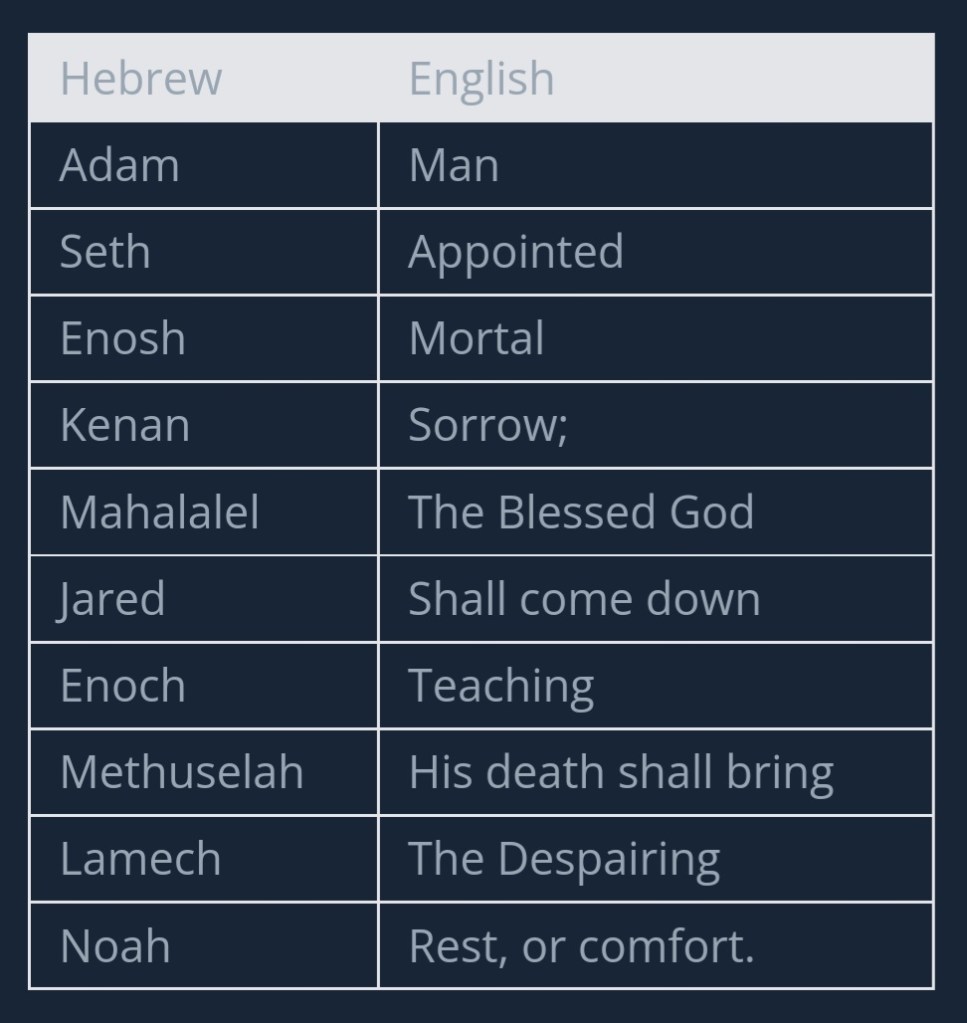




 SB SALT AND LIGHT MINISTRIES