12 “Words from the mouth of the wise are gracious,
but the lips of a fool destroy him.
13 The words from his mouth begin as folly
and end as grievous madness—”
Controlling the tongue is no small matter.
Words reveal the heart (Matt. 12:34-37). Our tongues can be a source of great healing or great hurt (Jas. 3:1-12).
These two verses reveal that it is impossible to conceal what type of people we are.
Our speech will give us away—whether we are wise or foolish.
The Bible teaches us…
Proverbs 18:21
“Death and life are in the power of the tongue: and they that love it shall eat the fruit thereof.”
Matthew 15:18
“But those things which proceed out of the mouth come forth from the heart; and they defile the man.”
Matthew 12:36
“But I say unto you, That every idle word that men shall speak, they shall give account thereof in the day of judgment.”
Psalm 19:14
“Let the words of my mouth, and the meditation of my heart, be acceptable in thy sight, O LORD, my strength, and my redeemer.”
These words are instruction and wisdom that we need to learn and apply to our life, especially when it comes to our appropriating our needs!
Mark 11:22-24
22 “So Jesus answered and said to them, “Have faith in God.
23 For assuredly, I say to you, whoever says to this mountain, ‘Be removed and be cast into the sea,’ and does not doubt in his heart, but believes that those things he says will be done, he will have whatever he says.
24 Therefore I say to you, whatever things you ask when you pray, believe that you receive them, and you will have them!”
———
Monday, March 7
The Winning Walk
by Dr Ed Young
THE POWER OF WORDS
King Solomon recognized the dangers of putting a little person in a big position.
Just let a fool talk, he reasoned, and his words will get the better of him.
Words are powerful things. Used rightly, they bless, encourage and instruct.
Used haphazardly, they can wound, confuse and destroy.
Leaders-in-training at West Point are taught economy with words early in their careers.
They begin their freshman year with a severely limited vocabulary.
Plebes may answer questions from their superiors in only four ways:
Yes, sir; No, sir; No excuse, sir; and Sir, I do not understand.
“Yes, sir” and “No, sir” teach the value of being direct.
“No excuse, sir” ensures that they learn to think in terms of teamwork and success.
“Sir, I do not understand” impresses cadets with the importance of making sure instructions and expectations are crystal clear.
It is a rather limited vocabulary-but it works, and any system for developing leaders that has been honed for nearly two centuries probably has as much to teach us ordinary folks as it does future generals.
The bottom line is this: a wise man (or a wise woman) carefully measures his words.
Jesus told his followers to “let your yes be yes and your no be no.”
A fool says too much, and often says it recklessly.
Understand the impact and the power of words.
I learned many years ago that before I broadcast my profound opinion based on excellent insight, I had better get all the facts that are available and seek the whole truth, not just a piece of it.
The fool is indiscreet, but the wise man measures his words.
Memory Verse
ECCLESIASTES 10:12
Words from the mouth of a wise man are gracious, while the lips of a fool consume him.
We’re either in God’s Kingdom, through faith in Jesus Christ, by our choice, or we’re in Satan’s kingdom by default!
Who is Jesus Christ to you?…
Our whole spiritual life depends on our answer to this one question.
“Humble witnesses for the Savior proclaim His gospel, and people’s response to the Son of God determines their destiny.” — Author Unknown
Who is Jesus Christ?
No fewer than twenty-three times in this Gospel Jesus refers to the One who sent Him, and John describes that in this paragraph.
John 3:34 “For He whom GOD HAS SENT speaks the words of God, for God does not give the Spirit by measure.”
Jesus comes from above…
He is sent from God (vv. 31,34).
Jesus is above all; he has all things in His hand (vv. 31,35).
Jesus speaks things He has seen and heard from the Father (vv. 31,34).
Jesus gives the truth to those who receive Him (v. 33).
Jesus gives the Spirit to those who trust in Him (v. 34).
Jesus is loved by the Father for He is the Son (v. 35).
Jesus can communicate life which is everlasting (v. 36).
The intimacy between the Father and the Son guarantees Jesus’ complete authority for universal reign.
He speaks the words of God, this time not logos but rhema—a message offered by a living voice.
The Bible is the Word inscripturated; Jesus is the Word incarnate!
If you accept Jesus as only a prophet or teacher, you have to reject His teaching and all the prophecies in the Old Testament that spoke of Him, for He claimed to be God’s Son—and to be God Himself (incarnate – God In the Flesh).
Isaiah 7:14 “Therefore the Lord Himself will give you a sign: Behold, the virgin will be with child and will give birth to a son, and will call Him Immanuel (God is with us).”
The heartbeat of John’s Gospel is the dynamic truth that Jesus Christ is God’s Son, the Messiah and the Savior, who existed from the beginning and will continue to live forever.
Colossians 1:16 “For in Him (in Jesus) ALL things were created, things in heaven and on earth, visible and invisible, whether thrones or dominions or rulers or authorities. ALL things were created through Him and for Him.”
Jesus’ testimony was trustworthy because He had come from heaven and was speaking of what He had seen there.
His words were the very words of God.
This same Jesus has invited us to accept Him and live with Him eternally.
When we understand who Jesus is, we are compelled to believe what He said.
God gives the Spirit without measure or limit.
Jesus was always filled, empowered, and totally connected to the heart and mind of God.
Thus, Jesus was the highest revelation of God to humanity (Hebrews 1:2).
He always spoke the words of God.
And Jesus says that all those who believe in Him have (not will have) eternal life.
To receive eternal life is to join in God’s life, which by nature is eternal.
Thus, eternal life begins at the moment of spiritual rebirth.
John, the author of this Gospel, wrote to demonstrate that Jesus is the true Son of God.
Jesus sets before us the greatest choice in life.
John 3:36 “He who believes in the Son has everlasting life; and he who does not believe the Son shall not see life, but the wrath of God abides on him.”
We each are responsible for deciding today whom we will obey (Joshua 24:15), and God wants us to choose Him and life (Deuteronomy 30:15-20).
“God’s angry judgment” refers to His final rejection of those who reject Him.
To put off the choice means choosing not to follow Jesus.
Indecision is a fatal decision. ———
Sat, February 26 Heartlight Devotions
WHAT JESUS DID!
[John the Baptizer said to his disciples,] “For [Jesus] is sent by God. He speaks God’s words, for God gives Him the Spirit without limit. The Father loves His Son and has put EVERYTHING into His hands.” — John 3:34-35 NLT
Key Thought Jesus is THE authority!
[1] Jesus has the authority over life and death. He has the authority to reveal the truth about God.
Jesus has the authority over religion, faith, and spiritual experience.
Jesus has the authority over our lives and our destinies.
Why? Because He is sent by God. He has the Spirit of God without any limit.
He is loved by God as His Son. And, as we will see toward the end of Jesus’ ministry,
God has validated Jesus’ authority through the resurrection.
So who do you have in charge of your life?
Is it the folks that sell ads in the media?
Do your peers control your life?
Are your fears in control?
Only one truly has the authority and can speak for God, and His name is Jesus.
We are told in the Bible (see 1 Cor 13:13) that when all is said and done, that there are three things that will remain — Faith, Hope and Love, but the greatest of all is Love…
The Bible also tells us that the very nature of God is Love, but what does that mean?
“God is love” (1 John 4:8) is a favorite Bible verse about love.
1 John 4:16 is a similar verse also containing the words “God is love.”
1 John 4:7-11 Knowing God Through Love
7 Beloved, let us love one another, for love is of God; and everyone who loves is born of God and knows God.
8 He who does not love does not know God, for God is love.
9 In this the love of God was manifested toward us, that God has sent His only begotten Son into the world, that we might live through Him.
10 In this is love, not that we loved God, but that He loved us and sent His Son to be the propitiation for our sins.
11 Beloved, if God so loved us, we also ought to love one another.
1 John 4:16
“We know how much God loves us, and we have put our trust in his love. God is love, and all who live in love live in God, and God lives in them.”
The Greek word used for love in all of these versus is ἀγαπάω agapaō, which is the God kind of love that comes with no strings.
To get the definition of what that kind of love looks like, we go to 1 Corinthians 13:4-7; and please know that this is how God treats each of us.
In fact, each place you see the word LOVE you can substitute “God” and the meaning of the text would not be changed one iota.
1 Corinthians 13:4-7 Living Bible
4 Love (God) is very patient and kind, never jealous or envious, never boastful or proud, 5 never haughty or selfish or rude.
Love (God) does not demand its (His) own way.
It (He) is not irritable or touchy. It (He) does not hold grudges and will hardly even notice when others do it wrong.
6 It (He) is never glad about injustice, but rejoices whenever truth wins out.
7 If you love someone, you will be loyal to him no matter what the cost.
You will always believe in him, always expect the best of him, and always stand your ground in defending him. ———
It’s a point in fact that this is how God treats each one of us, and if we will die to ourselves and get (self) out of the way, God desires to use each one of us as a conduit of His AGAPE love into all the dark places of this world.
Please note also that this agape love has absolutely NOTHING to do with our feelings, rather it’s all about us treating others based on the value God places on them.
There are two prayers offered by Paul, in the Bible, that I really like, which I believe expresses God’s true heart towards His Church.
Check it out…
Ephesians 1:15-23 Living Bible
Paul speaking: “…That is why, ever since I heard of your strong faith in the Lord Jesus and of the love you have for Christians everywhere, I have never stopped thanking God for you.
I pray for you constantly, asking God, the glorious Father of our Lord Jesus Christ, to give you wisdom to see clearly and really understand who Christ is and all that he has done for you.
I pray that your hearts will be flooded with light so that you can see something of the future He has called you to share.
I want you to realize that GOD HAS BEEN MADE RICH because we who are Christ’s have been given to Him!
I pray that you will begin to understand how incredibly great His power is to help those who believe Him.
It is that same mighty power that raised Christ from the dead and seated Him in the place of honor at God’s right hand in heaven, far, far above any other king or ruler or dictator or leader.
Yes, His honor is far more glorious than that of anyone else either in this world or in the world to come.
And God has put all things under His feet and made Him the supreme Head of the Church— 23 which is His body, filled with Himself, the Author and Giver of everything everywhere.
Ephesians 3:14-19 Living Bible
Paul speaking: “When I think of the wisdom and scope of His (God’s) plan, I fall down on my knees and pray to the Father of all the great family of God—some of them already in heaven and some down here on earth—
that out of his glorious, unlimited resources He will give you the mighty inner strengthening of His Holy Spirit.
And I pray that Christ will be more and more at home in your hearts, living within you as you trust in Him.
May your roots go down deep into the soil of God’s marvelous love; and may you be able to feel and understand, as all God’s children should, how long, how wide, how deep, and how high His love really is; and to experience this love for yourselves, though it is so great that you will never see the end of it or fully know or understand it.
And so at last you will be filled up with God himself.” ———
How do you not love a God like this, who gave so much of Himself (even His very life on Calvary’s Cross) in order to redeem His lost children and reconcile us back into His family
I believe the following quote is attributed to Augustine, and I think it says it best,
“that it’s impossible to know God and not love Him, and it’s equally impossible to love Him and not want to serve Him. ———
Tue, February 1 Franciscan Spirit blog Live in love grow in faith
Notes from a Friar: GOD SPEAKS TO ALL Written by Jim Van Vurst, OFM
Someone once asked me how many languages God speaks. I quickly realized that the person needed a fundamental answer. Of course, God speaks all languages.
It is better to think of God as communicating, which opens up many more possibilities.
We humans communicate with more than words. In our human nature, we can communicate with a glance, a smile, a chuckle, and so many more ways.
Think of a mother who communicates with her newborn infant. She does that by a kiss, a caress of her infant in her arms, a tender stroke, or even by humming.
We know that infants who don’t receive this kind communication often miss an essential part in their emotional development.
It has been proven that such communication stimulates key hormones in the infant that aids in emotional growth.
Just think of animals that lick their offspring when they are just born. They are doing more than cleaning them up.
We humans cannot exist without relationships. The need for communication is part of our very human nature.
Having said that about humans, and defining God as love, we understand that God is the infinite communicator.
His very act of creation is an act of communicating his love to all he creates, but especially to us who are blessed with intelligence and free will.
NO LANGUAGE IS FOREIGN TO GOD
But we should not restrict God’s communication. God can and does communicate in ways we can’t imagine.
If a mother can communicate to her infant, would we ever say that God does not?
God is in communication with us by his very presence. It may well be an inspiration or a thought that comes to mind. It may be an impulse to do something good for another.
People who think God is “somewhere up there” have a misunderstanding of the reality of God’s presence.
God is infinitely concerned and connected with all of us. There is never a moment when we walk alone. God is always present to us.
I was chaplain for many years at a large retirement and nursing facility. I would visit our nursing home and Alzheimer’s unit.
To my own perception, many of these people were unable to communicate to staff or to one another.
But at the same time, I was convinced that God was as close to each of them as he was to the rest of us.
That’s why I think God knows all languages. I consoled many families with that thought and they realized that their loved ones were never alone or without the presence of God. ———
You are cordially invited to the wedding supper of the Lamb…
In the ancient Hebrew culture, two invitations were expected when banquets were given.
The first asked the guests to attend; the second announced that all was ready.
In this story the king invited his guests three times, and each time they rejected his invitation.
God wants us to join him at his banquet, which will last for eternity.
That’s why he sends us invitations again and again. Have you accepted his invitation?
———
Matthew 22:1-14
The Voice
22 Jesus went on speaking in parables.
Jesus: 2 The kingdom of heaven is like a king whose son was getting married. The king organized a great feast, a huge wedding banquet.
3 He invited everyone he knew. The day of the wedding arrived, and the king sent his servants into town to track down his guests—but when the servants approached them with the king’s message, they refused to come.
4 So the king sent out another batch of servants.
King: Tell those people I’ve invited to come to the wedding banquet! Tell them I have prepared a great feast! Everything is ready! The oxen and fattened cattle have all been butchered, the wine is decanted, and the table is laid out just so.
5 And off the servants went, and they carried the king’s message to the errant guests—who still paid not a whit of attention.
One guest headed into his field to work; another sat at his desk to attend to his accounts.
6 The rest of the guests actually turned on the servants, brutalizing them and killing them.
7 When he learned of this, the king was furious. He sent his army to kill the murderers and burn their towns.
8 But there was, of course, still a wedding to celebrate.
King (to his remaining servants): The wedding banquet is ready, but those I invited didn’t rise to the occasion.
9 So go into the streets and invite anyone you see; invite everyone you meet.
10 And the servants did just that—they went into the streets and invited everyone they met, rich and poor, good and bad, high and low, sick and well. Everyone who was invited came, and the wedding hall practically burst with guests.
11 The king looked around the wedding party with glee, but he spotted one man who was not dressed appropriately. In fact, he was dressed rather plainly, in clothes not at all fitting for a fine nuptial feast.
King: 12 Kind sir, how did you get in here without a proper suit of wedding clothes?
The man was speechless. He had been invited in off the street, after all! 13 Getting no response, the king told his servants,
King: Tie him up, and throw him out into the outer darkness, where there is weeping and grinding of teeth.
14 For many are invited, but few are chosen.
———
22:2 THE KINGDOM OF HEAVEN IS LIKE
Many Jewish parables depict God as a king; sometimes His son represented Israel marrying the law.
Here the son is presumably Jesus.
WEDDING
Because the size of wedding banquets displayed honor, hosts usually invited as many people as possible.
22:3 THOSE WHO WERE INVITED… NOT WILLING TO COME
Jesus will reject those who refuse his invitation into honor and privilege, replacing them with true worshipers—those restored from sin by his grace.
Refusal to accept a banquet invitation insulted the inviter; insulting a king was treason.
But such invitations were normally RSVP, followed up by a second notice once the food was ready.
Thus the people now refusing to come, at the second notice, had already agreed to come at the first invitation (“those who had been invited”).
Their refusal now was therefore a conspicuously deliberate and provocative insult.
22:4 OXEN AND FATTENED CATTLE
A fattened calf alone could feed a village (cf. Luke 15:23); the king has made massive preparations, and the meat will spoil unless the guests come quickly.
22:6 KILLED THEM
All ancient readers would have agreed that slaughtering messengers was an offense worthy of death.
By universal ancient law, heralds, or messengers, were to be exempt from any harm, even during times of war.
22:7 BURNED UP THEIR CITY
Conquerors burned resistant cities; a generation after Jesus’ ministry, Rome’s army burned Jerusalem.
22:9 AS MANY AS YOU FIND, INVITE
The first invited guests had dishonored the king; the only way to recoup some honor is to find other guests before the food can spoil.
22:11 NOT HAVE ON A WEDDING GARMENT
In another Jewish parable possibly (but not certainly) as early as the first century, wise servants waited at a king’s gate, awaiting the promised banquet; foolish servants kept laboring with soiled garments and were unprepared when his banquet was ready.
Regarding the parable here in ch. 22, some scholars suggest that the host would have provided special garments; others simply note that coming to a wedding banquet in soiled clothing would insult the host.
In v. 12, the king asks how the intruder made it past the servants guarding the doors; the intruder’s refusal to answer may suggest that his insulting act was deliberate.
If the first invited guests represent Jerusalem’s leaders at Jesus’ first coming, the rudely dressed man perhaps represents professed followers of Jesus unprepared for His second.
———
YOU ARE INCLUDED IN THIS INVITATION
You are cordially invited to your wedding party.
Welcome to the great “Marriage Supper of the Lamb,” where you, one of Jesus’ brides and part of His Church, the elect, the ekklesia, the called-out ones, finally get to celebrate your marriage with Jesus.
You became part of His Bride the minute you accepted Him into your heart, and now you finally get to have the wedding supper, and it is going to be the party to end all parties—well, at least up until this point.
John described it like this:
Then a voice came from the throne, saying, “Praise our God, all you His servants and those who fear Him, both small and great!”
And I heard, as it were, the voice of a great multitude, as the sound of many waters and as the sound of mighty thunderings, saying, “Alleluia!
For the Lord God Omnipotent reigns! Let us be glad and rejoice and give Him glory, for the marriage of the Lamb has come, and His wife has made herself ready.”
And to her it was granted to be arrayed in fine linen, clean and bright, for the fine linen is the righteous acts of the saints.
Then he said to me, “Write: ‘Blessed are those who are called to the marriage supper of the Lamb!’”
Revelation 19:5–9
From that point on, the Bible is silent as to what the celebrations consist of, but we can rest assured that if Jesus is planning the party, it is going to be totally out of this world.
There is another event that will apparently take place at this time, referred to in Scripture as the Judgment Seat of Christ.
This is when the saved will come individually before Jesus Christ to receive their rewards.
Paul writes: “We shall all stand before the judgment seat of Christ. Then each of us shall give account of himself to God” (Romans 14:10,12).
Also, “For we must all appear before the judgment seat of Christ, that each one may receive the things done in the body, according to what he has done, whether good or bad” (2 Corinthians 5:10).
Jesus said, “Behold, I am coming quickly, and My reward is with Me, to give to every one according to his work” (Revelation 22:12).
And, “The Son of Man will come in the glory of His Father with His angels, and then He will reward each according to his works” (Matthew 16:27).
And also, “Be faithful until death, and I will give you the crown of life” (Revelation 2:10).
The apostle Paul, at the end of his ministry, shortly before his death, said, “I have fought the good fight, I have finished the race, I have kept the faith.
Finally, there is laid up for me the crown of righteousness, which the Lord, the righteous Judge, will give to me on that Day, and not to me only but also to all who have loved His appearing” (2 Timothy 4:7–8).
This crown is your reward.
A lot of Christians get confused by the Bible verses on rewards and crowns, and apply them to salvation as something that must be earned.
Salvation cannot be worked for and thus earned; it is a gift of God (Ephesians 2:8–9; Titus 3:5).
But you can work for rewards and you can earn praise and commendation from the Lord!
A special, “Well done, good and faithful servant. … Enter into the joy of your Lord!” (Matthew 25:21).
Although the good that you do in this life isn’t going to help to get you into Heaven, it will have a great deal to do with your reward and your position once you’re there.
When a heavenly messenger was speaking to Daniel, he said:
“And many of those who sleep in the dust of the earth shall awake, some to everlasting life, some to shame and everlasting contempt. Those who are wise shall shine like the brightness of the firmament, and those who turn many to righteousness like the stars forever and ever” (Daniel 12:2–3).
Those who have been wise by living a life dedicated to being what God wants them to be, and to turning others to righteousness, will shine as the stars; but those who haven’t done much for the Lord will be pretty dull and some held in shame and even contempt.
So those who have done more will receive more rewards. But it also has to be understood that “the Lord does not see as man sees; for man looks at the outward appearance, but the Lord looks at the heart” (1 Samuel 16:7).
He knows what you are capable of and what you desire to do, and if for some reason your circumstances hold you back from being as much of a force for good on Earth as you would like to be, then those circumstances will be taken into consideration.
Jesus is called the Righteous Judge, and your reward will be a righteous one.
Nevertheless, it is important that we do our best to be and do all that God expects of us.
Paul wrote, “Now if anyone builds on this foundation [salvation] with gold, silver, precious stones, wood, hay, straw, each one’s work will become clear; for the Day will declare it, because it will be revealed by fire; and the fire will test each one’s work, of what sort it is.
If anyone’s work which he has built on it endures, he will receive a reward” (1 Corinthians 3:12–14).
Having received Jesus, as both Lord and Savior, if you are living for Him and are doing your best to be a living sample of His love for others, when you stand before Him at this great Judgment Seat, these works will endure the test, even as gold and silver endure and come through the fire.
They will endure and you will receive a glorious reward. “That the genuineness of your faith, being much more precious than gold that perishes, though it is tested by fire, may be found to praise, honor, and glory at the revelation of Jesus Christ!” (1 Peter 1:7).
But, the Scripture passage in Corinthians continues,
“If anyone’s work is burned, he will suffer loss; but he himself will be saved, yet so as through fire” (1 Corinthians 3:15).
Those who have received Jesus, but yet did nothing for Jesus in thanksgiving, who lived their lives selfishly and did not live by the golden rule of “whatever you want men to do to you, do also to them” (Matthew 7:12), will find their works burned as wood, hay, and straw, and will not receive much of a reward, if any.
They’ll still be saved, but they’ll suffer such a sad loss!
So if nothing else, this should be strong motivation to do our best to live the way God wants us to live and do the things He wants us to do on Earth, so that we can receive His reward and commendation in Heaven!
Meanwhile, as we are rejoicing at the Marriage Supper and receiving our rewards, the angels of the Lord are taking care of unfinished business on the earth.
So the invitations have gone out and you are one of the recipients.
We are told that many are called, but few are chosen; and so obviously the ones that are chosen are the ones who answered the call, who have committed their life to Jesus and to His service.
Our decision for Christ and our willingness to serve him with all of our heart, mind and strength is the most important decision we will ever make in our life.
Luke 9:23-26
New Living Translation
23 Then he (Jesus) said to the crowd, “If any of you wants to be my follower, you must give up your own way, take up your cross daily, and follow me.
24 If you try to hang on to your life, you will lose it. But if you give up your life for my sake, you will save it.
25 And what do you benefit if you gain the whole world but are yourself lost or destroyed?
26 If anyone is ashamed of me and my message, the Son of Man will be ashamed of that person when he returns in his glory and in the glory of the Father and the holy angels.
So as we can gather from all the above versus Christianity is definitely not a spectator sport, it requires our total and absolute dedication, in order that we may fulfill the destiny that God has planned for each one of our lives (see Ps 139:16, Rom 8:29-30, Eph 1:4-6).
Wed, January 12 The Berean Daily Verse and Comment
Forerunner Commentary
Matthew 13:1-53
And Jesus spoke to the masses in parables…
THE PARABLE OF THE SOWER Before Jesus interpreted this parable about the Sower, He drew His disciples away from the crowd.
They said to Him,
“Why do You speak to them in parables?”
Jesus answered them,
“To you it has been granted to know the mysteries of the kingdom of heaven, but to them it has not been granted.
For whoever has, to him more shall be given, and he will have an abundance; but whoever does not have, even what he has shall be taken away from him.
Therefore I speak to them in parables; because while seeing they do not see, and while hearing they do not hear, nor do they understand.
In their case the prophecy of Isaiah is being fulfilled, which says,
‘Hearing you will hear and shall not understand, And seeing you will see and not perceive;
For the hearts of this people have grown dull. Their ears are hard of hearing, And their eyes they have closed, Lest they should see with their eyes and hear with their ears, Lest they should understand with their hearts and turn, So that I should heal them.’
But blessed are your eyes, because they see; and your ears, because they hear. For truly I say to you that many prophets and righteous men desired to see what you see, and did not see it, and to hear what you hear, and did not hear it” (Matthew 13:10-17). ———
Matthew 13:3-9 The Voice
[This next sermon series, the third of Jesus’ five Mosaic-like sermons, is filled with parables or stories with a deeper meaning about the kingdom of heaven.]
3 And so Jesus began to teach. On this day, He spoke in parables. Here is His first parable:
Jesus: Once there was a sower who scattered seeds. 4 One day he walked in a field scattering seeds as he went.
Some seeds fell beside a road, and a flock of birds came and ate all those seeds.
5 So the sower scattered seeds in a field, one with shallow soil and strewn with rocks.
But the seeds grew quickly amid all the rocks, 6 without rooting themselves in the shallow soil.
Their roots got tangled up in all the stones. The sun scorched these seeds, and they died.
7 And so the sower scattered seeds near a path, this one covered with thorny vines.
The seeds fared no better there—the thorns choked them, and they died.
8 And so finally the sower scattered his seeds in a patch of good earth. At home in the good earth, the seeds grew and grew.
Eventually the seeds bore fruit, and the fruit grew ripe and was harvested.
The harvest was immense—30, 60, 100 times what was sown.
9 He who has ears to hear, let him hear. ———
Jesus’ first parable to the multitudes concerns a sower and his limited success in receiving fruit from the earth.
Recognizing the context and audience reveals that this parable was a rebuke of the nation.
It testified of the citizens’ inability to receive “the word of the kingdom” (verse 19)—the gospel of the Kingdom of God.
It aptly describes what John the Baptist, Jesus, and the apostles experienced in the first century.
They saw within the people some interest—and even some willingness—to repent (after a fashion) and to be baptized, but there was little depth because their hearts were so far from their King.
In three out of four scenarios in the parable, the ground produced nothing of value.
Only the good soil—“he who hears the word and understands it” (verse 23; emphasis ours)—bears fruit.
All the types of ground receive the Word, but God prepares the soil only of some.
The masses lacked ears to hear, despite claiming Abraham as their father.
They looked for a messiah who would improve their political condition while leaving their religious system and moral state unchallenged.
We see this even within the context of the Parable of the Sower.
The critical factor is whether the “ground” heard and received the “word of the kingdom”—that is, whether God had given those hearing the Word the means to respond properly.
In Jesus’ explanation of the parable to His disciples, He refers to the multitude before Him when quoting Isaiah 6:9-10:
“Hearing you will hear and shall not understand, and seeing you will see and not perceive; for the hearts of this people have grown dull. Their ears are hard of hearing, and their eyes they have closed, lest they should see with their eyes and hear with their ears, lest they should understand with their hearts and turn, so that I should heal them.”
The people to whom He gave the parables were fulfilling Isaiah’s prophecy.
They were living proof of the truth in this first parable—they could not receive the truth.
In contrast, He had prepared His disciples to hear and respond properly.
They were the good soil that would yield an increase (Matthew 13:16-17; see John 15:1-17). — David C. Grabbe ———
Let us each prepare the soil of our hearts so that we may receive the FULL GOSPEL MESSAGE of our Lord into our hearts, that His seed of Truth may germinate and can grow within us!
The first Person we should consult, in order to properly divide and discern the Word of Truth, is the Holy Spirit…
UNDERSTANDING HOW THE HOLY SPIRIT ACTS AS A HOLOGRAM
If you take a piece of film and expose it under a laser’s light you get a holographic (three dimensional) image.
Likewise when we study and meditate in God’s word, before we begin, we need to ask the Holy Spirit to illuminate it, to give us the understanding we need to to give us wisdom, direction and guidance in our life.
Without that illumination of the Holy Spirit, the Bible is just ink on paper.
So each day, as we read and meditate in God’s Word, let us remember always to ask the Holy Spirit to illuminate the scriptures for us and to apply its principles and truths to our lives, and to our daily circumstances.
John 16:12-15
The Voice
12 Jesus speaking: “I have so much more to say, but you cannot absorb it right now.
13-15 The Spirit of truth will come and guide you in all truth.
He will not speak His own words to you; He will speak what He hears, revealing to you the things to come and bringing glory to Me.
The Spirit has unlimited access to Me, to all that I possess and know, just as everything the Father has is Mine.
That is the reason I am confident He will care for My own and reveal the path to you.”
———
It has always been my experience that the Bible is its own best commentary; if when reading the scriptures there’s a certain area you may not understand, then take that scripture and put it on your “God shelf” and ask the Holy Spirit to illuminate it for you and give you understanding.
Very often, the Holy Spirit will explain one passage of scripture by directing you to another passage, as the Bible always is its own best commentary.
———
Fri, January 7
Daily Devotionals
by Inspiration Ministries
UNDERSTANDING
“’Do you understand what you are reading?’ And he said, ‘How can I, unless someone guides me?’ […] Philip opened his mouth, and beginning at this Scripture, preached Jesus to him.”
— Acts 8:30-31, 35
An official from Ethiopia was returning home from Jerusalem. Clearly a sincere seeker, he was reading a passage from Isaiah but did not understand the meaning.
At that moment Philip, who was following the leading of the Spirit, approached him.
The man admitted that he needed help understanding what he was reading. Philip responded by preaching Jesus, “beginning at this Scripture.”
After hearing Philip’s teaching, the Ethiopian understood and believed.
The passage made sense. Acting on his belief, he asked to be baptized (vs. 36-38).
Many people are like this Ethiopian. They read Bible passages, yet don’t understand.
These are moments to remember the spiritual dimension of the Word and why we need a spiritual approach.
We need to pray and ask God for discernment. Ask the Spirit to open our eyes spiritually, give us revelation, and lead us to mature believers who might give us insight.
Paul illustrated these principles when he wrote,
“The natural man does not receive the things of the Spirit of God.”
These spiritual truths can seem like “foolishness” to our minds because the deeper things of the Bible “are spiritually discerned” (1 Corinthians 2:14).
Have you ever struggled to understand a passage from the Bible?
Are you not sure what the words mean?
These are times to pray and ask God for discernment.
As He leads, seek the insights of mature believers who can help you understand.
PRAYER
Father, I seek spiritual discernment for Your Word and revelation from You. Give me a clearer understanding. In Jesus’ name, amen.
Now that the Christmas holidays have come to a close, for 2021, and we’re starting a new year — 2022…
As we find ourselves taking down the holiday decorations and packing them away for another year; and as we are setting that once beautiful and sparkling Christmas tree, filled with all the holiday ornaments, out on the curb, do we also find ourselves packing away our Christmas cheer?
What about our Christmas spirit — you know, that extra cheery, smile and holiday attitude that causes us to be nice to everyone around us, that holiday “Joy to the World ” vibe that we embraced for the season, are we also packing that away too?
So of course as the season winds down there may be an extra rush to dispense with the festive spirit; but the more I think about it, the more I realize how much better things might be if we all kept that Christmastime cheer with us throughout the year.
During this holiday season, some of us possibly found ourselves giving money to the poor, volunteering with our church, praying with more intensity, and spending more time with friends and loved ones.
But once the season is behind us, and the overwhelming joy we all felt in remembering our Savior’s birth begins to recede, why is it so many of us are also packing away our Christmas cheer and charity to others?
Can you imagine what our world would be like if everyone, like Charles Dickens’ Scrooge, would “honor Christmas in our heart, and keep it all the year?”
“I will honour Christmas in my heart, and try to keep it all the year. I will live in the Past, the Present, and the Future. The Spirits of all Three shall strive within me. I will not shut out the lessons that they teach.”
— Charles Dickens, A Christmas Carol
———
Mon, January 3
Minute Meditations
A RETURN TO THE EVERYDAY
by Diane M. Houdek
No matter how much we try to extend the holiday with traveling and vacation time and a last party or two, there comes a time when we need to return to our daily activities and responsibilities.
School starts up again, work beckons, and we have to bid farewell to Christmas once again.
It can be refreshing to reclaim the space that was filled with the Christmas tree and other decorations.
We forsake the Christmas cookies and boxes of candy for healthier food choices in the new year.
If we’ve traveled to visit family, we return home, put away the suitcases, finish vacation laundry, and settle into our lives.
Mary, Joseph, and Jesus traveled a great deal during the first years after the birth—back and forth to Jerusalem, a sojourn in Egypt, a return to their home in Nazareth.
And in later years, Luke’s Gospel tells us, they traveled on pilgrimage to Jerusalem, where Jesus was separated from his parents and found conversing with holy teachers in the temple.
Perhaps we’re a bit relieved that Christmas is over for another year. But perhaps we discover that something has changed in us because of an encounter, a gift, a new insight into the meaning of the incarnation.
We can keep a little bit of that with us through the coming year and let it bring light and peace to our everyday lives.
Our journey with God doesn’t end with the Christmas season.
I was reading in Exodus 34 this morning, and verses 6-7 caught my attention:
Exodus 34:6-7 New King James Version
6 And the Lord passed before him and proclaimed, “The Lord, the Lord God, merciful and gracious, longsuffering, and abounding in goodness and truth,
7 keeping mercy for thousands, forgiving iniquity and transgression and sin, by no means clearing the guilty, visiting the iniquity of the fathers upon the children and the children’s children to the third and the fourth generation.” ———
I have always believed that there is a ripple effect regarding the sins that we commit that affect not only us, but those around us, including our families.
The question is, could these sins also have a negative effect on our DNA that affects future generations?
The above scripture, in verse 7, would seem to indicate that would be true.
To begin with, let’s take a look at how our genetics work:
GENESIS AND GENETICS
Adam’s DNA September 12, 2011 Answers to Questions, Bible/Science
According to the Bible, Adam was created in God’s image approximately 6000 years ago.
Now that we are beginning to understand DNA, we can determine Adam’s DNA; and by understanding Adam’s DNA, and how it relates to us, we can make some significant progress in understanding who we really are and how we fit into the Kingdom of God.
Genesis 2:7 And the LORD God formed man of the dust of the ground, and breathed into his nostrils the breath of life; and man became a living soul. (KJV)
So, Adam became a living soul, the first living soul. This means that he necessarily had all of the human genetic variations in his DNA.
Everyone, including Eve, came from Adam’s DNA.
(Note: If the Bible proclaimed that the first human were a woman, the Bible would be in error since women do not have the Y-Chromosome, without which man could not have been formed from the woman’s rib DNA. This is why it is called the Bible.)
Every human being has two sets of genes, one from their father and one from their mother.
These genes are generally dominant or recessive. If you get two dominant genes, that trait will be dominant.
If you get two recessive genes, that trait will be recessive.
If you get one dominant and one recessive gene, that trait will be dominant.
This means that Adam had one dominant and one recessive gene for each trait; so, in effect, we know Adam’s DNA and we have an idea what he looked like: he had dominant genetic traits.
Humans have approximately 22,000 genes and combinations of these genes give us variation in physical appearance such as eye color, nose shape, foot size, etc. These genes also affect our abilities and personality.
So, we know that Adam had all human variation in him and therefore one dominant and one recessive gene for each of the genes.
Based on current understanding of dominant traits, we can be reasonably sure that Adam had unattached earlobes, dimples, was right handed, had a widow’s peak hairline, and curly hair. All of these traits are dominant traits.
This is all very interesting, but, now we need to get into the spiritual:
Adam embodied all of humanity, including Eve and you and me.
Please read this one very carefully, the key word here is “them”:
Genesis 5:2 Male and female created he them; and blessed them, and called their name Adam, in the day when they were created.(KJV)
So, all of humanity was created on day six.
Adam was formed and given life after God’s rest, Eve was formed and given life shortly thereafter, and you and I were formed and given life in our mother’s womb. This is why God said to Jeremiah:
Jeremiah 1:4 Then the word of the LORD came unto me, saying,
Jeremiah 1:5 Before I formed thee in the belly I knew thee; and before thou camest forth out of the womb I sanctified thee, and I ordained thee . . . (KJV)
When Adam sinned, he became corruptible and took on the sin nature.
Since Adam embodied all of humanity, we all went down with him and also took on the sin nature.
Part of this sin nature is the corruption of our genes in the form of mutations.
Today, every generation has approximately 70 more genetic mutations than the previous generation.
These mutations can result in deformation, disorders and disease; genetic mutations are never good.
This is a bit discouraging, but we have the promise that in a twinkling of an eye, our DNA will be restored to the day 6 splendor. This is good news, this is the Gospel.
I Corinthians 15:51 Behold, I shew you a mystery; We shall not all sleep, but we shall all be changed,
I Corinthians 15:52 In a moment, in the twinkling of an eye, at the last trump: for the trumpet shall sound, and the dead shall be raised incorruptible, and we shall be changed.
I Corinthians 15:53 For this corruptible must put on incorruption, and this mortal must put on immortality. (KJV)
My dear friends and children, we have gone through much here on earth, but our future is very bright: We have the hope of being redeemed and restored to our original , day six, self. ———
So getting back to Exodus 34:7, how exactly do the sins of the father affect the children, down to the third and fourth generation?
It is my belief that it is passed down through our DNA, and that when we do sin it has an adverse effect on our DNA, and that corrupt programming gets passed down to the third and fourth generation. ———
HEALING AND DELIVERANCE MINISTRY
CAN A CHRISTIAN HAVE A DEMON?
Generational Curses Have you ever seen a family where the father has a problem with uncontrollable anger, his son seems to have been ‘handed it’, and the grandpa had the same problem?
Or have you noticed that not only do you suffer from something such as persistent irrational fears or depression, but your mother and your father also suffered from it as well?
There are many people today who are living under bondage that the sins of their forefathers have brought them under.
Exodus 34:7, “…keeping mercy for thousands, forgiving iniquity and transgression and sin, by no means clearing the guilty, visiting the iniquity of the fathers upon the children and the children’s children to the third and the fourth generation.”
Lamentations 5:7, “Our fathers have sinned, and are not; and we have borne (been punished for) their iniquities.”
This is beyond learned behavior; many children learn to be messy if their parents are messy.
This is a spiritual bondage that is passed down from one generation to another.
Some symptoms of a generational curse is a continual negative pattern of something being handed down from generation to generation.
Often people who are adopted end up with the same characteristics as their birth parents, not because they were around their birth parents to learn how they behaved, but because they inherited their spiritual bondage.
Some common symptoms of generational curses are family illnesses that seem to just walk from one person down to the next (cancer is a common physical manifestation of a spiritual bondage), continual financial difficulties (they continually hit roadblocks in their finances), mental problems, persistent irrational fears and depression.
Anything that seems to be a persistent struggle or problem that was handed down from one generation to another may very well be a generational curse.
THE PURPOSE OF A GENERATIONAL CURSE
I believe the reason God would punish the future generations with the sins of their fathers, is because of God’s bitter hatred for sin.
He would require somebody who practiced witchcraft to be put to death (Exodus 22:18).
He knows that one of the most prized possessions you have, is your children, and therefore it makes sin a lot harder to commit when you realize that you are not the only one that is being punished for it, but also your own children are going to pay the price for your foolishness.
That’s what I believe is the reason behind generational curses. The whole human race fell thanks to Adam’s sin for that matter.
THE PRICE FOR GENERATIONAL CURSES HAS BEEN PAID!
The good news is that once you accept Jesus, the transference of bondage stops from your ancestors by means of generational curses.
You can no longer receive spiritual bondages in this manner from your parents once you accept Jesus!
Christ was made a curse, so we can be freed from the curses that sin (both our sins and those of our forefathers) has brought us. Galatians 3:13, “Christ hath redeemed us from the curse of the law, being made a curse for us: for it is written, Cursed is every one that hangeth on a tree:”
Once you become a child of God, no longer will the sins of your forefathers cause curses to transfer into your life:
Jeremiah 31:29-30, “In those days they shall say no more, The fathers have eaten a sour grape, and the children’s teeth are set on edge. But every one shall die for his own iniquity: every man that eateth the sour grape, his teeth shall be set on edge.”
So why are there so many believers who seem to be living under a generational curse?
This has puzzled me before I understood how it works too.
What may need to be dealt with though, is any bondage that was already passed down to you before you came into covenant with God.
The legal grounds are certainly paid for on the cross and therefore broken.
The only thing left to do is cast out any spirits that have gained entrance before you accepted Jesus.
NON-BELIEVERS ARE STILL AFFECTED
Even after Jeremiah 31:29-30 makes it clear that believers are redeemed from generational curses, the next chapter in Jeremiah (32:18) clearly says,
“You show lovingkindness to thousands, and repay the iniquity of the fathers into the bosom of their children after them—the Great, the Mighty God, whose name is the Lord of hosts.”
Apparently, generational curses are still in effect, but for who is the big question.
Ezekiel 18:2-3 tells us, “What do you mean when you use this proverb concerning the land of Israel, saying: ‘The fathers have eaten sour grapes, And the children’s teeth are set on edge’? As I live, says the Lord God, ‘you shall no longer use this proverb in Israel.'”
(Note: This is referring to those who are in covenant with God, which includes ONLY born-again believers, not the rest of the world.)
Obviously, generational curses are alive and well in the lives of those who are outside the new covenant with God (non-believers).
‘TRIGGERING’ THE EFFECTS OF A GENERATIONAL CURSE
It is possible for demons to enter a child before he accepts Jesus, then remain dormant or hidden in that child’s life until some time later in his or her life when it manifests (or makes itself known).
Sometimes when a person heads for the ministry, it seems like the devil kicks up his ugly heels and causes havoc for that person.
Other times, a line of fear runs in the family tree, but isn’t manifested in a person’s life until they get themselves involved in something fearful, such as watching a demonic movie.
All of a sudden, the spirits in that person’s life “come alive” so to speak, and make themselves known.
They were there all along, but just now they have come out into the open.
The solution is to cast them out.
If you have involved yourself in any sin or opened any doors in your own life while ‘awaking’ or triggering the spirits, then it’s important that you clear up any legal grounds (or strongholds) that you gave the enemy in your own life relating to the bondage.
For example, if you have seen a demonic movie, and it seemed to have triggered spirits of fear in your life that were handed down to you, then it’s important to repent for going to see such a movie before trying to cast out any spirits.
It’s also possible that you picked up the spirits from such a movie without them even being there in the first place, and/or added to spirits that were already inside you.
It’s always a good idea to clear up any legal grounds or strongholds in your own life before casting spirits out.
I believe unforgiveness is a great way to ‘trigger’ generational spirits, so I would be on the lookout for any bitterness or unforgiveness in your heart as well.
A common sight is when a spirit of cancer is running down the family tree, and I believe bitterness is a great way to trigger those spirits.
Unforgiveness is a serious sin that blocks the forgiveness of your own sins (Matthew 6:15), which creates ample legal grounds for the enemy in your life.
Unforgiveness in itself puts us into the enemy’s hands (Matthew 18:23-35), say nothing about awakening any evil spirits in us already!
THE CURSE MAY BE CANCELED, BUT THE DEMONS MAY REMAIN
Just as other demons don’t automatically leave at the time of salvation… neither do the demons that you get from your ancestors automatically leave you either.
Let’s say that you accept Jesus at age 15.
Because you were born a sinner and outside of God’s covenant, you were still living under the curses handed down to you and demons can enter you through those curses.
Once you’ve accepted Jesus, those curses are broken automatically, but often the demons that entered in before you accepted Jesus still need to be cast out.
In other words, the curse is already broken, and there’s no need for you to break any generational curses.
But the demons who entered into you through those curses before you accepted Jesus may still need to be cast out.
That’s why it seems so many believers are living under generational curses, when the Bible makes it clear that we have been freed from any curses handed down from our forefathers!
My parents have almost perfect health, well into their 60’s, while it seems the family tree has many health problems that have been handed down from the forefathers.
My parents seem almost immune from the health problems in the family tree!
Sure, they take care of their bodies, but they also believe that they have been freed from the curses handed down in the family tree, and since no demons have entered them to take advantage of those old curses, they were freed from the effects simply by standing on what Jesus had done for them on the cross!
On the other hand, if demons have entered you through curses handed down to you before you became a Christian, then those demons may need to be cast out.
Demons often don’t leave on their own accord, and when they don’t, the remedy to get rid of them is by casting them out.
There’s a neat story in Mark 9:17-27, where Jesus deals with what is almost certainly a generational curse (verse 21).
Notice that Jesus didn’t have the boy confess the sins or iniquities of his ancestors, He cast out the demons that entered in through the curse.
That’s how I believe we are to deal with the effects of a generational curse; since the curse has been broken, all there is left to do is just cast the demons out that entered into that person’s life back before they became a Christian (before the curse was broken).
CONFESS WHAT IS RIGHTFULLY YOURS!
We know that our generational curses have been broken in Jesus’ name, but I still like to verbally confess what is going on and what is rightfully ours anyways, because there’s power in our verbal confessions, and it helps us to realize that we are set free, and also lets the enemy know that he’s in trouble!
Here’s a great sample confession prayer you can use to do just that:
In the name of Jesus, I confess the sins and iniquities of my parents (name specific sins if known), grandparents (name specific sins if known), and all other ancestors.
I declare that by the blood of Jesus, these sins have been forgiven and Satan and his demons can no longer use these sins as legal grounds in my life!
In the name of Jesus, and by the power of His blood, I now declare that all generational curses have been renounced, broken and severed, and that I am no longer under their bondage!
In the name of Jesus, I declare myself and my future generations loosed from any bondages passed down to me from my ancestors. AMEN!
ANOTHER FACTOR TO CONSIDER
There are other things that can ‘seem’ like generational curses, but aren’t.
Perhaps the most common is if there is an ungodly soul tie formed between you and one of your ancestors, that can also allow for the transferring of spirits.
There is more to learn on this subject in the teaching on Soul Ties.
IGNORANCE: ANOTHER SOURCE OF BONDAGE!
I also believe that some people can live under what SEEMS like a generational curse, simply because they believe it’s still in effect!
We need to know that it is NO LONGER in effect, and we have been FREED from any generational curses we used to live under!
Jesus makes it very clear that we can be held in bondage to sin through ignorance (John 8:31-36), and I believe the same is true with bondage to generational curses.
IN A NUTSHELL
To wrap it up in a nutshell, I don’t believe Christians can live under generational curses… but I do believe they can be affected by spirits that have entered through those curses before they accepted Jesus.
Just like many people’s past actions, before they came to Christ, have landed them in demonic bondage and caused them to pick up demons.
Those demons are not automatically shed at the time of salvation, they often need to be cast out.
The same is true with demons that enter in through generational curses (a doorway to demons).
How you deal with a spirit that has entered through a generational curse is very simple:
Mark 16:17, “And these signs shall follow them that believe; In my name shall they cast out devils…”
Let us learn about the Spiritual Authority that Jesus has given us over demon spirits, and by faith, we can command those spirits to leave you in Jesus’ name!
If you can’t seem to get them out, try prayer and fasting, as Jesus clearly stated, some demons won’t come out unless you have a higher level of faith that only prayer and fasting can bring you into (Matthew 17:19-21).
If you are facing heavier bondages, it is recommended to seek deliverance through a man or woman of God who is knowledgeable and working in the ministry of deliverance.
Before seeking out a deliverance through another person or minister, I recommend reading the teaching on Seeking a Deliverance.
ANOTHER TYPE OF GENERATIONAL CURSE
The type of curses handed down as a result of an ancestor’s sin is automatically atoned for on the cross, providing we don’t hide the sins of our forefathers in our hearts (holding sin in our hearts is never a good idea – whether it’s ours of the sins of our ancestors).
But there’s another kind of generational curse that is handed down, and it’s a spoken curse that takes a toll on future generations as well.
We can see this kind of curse in action in Genesis 9:24-25, “And Noah awoke from his wine, and knew what his younger son had done unto him. And he said, “Cursed be Canaan; a servant of servants shall he be unto his brethren.”
As the Bible goes on to say, this curse ended up affecting an entire nation!
I believe these kinds of curses may need to be renounced and broken.
If you are unsure of whether a curse should be broken, I recommend breaking it anyways, just so you know it’s broken.
It doesn’t hurt to break a curse that’s already been broken.
Here’s a sample prayer you can pray that you can use to break yourself free from spoken generational curses:
In the name of Jesus, and by the power of His blood, I now renounce, break and sever all curses that have been handed down to me from my ancestors.
In the name of Jesus, I now loose myself and my future generations from any bondages passed down to me from my ancestors!
Again, if a curse has landed on you and has been broken, it still doesn’t mean you are delivered from the spirits that entered in through that curse.
You may still need further deliverance to have the spirits cast out that took advantage of the curses handed to you. ———
The first necessary step for us to receive healing and/or deliverance, from demonic oppression, is that we must have a teachable heart and we must be willing to examine the scriptures and be taught by them, as Paul says, in 2 Corinthians 10:5-6,
“…casting down arguments and every high thing that exalts itself against the knowledge of God, bringing every thought into captivity to the obedience of Christ, and being ready to punish all disobedience when your obedience is fulfilled.” ———
As we look around us today it would seem that our country is going to hell in a handbasket.
Whereas graft and corruption have always existed in our government, the fact is they don’t even try to hide it anymore. It’s obvious and it’s all up in our face.
As believers, how should we respond to this?
The article I’m posting below, I think, should give us some direction in that regard.
Listen to Daniel’s lament as he prayed before the Lord for forgiveness, for his sins and for the sins of the nation:
Daniel 9:1-11 New Living Translation
Daniel’s Prayer for His People 9 It was the first year of the reign of Darius the Mede, the son of Ahasuerus, who became king of the Babylonians.
2 During the first year of his reign, I, Daniel, learned from reading the word of the Lord, as revealed to Jeremiah the prophet, that Jerusalem must lie desolate for seventy years.
3 So I turned to the Lord God and pleaded with him in prayer and fasting. I also wore rough burlap and sprinkled myself with ashes.
4 I prayed to the Lord my God and confessed:
“O Lord, you are a great and awesome God! You always fulfill your covenant and keep your promises of unfailing love to those who love you and obey your commands.
5 But we have sinned and done wrong. We have rebelled against you and scorned your commands and regulations.
6 We have refused to listen to your servants the prophets, who spoke on your authority to our kings and princes and ancestors and to all the people of the land.
7 “Lord, you are in the right; but as you see, our faces are covered with shame. This is true of all of us, including the people of Judah and Jerusalem and all Israel, scattered near and far, wherever you have driven us because of our disloyalty to you.
8 O Lord, we and our kings, princes, and ancestors are covered with shame because we have sinned against you.
9 But the Lord our God is merciful and forgiving, even though we have rebelled against him.
10 We have not obeyed the Lord our God, for we have not followed the instructions he gave us through his servants the prophets.
11 All Israel has disobeyed your instruction and turned away, refusing to listen to your voice.
“So now the solemn curses and judgments written in the Law of Moses, the servant of God, have been poured down on us because of our sin. ———
Let us each take our cue from Daniel, and let us truly lament before the Lord and be sorry and repent for our sins, as individuals and also as a nation, for all of us have missed the mark and have sinned against the Lord.
Let us do as God tells us to do and 2 Chronicles 7:14,
“That if my people, who are called by my name, will humble themselves and pray; turn from their wicked ways and seek my face, then I will hear their prayers in heaven and I will heal their land’
True repentance is a slow ongoing process, dealing with each sin in our life as God reveals them to us.
Total and utter destruction of each sin is what is required.
This means that we must truly be sorry for our sins (we must repent, which means change the way we think) in order to obtain God’s forgiveness.
What sorrows have you known?
Have you experienced the death of a loved one, a ruined life, or regrettable mistakes?
If your heart is grieving, turn to God for comfort and assurance. He hears your cries, tears, and disappointments.
The Book of Lamentations was read publicly each year to remind the Jews that their sin had caused the destruction of Jerusalem.
Lamentations also recorded both the faithfulness of God and the repentance of His people.
Sin brings punishment. But sorrow, confession, and repentance bring healing and wholeness.
The Book of Lamentations, though unfortunately not one of the most popular or often-read books, conveys one great truth.
History belongs to the forces of righteousness, not those of iniquity.
Many truths emerge from a serious study of this book.
Notice several of them.
A society or nation that “sells out” will deteriorate and eventually perish. The roll call of great people and great civilizations affirms this truth.
Popular speakers and writers refer often to Rome, but this great empire was only one of many to flourish and then fizzle.
One who reads history sees this recur with regularity.
Another truth assures us that all is not hopeless.
Those who anchor themselves by faith to God and his purposes have resources to meet any crisis.
A third message from this great book comes directly from the life of Jeremiah.
When the crisis comes, wise people listen to God’s messengers.
Jerusalem could have escaped the heartbreaking misery she experienced if the king and people had been willing to heed Jeremiah’s advice. ———
Thur, December 30
FRANCISCAN SPIRIT
BIBLICAL LAMENTS: PRAYER OUT OF PAIN by Michael D. Guinan
We have such structures and models available to us in the prayer of our Scriptures.
The loss of lament has been costly; we have much to gain by recovering it.
“At a certain time, a country was under attack by an assortment of Middle Eastern peoples. The crisis was acute and its leader called all the people to prayer.
This general description sounds painfully similar to the 9/11 terrorist attacks, but, in fact, the time in question was about 850 B.C.
The country was the biblical kingdom of Judah. The enemies were from Ammon, Moab and Edom (today all part of Jordan).
The leader was the Davidic king, Jehoshaphat, and the prayer he called the people to was a lamentation prayer.
”We are powerless before this vast multitude that comes against us. We are at a loss what to do, hence our eyes are turned toward you” (2 Chronicles 20:12)
Lamentation is a prayer for help coming out of pain, and it is very common in the Bible.
Over one third (50 or so) of the psalms are laments.
Lament frequently occurs in the Book of Job:
“Why did I not perish at birth, come forth from the womb and expire?” (Job 3:11).
The prophets likewise cry out to God, such as Jeremiah does:
“Why is my pain continuous, my wound incurable…?” (15:18) and
Habakkuk: “…my legs tremble beneath me. I await the day of distress that will come upon the people who attack us” (3:16).
One whole book, Lamentations, expresses the confusion and suffering felt after the destruction of Jerusalem by the Babylonians.
We find something similar in the New Testament as well. People who are afflicted cry out to Jesus for help. Bartimaeus, the blind beggar, shouts out, “Jesus, Son of David, have pity on me!” (Mark 10:47).
Jesus himself laments to the Father in the Garden of Gethsemane,
“Abba, Father, all things are possible to you. Take this cup away from me…” (Mark 14:36).
In his agony on the cross, Jesus makes his own the words of Psalm 22,
“My God, my God, why have you forsaken me…?”
Despite its wide-ranging presence in the Bible, we Christians have by and large lost touch with this dimension of prayer. It is something we need to recover.
WHAT IS LAMENTATION?
When we feel blessed in life, when we experience goodness and wholeness, we turn to God in praise and thanksgiving.
But what happens when we experience just the opposite?
What happens when we are overcome by the presence of chaos, brokenness, suffering and death, or by a sudden sense of our human vulnerability, as in the terrorist attacks in New York, Washington, D.C., and Pennsylvania?
When we hurt physically, we cry out in pain; when we hurt religiously, we cry out in lament.
Lamentation can be described as a loud, religious “Ouch!”
To begin with, the laments we find in Scripture are addressed directly to God:
“Out of the depths I cry to you, O Lord; Lord, hear my voice!” (Psalm 130:1)
and “My soul, too, is utterly terrified; but you, O Lord, how long…?” (Psalm 6:4).
In more modern terms we might say,
“I call to you, O Lord, and all I get is your answering machine!”
We take our cries directly to the top. God, however, seems very far away,
“O my God, I cry out by day, and you answer not; by night, and there is no relief for me” (Psalm 22:3).
We ask heartfelt questions:
“How long, O Lord? Will you utterly forget me?” (Psalm 13:2),
which implies: I am at the end of my rope, and I cannot hold on much longer; and,
“Why, O Lord, do you stand aloof? Why hide in times of distress?” (Psalm 10:1),
which implies: “I do not understand what is going on; this makes no sense.
How long? Why?” These are not requests for information, but cries of pain.
The afflictions of the speaker(s) are described in broad, stereotyped ways with which all sufferers can identify:
sickness —
”…heal me, O Lord, for my body is in terror” (Psalm 6:3);
loneliness and alienation —
”My friends and my companions stand back because of my affliction…” (Psalm 38:12);
danger and mistreatment by others —
”O Lord,… save me from all my pursuers” (Psalm 7:2) and
even aging —
”Cast me not off in my old age…” (Psalm 71:9).
Finally, the ultimate affliction is physical death —
”For my soul is surfeited with troubles and my life draws near to the nether world” (Psalm 88:4).
All of these are manifestations of the realm of chaos and of brokenness invading and pulling our lives apart.
THE ROLE OF ENEMIES
Lamentations often speak of enemies. At times these are enemies from outside the community, also known as “foreigners” or “the nations”:
“O God, the nations have come into your inheritance; they have defiled your holy temple” (Psalm 79:1).
At other times, it is an enemy from within who schemes and plots against the psalmist:
“I hear the whispers of the crowd…as they consult together against me” (Psalm 31:14).
On more than one occasion, the psalmist suggests to God things to do to these enemies, which are known as the so-called “cursing psalms”:
“So now, deliver their children to famine, do away with them by the sword….May cries be heard from their homes” (Jeremiah 18:21-22);
“All my enemies shall be put to shame in utter terror” (Psalm 6:11);
“Happy the man who shall repay you the evil you have done us! Happy the man who shall seize and smash your little ones against the rock!” (Psalm 137:8-9).
It is fairly obvious that as Christians we are not all that comfortable in speaking our pains, our doubts and our anger before God.
Lament leaves us more than a little uneasy.
Unlike the Jewish community (think of Tevye in Fiddler on the Roof, speaking his pain and confusion to God), we have lost a certain sense of lamentation, and this has been, in the words of one scholar, “a costly loss.”
What might we gain from a recovery of lamentation?
ACCEPTING LAMENT AS AN ACT OF FAITH
First, we feel, “My God, my God, why have you forsaken me?” and we might think, “I should not feel this way! I am losing my faith!”
Lament corrects a false, naïve and overly rationalistic view of faith.
In the Scriptures, faith is not simply an intellectual assent to some statement about God.
It is the trusting of our entire selves to God.
At times, we do experience God’s absence; we do feel alone and confused, and we doubt.
Doubt is not opposed to faith; despair is.
We see this in the case of the father who brought his son to Jesus for healing.
When Jesus encouraged the father to have faith, he replied,
“I do believe, help my unbelief!” (Mark 9:24).
Even St. Paul tells us he was “perplexed, but not driven to despair” (2 Corinthians 4:8).
In despair we give up on our relationship with God.
Doubt, on the other hand, is a sign that our faith is alive and kicking; it is part of the rhythm of faith itself.
Lament is not a failure of faith, but an act of faith.
We cry out directly to God because deep down we know that our relationship with God counts; it counts to us and it counts to God.
Even if we do not experience the closeness, we believe that God does care.
Even if God seems not to hear, we believe that God is always within shouting distance.
In the Scriptures, God does not say, “Do not fear, I will take away all the pain and struggle.”
Rather, we hear, “You have no need to fear, since I am with you” (e.g., to Isaac, frightened of the Philistine king—Genesis 26:24;
to the anxious Moses being sent to confront Pharaoh—Exodus 3:11-12;
to the disciples when they see Jesus walking on the sea—Matthew 14:27) and together we will make it.
What Was Lost: Seeking Refuge in the Psalms We will survive, yes, even death itself. In the aftermath of the terrorist attacks, our security can be shaken, and our faith as well. Perhaps it is not lamenting, but the failure to lament that expresses a lack of faith.
Secondly, in lamenting we cry to God, “Why, O Lord?” Our suffering is so big; it does not make any sense; it lacks meaning. The desire to find meaning is a strong one.
After the attacks on the World Trade Center, a photo made the rounds on the Internet showing what seemed to be a face (or a skull) visible in the smoke pouring out of the towers. Could this be a sign that this was the work of the devil? Others appealed to the predictions of Nostradamus and some of the superficial religious explanations of prominent media preachers to make sense of what had happened.
In our search for meaning, we can be tempted to look for cheap and easy answers. Lament teaches us that there are indeed things we do not understand; in fact, we cannot understand. God does not say, “Do not fear; you will understand everything and have all the answers.” Our human mind can take us only so far. At times we can do no more than speak our confusion to God, and lament tells us that we should do no less.
Thirdly, we feel against people who hurt us, personally or as a nation, “Happy the man who shall seize and smash your little ones against the rock” (Psalm 137:9), and we think, “I should not feel this way; it is against charity.”
Lament counters a false, naïve and overly romantic view of charity. Charity does not mean that everything is lovely, that we never get upset, that we sit around holding hands and saying how wonderful everything is. This is unreal.
Negativity, injustice, hatred, brokenness are part of our lives and part of our world. In the face of this, we can have an instinctive feeling for retaliation in kind, for returning hatred with hatred. I do feel pain, hurt and anger, but these are not a good basis on which to act. The fact that I feel a certain way does not give me permission to go out and dump my negativity wherever and on whomever I want. Lament suggests that it is all right to express our uncensored feelings before God.
ACKNOWLEDGING OUR PAIN
In this light, the “cursing psalms” make sense. They have often been a particular stumbling block. We need to recognize, first, that they are clearly spoken out of great pain and distress. The feelings are really in the psalms, and at times they are really in us.
But, second, the psalmist does not say, “I am going to go out and smash his little ones against the rock!” We do not, as it were, take things into our own hands. We say rather, “God, this is the way I feel; I leave it to you.” And God has never been known to rush out and do everything we ask when we are angry. We let God deal with it, and in the process, we get the feelings out of us; we can begin to respond more reflectively, more constructively.
It is true that Jesus’ example teaches us to pray, “Father, forgive them, they know not what they do” (Luke 23:34)—an attitude found also in some parts of the Old Testament, such as Exodus 23:4-5 and Job 31:29-30. This is indeed the direction in which we hope to move, the direction we want our actions to reflect. But our feelings may not always be there—at least at first.
Again, the feelings are real and will not go away, and if we do not recognize them and deal with them constructively, they will go underground and pop up later in destructive ways. Lament is a constructive way to deal with them.
It is often noted that almost all of the lament psalms (Psalm 88 is an exception) end on a sudden turn to praise (e.g., 6:9-11; 22:23-32). Scholars have offered various explanations for this, but from the viewpoint of prayer, the meaning seems clear. It is only after we lament, after we face and express the pain and negativity and get it all out, that healing can begin. In more theological terms, we can say that it is only by facing and going through death that we can come to new life, to resurrection.
The structure of lament tells us that it is possible to praise too soon. The psalmist takes the time to let all the pain and anger out before the praise can set in. Perhaps it is not lamenting, but the failure to lament that expresses a lack of charity.
RECOVERING THE POWER OF LAMENTATIONS
It is true that we have lost a healthy sense of lament in our personal prayer life. We have lost it as well in our communal, liturgical life. Almost the only remaining context in which lament is formally acknowledged is the funeral liturgy, but here too it is possible to give lament short shrift.
Some years back, after the changes in the rite of funerals, a family I knew lost a child in a boating accident. A lot of pressure was brought to bear to “celebrate the Mass of the Resurrection, to rejoice in his birth to new life.”
About a year later, their suppressed grief almost tore the family apart. Again, we must not deny honest pain, nor jump too quickly from loss to acceptance and skip over the lamenting process. Christian faith does proclaim a message of hope, but death and grief are still real.
Perhaps other situations exist in which some form of communal liturgical or paraliturgical lament would be appropriate: after a painful experience of divorce; in a religious community after dear members choose to leave; when missionaries depart for home after years of service in a foreign country; for victims of clergy abuse on the path of healing; in a neighborhood taken over by drug dealers; in a community hard hit by HIV and AIDS; in a community devastated by natural disaster (fire, flood, earthquake, tornado, hurricane); for people after the experience of rape. Or when terrorists attack a country and many lives are lost.
Perhaps we are discovering that, as a nation, we have been more traumatized than we initially thought; there may still be lamentation work to do.
How helpful it would be if we had some structures and models to allow us to express and acknowledge our grief, our pain, our confusion and our anger; to offer each other strength and support in difficult times; to help us, individually and communally, move forward with the task and challenge of life and to help us discern what is a good and proper response to any situation.
We have such structures and models available to us in the prayer of our Scriptures. The loss of lament has been costly; we have much to gain by recovering it. ———
God has a plan and a purpose for each one of our lives…
God leaves it up to us to choose, according to our own free will and volition, whether we are going to spend our lives on Him (following Him) or on ourselves, following after our own personal desires and ambitions, with no regard for His plan and purpose for our life?
Yet it is that very nature and attitude (which all of us have, which we have inherited from Adam) that is the very nature of what sin is, that we choose to do our will with no regard to God’s plan and purpose for our life.
Isaiah 53:6 All we like sheep have gone astray; We have turned, every one, to his own way; And the Lord has laid on Him (Jesus) the iniquity of us all.
Ephesians 1:7-11 The Voice
7 Visualize this: His blood freely flowing down the cross, setting us free!
We are forgiven for our sinful ways by the richness of His grace, 8 which He has poured all over us.
With all wisdom and insight, 9 He has enlightened us to the great mystery at the center of His will.
With immense pleasure, He laid out His intentions through Jesus, 10 a plan that will climax when the time is right as He returns to create order and unity—both in heaven and on earth—when all things are brought together under the Anointed’s royal rule.
In Him 11 we stand to inherit even more.
As His heirs, we are PREDESTINED to play a key role in His unfolding purpose that is energizing everything to conform to His will.
Matthew 16:24-27
Take Up the Cross and Follow Him 24 Then Jesus said to His disciples, “If anyone desires to come after Me, let him deny himself, and take up his cross, and follow Me.
25 For whoever desires to save his life will lose it, but whoever loses his life for My sake will find it.
26 For what profit is it to a man if he gains the whole world, and loses his own soul? Or what will a man give in exchange for his soul?
27 For the Son of Man will come in the glory of His Father with His angels, and then He will reward each according to his works.
1 John 2:1-6 The Voice
[The word “sin” has virtually disappeared from modern conversation. Afraid of sounding judgmental, we call sin something else—a mistake, an addiction, a tendency, a bad decision—and ignore it as normal and natural behavior. But John is calling the church to a radical holiness where those in the church will regularly remember their sins and seek God’s forgiveness. Each sin, small and large, injures us or someone else; it imprints on our soul, makes us imperfect, and separates us from the perfect God. If we confess our sins to God each day, then He will purify our hearts and draw us closer to Him.]
1 You are my little children, so I am writing these things to help you avoid sin.
If, however, any believer does sin, we have a high-powered defense lawyer—Jesus the Anointed, the righteous—arguing on our behalf before the Father.
2 It was through His sacrificial death that our sins were atoned. But He did not stop there—He died for the sins of the whole world.
[John is affectionately addressing this letter to his “little children,” and he is writing to help them avoid sin and the pain and guilt that come with it.
The glamour of decadent lifestyles devoid of God is often advertised as the epitome of joy and freedom.
But what are often conveniently left out of these portrayals are the agonizing consequences of such destructive lifestyles.
Meaningful pleasure comes not when we are enslaved by the empty promises of the world, but when we are living in loving obedience to God.]
3 We know we have joined Him in an intimate relationship because we live out His commands.
4 If someone claims, “I am in an intimate relationship with Him,” but this big talker doesn’t live out His commands, then this individual is a liar and a stranger to the truth.
5 But if someone responds to and obeys His word, then God’s love has truly taken root and filled him.
This is how we know we are in an intimate relationship with Him:
6 anyone who says, “I live in intimacy with Him,” should walk the path Jesus walked. ———
LEAVING EVERYTHING TO FOLLOW JESUS by Greg Burdine
The story has it that Mark Twain loved to go fishing, but he hated to catch fish.
The problem was he went fishing to relax, and catching fish ruined his relaxation, since he had to take the fish off the hook and do something with it.
When he wanted to relax by doing nothing, people thought he was lazy, but if he went fishing he could relax all he wanted.
People would see him sitting by the river bank and they would say, “Look, he’s fishing, don’t bother him.”
So Mark Twain had the perfect solution: he would take a fishing pole, line, and a bobber, but he wouldn’t put a hook on the end.
He would cast the bobber in the water and lay back on the bank. That way he could relax all he wanted and he would be bothered neither by man nor fish.
Mark Twain is like a lot of Christians I know. They have their pole in the water, but there is no hook on the end. They are not fishing; they are relaxing.
Jesus called men who were great fishermen to follow Him.
He said, “Come ye after me, and I will make you to become fishers of men.” (Mark 1:17).
From this invitation, we uncover a simple truth that I will expand on.
Jesus calls people to Himself so they can influence others.
THIS IS A COMMAND Jesus is not asking for volunteers. He has made a command. This is not a question.
It is in the imperative tense. And notice that this is not a command to a work but to a Person.
He calls them to a continuous walk with Him rather than to a single act toward Him.
THIS IS A SACRIFICE To follow Jesus means you leave everything else.
They left everything they’ve known – all the security, family, and business- to follow Jesus.
It is interesting to note when they obeyed, one pair left their occupation, the others left their father.
THIS IS RADICAL DISCIPLESHIP A person must leave all behind to follow Jesus.
A radical message with a radical call resulted in radical obedience.
This seems negative, but it actually is a positive teaching, that the power of Jesus’ Word overcomes the power of even family ties and financial stability.
God may not ask us to leave our jobs or families, but we must be willing to abandon everything to follow Him.
THIS IS A TRUST They left what they were doing and embraced what God was doing wholeheartedly.
THIS IS ‘REPENT & BELIEVE’ IN ACTION When they heard what Jesus wanted them to do they immediately obeyed and acted with faith.
They put their futures and the livelihood of their families in His hands.
To follow Jesus shows you trust Him with your future.
Jesus said He would make them ‘fishers of men.’
He promised a lifelong learning and growth process.
Jesus chooses teachable people. It is no accident that He chose unsophisticated, unlearned fishermen. What an unlikely start for world conquest.
THIS IS A CHOICE Men or Fish?
We were created with a desire to influence others.
We want to make a mark. We sometimes worry about the ambition that burns within us.
We want to be somebody and do things, but it is not always easy to sort out how much of this is selfish and how much is Christian.
Jesus addresses each of us and our ambition:
‘Do you want to make something of your life, to have a life that is useful? Follow me!’
In light of this, think about the following questions:
What does Christ expect me to leave behind to follow Him?
What sacrifice of personal achievement, wealth, or position does Christ ask me to make?
What prevents me from following Jesus immediately and wholeheartedly?
What must I do to eliminate these hindrances in my life?
This episode in the life of Jesus is a shortened version of what happened.
It is actually the conclusion of a day-long experience.
Luke 5 tells the miracle leading up to this moment.
Luke 5:1-11
Four Fishermen Called as Disciples 5 So it was, as the multitude pressed about Him to hear the word of God, that He stood by the Lake of Gennesaret, 2 and saw two boats standing by the lake; but the fishermen had gone from them and were washing their nets. 3 Then He got into one of the boats, which was Simon’s, and asked him to put out a little from the land. And He sat down and taught the multitudes from the boat.
4 When He had stopped speaking, He said to Simon, “Launch out into the deep and let down your nets for a catch.”
5 But Simon answered and said to Him, “Master, we have toiled all night and caught nothing; nevertheless at Your word I will let down the net.” 6 And when they had done this, they caught a great number of fish, and their net was breaking.
7 So they signaled to their partners in the other boat to come and help them. And they came and filled both the boats, so that they began to sink.
8 When Simon Peter saw it, he fell down at Jesus’ knees, saying, “Depart from me, for I am a sinful man, O Lord!”
9 For he and all who were with him were astonished at the catch of fish which they had taken; 10 and so also were James and John, the sons of Zebedee, who were partners with Simon.
And Jesus said to Simon, “Do not be afraid. From now on you will catch men.”
11 So when they had brought their boats to land, THEY FORSOOK ALL AND FOLLOWED HIM. ———
THE FOLLOWING STORY COMES FROM THE ABOVE PASSAGE:
Clarence Darrow was a very successful U.S. lawyer. He was not a Christian, but had among his friends a young minister.
One day Darrow asked his minister friend, ‘Would you like to know my favorite Bible verse?’
His friend said, ‘Indeed I would.’ Mr. Darrow said, ‘You will find it in Luke 5:5.
‘We’ve toiled all the night and have taken nothing.’
He added, ‘In spite of my success that verse seems to sum up the way I feel about life.’
No matter what one does in life, no matter what position he may obtain, no matter what he might come to own, if he leaves God out, the time will come when life itself will rise up and mock him with the word nothing… nothing! ———
Sun, December 26 Daily Devotionals by Inspiration Ministries
LEAVING ALL
“After Jesus was born in Bethlehem in Judea, during the time of King Herod, Magi from the east came to Jerusalem.” – Matthew 2:1 NIV
Imagine deciding to follow the star. It was one thing to study that star, to search ancient records and speculate about its path and purpose.
But to these Magi, that was not enough.
They felt compelled to leave their home in “the east” and travel hundreds of miles westward to follow the star and prove their theories were correct.
It was a massive commitment.
Following their studies after months of travel, they arrived in Jerusalem.
Then, insights provided by Herod’s scholars pointed them toward Bethlehem where they saw Jesus along with his parents.
Overwhelmed, “they bowed down and worshiped,” and presented Him with treasures they had brought (v. 11).
It had been the journey of a lifetime, but they were rewarded with a life-changing encounter.
These Magi joined men and women throughout the ages who had left everything behind to follow Jesus (Matthew 4:21-22).
Others would leave everything in other ways.
The shepherds would need to leave their flocks to see the baby Jesus.
For some, following Jesus would involve a life of surrender and sacrifice.
For many, it means leaving personal comforts to go to faraway places and laying aside their plans and personal desires.
Following Jesus means leaving everything else behind – your past and future.
Make Him your highest priority. Trust Him to provide meaning to your life and meet your needs and guide you. Follow Jesus.
Prayer Dear Lord Jesus, I am Your disciple. You are my Lord. I will leave all to follow You. In Your name, amen.

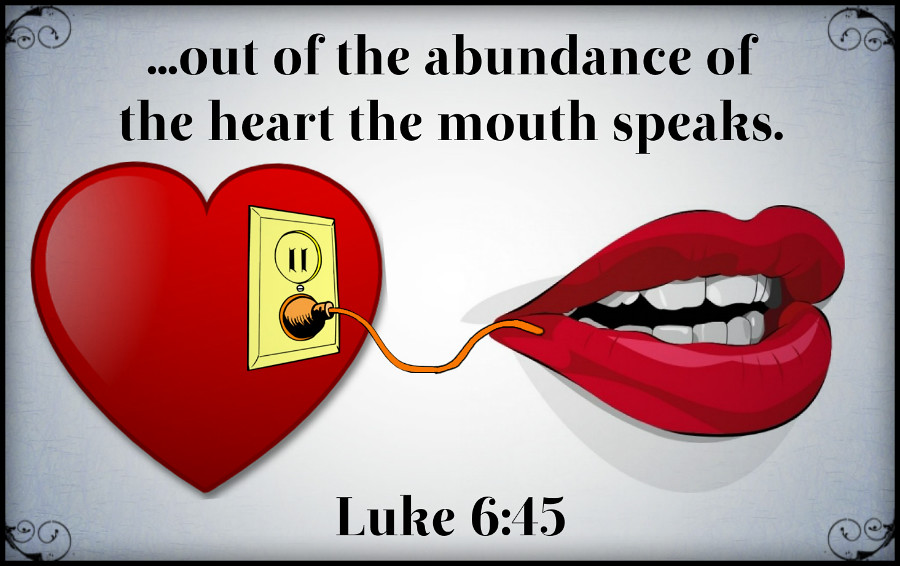

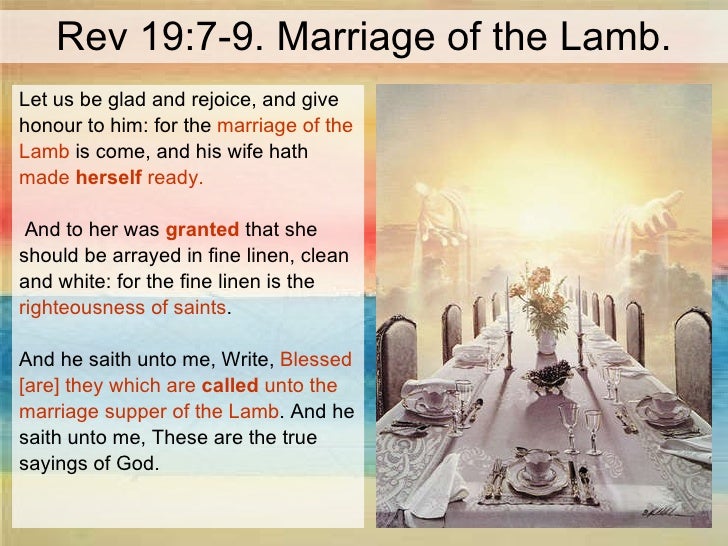



 SB SALT AND LIGHT MINISTRIES