I love studying the Bible and especially when it comes to studying the nature of God and all things concerning His creation…

God never ceases to blow my mind!

Let’s start by looking at what science has discovered about God’s creation, and the fact that there is never any contradiction between what the Bible says and TRUE science.

Believe in God in 5 Minutes (Scientific Proof)

MIT Physicist Dr. Gerald Schroeder offers proof God exists and explains how, as a scientist, he believes in God.

What is meant by God’s omniscience?

One of the main attributes of God is that God cannot learn, because quite simply He knows everything.

In other words, our future is always in God’s past.

I love what the scripture says in Psalms 139:16 (TLB)

(Psalm 139 is one of my most favorite verses in the Bible)

Psalm 139:15-18
Living Bible

15 You were there while I was being formed in utter seclusion!

16 You saw me before I was born and scheduled each day of my life before I began to breathe.

Every day was recorded in your book!

17-18 How precious it is, Lord, to realize that you are thinking about me constantly!

I can’t even count how many times a day your thoughts turn toward me.

And when I waken in the morning, you are still thinking of me!

When I read Psalm 139, the words of David come to mind in Psalm 8:4-8 CEV)

4 Then I ask, “Why do you care
about us humans?

Why are you concerned
for us weaklings?”

5 You made us a little lower
than you yourself,
and you have crowned us
with glory and honor.

6 You let us rule everything
your hands have made.
And you put all of it
under our power—

7 the sheep and the cattle,
and every wild animal,

8 the birds in the sky,
the fish in the sea,
and all ocean creatures.

How marvelous it is to think that God is so mindful of us.
___

Omniscience is defined as “the state of having total knowledge, the quality of knowing everything.”

For God to be sovereign over His creation of all things, whether visible or invisible, He has to be all-knowing.

His omniscience is not restricted to any one person in the Godhead—Father, Son, and Holy Spirit are all by nature omniscient.

God knows everything (1 John 3:20).

He knows not only the minutest details of our lives but those of everything around us, for He mentions even knowing when a sparrow falls or when we lose a single hair (Matthew 10:29-30).

Not only does God know everything that will occur until the end of history itself (Isaiah 46:9-10), but He also knows our very thoughts, even before we speak forth (Psalm 139:4).

He knows our hearts from afar; He even saw us in the womb (Psalm 139:1-3, 15-16).

Solomon expresses this truth perfectly when he says, “For you, you only know the hearts of all the children of mankind” (1 Kings 8:39).

Despite the condescension of the Son of God to empty Himself and make Himself nothing (Philippians 2:7), His omniscience is clearly seen in the New Testament writings.

The first prayer of the apostles in Acts 1:24, “Lord, you know everyone’s heart,” implies Jesus’ omniscience, which is necessary if He is to be able to receive petitions and intercede at God’s right hand.

On earth, Jesus’ omniscience is just as clear.

In many Gospel accounts, He knew the thoughts of his audience (Matthew 9:4; 12:25; Mark 2:6-8; Luke 6:8).

He knew about people’s lives before He had even met them.

When He met the woman collecting water at the well at Sychar, He said to her,

“The fact is you have had five husbands, and the man you now have is not your husband” (John 4:18).

He also tells His disciples that their friend Lazarus was dead, although He was over 25 miles away from Lazarus’s home (John 11:11-15).

He advised the disciples to go and make preparation for the Lord’s Supper, describing the person they were to meet and follow (Mark 14:13-15).

Perhaps best of all, He knew Nathanael before ever meeting him, for He knew his heart (John 1:47-48).

Clearly, we observe Jesus’ omniscience on earth, but this is where the paradox begins as well.

Jesus asks questions, which imply the absence of knowledge, although the Lord asks questions more for the benefit of His audience than for Himself.

However, there is another facet regarding His omniscience that comes from the limitations of the human nature which He, as Son of God, assumed.

We read that as a man He “grew in wisdom and stature” (Luke 2:52) and that He learned “obedience through suffering” (Hebrews 5:8).

We also read that He did not know when the world would be brought to an end (Matthew 24:34-36).

We, therefore, have to ask, why would the Son not know this, if He knew everything else?

Rather than regarding this as just a human limitation, we should regard it as a controlled lack of knowledge.

This was a self-willed act of humility in order to share fully in our nature (Philippians 2:6-11; Hebrews 2:17) and to be the Second Adam.

Finally, there is nothing too hard for an omniscient God, and it is on the basis of our faith in such a God that we can rest secure in Him, knowing that He promises never to fail us as long as we continue in Him.

He has known us from eternity, even before creation.

God knew you and me, where we would appear in the course of time, and whom we would interact with.

He even foresaw our sin in all its ugliness and depravity, yet, in love, He set his seal upon us and drew us to that love in Jesus Christ (Ephesians 1:3-6).

We shall see Him face to face, but our knowledge of Him will never be complete.

Our wonder, love and praise of Him shall go on for all millennia as we bask in the rays of His heavenly love, learning and appreciating more and more of our omniscient God.

[From S. Michael Houdmann — Got Questions Ministries]

Let’s take a look at what the ancient Church fathers thought on the subject of God’s omniscience.
____________________________

Ancient Christian Commentary on Scripture

by Thomas C Oden

What is God’s omniscience?

God’s omniscience is a way of speaking about God’s knowledge.

The biblical authors describe God’s knowledge as exhaustive.

He knows everything that can be known, everything there is to know.

This knowledge is a comfort to the biblical authors and to those who commented on Scripture in the first centuries of the church.

Let’s see how they reflect on God’s omniscience with the Ancient Christian Commentary on Scripture.

Overview of Psalm 139:1–6:

“O LORD, you have searched me and known me!

You know when I sit down and when I rise up; and you discern my thoughts from afar.

You search out my path and my lying down and are acquainted with all my ways.

Even before a word is on my tongue, behold, O LORD, you know it altogether.

You hem me in, behind and before, and lay your hand upon me.

Such knowledge is too wonderful for me; it is high; I cannot attain it.” -Psalms 139:1-6

We can better understand the depth of God’s wisdom by observing the marvelous nature and functions of our physical constitution.

Although it is more difficult for people to know themselves than the world around them, yet there is no better resource for understanding the greatness of God than the constitution of our nature.

Divine providence is marvelous, provides wonderful and magnificent resources to humanity and motivates us to praise our divine Benefactor.

No matter what language a people speaks, they receive the proclamation of God and praise his wonderful knowledge.

Every living creature is surrounded by the power and presence of God.

God is truly infinite, incomprehensible, omnipresent, and omniscient.

Since God is omnipresent and possesses omniscience, we cannot hide our sins from him and therefore should be ashamed to sin in his sight.

The omnipresence of Father and Son supports their personal equality in the godhead.

If God is present everywhere, then His wisdom and Spirit are also omnipresent.

While everyone is in the presence of God, only the blessed are truly with him.

God’s Omniscience

“Such knowledge is too wonderful for me; it is high; I cannot attain it.” -Psalms 139:6

BODILY FUNCTIONS WITNESS THE WISDOM OF GOD – Basil the Great

Basil the Great (b. c. 330; fl. 357–379). One of the Cappadocian fathers, bishop of Caesarea and champion of the teaching on the Trinity propounded at Nicaea in 325.

He was a great administrator and founded a monastic rule.

“And so, when you have gone over all these points with suitable reflections on each, when you have, in addition, studied the process of breathing, the manner in which the heart conserves its warmth, the organs of digestion and the veins, you will discern in all of these wonders the inscrutable wisdom of the Creator; so that you will be able to say with the prophet: ‘Your knowledge is become wonderful’ from the study of myself.

‘Give heed, therefore, to yourself,’ that you may give heed to God, to whom be glory and power forever and ever. Amen.” — HOMILY ON THE WORDS “GIVE HEED TO THYSELF”

THE CONSTITUTION OF THE HUMAN BODY REVEALS THE WISDOM OF GOD – Basil the Great

“In truth, to know oneself seems to be the hardest of all things.

Not only our eye, which observes external objects, does not use the sense of sight on itself, but even our mind, which contemplates intently another’s sin, is slow in the recognition of its own defects.

Therefore, even at present our speech, after eagerly investigating matters pertaining to others, is slow and hesitant in the examination of our own nature.

Yet, it is not possible for one, intelligently examining himself, to learn to know God better from the heavens and earth than from our own constitution, as the prophet says, ‘Your knowledge is become wonderful from myself’; that is, having carefully observed myself, I have understood the superabundance of wisdom in you.” — HOMILIES ON THE HEXAEMERON 9.6

GOD’S KNOWLEDGE IS SUBLIME– Augustine

Augustine of Hippo (354–430).

Bishop of Hippo and a voluminous writer on philosophical, exegetical, theological and ecclesiological topics.

He formulated the Western doctrines of predestination and original sin in his writings against the Pelagians.

“Do we, whose minds are so feeble, believe that we can comprehend whether God’s foresight is the same as his memory and understanding, who do not behold individual things by thought but embraces all that he knows in one eternal, unchangeable and ineffable vision?

In this difficulty and distress, therefore, we may indeed cry aloud to the living God, ‘Your knowledge is become wonderful to me; it is sublime, and I cannot reach it.’

For I understand from myself how wonderful and how incomprehensible your knowledge is, by which you have made me, when I consider that I cannot even comprehend myself whom you have made; and yet in my meditation a fire flames out, ‘so that I seek your face evermore.’” — ON THE TRINITY 15.7.13

THE MARVEL OF DIVINE Providence — Theodoret of Cyr

Theodoret of Cyr (c. 393–466).

Bishop of Cyr (Cyrrhus), he was an opponent of Cyril who commented extensively on Old Testament texts as a lucid exponent of Antiochene exegesis.

“Since water does not support horses, donkeys, mules, the tracks of wheels and the marks of wagons and chariots, which are all unmistakable guides to travelers by land, the Maker of the universe has given to the broad seas the disposition of the stars like road tracks on land.

Praise the wonders of divine providence! Oh! Ineffable love! Oh! unspeakable wisdom!

Who could marvel enough at the goodness of divine providence, at its power, its nobility in difficulties, its ease in managing awkward situations, its magnificence, its resourcefulness?

Truly your knowledge was wonderful to me:

‘I was overwhelmed and could not reach to it.’

That is my exclamation, too. If you listen to me, you too will recite these words with me, praise the Benefactor with all your might and render grateful words of thanks for his countless blessings.” — DISCOURSE 1.39

GOD’S KNOWLEDGE IS WONDERFUL– Theodoret of Cyr

“And so loud is their proclamation that the whole human race hears their voice,

‘There are no speeches or utterances where their voices are not heard.’

For every race and every tongue hears the proclamations of day and night.

Tongue differs from tongue, but nature is one and derives the same lesson from day and night.

Thus the same author, singing the praises of the Creator in another psalm, says, ‘Your knowledge was wonderful to me; I was overwhelmed, and I could not reach to it.’” — DISCOURSE 4.4

GOD’S OMNISCIENCE AND OMNIPRESENCE IS Incomprehensible — Chrysostom

John Chrysostom (344/354–407; fl. 386–407).

Bishop of Constantinople who was noted for his orthodoxy, his eloquence and his attacks on Christian laxity in high places.

“Let us listen to what the prophet says:

‘Your knowledge is too wonderful for me.’ But let us see what he says further on:

‘I will give you thanks, for you are fearful and wonderful.’

Why ‘fearful’?

We wonder at the beauty of columns, mural art, the physical bloom of youth.

Again, we wonder at the open sea and its limitless depth, but we wonder fearfully when we stoop down and see how deep it is.

It was in this way that the prophet stooped down and looked at the limitless and yawning sea of God’s wisdom.

And he was struck with shuddering.

He was deeply frightened, he drew back, and he said in a loud voice,

‘I will give you thanks for you are fearfully wondrous; wondrous are your works.’ And again, ‘Your knowledge is too wondrous for me; it is too lofty and I cannot attain to it.’

Do you see how prudent the servant is and how grateful is his heart?

What he is saying is this:

‘I thank you that I have a Master whom I cannot comprehend.’

And he is not now speaking of God’s essence. He passes over the incomprehensibility of his essence as if it is something on which everybody is agreed.

What he is speaking of here is God’s omnipresence and omniscience; and he is showing that this is the very thing that he does not understand, namely, how God is present everywhere and knows everything.”

— AGAINST THE ANOMOEANS 1.24–25

Read the Ancients’ Insight!

The Ancient Christian Commentary on Scripture is a commentary on the entire Bible (and Apocrypha).

The commentary is taken from the writings of the early church fathers who lived during the first several centuries of the church.
____

I thank you Jesus that you are always mindful of each one of us and that you have promises that you will complete the work that you have begun in each one of our lives (Philippians 1:6)

Come join the Adventure!

Skip 🕊️

These signs will follow those who believe…

The entire Bible (from Genesis to revelation) is God’s Operations Manual for Life…

And in it’s pages we are not only given a road map and instructions for eternal life, but we also are given the Rules of Engagement and instructions in how we are to engaged in spiritual warfare (see 2 Cor 10: 3-6), along with many other important instructions for life.

Miracle, Signs and Wonders

In Mark 16, Jesus (after His resurrection) rebuked His disciples for their unbelief and their lack of faith.

As far as I can see, that same problem exists today in the church.

When I became a Christian, I knew less than nothing about the Bible, and I made a promise to the Lord that the Bible would be my Plumb line and Guide (and as it says in 2 Timothy 3:16) “profitable for doctrine, for reproof, for correction, and instruction in all righteousness,” and if I could find it in the Word I would accept it as truth.

Mark 16:14-18
The Voice

14 The eleven did not believe until Jesus appeared to them all as they sat at dinner.

He rebuked them for their hard hearts—for their lack of faith—because they had failed to believe those witnesses who had seen Him after He had risen.

Jesus: 15 Go out into the world and share the good news with all of creation.

16 Anyone who believes this good news and is ceremonially washed (baptized) will be rescued, but anyone who does not believe it will be condemned.

17-18 And these signs will follow those who believe:

1. They will be able to cast out demons in My name,

2. Speak with new tongues,

3. Take up serpents,

4. Drink poison without being harmed, and

5. Lay their hands on the sick to heal them.
____

In chapter 16 verse 8, the women fled from the tomb with mingled shock and panic.

They were too afraid to tell anyone what had happened.

This is not surprising.

The wonder is that they had been so brave and loyal and devoted up to now.

From the other Gospels we learn that after finding the tomb empty, Mary Magdalene ran and told Peter and John.

Coming back with her they found the sepulcher empty, as she had told them.

They returned to their home but she stayed at the empty tomb.

It was then that Jesus appeared to her.

16:10, 11 Again she went back to the city to share the good news with the sorrowing disciples.

For them it was too good to be true.

They did not believe it.

The Appearance to Two Disciples (16:12, 13)

16:12 The full account of this appearance is found in Luke 24:13–31.

Here we read that He appeared in another form to two disciples on the road to Emmaus.

To Mary He had appeared as a gardener.

Now He seemed like a fellow-traveler.

But it was the same Jesus in His glorified body.

16:13 When the two disciples returned to Jerusalem and reported their fellowship with the risen Savior, they met the same disbelief that Mary had encountered.

The Appearance to the Eleven (16:14–18)

16:14 This appearance of Jesus to the eleven took place that same Sunday evening (Luke 24:36; John 20:19–24; 1 Cor. 15:5).

Although the disciples are referred to as the eleven, only ten were present.

Thomas was absent on this occasion.

Jesus rebuked His own for their refusal to accept the reports of His resurrection from Mary and the others.

Verse 15 records the commission that was given by the Lord on the eve of His Ascension.

There is thus an interval between verses 14 and 15.

The disciples were commanded to preach the gospel to the whole creation.

The Savior’s goal was world evangelization.

He purposed to accomplish it with eleven disciples who would literally forsake all to follow Him.

16:16 There would be two results of the preaching. Some would believe, be baptized, and be saved; some would disbelieve and be condemned.

Verse 16 is used by some to teach the necessity of water baptism for salvation.

We know it cannot mean that for the following reasons:

1. The thief on the cross was not baptized; yet he was assured of being in Paradise with Christ (Luke 23:43).

2. The Gentiles in Caesarea were baptized after they were saved (Acts 10:44–48).

3. Jesus Himself did not baptize (John 4:1, 2)—a strange omission if baptism were necessary for salvation.

4. Paul thanked God that he baptized very few of the Corinthians (1 Cor. 1:14–16)—an impossible thanksgiving if baptism were essential for salvation.

Approximately 150 passages in the NT state that salvation is by faith alone.

No verse or few verses could contradict this overwhelming testimony.

Baptism is connected with death and burial in the NT, not with spiritual birth.

What then does verse 16 mean?

We believe it mentions baptism as the expected outward expression of belief.

Baptism is not a condition of salvation, but an outward proclamation that the person has been saved.

16:17, 18 Jesus here describes certain miracles that would accompany those who believe the gospel.

Most of these signs are found in the Book of Acts: Cast out demons (Acts 8:7; 16:18; 19:11–16).

New tongues (Acts 2:4–11; 10:46; 19:6).

Handle serpents (Acts 28:5). Drink poison without harmful effects—not recorded in Acts but attributed to John and Barnabas by the church historian Eusebius.

Lay hands on the sick for healing (Acts 3:7; 19:11; 28:8, 9).

What was the purpose of these miracles?

We believe the answer is found in Hebrews 2:3, 4.

Often men would ask the apostles and others for proof that the gospel was divine.

To confirm the preaching, God bore witness with signs and wonders and various gifts of the Holy Spirit.

As we read this text, “these signs will follow those who believe, here Jesus gave His disciples a promise of divine power and protection as they fulfill the Great Commission.

This promise is to be understood in the context of the dangers inherent in the worldwide spread of the gospel, as Paul was bitten by a snake and preserved on the island of Malta (Acts 28:1-6).

Jesus never intended drinking poison or handling snakes to be a specific test or measure of faith.

[NOTE: Many scholars question the authenticity of vv. 9–20, primarily because of omission of these verses in some of the earliest manuscripts, and because their style is somewhat different from the rest of Mark.

However, Christian writers of the second century, such as Justin Martyr, Irenaeus, and Tatian, testify to the inclusion of these verses, and the earliest translations, such as the Latin, Syriac, and Coptic, all include them.

In any case, the passage does reflect the experience and expectation of the early church concerning the practice of charismatic gifts, and the question of its authenticity should remain open.]

God changes not… “He is the same yesterday, today and forever (Heb 13:8).

God is true to His Word and His Word has not changed.

God says that He has counted His Word above all His name (Ps 138:2), and that His Word shall not return to Him void, without accomplishing the purpose wherein it has been sent (Isa 55:11).

SELAH (let us pause and calmly think about these things)

Come join the Adventure!

Skip 🕊️
As Christians, we are to be guided by the Holy Spirit and not by our flesh…

The Bible tells us that the desires of our flesh are at enmity against the mind of God (Rom 8:7)…

And so we are instructed in scripture to walk in the Spirit, by faith, and not by the flesh.

Galatians 5
Walk in the Spirit

In chapter 5, Paul explains to the Galatian Christians: Through grace, Christ has set you free.

Stand firm, and do not fall back into the slavery of the law.

Yet do not use your freedom as an opportunity to sin.

Do not give yourself over to the deeds of your carnal desires but rather to the deeds of the Holy Spirit.

The Christian is freed from external control by the law to internal control by the Holy Spirit.

The Christian is also set free from the negative effects of the law, so don’t return to it.

You would have to keep the whole law perfectly, which you cannot.

In Christ, only faith working through love avails anything.

Christ died to set us free from slavery to the law.

Our responsibility is to stand firm and not to fall back into law and sin.

Those who return to the law face six negative consequences.

First, it invalidates Christ’s work on the cross for Christ will be of no value to you.

By submitting to circumcision, a person demonstrated that they were not fully trusting in Christ.

Instead they added their own works to what Christ had done, thus invalidating the sufficiency of Christ for salvation.

The second negative consequence of returning to the law is obligation.

Once a person submits to one part of the law (circumcision), he is obligated to obey the whole law.

The third negative consequence of returning to the law is that it removes a person from the sphere of grace.

While the legalist is insecure because he cannot know if he has done enough to merit salvation, the believer is secure because he has placed his faith in Christ and will eagerly await righteousness.

When Paul says we eagerly await. . . the righteousness for which we hope, he is referring to one of two possibilities.

On the one hand he may be referring to the righteousness that grows in us slowly, day by day, as we live by faith in Him (in Jesus).

On the other hand, he may be referring to the day when our righteousness will suddenly be complete, the day when Jesus returns (Rom. 8:8-25; Col. 1:5; 2 Tim. 4:8).

Both ideas are true and are taught elsewhere in Scripture.

Our salvation is past, present, and future. We have been saved by Jesus’ work on the cross in the past; we are saved day by day as the Spirit works within us to bring about daily righteousness, and we will be saved when we see Jesus and receive our glorified body, freed from sin to serve him in unsullied righteousness.

What truly matters is the fruit of grace which is faith expressing itself through love (Eph. 2:10; Jas. 2:14-18).

To fall from grace is to fall from love.

The fourth negative consequence of returning to the law is that it hinders spiritual growth and development.

Using the metaphor of a race, Paul states that the legalists had cut in on the Galatians’ spiritual race and caused them to stumble spiritually.

As a result, the Galatians were no longer obeying the truth.

Turning to a yeast metaphor, Paul illustrates how quickly a little bit of legalism can contaminate a believer and, indeed, a whole church.

Paul, however, expressed his confidence that the Galatians would not depart from the truth.

He warned that those who are confusing them will experience God’s judgment.

A fifth consequence when one retreats to legalism is the removal of the offense of the cross.

Before Paul was converted, as a Pharisee, he preached circumcision.

Now he is being accused of still preaching circumcision.

Paul denies this accusation by pointing to the offense or stumbling block of his gospel.

He omitted circumcision, and this omission was an offense to the legalists who attacked him.

The sixth and final consequence of turning to the law is anger.

Paul is so angry he wishes the legalists would go the whole way and castrate themselves as did the pagan priests of the cult of Cybele in Asia Minor.

This desire is not a pretty picture, but Paul is completely exasperated by these people who are preaching circumcision and sabotaging the Galatians’ faith.

Christ gives the Christian the freedom to love others truly.

In verse 1, Paul states that Christian freedom is the right and privilege of every believer.

Then he points out six negative consequences of falling back into slavery.

Now he warns them not to use this freedom as a license to sin.

Rather than liberty being used for selfishness, the true objective of their newfound freedom is love.

Quoting Leviticus 19:18, Paul summarizes the law as “love your neighbor as yourself.”

Always remember that we are slaves commissioned to love one another (Matt. 22:39).

As a result of the legalists, this church was divided.

They were biting and devouring each other.

Their church and community of faith were on the verge of destruction.

Legalism treats people harshly and often leads to divisions.

Release from the law and the power to love are results of God’s working in us by the Holy Spirit.

The law was powerless to help a Christian overcome these sins.

We may want to please God, but our sin nature continually pulls us into disobedience (see Rom. 7).

The answer to this battle between the old and new nature is found in the inward ministry of the Holy Spirit.

To experience victory we must live or walk by the Spirit.

As we live our lives in dependence on, and obedience to, the Holy Spirit, we will not gratify the desires of the sinful nature.

Now Paul demonstrates the need for the Holy Spirit’s enablement.

The Christian will, this side of heaven, always experience conflict between the Holy Spirit and the flesh.

Here flesh is not limited to the physical dimension of man but denotes anything less than and other than God in which man places trust that belongs to God alone.

Paul gives a more complete description of this conflict in Romans 7.

In summary, Paul tells us that victory over sin is not the result of living under the law.

Instead, it is the result of actively yielding to the Spirit.

Therefore, both the first step of salvation and its ongoing steps (sanctification, growth in holiness) are brought about within us by God’s Spirit working through faith.

To be saved, we must have faith in Christ.

To walk in God’s way, we must have faith in the Holy Spirit, for He empowers us to walk in obedience.

The acts of the flesh symbolize spiritual death, but the fruit of the Spirit is evidence of spiritual life.

In verses 19-23, Paul contrasts the acts of the flesh with the fruit of the Spirit.

The acts of the sinful nature are divided into four categories.

First, three sexual sins are listed.

Sexual immorality is a broad term covering fornication, adultery, and homosexuality.

Impurity is also a broad term referring to moral uncleanness in our thought life, speech, and actions (Eph. 5:3-4).

Debauchery is brazen, unashamed boldness in these sexual sins.

People who become desensitized through sexual exploits can eventually lose all modesty and instead can flaunt their erotic, sinful lifestyle.

The second category of these sinful acts is religious sin.

Paul presents idolatry and witchcraft as two religious sins. Idolatry involves bowing down to pagan gods.

Witchcraft refers to the magical potions administered by sorcerers.

Through these magical potions, these sorcerers were able to control the evil powers.

Now Paul lists eight societal sins.

They run the gamut from hatred to the actions of discord and jealousy that result in factions.

Loving others is not easy.

When the flesh controls us, interpersonal problems are the result.

Finally, two alcohol-related sins are listed: drunkenness and orgies.

Orgies refer to drunken sexual perversions associated with Bacchus, the god of wine.

Alcohol controls people and distorts their thinking.

Many people, under the influence of a few drinks, have committed grievous sexual sins.

Rather than being controlled by alcohol, the Christian is to be controlled by the Holy Spirit (Eph. 5:18).

While a Christian may intermittently get pulled into these sins, those who live like this (habitually, continually) ARE NOT CHRISTIANS and will therefore NOT inherit the kingdom of GOD (see 1 Corinthians 6:9).

In contrast to the “acts of the flesh” presented above, those who are obedient to the Holy Spirit produce beautiful, nourishing spiritual fruit.

Notice the fruit in this passage is called the fruit of the Spirit, not the fruit of self-effort.

This fruit the Holy Spirit produces in the life of a faithful Christian.

In other passages of Scripture, we are commanded to fulfill the individual characteristics.

The answer to this seeming paradox, I believe, is that only the Holy Spirit can produce the fruit; but he will not do so unless we are striving to the best of our ability for them in faithful obedience.

These fruits of the Spirit are in harmony with and not opposed to the law.

However, they are not produced by the law but rather by the Spirit working through the believer’s faith.

The Christian has died to sin and is alive to a Spirit-controlled life of righteousness.

The struggle between our flesh and our new nature is real.

Yet there is more truth to help us win this battle.

Paul explains that those who know Jesus Christ do not have to respond to the flesh because they have crucified the [flesh] with its passions and desires.

This crucifixion refers to our identification with Christ in His death and resurrection (Gal. 2:20).

When Christ died, our flesh was judged.

This does not mean our propensity to sin has been eradicated or rendered inoperative.

We must accept that our old nature has died with Christ and that as new people we have an increasing power to resist sin (Rom. 6:10-12).

In addition to the flesh that is judged, Paul reminds the Galatians that they have the Holy Spirit to strengthen them against sin.

We must keep in step by following the Holy Spirit’s direction and guidance.

He ends our bondage to evil desires.

Finally, Paul challenges the Galatians to live a life of harmony.

Conceited legalism sees no need of the Spirit’s help and thinks it has accomplished salvation apart from the Spirit. Instead, it leads to arguments.

Paul says to stop provoking and envying each other.

These negative traits point to the divisions in the church caused by the legalists.

The only answer to such disharmony is love empowered by the Holy Spirit.

Everyone needs a certain amount of approval from others. But those who go out of their way to secure honors or to win popularity become conceited and show they are not following the Holy Spirit’s leading.

Those who look to God for approval won’t need to envy others.

Because we are God’s sons and daughters, we have His Holy Spirit as the loving guarantee of His approval.

Seek to please God, and the approval of others won’t seem so important.

Ships at sea are not guided by following other ships, or else we will just be going in circles; rather Jesus Christ is our TRUE NORTH and we follow him alone!

SELAH (let us pause and calmly think about these things)
________________________

From Faith to Faith

PURE SPIRITUAL POWER
by Gloria Copeland

“But the fruit of the Spirit is love, joy, peace, longsuffering, gentleness, goodness, faith, meekness, temperance: against such there is no law.”
— Galatians 5:22-23

So many believers think of the fruit of the spirit as little more than a passive list of pleasant qualities that can help improve their personalities.

But they’re far greater than that! They’re pure spiritual power.

Love is so powerful, the scripture says, that it never fails.

Patience is so powerful it cannot be stopped. No matter what the circumstances, it will not quit.

Temperance is so powerful it can master all the unruly desires of your flesh.

The fruit of the spirit are not weak; they’re strong. So strong all the demons of hell can’t stop them. So strong that if you’ll let them flow out of you, they’ll correct the problems in your life.

They’ll keep you steadfast when all the people around you are falling down.

They’ll keep you on your feet when governments fail and when the storms of life come.

We are living in dangerous days. There’s only one way you can make it through in victory.

You must begin to release those powerful fruits of the spirit God has placed inside you.

Believe me, if you’re born again, they are there.

Learn to yield to them and as 2 Peter 1:10 promised, you shall never fall!

Scripture Reading: 2 Peter 1:1-10
____

Come join the Adventure!

Skip 🕊️

The Bible warns us not to believe every spirit, but rather we are to test the spirits, to see whether they are from God…

Jesus said that we may know them by their fruit, and whether the words they speak line up with scripture…

1 John 4:1-4
Amplified Bible, Classic Edition

1 Beloved, do not put faith in every spirit, but prove (test) the spirits to discover whether they proceed from God; for many false prophets have gone forth into the world.

2 By this you may know (perceive and recognize) the Spirit of God: every spirit which acknowledges and confesses [the fact] that Jesus Christ (the Messiah) [actually] has become man and has come in the flesh is of God [has God for its source];

3 And every spirit which does not acknowledge and confess that Jesus Christ has come in the flesh [but would annul, destroy, sever, disunite Him] is not of God [does not proceed from Him].

This [nonconfession] is the [spirit] of the antichrist, [of] which you heard that it was coming, and now it is already in the world.

4 Little children, you are of God [you belong to Him] and have [already] defeated and overcome them [the agents of the antichrist], because He Who lives in you is greater (mightier) than he who is in the world.
____

The mention of the Holy Spirit in chapter 3:24 caused John to pause briefly to sound a warning.

God’s Spirit is not the only spirit manifest in the world.

Some people naively think that any manifestation of a spiritual presence is indication of the Holy Spirit.

The apostle explained how to distinguish the Holy Spirit from other spirits at work in the world.

“In chapter 3 we studied the contrast between two families, the children of God and the children of the devil.

Here we find a contrast between two spirits, the spirit of Christ and the spirit of antichrist.”

In chapter 4:1-3, John wrote, “Stop believing” (everything you hear)!

Evidently some of his first readers were believing false teaching.

“Credulity means gullibility and some believers fall easy victims to the latest fads in spiritualistic humbuggery.”

It is necessary to distinguish the Spirit of God from false spirits (i.e., spirits advocating falsehood) because many false prophets have gone out into the world (cf. 2:18-27).

False spirits (utterances or persons inspired by a spirit opposed to Christ) produce false teaching.

“To ‘test the spirits’ is to make a choice from among competing claims.”

John’s test question whereby one can determine whether the Spirit of God or a spirit of falsehood possesses a person was this.

What does the person believe about Jesus Christ?

If a person denies the incarnation of Jesus Christ (this was a heresy false teachers were promoting among John’s original readers) then you can know he has the spirit of antichrist (cf. 2:18-27).

That is a denial of the doctrine of Christ, as the apostles taught it, and is therefore a deviation from orthodox Christology, and it evidences a spirit opposed to Jesus Christ.

The test of the presence of the Divine Spirit is the confession of the Incarnation, or, more exactly, of the Incarnate Savior (who is the Christ (anointed One – God in the flesh).

The Gospel centers in a Person – Jesus, who is the Way, the Truth, and the Life.

Mind you, that John did not say we can tell false spirits by their works.

He said we can identify that they are false spirits by their message.

This was the acid test of a false prophet under the Old Covenant as well (Deut. 13:1-5).

“According to the Lord Jesus, false prophets were to be tested ‘by their fruits’ (cf. Matthew 7:16-20).

Contrary to popular interpretation, this does not mean that they were to be tested by their works.

On the contrary, as Matthew 12:33-37 proves, their fruits are their words!

Indeed, as the Lord Himself said, they ‘come to you in sheep’s clothing’ so that they look like sheep when in reality they are ‘ravenous wolves’ (Matthew 7:15).

Their behavior does not set them apart from the sheep, but their message does!”

John did not say that every spirit that denies Jesus, but every spirit that does not confess Jesus (v. 3).

Often heretical teaching masks its deviations from the truth by simply failing to affirm important biblical truth.

Rather than proclaiming, “Jesus is not the Christ,” they fail to affirm that He is the Christ.

In verse 4, we’re told that John’s readers had already overcome these opponents of Jesus Christ by the Holy Spirit who indwelt them (“He who is in you”; cf. 3:24; 4:2, 13).

The Holy Spirit is stronger than Satan (“he who is in the world”).

We overcome Satan, his agents, and his influence as we resist his temptations to doubt, deny, disregard, and disobey the Word of God (1 Pet. 5:9; cf. Gen. 3; Matt. 4).

“You are from God” is the center of a chiasm that embraces verses 2-6.

This powerful and liberating reminder from John tells us not to be frightened by the wickedness and hostility we see all around us, nor to be overwhelmed by the problems we face.

Evil can often seem much stronger than we are.

John assures us, however, that God has ultimately triumphed.

The Holy Spirit has far more power than Satan, all his demons, and all temptations and forces of evil.

God will conquer all evil—and his Spirit and His Word lives in our hearts!

SELAH (let us pause and calmly think about these things)
____________________________

Friday, August 19
Faith To Faith Daily Devotional

GET OUT FROM UNDER
by Gloria Copeland

Ye are of God, little children, and have overcome them: because greater is he that is in you, than he that is in the world.
— 1 John 4:4

Under the circumstances…. Have you ever caught yourself using that phrase?

“I suppose I’m doing pretty well under the circumstances.”

If you’ve ever said something like that, I want you to kick those words out of your vocabulary right now. Because you, as a victorious child of God, don’t have any business living your life “under” your circumstances.

You don’t have any business letting problems and situations rule over you.

Two thousand years ago, Jesus—the One who is in you—ransacked Satan’s kingdom.

Through His death at Calvary, He legally entered the regions of the damned and stripped Satan of EVERYTHING!

He took away all his armor. He took the keys to death and hell.

He bound that strong man, looted his kingdom, and Colossians says He spoiled principalities and powers and made a show of them openly, triumphing over them.

Then Jesus turned around and gave that victory to you.

You are of God. Remember that!

You have overcome through Jesus because He lives in you.

You NEVER have to live “under” the circumstances again!
____

Come join the Adventure!

Skip 🕊️
We can know from the prophetic signs, as predicted in the Bible, that Jesus’ return is near…

God always tells us in His Word what to look for…

Amos 3:7

“Surely the Lord God does nothing,
Unless He reveals His secret to His servants the prophets.”

The Bible is the only book ever written that gives the future as history.

And this is true for all of us, since God exists outside of time and space (which is all a part of His creation, that He created for our benefit), that our future is already in the past for God.

He knows all and He sees all. There’s nothing about us that He doesn’t already know, past, present and future.

Isaiah 46:8-10

8 “Remember this, and show yourselves men;

Recall to mind, O you transgressors.

9 Remember the former things of old,
For I am God, and there is no other;

I am God, and there is none like Me,

10 Declaring the end from the beginning,
And from ancient times things that are not yet done,

Saying, ‘My counsel shall stand,
And I will do all My pleasure’”
____

Jesus already foretold what would happen in the last days, just before His return, and today we are seeing it unfold in the evening news.

IT BEGINS! Biblical Destruction – Bo Polny, Kim Clement

The reason Jesus told us what to look for was so that we wouldn’t lose our peace.

The only people who will know what to look for are those who read their Bible and take it seriously.

When the topic of the end times or last days comes up, many people respond with fear.

When you read the events that will occur leading up to the second coming of Christ there is reason to fear, if you are on the wrong side.

By the way, if you are in Christ you are not on the wrong side.

That’s why you don’t need to be afraid.

In fact, you can look at these signs with great hope and expectation.

If you have looked at end times events through the lens of fear, then we need to stop doing that.

We need to switch our thinking today…and change the way we look at end times events.

We need to line up our faith and hope with the promises of Scripture.

Here are five biblical reasons you can hold on to so you don’t have to be afraid about the end times:

1. Your Redemption Is Drawing Closer

“When these things begin to take place, stand up and lift up your heads, because your redemption is drawing near.”
— Luke 21:28

In this chapter in Luke, Jesus is describing the destruction of the temple and what will happen during the end times.

After describing these things, He then proceeds to remind you of what your response should be.

Not heads down, but heads up.

In other words, Jesus is saying when these things begin to happen look for me…because I am coming soon.

Your fear should be replaced by anticipation because your salvation is drawing closer. Isn’t that reason to rejoice?

Jesus is encouraging you not to be afraid.

Remember, you are on His side. And let us sneak peek to the end of the story, Jesus wins.

Because He wins, you win—so don’t be afraid.

When you see the signs, that means His coming is getting closer so lift up your head and rejoice.

“And do this, understanding the present time:

The hour has already come for you to wake up from your slumber, because our salvation is nearer now than when we first believed.”
— Romans 13:11!

2. You Should Be Encouraging Yourself and Others

“For the Lord Himself will come down from heaven, with a loud command, with the voice of the archangel and with the trumpet call of God, and the dead in Christ will rise first.

After that, we who are still alive and are left will be caught up together with them in the clouds to meet the Lord in the air.

And so we will be with the Lord forever.

Therefore encourage one another with these words.”
— 1 Thessalonians 4:16-18

In this passage, Paul is describing what is commonly known as the rapture of the church.

The verse I want you to pay close attention to is verse 18.

What does Paul instruct the church to do? Encourage each other with these words.

It feels like there was a time in the church when we lived with the expectation and hope of Jesus’ return.

I don’t know if that still exists today, for many people (even Christians) I would say not, but regardless, we need to look at the end times and the expectation of Christ’s return as a means of encouraging each other.

As with the story of the 10 virgins, we need to keep our lamps (our vessels) full of oil, in these last days!

The Bible tells us that when Jesus comes back, every wrong thing will be made right and every broken thing will be made well.

That’s something we can all look forward to.

The world might be crazy right now, but I know it won’t always be that way…because Jesus is coming.

This is not something to be afraid of, but something that can encourage you and someone else.

3. We Have Work to Do

“And this gospel of the kingdom will be preached in the whole world as a testimony to all nations, and then the end will come.”
— Matthew 24:14

Knowing that we are living in the end times, this is not the time to shrink back.

There is still something called the Great Commission—our responsibility to preach the gospel and make disciples.

If you want to be afraid of something, be afraid for those who don’t know Jesus, because their end is different from ours.

This should compel us to want to share the love and hope of Jesus to those who don’t know him.

This will not be easy work, especially as the love of many grows cold in our society, but this is necessary work.

How else will they know unless we tell them?

Let’s be committed to the cause of Christ and even more so as we see the day approaching.

I challenge you (and myself) to be true SALT and LIGHT to a world that needs it.

Let’s be godly examples in our homes, communities, and places of work.

The very fact we know the signs should motivate us to action.

“Therefore, my dear brothers and sisters, stand firm.

Let nothing move you. Always give yourselves fully to the work of the Lord, because you know that your labor in the Lord is not in vain.”
— 1 Corinthians 15:58

4. You Are Closer to Seeing Jesus

“Dear friends, now we are children of God, and what we will be has not yet been made known. But we know that when Christ appears, we shall be like him, for we shall see him as he is. All who have this hope in him purify themselves, just as he is pure.”
– 1 John 3:2-3

One of the awesome things about when Jesus returns is that we will see Him.

Isn’t that what Christianity is all about?

Seeing our wonderful Savior!

The one who loved us so much that He suffered, died, and rose again for our redemption.

In that moment, your faith and all that you have believed will become sight.

One of the great beauties of it all is that we get to see Him just as He is.

That means in all of His glory and splendor.

I know you may have experienced the presence of God before, but never like this.

This alone, my friend, is reason for hope and reason for excitement.

Don’t fear His coming, long for it!

What an awesome day that will be.

What a glorious day that will be, when we shall have total Victory in Jesus!

5. You Are Closer to Your Eternal Home

Then the angel showed me the river of the water of life, as clear as crystal, flowing from the throne of God and of the Lamb down the middle of the great street of the city.

On each side of the river stood the tree of life, bearing twelve crops of fruit, yielding its fruit every month.

And the leaves of the tree are for the healing of the nations.

No longer will there be any curse.

The throne of God and of the Lamb will be in the city, and His servants will serve Him.

They will see His face, and His name will be on their foreheads.

“There will be no more night.

They will not need the light of a lamp or the light of the sun, for the Lord God will give them light. And they will reign for ever and ever.”

“Blessed are those who wash their robes, that they may have the right to the tree of life and may go through the gates into the city.”

(Revelation 22:1-5; Revelation 22:14)

On that day we will no longer be victims to the curse of sin which will be gone forever.

We now get to enjoy God’s presence forever and ever.

This is the ultimate hope and destination of our faith in Christ.

Let us cling to this hope, and as you see the signs of the end times rejoice—because your salvation is truly at hand.

Let’s hope that you are finishing this article more encouraged than when you started.

The end times and the second coming of Christ are awesome events.

My prayer for all of us is that these words would motivate us to be all that God wants us to be, and fulfill our destiny, before He returns.

Let these words of Paul’s be ours:

“I have fought the good fight, I have finished the race, I have kept the faith. Now there is in store for me the crown of righteousness, which the Lord, the righteous Judge, will award to me on that day—and not only to me, but also to all who have longed for his appearing.
— 2 Timothy 4:7-8

SELAH (let us pause and calmly think about these things)

Skip

IXOYE <><
Be still & know Him
Psalm 46:10

Don’t let the world around you press you into its mould…

Give God first place in your life…

Romans 12:1-2
J.B. Phillips New Testament

We have seen God’s mercy and wisdom: how shall we respond?

1-2 With eyes wide open to the mercies of God, I beg you, my brothers, as an act of intelligent worship, to give him your bodies, as a living sacrifice, consecrated to him and acceptable by him.

Don’t let the world around you squeeze you into its own mould, but let God re-mould your minds from within, so that you may prove in practice that the plan of God for you is good, meets all his demands and moves towards the goal of true maturity.
____

Living Sacrifice – In the Old Testament sacrificial system, the “job” of the sacrificial lamb was ended with its death.

An individual or household selected an animal according to the dictated forms, and it was sacrificed to cover sins.

Since Christ became the final atonement for sin, we no longer need the old system.

But Paul is calling believers to consider their whole life as a sacrifice dedicated to God and His purposes, a “living” sacrifice, both holy and single-minded.

Page after page of the Bible proclaims the amazing things that God has done for us.

So how should we respond to these blessings—or “mercies,” as Paul calls them?

The only appropriate response is to give ourselves to God as living sacrifices, ready to be offered up for His purposes however He sees fit.

Walking in the Spirit—Confession of sin in itself is not enough to enable the believer to automatically walk in the Spirit.

He or she must learn to yield their whole self to God (Rom. 6:13; James 4:7).

This involves both the body (Rom. 12:1; 1 Cor. 6:20) and the mind (Rom. 12:2), since what is conceived in the mind is carried out by the body.

One’s whole being must be presented by a decisive act of the will to God for His service.

Yielding leads not only to dedication but also can result in separation:

“do not be conformed to this world” (Rom. 12:2).

Finally, yielding includes transformation of the mind.

This work is said to be accomplished through a lifetime of “renewing” the mind.

Man’s mind has been darkened by sin (8:7; Col. 1:21) and must be brought to the place where it thinks as God thinks (Eph. 4:23).

This renewing is said to come especially through prayer in everything (Phil. 4:6–7) and through constant meditation on the Word of God (Ps. 119:1).

This transformation is a lifelong process that will not be completed until we are with Christ (Phil. 1:6; 1 John 3:2).

While Scripture outlines multiple ways we can serve God, three stand out as major mandates:

The Great Creation Mandate concerns the universe and its intricate richness. God made the world and appointed human beings as its managers (Gen. 1:26–31; 2:15).

The creation mandate calls us to join Him in developing the natural order of the earth for the benefit of all people (see “People at Work” at Ps. 8:6).

Creation now suffers under a curse (Gen. 3:17–19), but God will eventually deliver it from corruption (Rom. 8:18–22).

In the meantime, we are to use it responsibly for His glory.

The Great Commandment Mandate sums up all of our relationships.

We are commanded to love God with every part of our being (Deut. 6:5; Matt. 22:37, 38).

Christians have even more reason to love and serve the Lord because of our exalted position as His adopted children (Rom. 8:12–17).

But our love for God is empty if we neglect to love others (Matt. 22:39, 40; Rom. 13:8–10; 1 John 4:7–11).

The Great Commission Mandate is an extension of the truth that “God so loved the world that He gave His only begotten Son” (John 3:16).

Those who believe in Christ have been charged with spreading this truth to all human beings, so that all people can recognize their sin and respond to God’s gracious offer of forgiveness and new life (Matt. 28:18–20; Rom. 10:14, 15).

These three mandates recur as dominant themes throughout the Bible.

They tell us that God cherishes His creation and intends it to be managed well.

He wants people to love Him and love each other.

And He longs for everyone to know of Christ’s work of salvation.

Each of these mandates is an invitation to faith and service.

We have been invited to be good stewards of the earth and its resources, good neighbors toward all peoples, and good communicators of the gospel.

This renewing of our mind is said to come especially through prayer in everything (Phil. 4:6–7) and through constant meditation on the Word of God (Ps. 119:1).

This transformation is a lifelong process that will not be completed until we are with Christ (Phil. 1:6; 1 John 3:2).

What particular sin stalks you?

When does it seize you with temptation?

As a safeguard, memorize Romans 12:1, 2.

Whenever you feel tempted, repeat these verses in your mind and by God’s power plan not to sin.

SELAH (let us pause and calmly think about these things)
____________________________

The Spirit Filled Believer
by Dick Mills

INTERNAL AND EXTERNAL

“Don’t let the world around you squeeze you into its own mould, but let God re-make you…”
— Romans 12:2 (Phillips)

The ancient Greek had two special words to describe a thing or a person.

The words are schema (skhay’-mah) and morphe (mor-fay’).

We can relate easily to these words because of English derivations.

Schema becomes scheme in English.

Morphe is recognized in the word metamorphosis, used to describe the change of a larva into a butterfly or a polliwog (tadpole) into a frog.

Schema has to do with externals – outward appearance, shell, visible form or fashion, something molded into a certain shape or fixture.

The “scheme of things” thus refers to the visible pattern of things.

Morphe has to with internals – the inner nature of a thing, situation, or person.

In Christians, it points to their character, integrity, and basic decency because of the presence of the Christ-nature within them.

Schema can be transient and morphe can be quite permanent.

When Paul says in the King James Version, “…Be not conformed to this world: but be ye transformed…” the first verb is derived from schema, the second from morphe.

J.B. Phillips translates this verse with a touch of elegant humor:

Don’t let the world around you squeeze you into its own mould, but let God re-make you….

The whole world system is transient, not permanent.

It is unreal, since God’s kingdom is the only ultimate reality.

According to this word from the Lord, we do not need to lose a lot of sleep worrying about how the world looks to us or at us!

Source: The Spirit-Filled Believer’s Daily Devotional by Dick Mills
____


Skip

IXOYE <><
Be still & know Him
Psalm 46:10

Let God’s Word be a Lamp unto our feet…

Thy Word have I hidden in my heart…

Psalm 119:9-16

GOD’S WORD Translation

9 How can a young person keep his life pure?

⌞He can do it⌟ by holding on to your word.

10 I wholeheartedly searched for you.

Do not let me wander away from your commandments.

11 I have treasured your promise in my heart

so that I may not sin against you.

12 Thanks be to you, O Lord.

Teach me your laws.

13 With my lips I have repeated

every regulation that ⌞comes⌟ from your mouth.

14 I find joy in the way ⌞shown by⌟ your written instructions

more than I find joy in all kinds of riches.

15 I want to reflect on your guiding principles

and study your ways.

16 Your laws make me happy.

I never forget your word.
____

God does not make us holy against our will or without our cooperation.

Someone has wisely said,

“The best book in the world is the Bible. The best place to put it is in the heart. The best reason for putting it there is that it saves us from sinning against God.”

Our hiding (keeping) God’s Word in our hearts is a deterrent to sin.

This alone should inspire us to understand, meditate on, review, and memorize Scripture.

But these practices on their own will not keep us from sinning; we must also put God’s Word to work in our lives, making it a vital guide for everything we do.

Each time you read the Bible, ask, “Lord, what can I do to put this Scripture into practice today?”

Also, we are admonished in Proverbs 4:

Proverbs 4:20-23

20 My son, give attention to my words;

Incline your ear to my sayings.

21 Do not let them depart from your eyes;

Keep them in the midst of your heart;

22 For they are life to those who find them,

And health to all their flesh.

23 Keep your heart with all diligence,

For out of it spring the issues of life. Amen

SELAH (let us pause and calmly think about these things)

Skip

IXOYE <><
Be still & know Him
Psalm 46:10

The soul that waits upon the Lord shall renew their strength…

Our future is in God’s past, as He saw all of our days before we were even born…

He sees it all – every trial and every tribulation; and He works it ALL for our good, in order that we may be conformed into the image of His Son (Rom 8:29-30).

God promises to enter into EVERY situation we face and work it for our good, to all those who love Him and are called according to His purpose (Rom 8:28).

Sometimes we may get discouraged, but don’t lose hope, always trust in God’s timing.

It’s always seems darkest before the dawn,

Lamentations 3 describes what that is like, and why we must trust God and wait upon Him until we get our breakthrough.

Lamentations 3:17-26

17 My soul is bereft of peace;
I have forgotten prosperity.
18 So I say, “My strength and my hope
from the Lord have perished.”

19 Remember my affliction and my misery,
the wormwood and the gall.
20 Surely my soul remembers
and is humbled within me.
21 But this I call to mind,
and therefore I have hope:

22 It is of the Lord’s mercies that we are not consumed;
His compassions do not fail.
23 They are new every morning;
great is Your faithfulness.
24 “The Lord is my portion,” says my soul,
“therefore I will hope in Him.”

25 The Lord is good to those who wait for Him,
to the soul who seeks Him.
26 It is good that a man should wait quietly
for the salvation of the Lord.
____________________________

Saturday, July 22
Streams in the Desert

GOD IS WAITING UPON US

“And therefore will the Lord wait, that he may be gracious unto you…blessed are all they that wait for him.”
— Isaiah 30:18

We must not only think of our waiting upon God, but also of what is more wonderful still, of God’s waiting upon us.

The vision of Him waiting on us, will give new impulse and inspiration to our waiting upon Him.

It will give us unspeakable confidence that our waiting cannot be in vain.

Let us seek even now, at this moment, in the spirit of waiting on God, to find out something of what it means.

He has inconceivably glorious purposes concerning every one of His children.

And you ask, “How is it, if He waits to be gracious, that even after I come and wait upon Him, He does not give the help I seek, but waits on longer and longer?”

God is a wise husbandman, “who waiteth for the precious fruit of the earth, and hath long patience for it.”

He cannot gather the fruit till it is ripe.

He knows when we are spiritually ready to receive the blessing to our profit and His glory.

Waiting in the sunshine of His love is what will ripen the soul for His blessing.

Waiting under the cloud of trial, that breaks in showers of blessings, is as needful.

Be assured that if God waits longer than you could wish, it is only to make the blessing doubly precious.
____

“God waited four thousand years, till the fullness of time, ere He sent His Son.

Our times are in His hands; He will avenge His elect speedily; He will make haste for our help, and not delay one hour too long.”
—Andrew Murray

Amen
___

SELAH (let us pause and calmly think about these things)

Skip

IXOYE <><
Be still & know Him
Psalm 46:10

The Bible clearly teaches us that as Christians, we are to be followers of Christ…

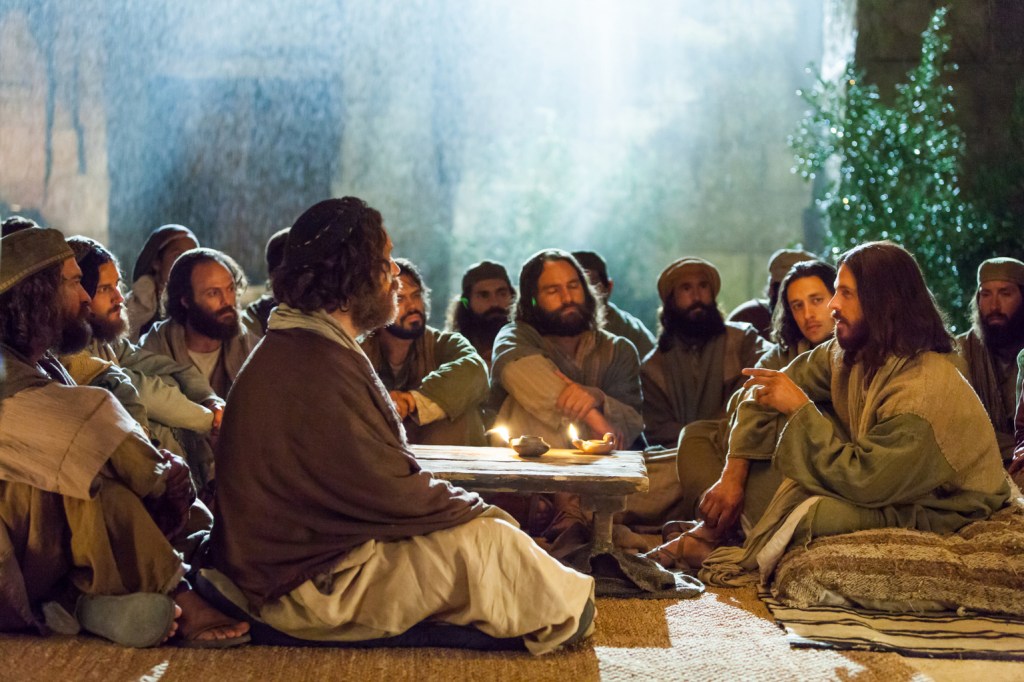
In Mark 3 we read how Jesus’ Mother and Brothers came looking for Jesus…

And Jesus asked the question, “Who are my mother and my brothers?”

Jesus had overthrown many conventions earlier in this chapter, so why not one more?

Here’s the backstory:

Jesus’ life and mission revolved around the will of God.

Our highest priority in life is to serve our Creator, as the Bible clearly says we have been created for His pleasure.

Only the Creator and Author of each one of our lives can require such devotion, how-be-it He doesn’t demand it, He only requests that, as an act of our free will, that we surrender to Him daily in His service.

The “sheep” must learn to follow their Shepherd, as He alone knows where the Green Pastures are and the Still Waters.

To put it another way, as a loving omniscient (All-knowing) God, He knows every detail of each of our futures, and the Bible says, He goes before each one of us to make our path straight (see Prov 3:5-6).

In Colossians 3:17 we are told, WHATEVER we do in word and deed, do it as unto the Lord.”

In Romans 12:1-2 the Apostle Paul admonishes us, “…to present our bodies as a LIVING SACRIFICE, holy and acceptable to God, which is our reasonable service. And do not be conformed to this world, but be transformed by the renewing of your mind, that you may prove what is that good and acceptable and perfect will of God.

I particularly like the Phillips translation of verse 2, which says,

“Don’t let the world around you squeeze you into its own mould, but let God re-mould your minds from within.”

In Mark 3, when Jesus asked, “Who are my family,” He was stating that there are some matters and some relationships that transcend the normal blood relations known as “family.”

Notice how in verse 34 and 35 that those who were seated around Jesus were His disciples (His followers), and per 1 John 2:6, as followers of Christ, of all those who say that they abide in Him, our place is to sit as His feet that we may learn to walk as He walked in His earthly ministry, totally submitted and Reliant upon the Holy Spirit and His Father in heaven.

1 John 2:6

“He who says he abides in Him ought himself also to walk just as He walked.”

This is the assignment of every Christian; and so as christians, after having been born again, this new life in the spirit has been birthed in each one of us.

And so Jesus, in verse 35 asks the question, “Who is my mother and who are my brothers?”

And his answer is, “whoever does the will of God is My brother and My sister and mother.”

SELAH (let us pause and calmly think about these things)
____

Skip

IXOYE <><
Be still & know Him
Psalm 46:10

The importance of our staying in and walking in faith… 

The Bible tells us that the scriptures were written for our example and admonition that we may learn lessons from them…

From God’s point of view, the emphasis is always on us remaining in faith, and as we grow in the knowledge of the scriptures we learn how not to allow the enemy to deceive us and get us off track.

The truth is, going all the way back to our original parents Adam and Eve, we have all been bitten by “Old Sleuth Foot the serpent,” whose name is Satan.

And because of that infection which we all have inherited through Adam’s blood, we each have a sin nature from birth, which nature the Bible says is at enmity against God (Romans 8:7-8).

But through the death and resurrection of Jesus Christ, God has de-fanged the snake.

When we place our faith in Christ, the snake’s venom is no longer fatal-and when we situate ourselves against the prevailing winds of culture, we can easily hear him, smell him, and pinpoint his location.

Even so, Christians are still bitten by the snake.

How? We turn our backs-not our faces-to the wind and move with it, dulling our senses to sin and allowing the snake to surprise us when it strikes.

And so in this pilgrimage of faith, that starts when we are born-again, and doesn’t end until we graduate to glory, out of necessity we must learn as Paul warned us, “lest we be taking advantage of, we should never be ignorant of the enemy’s devices (his modus operandi),” and the way we are taught these things, they are given us through the instruction of the Holy Spirit, as we study, meditate and immerse ourselves in God’s Word.

The development of our faith is what’s at stake and remember how Romans 10:17 tells us that faith comes by hearing and hearing by the Word of God!

The key lesson here, unless we continue to press forward in faith, then the law of entropy applies, and all we have to do to start slipping backwards is do nothing!

Hebrews 3
Contemporary English Version

Jesus Is Greater than Moses
1 My friends, God has chosen you to be his holy people. So think about Jesus, the one we call our apostle and high priest!

2 Jesus was faithful to God, who appointed him, just as Moses was faithful in serving all God’s people.

3 But Jesus deserves more honor than Moses, just as the builder of a house deserves more honor than the house.

4 Of course, every house is built by someone, and God is really the one who built everything.

5 Moses was a faithful servant and told God’s people what would be said in the future.

6 But Christ is the Son in charge of God’s people. And we are those people, if we keep on being brave and don’t lose hope.

A Rest for God’s People
7 It is just as the Holy Spirit says,

“If you hear God’s voice today,
8 don’t be stubborn!

Don’t rebel like those people
who were tested
in the desert.

9 For forty years your ancestors
tested God and saw
the things he did.

10 “Then God got tired of them
and said,

‘You people never
show good sense,
and you don’t understand
what I want you to do.’

11 God became angry
and told the people,
‘You will never enter
my place of rest!’ ”

12 My friends, watch out! Don’t let evil thoughts or doubts make any of you turn from the living God.

13 You must encourage one another each day. And you must keep on while there is still a time that can be called “today.”

If you don’t, then sin may fool some of you and make you stubborn.

14 We were sure about Christ when we first became his people. So let’s hold tightly to our faith until the end.

15 The Scriptures say,

“If you hear his voice today,
don’t be stubborn
like those who rebelled.”

16 Who were those people that heard God’s voice and rebelled?

Weren’t they the same ones that came out of Egypt with Moses?

17 Who were the people that made God angry for 40 years?

Weren’t they the ones that sinned and died in the desert?

18 And who did God say would never enter his place of rest?

Weren’t they the ones that disobeyed him?

19 We see that those people did not enter the place of rest because they did not have faith.
____

And finally, let us all remember the admonition of Peter:

1 Peter 5:6-11

6 Therefore humble yourselves under the mighty hand of God, that He may exalt you in due time,

7 casting all your care upon Him, for He cares for you.

8 Be sober, be vigilant; because your adversary the devil walks about like a roaring lion, seeking whom he may devour.

9 Resist him, steadfast in the faith, knowing that the same sufferings are experienced by your brotherhood in the world.

10 But may the God of all grace, who called us to His eternal glory by Christ Jesus, after you have suffered a while, perfect, establish, strengthen, and settle you.

11 To Him be the glory and the dominion forever and ever. Amen.

SELAH (let us pause and calmly think about these things)

Come join the Adventure and keep your faith strong in Christ!

Skip 🕊️