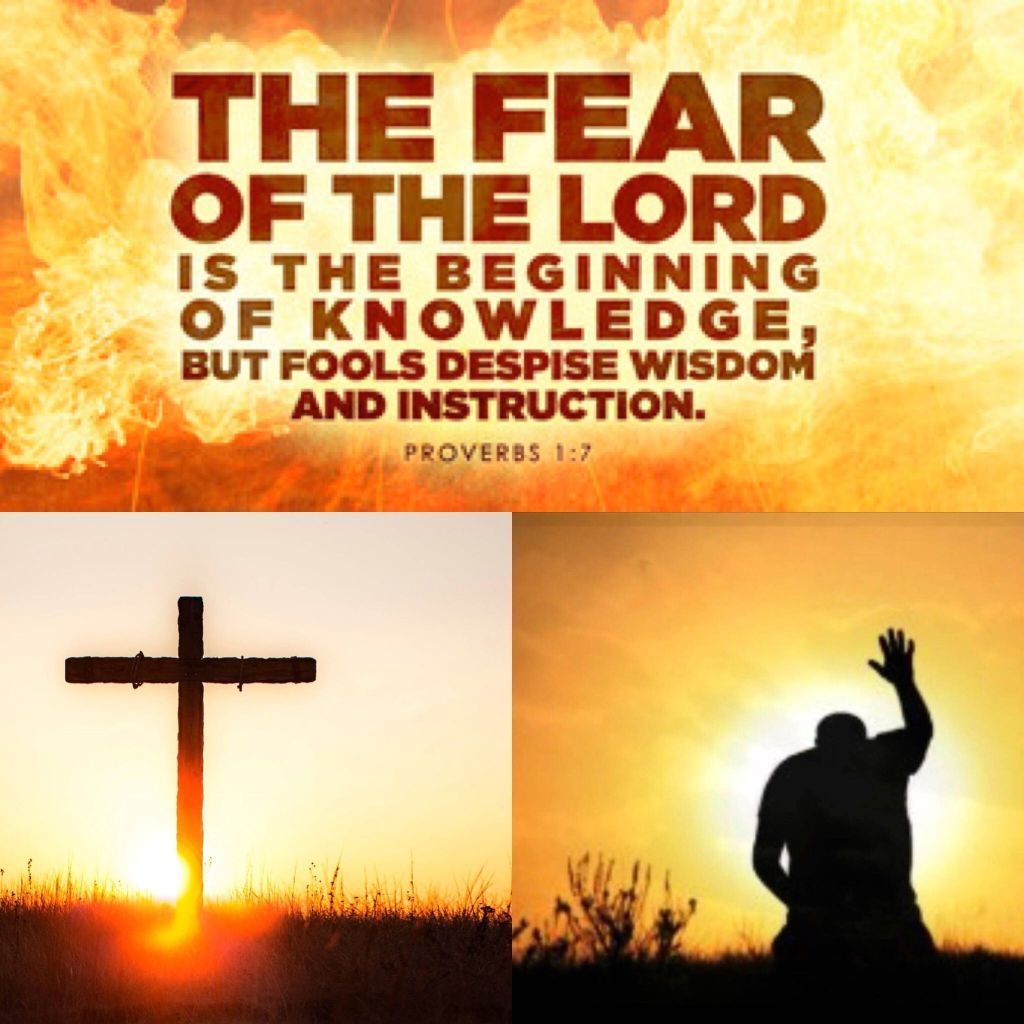
Standing in the Gap, praying for another Great Awakening in America…

The Moravian Revival of 1727…

One of the greatest revivals of God’s people occurred at the Saxony estate of Count Zinzendorf.

The young, Christian noblemen offered many Christians safety on his property.

Many at the time were fleeing imprisonment, death, banishment, and torture for their beliefs.

They fled to Zinzendorf’s and called their new home Herrnhut, ‘the Lord’s Watch’.

There on August 13, 1727 a great revival started.

According to Oswald Smith, “They made the discovery that the Church could not save them; that there was no salvation in its creeds, doctrines or dogmas; that good works, moral living, commandment keeping, praying and Bible reading, could not avail; much less culture, character or conduct.

They found that Christ alone could save; that He was willing and able to receive sinners at a moment’s notice; that justification, the forgiveness of sins, the new birth, etc. were instantaneous experiences received the very moment a sinner believed on Christ; that salvation was through grace and by faith, apart from the deeds of the law; that when a man is saved he has peace with God, and that he receives the assurance of salvation by the witness of the Holy Spirit in his heart.”

History of the Moravian Church

A MODERN PENTECOST

“Lord God, the Holy Ghost,
In this accepted hour,
As on the day of Pentecost,
Descend in all Thy power.

We meet with one accord,
In our appointed place,
And wait the promise of our Lord,
The Spirit of all grace.

The young, the old inspire
With wisdom from above;
And give us hearts and tongues of fire,

To pray, and praise, and love.”
____

THUS sang the Scotch Moravian poet and hymn writer, James Montgomery, more than a hundred years ago.

His prayer for another Pentecost was undoubtedly inspired by the experiences of his spiritual fathers on August 13, 1727 in Herrnhut, Germany.

We are now (in 1927) celebrating the Bi-Centennial of what our Moravian Text Book calls the “Signal outpouring of the Holy Spirit experienced by the congregation of Herrnhut.”

We do well to join in Montgomery’s earnest prayer for another Pentecost in our own day.

D.L. Moody in one of his last sermons in Boston, his spiritual birthplace, spoke thus of the Holy Spirit:

“See how He came on the day of Pentecost! It is not carnal to pray that He may come again and that the place may be shaken.

I believe Pentecost was but a specimen day. I think the Church has made this woeful mistake that Pentecost was a miracle never to be repeated.

I have thought too that Pentecost was a miracle that is not to be repeated.

I believe now if we looked on Pentecost as a specimen day and began to pray, we should have the old Pentecostal fire here in Boston.”

A Moravian historian writes in a similar vein as follows:

God says; “It shall come to pass I will pour out My Spirit.”

This was His promise through the prophet Joel.

The first fulfillment of this promise was on the day of Pentecost.

There is nothing in the New Testament to indicate that this was to be the one and only fulfillment of this promise.

On the contrary we read in the book of Acts of many outpourings of the Holy Spirit, as in Samaria (8:14-17) as in Ephesus (19:1-7) and even in the case of the Gentiles (10:44-46).

Church History also abounds in records of special outpourings of the Holy Ghost, and verily the thirteenth of August 1727 was a day of the outpouring of the Holy Spirit.

We saw the hand of God and His wonders, and we were all under the cloud of our fathers baptized with their Spirit.

The Holy Ghost came upon us and in those days great signs and wonders took place in our midst.

From that time scarcely a day passed but what we beheld His almighty workings amongst us.

A great hunger after the Word of God took possession of us so that we had to have three services every day, at 5:00 and 7:30 A.M. and 9:00 P.M.

Everyone desired above everything else that the Holy Spirit might have full control. Self-love and self-will as well as all disobedience disappeared and an overwhelming flood of grace swept us all out into the great ocean of Divine Love.”

Psalms 14:2

The Lord has looked down from heaven upon the sons of men
To see if there are any who understand,
Who seek after God.

God’s warning to Israel…

Deuteronomy 4:27-31
The Message

25-28 When the time comes that you have children and grandchildren, put on years, and start taking things for granted, if you then become corrupt and make any carved images, no matter what their form, by doing what is sheer evil in God’s eyes and provoking his anger—I can tell you right now, with Heaven and Earth as witnesses, that it will be all over for you.

You’ll be kicked off the land that you’re about to cross over the Jordan to possess.

Believe me, you’ll have a very short stay there. You’ll be ruined, completely ruined.

God will scatter you far and wide; a few of you will survive here and there in the nations where God will drive you.

There you can worship your homemade gods to your hearts’ content, your wonderful gods of wood and stone that can’t see or hear or eat or smell.

29-31 BUT EVEN THERE, IF YOU SEEK GOD, YOUR GOD, YOU’LL BE ABLE TO FIND HIM IF YOU’RE SERIOUS, LOOKING FOR HIM WITH YOUR WHOLE HEART AND SOUL.

When troubles come and all these awful things happen to you, in future days you will come back to God, your God, and listen obediently to what he says. God, your God, is above all a compassionate God.

In the end he will not abandon you, he won’t bring you to ruin, he won’t forget the covenant with your ancestors which he swore to them.

Jeremiah 29:13

You will seek Me and find Me when you search for Me with all your heart!
____

That offer still stands and is available to us today, to WHOMSOEVER will call upon His name, with all their heart, mind and strength!

The question is, are we thirsty enough yet?

The Amazing Story of the Moravian Falls Portal

God is still extending this invitation to us today:

Isaiah 55:1-7
The Message

Buy Without Money
55 1-5 “Hey there! All who are thirsty,
come to the water!

Are you penniless?
Come anyway—buy and eat!

Come, buy your drinks, buy wine and milk.

Buy without money—everything’s free!
Why do you spend your money on junk food,
your hard-earned cash on cotton candy?

Listen to me, listen well: Eat only the best,
fill yourself with only the finest.

Pay attention, come close now,
listen carefully to my life-giving, life-nourishing words.

I’m making a lasting covenant commitment with you,
the same that I made with David: sure, solid, enduring love.

I set him up as a witness to the nations,
made him a prince and leader of the nations,
And now I’m doing it to you:

You’ll summon nations you’ve never heard of,
and nations who’ve never heard of you
will come running to you

Because of me, your God,
because The Holy of Israel has honored you.”

6-7 Seek God while he’s here to be found,
pray to him while he’s close at hand.

Let the wicked abandon their way of life
and the evil their way of thinking.

Let them come back to God, who is merciful,
come back to our God, who is lavish with forgiveness. Amen

SELAH (let us pause and calmly think about these things)
______________________________

From Wednesday, March 01
Worthy Brief

THE ENEMY WANTS TO KILl … BEFORE IT’S EVEN BIRTHED!

“…for you are still fleshly. For insofar as there is jealousy, strife, and factions among you, aren’t you fleshly, and don’t you walk in the ways of men? For when one says, “I follow Paul,” and another, “I follow Apollos,” aren’t you fleshly?
— 1 Corinthians 3:3-4

During the Catholic inquisitions, as millions of Christians were being killed by the Jesuit Priests for apostasy, throughout Europe, Christians were fleeing.

In Bohemia alone, there were an estimated 4,000,000 Christians before the Jesuit inquisition, and ten years later, only 800,000 people remained in Bohemia – all of whom were Catholic.

These terrible events prepared the ground for one of the greatest moves of God that have ever been recorded, the Moravian Revival, which lasted for over 100 years.

Gustav Warneck, the German Historian of Protestant Missions, testified,

“This small church in twenty years called into being more missions than the whole Evangelical Church has done in two centuries.”

It began with a young man, Count Zinzendorf, who was 27 years old when he opened his estate to welcome believers escaping persecution and inviting them to settle there.

There were different groups, Bohemian Brethren, Moravian Christians, Reformed Christians, and unsatisfied Catholics.

After a few years, this fragmented community of some 300 individuals with differing spiritual convictions and loyalties was so rife with conflict and disunity it seemed destined to fail.

One of the village founders, Christian David, got so caught up in apocalyptic fanaticism that he referred to Zinzendorf as the “Beast of the Apocalypse,” while the estate manager of the village, Johan Andreas Rothe was termed the “False Prophet.”

In this impossible environment, Count Zinzendorf devoted himself full-time to reconciliation and conflict resolution, visiting each home for prayer and exemplifying the persevering love of Christ.

Amazingly, this personal attention and devotion to unity and reconciliation opened the way for an awakening that would come in just a few weeks.

Yet what would have happened if Count Zinzendorf had lost patience and, in justified frustration, thrown everyone off his estate?

Instead of a 100-year spiritual awakening…NOTHING of spiritual significance would have happened.

The enemy, working through the carnal attitudes of believers [1 Corinthians 3:3-4], continually slandered this young man and one another, but his response was to disarm those persecuting him with the love of Christ.

The result was a genuine revival.

Disunity, and slander are deadly to spiritual life and will absolutely kill any hope of enjoying God’s presence.

This is true in the smallest company of two or three, or in a local church community, or in any size gathering at all.

When the Lord is moving, He will bring humility and love as Zinzindorf did.

Let this humble Count be your example in any sphere of responsibility God places you. God is always desiring to birth something supernatural!

From Thursday, March 02
PART II

SEEK UNITY … NOT CONFORMITY!

“…with all lowliness and gentleness, with longsuffering, bearing with one another in love, endeavoring to keep the unity of the Spirit in the bond of peace. There is one body and one Spirit, just as you were called in one hope of your calling; one Lord, one faith, one baptism; one God and Father of all, who is above all, and through all, and in you all.”
— Ephesians 4:2-6

Yesterday we wrote about one of the greatest moves of God … the Moravian Revival.

When the community was in complete disarray, Count Zinzendorf focused on how they could live together in love despite their differences.

He called all the men together for an intense study of the Scriptures to focus on how Christian life in community was portrayed.

These studies combined with intense prayer convinced many of the believers that they were called to live together in love and that their disunity and conflict were contrary to the clear calling of Scripture.

Zinzendorf’s dream was to see the differences among the community’s many traditions become secondary to a corporate unity in love.

In the history of the Moravian revival, we read:

“Zinzendorf was not aiming at organizational unity and uniformity among Christians and did not desire the dissolution of particular traditions, but rather their binding together in fraternal charity, mutual respect, communication and communion within a sort of loose federation.”

Thus they learned to agree to disagree on certain subjects – the one thing they agreed upon was the emphasis on love – and this was necessary in order to fulfill the “great commission.”

The complexities of God’s truth will make uniformity in all doctrines impossible for all believers.

It is even probable that secondary issues may be used of God to test our hearts.

The essential truths of the faith, however, are indisputable among true brethren and they form the truth basis for our unity.

The Moravian Revival motto was, “in essentials unity, in non-essentials liberty, but in all things love!”

Revivals always reveal the veracity and power of this motto, and their fruit is the result of God’s wonderful unifying presence.

We will not compromise on the essentials (though some may even disagree on what they are); and we will peacefully discuss our convictions about secondary issues, agreeing to disagree and preserving the unity of the spirit in the bond of peace.

Your family in the Lord with much agape love,

George, Baht Rivka, Obadiah and Elianna (Going to Christian College in Dallas, Texas)
____

Come join the Adventure!

Skip 🕊️

God the Father’s goal is for us to be conformed into the image of Christ and be like Him in all of our ways…

The one necessity of life, above all else, is that we each allow God’s Light to shine upon us and transform us, in order that we can be conformed into Christ’s image.

And so let this be our prayer each and every day…

God’s love for us is great indeed.

Those who hope to see God purify themselves, even as He is pure.

The person who is born of God will not continue to live in sin. Rather, he should love his brother.

As Jesus laid down His life for us, so we should lay down our lives for one another, loving not in words but in deeds.

As believers, our self-worth comes from the fact that God loves us and calls us His children.

We are His children now, not just sometime in the distant future.

Knowing that we are God’s children should encourage us to live as Jesus did.

1 John 2:6
Legacy Standard Bible

The one who says he abides in Him (Jesus) ought himself to walk in the same manner as He walked.

Believing in Christ begins the process of becoming more and more like Him (see Romans 8:29).

This process continues until we see Christ face-to-face (1 Corinthians 13:12; Philippians 3:21).

We don’t know exactly how we’ll be like Him, but we do know that we will have eternal, resurrected bodies.

We will be free from sin and pain, and we will have much more understanding than we do now on earth.

Knowing our ultimate destiny motivates us to keep morally pure and free from the corruption of sin.

It also gives us hope as we struggle with sin because we know that one day we will be totally sinless like Jesus.

God purifies us, but we must also take steps to remain pure (see 1 Timothy 5:22; James 4:8; 1 Peter 1:22).

Every time we resist a temptation or turn from sin, we become more like Jesus.

Max Lucado’s LifeLessons…

Believers’ future transformation will take place when we see Him as He is.

Why do Jesus and His angels rejoice over one repenting sinner?

Can they see something we can’t?

Do they know something we don’t?

Absolutely. They know what heaven holds. They’ve seen the table, and they’ve heard the music, and they can’t wait to see your face when you arrive.

Better still, they can’t wait to see you.

When you arrive and enter the party, something wonderful will happen.

A final transformation will occur. You will be just like Jesus.

Drink deeply from 1 John 3:2:

“It has not yet been revealed what we shall be, but we know that when He is revealed, we shall be like Him, for we shall see Him as He is.”

Of all the blessings of heaven, one of the greatest will be you!

You will be God’s magnum opus, His work of art. The angels will gasp. God’s work will be completed. At last, you will have a heart like His.

You will love with a perfect love.

You will worship with a radiant face.

You’ll hear each word God speaks.

Your heart will be pure, your words will be like jewels, your thoughts will be like treasures.

You will be just like Jesus.

You will, at long last, have a heart like His.

Envision the heart of Jesus and you’ll be envisioning your own.

Guiltless. Fearless. Thrilled and joyous. Tirelessly worshiping.

Flawlessly discerning.

As the mountain stream is pristine and endless, so will be your heart. You will be like Him.

And if that were not enough, everyone else will be like Him as well.

“Heaven is the perfect place for people made perfect.”

Heaven is populated by those who let God change them.

Arguments will cease, for jealousy won’t exist.

Suspicions won’t surface, for there will be no secrets.

Every sin is gone. Every insecurity is forgotten.

Every fear is past. Pure wheat. No weeds. Pure gold. No alloy. Pure love. No lust. Pure hope. No fear.

No wonder the angels rejoice when one sinner repents; they know another work of art will soon grace the gallery of God.

They know what heaven holds.
(From Just Like Jesus by Max Lucado)

SELAH (let us pause and calmly think about these things)
_________________________________

Monday, February 27
The Winning Walk
by Ed Young

WHAT WILL WE BE?

Not one of us knows what we will become.

We can study for a certain career, plan for a certain vocation…but we do not know what we shall be.

When we come to Christ, we become members of His family, and He takes us on as His divine project.

He alone knows what we will become. He knows the precise blending of blessing and brokenness necessary to conform us to the image of Christ and allow us to be used by Him.

Suppose there is a certain aristocratic family in London, England, and the heir to this family’s fortune is Lord Something-or-Other.

He is wealthy and cultured. He and his wife and all of their children are graduates of Oxford and Cambridge.

Lord Something-or-Other decides rather late in life to adopt a child-a young boy- from the Belgian Congo.

He brings the boy to London and sets about indoctrinating him into the family.

What a challenge! This foreigner will need language tutors, etiquette lessons, and instruction on how to dress and act in aristocratic circles.

It will be no small challenge to make him into “one of the family.”

In one sense, that’s what God has done with us.

We have been adopted into His family…born again.

Right now we do not know where the journey is going to take us. We can only be certain that through blessings and buffetings, He will shape us into the man or woman He desires us to become…and He will not stop until the job is complete.

Memory Verse

1 John 3:2
Beloved, now we are children of God, and it has not appeared as yet what we shall be.
____

Come join the Adventure!

Skip 🕊️
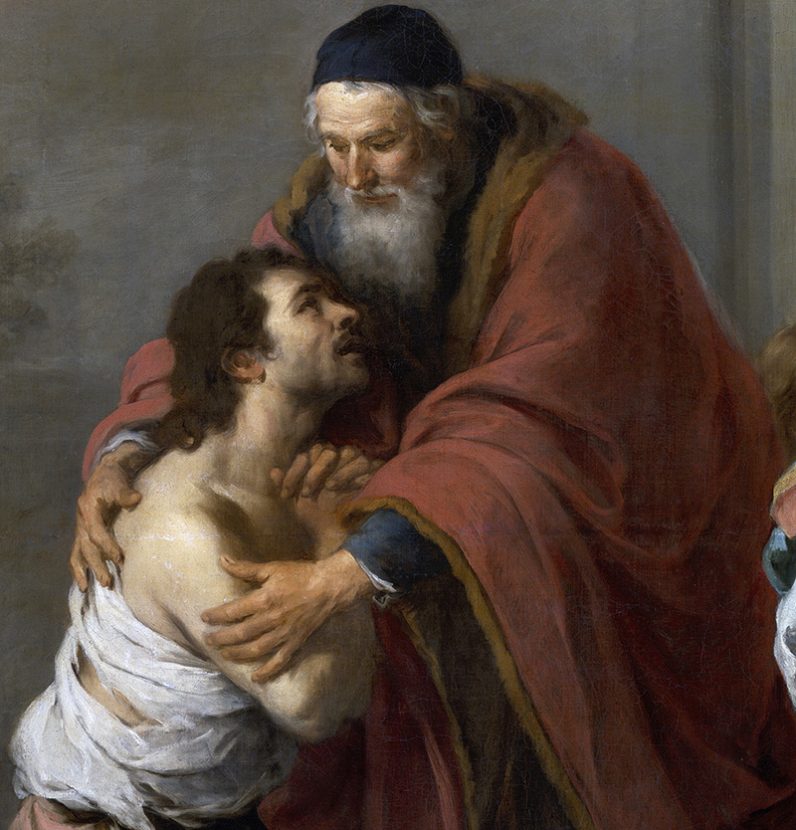
God yearns for ALL of His lost children to come home…

Jesus tells His disciples the parable about The Prodigal Son…

From a spiritual perspective, getting lost is unavoidable.

Human nature is fundamentally flawed by sin. If people live their lives apart from God and follow their intuitions, they stay lost.

That is because getting lost—physically or spiritually—is easy.

Sinners followed Jesus eagerly. Self-righteous religious leaders constantly chided Jesus for associating with such sinners.

Finally, Jesus told this story about the Prodigal Son, to show what it means to be lost and how a loving Father waits for His lost (estranged) son to come home and be reconciled back into the family.

Rich Man, Poor Woman, but Just Alike

The Rich Man…

The European tailored suit fit in perfectly in this large, white stone house nestled among the trees on a hill overlooking Lake Zurich.

The man conversed comfortably in three languages. An executive with an international company headquartered in Switzerland, he calmly discussed that day’s unexpected fall in the market.

Obviously, it had cost him at least six figures, if not seven.

Still, he remained unconcerned. He had more where that came from and knew how to make even more.

When I tried to turn the conversation from finances to eternal riches, he turned cold.

He had heard as much about God as he wanted.

God played no hand in his world.

Intelligence and quick action were all that mattered.

The Poor Woman…

From her ragged mat spread in front of her mud two-room house, she looked helplessly up at this strange white man.

Could we tell her about Jesus? Sure, but first would we pray for her husband?

He had crossed the Kenya border into Uganda and set up housekeeping there with his other two wives.

This left her almost destitute, but that was not her prayer request. She wanted her husband to come back and spend more time with her.

One could continue the stories on and on.

One thing unites these people who live in totally different worlds.

They are lost. They do not have a saving relationship with Jesus Christ.

The destitute African woman was at least willing to listen to the story.

Jesus told three parables illustrating what it means to be lost, heaven’s joy when the lost are found, and how the loving Father looks to save people.

The final parable also implicated the Pharisees as those who did not share the Father’s joy over the salvation of the lost because it was not done their way.

Are you like the sinners seeking salvation and finding a Father’s love, or are you standing aside watching and wondering how in the world the Father could do that for such unworthy, unclean, sinful people?

Reading Luke 15 raises one question for you: “Am I lost?”

All people are lost until they repent of their sins and find salvation.

When even one sinner comes to the Lord, the Bible tells us that “there is joy in the presence of God’s angels over one sinner who repents,” as his homecoming sets off a joyful celebration in heaven beyond all earthly experience or imagination.

God is not willing that any perish, but rather He loves ALL of His lost children and yearns that they should come home!

In this parable the younger son of the father demanded his share of the estate and got it.

There is no indication of why he wanted it or why the father so quickly gave it to him.

Later we will see the older brother’s attitude and surmise sibling rivalry here, as in the Old Testament stories of Jacob and Esau and of Joseph and his brothers.

The younger brother’s portion was only a third of the estate if the entire estate were divided. By law, the older brother got a double portion (Deut. 21:17).

The younger son wanted to be on his own, and so he distanced himself as far as possible from the family.

He also took up a new lifestyle. Untrained and inexperienced in money matters, he quickly had many expenses and no income.

The result came quickly: no assets. Then a famine hit the land. No one had food or work.

He was fortunate. He found a job, but what a job for a Jew!

He fed pigs in a pigpen.

Destitute of other resources, he longed to eat what he fed the pigs.

How repulsive for a law-abiding Jew to be tending the pigs; himself starving and yet he was not even allowed to eat their food.

So he fattened the pigs and starved himself.

Finally, his mind went to work again.

Humans have the capacity to change. We do not have to remain in the pigpen.

We do not have to continue to live as sinners.

We can become responsible for our lives. We can quit our riotous living. We can come home.

The younger brother came to his senses:

The day laborers on his dad’s farm had enough to eat. “And I am about to die from hunger,” he said.

“I will go back to Daddy and tell him I have sinned against him and against heaven.”

Note how this ties the story back to the beginning of the chapter and the theme of sinners.

No longer are we using animals or objects to talk about the lost. Now we have gotten down to basic facts.

People are lost. People need to realize their lost condition and admit it.

The younger son’s first step is saying, “I am a sinner.”

What is a sinner?

An unworthy person. One who deserves nothing. Yet a sinner wants something.

So the sinner searches for someone who loves the unworthy, who is willing to help the undeserving.

The sinful younger brother had forfeited his position as son. He had no more claims on his father, so he applied for a new job—day laborer.

At this point the focus shifts from son to father.

The son is on the move. The father is standing still, waiting to see his son.

Here is the poignant portrait of a busy man who has lost one of his chief helpers, taking himself away from his work to wait for a son who may never appear.

It is certainly not given that a sinner will repent.

The father did not stay still long. There he was—the son had returned.

What joy! What love! What tender compassion filled the father’s heart.

The old legs started churning. Arms stretched out. Lips reached for a kiss. The family feud was over and forgotten. My son was home.

Even the joyful welcome did not deter the son from his determined course.

He repeated the plea he had rehearsed, but somehow the last line never came out; the job application as a day laborer was never made.

The father never heard his lost son. He had business to attend to. Party time!

The son must be properly dressed for the party. Servants dashed off as they were commissioned to get the best robe, a ring, sandals—things all lost long before the pigpen.

Other servants ran to the kitchen to prepare the menu the father ordered. Nothing but the best for his son.

How could the father act like this? Did he not know what the son had done? Of course, but the son had been given up for dead.

This was resurrection time. He was lost.

We found the precious treasure for which we have hunted. The lost sheep is back.

Certainly a lost and found son is worth much more than a coin or a sheep.

Celebrate! What a picture of the Father in heaven.

How He does celebrate when the lost are found, when sinners repent.

What compassion and love He shows.

Why does Jesus associate with sinners?

Because heaven loves them and waits patiently for them to return and repent so the celebration can begin.

Let us remember that ALL of Heaven’s citizens are repentant sinners.

Jesus had given His disciples three different parables, illustrating the same point.

The sheep was lost because it foolishly wandered away (15:4), the coin was lost through no fault of its own (15:8), and the son left out of selfishness (15:12).

The point is this, God’s great love reaches out and finds sinners no matter why or how they got lost.

SELAH (let us pause and calmly think about these things)

_________________________________

Sunday, February 26, 2023
Anchor Devotional

THE FATHER WHO RUNS TO YOU


“But while he was still a long way off, his father saw him and was filled with compassion for him; he ran to his son, threw his arms around him and kissed him.”
— Luke 15:20

Through tears, a prisoner mentee asked, “How can Jesus love me when I keep letting Him down and keep committing the same sins again and again?”

There are many comforting words for my friend and for so many of us who ask the same question.

“Your sins evoke his deepest heart for you, his compassion and pity. He is on your side.

He sides with you against your sin. He hates your sin, but he loves you” (Dane Ortlund, 2020).

Jesus is the good shepherd who goes after the one lost sheep until he finds it (see Luke 15:3-4).

He is the woman who seeks diligently until she finds her lost coin (v. 8). And He is the welcoming, forgiving father who runs to, embraces, and kisses his wayward son (v. 20).

When we struggle, we can turn to Jesus for help. When our faith is wobbly, when doubts fill our hearts, when we stumble again into the same sins,

if we will just turn toward Jesus, He will be our help.

Try as we may, we cannot pick ourselves up. Yet though we have no power of our own to turn to Him, He will come to us, seek us out, and rescue us.
____

Come join the Adventure!

Skip 🕊️

What is Faith?

1 Peter 5:7 tells us (by faith) to cast ALL of our cares upon Him, for He cares for us…

In Hebrews, faith is active and lived out rather than a matter of mere belief.

Faith happens when we are willing to take the RISK of stepping out in obedience to God’s Word, with the underlying confidence of His trustworthiness and reliability, that what He promises us He will perform

To have faith means more than just to believe.

Hebrews defines faith as “the substance of things hoped for, the evidence of things not seen.”

Faith starts out certain.

When people believe that God will fulfill His promises, they are showing TRUE FAITH, even in the midst of all contrary feelings and or circumstantial evidence.

Jesus said to Thomas, “Blessed are those who have not seen and yet have believed” (John 20:29).

When people have faith in God, they know without a doubt that He will keep His promises.

They live and make choices in this world based on the unseen reality of their future home in heaven.

They persevere in their faith despite pain, hardship, or persecution, because they are convinced that the unseen God is with them.

In short, faith in God makes all the difference, both now and for eternity; and the Bible tells us in verse 6 that without Faith we cannot please God.

The rest of chapter 11 goes on to describe the exploits of the men and women in the Old Testament, as they took the risk of stepping out in faith, in obeying God against all odds.

And in Hebrews 11:32-40 (in The Message Bible) we read:

I could go on and on, but I’ve run out of time. There are so many more—Gideon, Barak, Samson, Jephthah, David, Samuel, the prophets. . . . Through acts of faith, they toppled kingdoms, made justice work, took the promises for themselves.

They were protected from lions, fires, and sword thrusts, turned disadvantage to advantage, won battles, routed alien armies.

Women received their loved ones back from the dead. There were those who, under torture, refused to give in and go free, preferring something better: resurrection.

Others braved abuse and whips, and, yes, chains and dungeons.

We have stories of those who were stoned, sawed in two, murdered in cold blood; stories of vagrants wandering the earth in animal skins, homeless, friendless, powerless—the world didn’t deserve them!—making their way as best they could on the cruel edges of the world.

Not one of these people, even though their lives of faith were exemplary, got their hands on what was promised.

God had a better plan for us: that their faith and our faith would come together to make one completed whole, their lives of faith not complete apart from ours.
____

11:32-40 These verses summarize the lives of other great men and women of faith.

Some experienced outstanding victories, even over the threat of death. But others were severely mistreated, tortured, and even killed.

Having steadfast faith in God does not guarantee a happy, carefree life.

On the contrary, our faith almost guarantees us some form of abuse from the world.

While we are on earth, we may never see the purpose of our suffering. But we can know with confidence that God will keep His promises to us.

The Old Testament records the lives of the various people who experienced these great victories.

Joshua and Deborah overthrew kingdoms (see the book of Joshua; Judges 4–5).

Nehemiah ruled with justice (see the book of Nehemiah).

Daniel was saved from the mouths of lions (Daniel 6).

Shadrach, Meshach, and Abednego were kept from harm in the flames of a blazing furnace (Daniel 3).

Elijah escaped death by the edge of the sword from evil Queen Jezebel’s henchmen (1 Kings 19:2-21).

Hezekiah regained strength after sickness (2 Kings 20).

Gideon was strong in battle (Judges 7).

A widow’s son was brought back to life by the prophet Elisha (2 Kings 4:8-37).

We, too, can experience victory through faith in Christ.

Our victories over oppressors may be like those of the Old Testament saints, but more likely, they will be directly related to the unique role God wants us to play.

Even though our bodies deteriorate and die, we will live forever because of Christ.

In the promised resurrection, even death will be defeated, and Christ’s victory will be complete.

SELAH (let us pause and calmly think about these things)
_________________________________

FRIDAY, FEB 17
Faith in All the Ages
by Henry M. Morris, PH.D.

“And what shall I more say? for the time would fail me to tell of Gedeon, and of Barak, and of Samson, and of Jephthah; of David also, and Samuel, and of the prophets.”
— Hebrews 11:32

Hebrews 11 is a thrilling catalog of the faithful servants of God in all the ancient ages. There were Abel, Enoch, and Noah before the Flood; then Abraham, Sarah, Isaac, Jacob, and Joseph in the patriarchal age; followed by Moses, Joshua, and Rahab in the time of the exodus and conquest. Finally, today’s verse summarizes the periods of the judges (Gideon, Barak, Samson, and Jephthae), the kings (Samuel, David), and the prophets.

All these were men and women of great faith, though each had to endure great testing. They, as the writer says, “stopped the mouths of lions, quenched the violence of fire, escaped the edge of the sword…had trial of cruel mockings and scourgings, yea, moreover of bonds and imprisonment: They were stoned, they were sawn asunder…destitute, afflicted, tormented” (Hebrews 11:33-37).
In every age, men and women of faith were more often than not despised and persecuted by the world (even by the religious world!), but the Bible notes, parenthetically, that it was they “of whom the world was not worthy” (Hebrews 11:38). In God’s sight, they all “obtained a good report through faith” (Hebrews 11:39), and this is worth more than all the world, for it is the entrance into a far better and eternal world.

Note that faith is not a sentimental wishfulness but a strong confidence in God and His Word, through Jesus Christ, who is Himself “the author and finisher of our faith” (Hebrews 12:2). Like those of past ages, we can also “run with patience the race that is set before us” (Hebrews 12:1) through the faith He offers us.
____

Come join the Adventure!

Skip 🕊️

Who do you say that Jesus is?…

Isaiah 9:6 says,

“For unto us a Child is born,
Unto us a Son is given; and the government will be upon His shoulder.

And His name will be called
Wonderful, Counselor, Mighty God,
Everlasting Father, Prince of Peace!
____

What happened in Caesarae Philippi?…

Matthew 16:13-21
Peter’s confession of Christ

The Transfiguration (17:1–8)

17:1, 2 Six days after the incident at Caesarea Philippi, Jesus took Peter, James, and John up to a high mountain, somewhere in Galilee.

Many commentators attach significance to the six days.

Gaebelein, for instance, says: “Six is a man’s number, the number signifying the days of work.

After six days—after work and man’s day is run out then the day of the Lord, the Kingdom.”

Peter, James, and John, who seem to have occupied a place of special nearness to the Savior, were privileged to see Him transfigured.

Up to now His glory had been veiled in a body of flesh. But now His face and clothes became radiant like the sun and dazzling bright, a visible manifestation of His deity, just as the glory cloud or Shekinah in the OT symbolized the presence of God.

The scene was a preview of what the Lord Jesus will be like when He comes back to set up His kingdom.

He will no longer appear as the sacrificial Lamb but as the Lion of the tribe of Judah.

All who see Him will recognize Him immediately as God the Son, the King of kings and Lord of lords.

Jesus’ followers took a risk when they believed that Jesus was the Messiah and the Son of God.

Though they had seen Jesus’ power and authority daily, this transformation of Jesus proved that Jesus was God’s Son—the Messiah.

Max Lucado puts it this way…

Light spilled out of Him. Brilliant. Explosive. Shocking. Brightness poured through every pore of His skin and stitch of His robe.

Jesus on fire. To look at His face was to look squarely into Alpha Centauri (a triple star system in the southern constellation of Centaurus).

Mark wants us to know that Jesus’ “clothes became shining, exceedingly white, like snow, such as no launderer on earth can whiten them” (Mark 9:3).

This radiance was not the work of a laundry; it was the presence of God.

Scripture habitually equates God with light and light with holiness.

“God is light and in Him is no darkness at all” (1 John 1:5).

He dwells in “unapproachable light” (1 Timothy 6:16).

The transfigured Christ, then, is Christ in His purest form.

It’s also Christ as His truest self, wearing His pre-Bethlehem and post-Resurrection wardrobe . . . One who is “holy, harmless, undefiled, separate from sinners” (Hebrews 7:26).

A diamond with no flaw, a rose with no bruise, a song on perfect pitch, and a poem with impeccable rhyme. . . . They were gripped deep in their gut that God was, at once, everywhere and here.

The very sight of the glowing Galilean sucked all air and arrogance out of them, leaving them appropriately prostrate.

Face-first on the ground. “They fell on their faces and were greatly afraid” (Matthew 17:6). . . . In the end we respond like the apostles.

We, too, fall on our faces and worship. And when we do, the hand of the carpenter extends through the tongue of towering fire and touches us.

“Arise, and do not be afraid” (17:7).

(From Fearless by Max Lucado)

When did God open your eyes to accept Jesus?

Recount the experience when God took your heart and made it new.

Thank Him for His awesome love and grace that He has extended to you, in your own life.

And in your daily routine today, look for a way to tell someone else your story.

SELAH (Let us pause and calmly think about these things)

_________________________________

Thursday, Feb 16
The Berean
Daily Verse and Comment

Matthew 17:1-6

(1) Now after six days Jesus took Peter, James, and John his brother, led them up on a high mountain by themselves;

(2) and He was transfigured before them. His face shone like the sun, and His clothes became as white as the light.

(3) And behold, Moses and Elijah appeared to them, talking with Him.

(4) Then Peter answered and said to Jesus, “Lord, it is good for us to be here; if You wish, let us make here three tabernacles: one for You, one for Moses, and one for Elijah.”

(5) While he was still speaking, behold, a bright cloud overshadowed them; and suddenly a voice came out of the cloud, saying,

“This is My beloved Son, in whom I am well pleased. Hear Him!”

(6) And when the disciples heard it, they fell on their faces and were greatly afraid.
____

Jesus clearly calls this mysterious occurrence a “vision” (verse 9). It was not reality but a glimpse of what the future held for Jesus Christ.

The word “transfigured” in verse 2 sounds esoteric, but it is merely the passive form of the Greek word metamorphoo, meaning “changed in form” or “transformed.”

This same word is used in the well-known Romans 12:2, “. . . be transformed by the renewing of your mind. . . .”

Unlike Matthew and Mark, Luke uses the phrase egeneto heteron, translated as “was altered” and meaning “became different” (Luke 9:29).

In the vision, the three disciples saw Jesus change to the form He will have in God’s Kingdom, which He alluded to in Matthew 16:28.

Why did Moses and Elijah appear with Him?

This is where the events of Matthew 16 become important.

These two servants of God were the most revered among all the Old Testament figures.

Moses, the Great Lawgiver, personified the Law, and Elijah, the Archetypal Prophet, the Prophets.

Evidently, the vision depicted Moses and Elijah speaking to Jesus in a servant-Master relationship, but the disciples failed to see this vital distinction.

Notice how Peter puts it.

“Let’s make three tabernacles, one for each of you.”

The other accounts say he did not really know what he was saying, meaning that he had missed something in his fear, that he spoke without thinking it through (Mark 9:6; Luke 9:33).

What happened as a result of his thoughtless comment?

Notice that Matthew writes, “While he was still speaking. . . .”

This is a big clue. God, immediately seeing that the disciples did not understand, took steps to make it plain.

To paraphrase what God says, “Look! Jesus is MY beloved Son, and He has MY highest approval.

Listen to what HE says! He is far greater than Moses and Elijah, the Law and the Prophets.”

This is why the transfiguration occurred.

God wanted to make it very clear to the disciples that His way of life is based on the life and death and life again of Jesus Christ, not on the Jews’ traditional beliefs.

He had to stun the disciples so that they would put Jesus and His teachings on a higher level than Judaism—even higher than the teachings of Moses and Elijah.

Whatever Jesus says is far more important to our salvation than the minutiae of Moses’ law or the vagaries of prophecy.

In many instances, Jesus makes upgrades to Old Testament law, giving a higher, spiritual meaning (for instance, Matthew 5:21-22). Hear Him!
— Richard T. Ritenbaugh
____

Come join the Adventure!

Skip 🕊️
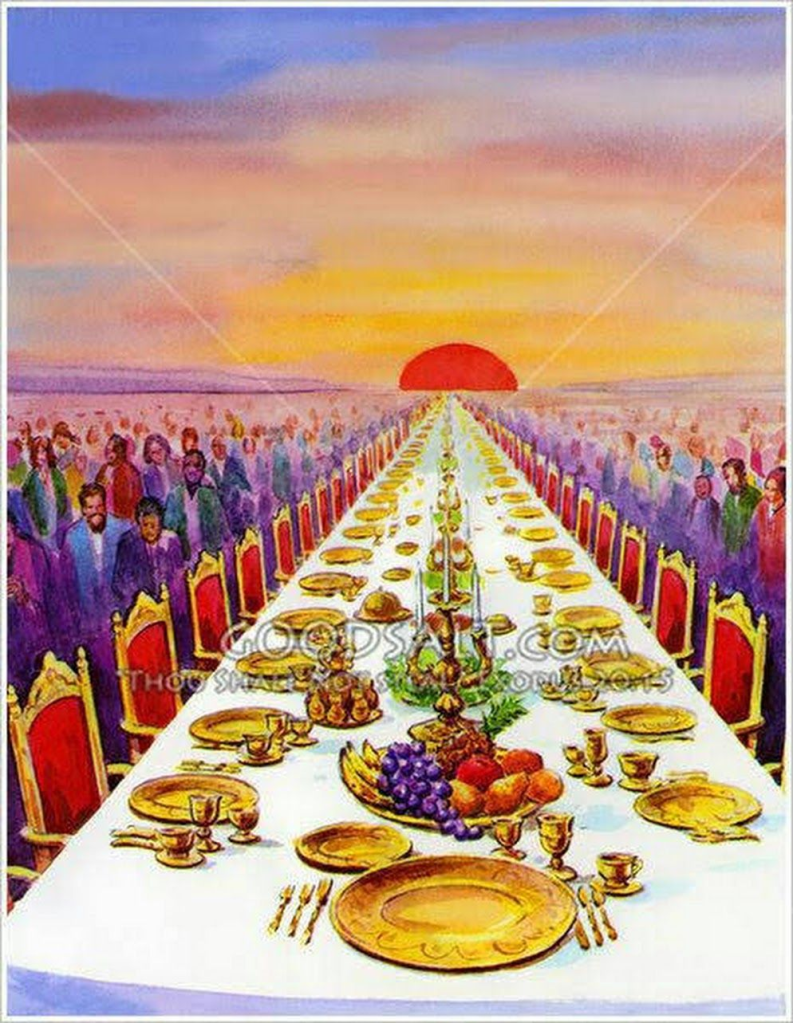
The importance of our giving Christ numeral uno position in our life…

This is a question we all need to consider…

Are you too busy with your life to consider God and to give Him first place in your life?

Don’t you realize that we are His creation, that it is He who made us, that we belong to Him and we did not make ourselves?

If you don’t realize that then you’ve been educated beyond your intelligence!

Galatians 1:16 tells us that, “For in Him (Jesus) ALL things were created, things in heaven and on earth, visible and invisible, whether thrones or dominions or rulers or authorities.

All things were created through Him and for Him”; and in John 1:3, we are told, “All things came into being through Him (Jesus), and without Him not even one thing came into being that has come into being.”

In Luke 14:15, Jesus tells a parable about a wedding feast which the Father in Heaven is planning for His children, and this parable illustrates the low regard that so many of His children have for Him.

The first thing necessary for one to obey the gospel message and be born-again, to have their sins forgiven and be reconciled back into God’s family again is that they have to recognize the value of what God is offering them!

What an honor and privilege it is that God is a requesting the honor of our presence at His wedding banquet!

Luke 14:15-33
The Message

The Story of the Dinner Party
15 (Someone said) “…How fortunate is the one who gets to eat dinner in God’s kingdom!”

16-17 Jesus followed up. “Yes. For there was once a man who threw a great dinner party and invited many.

When it was time for dinner, he sent out his servant to the invited guests, saying, ‘Come on in; the food’s on the table.’

18 “Then they all began to beg off, one after another making excuses.

The first said, ‘I bought a piece of property and need to look it over. Send my regrets.’

19 “Another said, ‘I just bought five teams of oxen, and I really need to check them out. Send my regrets.’

20 “And yet another said, ‘I just got married and need to get home to my wife.’

21 “The servant went back and told the master what had happened.

He was outraged and told the servant, ‘Quickly, get out into the city streets and alleys.

Collect all who look like they need a square meal, all the misfits and homeless and down-and-out you can lay your hands on, and bring them here.’

22 “The servant reported back, ‘Master, I did what you commanded—and there’s still room.’

23-24 “The master said, ‘Then go to the country roads. Whoever you find, drag them in. I want my house full!

Let me tell you, not one of those originally invited is going to get so much as a bite at my dinner party.’”

Figure the Cost
25-27 One day when large groups of people were walking along with him, Jesus turned and told them,

“Anyone who comes to me but refuses to let go of father, mother, spouse, children, brothers, sisters—yes, even one’s own self!—can’t be my disciple.

Anyone who won’t shoulder his own cross and follow behind me can’t be my disciple.

28-30 “Is there anyone here who, planning to build a new house, doesn’t first sit down and figure the cost so you’ll know if you can complete it?

If you only get the foundation laid and then run out of money, you’re going to look pretty foolish.

Everyone passing by will poke fun at you: ‘He started something he couldn’t finish.’

31-32 “Or can you imagine a king going into battle against another king without first deciding whether it is possible with his ten thousand troops to face the twenty thousand troops of the other? And if he decides he can’t, won’t he send an emissary and work out a truce?

33 “Simply put, if you’re not willing to take what is dearest to you, whether plans or people, and kiss it good-bye, you can’t be my disciple.
____

Let’s take another look at verse 26, which in the New King James Bible says, “If anyone comes to Me and does not hate his father and mother, wife and children, brothers and sisters, yes, and his own life also, he cannot be My disciple.”

Jesus here is telling those who follow Him that in order to be His disciple, they must love Him supremely, above all else.

One point that becomes very clear, as we understand the Second Commandment, is that ANYTHING that we put at a higher value and importance in our life than our relationship and devotion to God is an idol.

He’s not suggesting that men should have bitter hatred in their hearts toward father, mother, wife, children, brothers, and sisters.

Rather He is emphasizing that love for Christ must be so great that all other loves are hatred by comparison (cf. Matt. 10:37).

No consideration of family ties must ever be allowed to deflect a disciple from a pathway of full obedience to the Lord.

Actually, the most difficult part of this first term of discipleship is found in the words “and his own life also.”

It is not only that we must love our relatives less; we must hate our own lives also!

Instead of living self-centered lives, we must live Christ-centered lives.

1 John 2:6 makes it very clear that WHOEVER says that he or she (is a Christian)that their lives [abides and remains] in God, they must learn to live and walk as Jesus lived and walked.

Come join the Adventure!

Skip 🕊️

Urgent Warning: The Fear of God is Coming!…

What is the fear of the Lord…

“The fear of the LORD is the beginning of wisdom, and knowledge of the Holy One is understanding.”
— Proverbs 9:10

The word “fear” is typically used in a negative context. When we are afraid of something, it’s usually because that particular something is bad or negative in some way.

But what about when we are talking about the fear of the Lord? God isn’t bad or negative — we know God is a good God. He is our Heavenly Father, our creator who loves us and who made each of us in His image.

So why are we supposed to fear the Lord? What is the fear of the Lord?

Proverbs 19:23

The fear of the Lord leads to life,
So that one may sleep satisfied, untouched by evil.

Isaiah 33:6

And He will be the stability of your times,
A wealth of salvation, wisdom and knowledge;
The fear of the Lord is his treasure.

Proverbs 14:26

In the fear of the Lord there is strong confidence,
And his children will have refuge.

Proverbs 14:27

The fear of the Lord is a fountain of life, that one may turn away from the snares of death.

Luke 1:50

And his mercy is for those who fear him from generation to generation.

Come join the Adventure!

Skip 🕊️

Learning to put God first in EVERYTHING we do…

God’s Word tells us that He inhabits the praises of His people (Psalm 22:3)…

Read Psalm 22

What does that mean that God inhabits the praises of His people?

Psalm 22 is a prophetic psalm of David presenting Jesus Christ as the Savior who laid down His life.

The psalm begins by portraying the rejection and abandonment Christ suffered on the cross (Psalm 22:1–2; cf. Matthew 27:46; Mark 15:34).

Yet, immediately, the suffering Messiah makes a strong declaration of trust in God:

“But thou art holy, O thou that inhabitest the praises of Israel” (Psalm 22:3, KJV).

As the bearer of humanity’s sins, Christ was destined to experience untold pain and anguish (Isaiah 53:4–6, 10; 2 Corinthians 5:21).

In the seemingly endless silence in which God does not answer—perhaps the worst moment of torment Christ would ever know—the Son reminds Himself of God’s sovereign position:

“Yet you are holy, enthroned on the praises of Israel” (Psalm 22:3, ESV).

The word enthroned here describes the circumstance of sitting, remaining, or dwelling somewhere.

(The phrasing God inhabits the praise of His people comes from the King James Version of Psalm 22:3.)

When the Messiah declared, “God inhabits the praise of His people” in Psalm 22:3, He expressed His absolute trust in God.

No matter what was happening at that moment or how alone He felt, the Messiah knew that God was present and in control, ruling over His hour of greatest need (see 1 Peter 2:23).

God the Father had not abandoned Him. God was working out His sovereign plan, and the Messiah would soon be delivered (see Psalm 22:4–5).

Here’s just one example of how this truth should be applicable in our everyday life, if we would each day put on the mind of Christ

“As she slipped and fell next to her car on an icy January morning, Aileen said aloud, “Praise the Lord!”

The woman stepping from the next car was surprised by the elderly woman’s words at a time that did not seem praiseworthy to her.

As they sought care for the resulting broken arm, Aileen shared her view of praise.

‘If I hadn’t praised God, I would probably have chastised myself for being so clumsy. Or I might have criticized the store management for not tending the parking lot better. I’m sure I would have felt more pain because I would have been angry and focused on myself. Praise somehow sets things right with God and with me.’ ”
(From the Franciscan Spirit Blog)

Praise works! We may never understand in this life how, but it does work wonders.

Clearly if God inhabits the praises of His people then the best way to get God involved with your circumstances is to praise Him in the midst of your circumstances.

SELAH (let us pause and calmly think about these things)

Come join the Adventure!

Skip 🕊️

Let’s get our heads on right this morning for the battle ahead…

Let us put on the full armor of God each and every day…

Ephesians 6:10-18
Expanded Bible

Wear the Full Armor of God
10 Finally, be strong in the Lord and in His ·great [strong; mighty] power.

11 Put on the full armor of God so that you can fight against the devil’s ·evil tricks [schemes].

12 [For] Our ·fight [conflict; struggle] is not against ·people on earth [flesh and blood] but against the rulers and authorities and the ·powers [or cosmic powers/rulers] of this ·world’s darkness [darkness], against the spiritual powers of evil in the heavenly ·world [realm; places].

13 ·That is why you need to [For this reason,] put on God’s full armor.

Then on the day of evil [persecution generally or end-time tribulation] you will be able to ·stand strong [keep your ground; resist the enemy].

And ·when you have finished the whole fight [after you have done/accomplished everything], you will still be standing.

14 So stand ·strong [or ready], with the belt of truth tied around your waist and the ·body armor [breastplate] of ·right living [a righteous life; or God’s own righteousness/justice; righteousness].

15 On your feet wear the ·Good News [Gospel] of peace ·to help you stand strong [for firm footing; or to be fully prepared].

16 And ·also [in addition to all this; or in all circumstances] use the shield of faith with which you can ·stop [extinguish] all the ·burning arrows [fiery darts] of the Evil One.

17 ·Accept [Receive; or Take] the helmet of salvation, and take the sword of the Spirit, which is the ·word [message] of God.

18 Pray ·in [or in dependence on] the Spirit at all times with all ·kinds of prayers [prayers and requests], asking for everything you need.

To do this you must always be ·ready [alert] ·and never give up [with all perseverance].

Always pray for all ·God’s people [the saints]. Amen
____

In the Christian life we battle against “rulers and authorities” (the powerful evil forces of fallen angels headed by the devil, who is a vicious fighter; see 1 Peter 5:8).

To withstand their attacks, we must depend on God’s strength and use EVERY piece of his armor.

Isaiah similarly mentions God’s armor (Isaiah 11:5; 49:2).

Paul gives this counsel not only to the church, the body of Christ, but also to each individual within it.

The whole body needs to be armed!

Satan checks for weak spots; he knows them all. So we must help each other, stand our ground, and resist the enemy until the end of the battle. Don’t try to face him unarmed.

We are engaged in a spiritual battle—ALL believers find themselves subject to the devil’s attacks because they are no longer on the devil’s side.

Thus, Paul tells us to use EVERY piece of God’s armor to resist these attacks and to stand firm, staying true to God in the midst of them.

These who are not “flesh-and-blood enemies” are demons over whom the devil has control.

They are not mere fantasies—they are very real.

We face a powerful army whose goal is to defeat Christ’s church.

When we believe in Christ, these beings become our enemies, and they try every device to turn us away from Him and back to sin.

Although we are assured of victory, we must engage in the struggle until Christ returns, because Satan is constantly battling against all who are on the Lord’s side.

We need SUPERNATURAL POWER to defeat Satan, and God has provided this by giving us his Holy Spirit within us and His armor surrounding us.

If you feel discouraged, remember Jesus’ words to Peter: “Upon this rock I will build my church, and all the powers of hell WILL NOT CONQUER IT (Matthew 16:18).

When the enemy, the ruler of this world (John 12:31), sends his flaming arrows of temptation, doubt, lust, anger, despair, or desire for vengeance at us, we can hold up our shields and stop them.

We are assured that “every child of God defeats this evil world, and we achieve this victory through our faith” (1 John 5:4).

Stand in faith against Satan with firm courage, even when he uses his most fearsome weapons. God assures you of victory.

The Bible tells us that we are “more than conquerors,” but ONLY THROUGH CHRIST, He’s the Vine we are the branches and we can do nothing of significance without Him!

SELAH (Pause and calmly think about these things)

Come join the Adventure!

Skip 🕊️

God says, “Fear not for I go with you wherever you go” (see Ps 139:5, Isa 41:10, Heb 13:5b)…

Our problems come to make us strong…

“I believe that God can and will bring good out of evil, even out of the greatest evil.

For that purpose He needs men who make the best use of everything.

I believe that God will give us all the strength we need to help us to resist in all times of distress.

But He never gives it in advance, lest we should rely on ourselves and not on Him alone.

A faith such as this should allay all our fears for the future.”
— Dietrich Bonhoeffer

The next time fear rises, turn your attention to God’s promises.

Turn your spirit to His. Ignite your faith by prayer and reading His Word.

Replace every fearful thought with Scripture because God is bigger than our fears.

Corrie Ten Boone once told the story about how she became worried about what may happen to her and her family in the future, as a result of their being a part of this underground railroad, smuggling Jews out of Holland.

This is what her father told her:

Father sat down on the edge of the narrow bed.

“Corrie,” he began gently, “when you and I go to Amsterdam-when do I give you your ticket?”

I sniffed a few times, considering this.

“Why, just before we get on the train.”

“Exactly. And our wise Father in heaven knows when we’re going to need things, too.

Don’t run out ahead of Him,

Corrie. When the time comes that some of us will have to die, you will look into your heart and find the strength you need-just in time.

[From Corrie ten Boom, The Hiding Place]
____

God will give you what you need when you need it!

God will only allow things to happen in your life that you can handle and that requires you to become the person He has created you to be!

God is always giving us what we need because He knows our story!

He knows what we need in order to become the best and strongest version of ourselves.

“And my God will supply every need of yours according to His riches in glory in Christ Jesus.” (Philippians 4:19)

One of the most difficult parts of the Christian life is the fact that becoming a disciple of Christ does not make us immune to life’s trials and tribulations.

Why would a good and loving God allow us to go through such things as the death of a child, disease and injury to ourselves and our loved ones, financial hardships, worry and fear?

Surely, if He loved us, He would take all these things away from us.

After all, doesn’t loving us mean He wants our lives to be easy and comfortable?

Well, no, it doesn’t. The Bible clearly teaches that God loves those who are His children, and He “works all things together for good” for us (Romans 8:28).

So that must mean that the trials and tribulations He allows in our lives are part of the working together of all things for good.

Therefore, for the believer, all trials and tribulations must have a divine purpose.

As in all things, God’s ultimate purpose for us is to grow more and more into the image of His Son (Romans 8:29).

This is the goal of the Christian, and everything in life, including the trials and tribulations, is designed to enable us to reach that goal.

It is part of the process of sanctification, being set apart for God’s purposes and fitted to live for His glory.

The way trials accomplish this is explained in 1 Peter 1:6-7:

“In this you greatly rejoice, even though now for a little while, if necessary, you have been distressed by various trials, that the proof of your faith, being more precious than gold which perishes, even though tested by fire, may be found to result in praise and glory and honor at the revelation of Jesus Christ.”

The true believer’s faith will be made sure by the trials we experience so that we can rest in the knowledge that it is real and will last forever.

Even the Bible says of Jesus that “He learned obedience through the things He suffered (Heb 5:8)

With each trial comes an invitation from God to enter into a new experiential relationship with Him, they come not to defeat you, but to make you stronger!

SELAH (Let us pause and calmly think about these things)

And then come join the Adventure!

Skip 🕊️