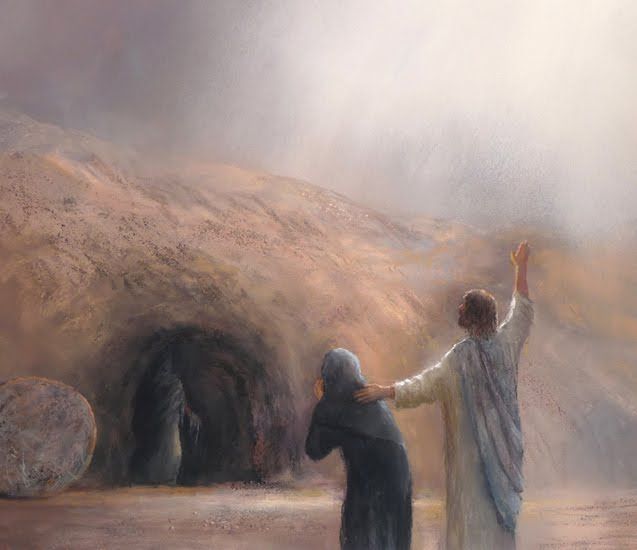
“Seek the LORD while He may be found; call on Him while He is near.” (Isa 55:6)
To seek God early in life; and to live responsibly in your youth for Old Age and Death are coming for all.
Young people ought to enjoy the youthful season of life but never forget that everything they think and do will be judged by God.
Read Ecclesiastes 12
Solomon here underlined the thought of responsible living in one’s youth by vividly depicting in a series of word pictures the increasing gloom and declining powers of old age which culminate in death.
These word pictures are arranged in three groups, each introduced with “before” (vv. 1-2, 6) and modifying the basic imperative, “Remember your Creator in the days of your youth” (v. 1).
Live responsibly before the miseries of old age come
12:1 A life without God can produce bitterness, loneliness, and hopelessness in old age.
A life centered around God is fulfilling and can be richer and more bearable than one without him if we are faced with disabilities, sickness, or handicaps.
Being young is exciting. But the excitement of youth can become a barrier to closeness with God if it makes young people focus on passing pleasures instead of eternal values.
Make your strength available to God when it is still yours—during your youthful years.
Don’t waste it on evil or meaningless activities that become bad habits and make you callous. Seek God now.
12:6-8 The silver cord, golden bowl, water jar, and pulley symbolize life’s fragility.
How easily death comes to us; how swiftly and unexpectedly we return to the dust from which we came.
Therefore, we should recognize life as a precious resource to be used wisely and not squandered frivolously.
12:7-8 Stripped of the life-giving spirit breathed into us by God, our bodies return to dust.
Stripped of God’s purpose, our work is in vain.
Stripped of God’s love, our service is futile.
We must put God FIRST over ALL we do and in ALL we do because without Him we have nothing.
Knowing that life is futile without God motivates a wise person to seek God first.
12:11 A cattle prod was a wooden rod with a sharp metal tip, which was used to keep cattle moving.
Like a cattle prod, wise words or important truths might be unpleasant when first heard and applied but can be essential for moving us in God’s direction.
12:12 Opinions about life and philosophies about how we should live could be read and studied forever.
It is not wrong to study these opinions, but we should spend most of our time feeding on the truth of God’s Word and putting the wisdom we gain into action.
Wise students of the Bible will understand and do what they are taught. Because our time on earth is so short, we should use it to learn the truths that affect not only this life but also eternity.
12:13-14 In his conclusion, Solomon presents his antidotes for the two main ailments presented in this book.
Those who lack purpose and direction in life should fear God and obey His commands.
Those who think life is unfair should remember that God will review every person’s life to determine how he or she has responded to Him, and He will judge every deed.
Have you committed your life—your present and your future—to God?
Does your life measure up to His standards?
12:13-14 The book of Ecclesiastes cannot be interpreted correctly without reading these final verses.
No matter what the mysteries and apparent contradictions of life are, we must work toward the single purpose of knowing God.
In Ecclesiastes, Solomon shows us that we should enjoy life but that this does not exempt us from obeying God’s commands.
We should search for purpose and meaning in life, but these cannot be found in human endeavors.
We should acknowledge the evil, foolishness, and injustice in life yet maintain a positive attitude and strong faith in God.
All people will have to stand before God and be judged for what they did in this life.
We will not be able to use life’s inconsistencies as an excuse for failing to live as God wants.
To live as God wants, we need to…
(1) recognize that human effort apart from God is futile;
(2) put God first—now;
(3) receive every good thing as a gift from God;
(4) realize that God will judge both evil and good; and
(5) know that God will judge the quality of every person’s life.
How strange that people spend their lives striving for the very enjoyment that God gives freely!
In Isaiah 55:2, God asks the question…
“Why spend money on what is not bread, and your labor on what does not satisfy? Listen, listen to Me, and eat what is good, and you will delight in the richest of fare.” ____
Max Lucado’s Life Lessons…
Ecclesiastes 9:1—12:14
Every person must face death. Those who are righteous and wise rest in God’s hands.
Work hard, enjoy what you have in life, and Seek wisdom.
Wisdom provides greater assets than power.
Although you still face death, you can be comforted to know that those who follow God will live forever with Him.
Remarkable. Each morning I climb into a truck that weighs half a ton and take it out on an interstate where I—and a thousand other drivers—turn our vehicles into sixty-mile-per-hour missiles.
Although I’ve had a few scares and mishaps, I still whistle while I drive at a speed that would have caused my great-grandfather to pass out.
Remarkable. Every day I have the honor of sitting down with a book that contains the words of the One who created me.
Every day I have the opportunity to let Him give me a thought or two on how to live.
If I don’t do what He says, He doesn’t burn the book or cancel my subscription.
If I disagree with what He says, lightning doesn’t split my swivel chair or an angel doesn’t mark my name off the holy list.
If I don’t understand what He says, He doesn’t call me a dummy.
In fact, He calls me “Son,” and on a different page explains what I don’t understand.
Remarkable. At the end of the day when I walk through the house, I step into the bedrooms of three little girls.
Their covers are usually kicked off, so I cover them up.
Their hair usually hides their faces, so I brush it back.
And one by one, I bend over and kiss the foreheads of the angels God has loaned me.
Then I stand in the doorway and wonder why in the world He would entrust a stumbling, fumbling fellow like me with the task of loving and leading such treasures.
Remarkable. Then I go and crawl into bed with a woman far wiser than I . . . a woman who deserves a man much better looking than I . . . but a woman who would argue that fact and tell me from the bottom of her heart that I’m the best thing to come down her pike.
After I think about the wife I have, and when I think that I get to be with her for a lifetime, I shake my head and thank the God of grace for grace and think, Remarkable.
In the morning, I’ll do it all again.
I’ll drive down the same road. Go to the same office. Call on the same bank. Kiss the same girls. And crawl into bed with the same woman.
But I’m learning not to take these everyday miracles for granted. . . . I’m discovering many things: traffic jams eventually clear up, sunsets are for free, Little League is a work of art, and most planes take off and arrive on time.
I’m learning that most folks are good folks who are just as timid as I am about starting a conversation. . . . I’m learning that if I look . . . if I open my eyes and observe . . . there are many reasons to take off my hat, look at the source of it all, and just say thanks. (From In the Eye of the Storm by Max Lucado)
Do you feel like you are falling behind in the rat race?
Do you wonder how you will catch up?
Look at your remarkable blessings, and give God thanks for what you do have. ____
Love starts by our loving God with all of our heart, soul, mind and strength…
“Jesus answered, “Hear, O Israel! The Lord our God is one Lord; and you shall love the Lord your God with all your heart, and with all your soul, and with all your mind, and with all your strength.’ The second is this, ‘You shall love your neighbor as yourself.’ There is no other commandment greater than these.’” (Mark 12:29-31)
As Covenant children of God, we are called to be the Distributors of God’s Love and Light into all the dark areas of this world.
What does the God kind of love look like?
For that answer we look to 1 Corinthians 13:
13:1-13 In 1 Corinthians 12, Paul gave evidence of the Corinthians’ lack of love in the utilization of spiritual gifts; 1 Corinthians 13 defines real love, and 1 Corinthians 14 shows how love works.
Love is more important than all the spiritual gifts exercised in the church body—love demonstrates the ultimate purpose of human existence.
God’s love is the reason this world exists and why He wants to spend eternity with us.
We have the wonderful opportunity to love Him in return and love others because we understand how love changes everything for good.
Great faith, acts of dedication or sacrifice, and miracle-working power produce very little without love.
Love makes our actions and gifts useful.
Although people have different gifts, everyone can have a huge amount of love.
13:4-7 Our society confuses love and lust.
Unlike lust, God’s kind of love is directed outward toward others, not inward toward ourselves.
It is utterly unselfish.
This kind of love goes against our natural inclinations.
It is impossible to have this kind of love unless God helps us set aside our own natural desires so that we can love without expecting anything in return.
We can’t manufacture this kind of love when we don’t feel it.
We gain it only through the Holy Spirit (Romans 5:5).
We never love perfectly; only Jesus can.
Thus, the more we become like Christ, the more love we will show to others.
13:5 Paul says that love “is not irritable.”
Sometimes we’re irritated or angered by others, and we don’t know why.
Not all irritability stems from sinful or selfish motives, although the irritable treatment of others is surely wrong.
Much irritability comes from a love of perfection, a deep desire for programs, plans, meetings, and structures to be run perfectly.
A desire to run things perfectly can erupt into anger at those who get in the way or ruin an outcome.
When we get easily irritated, it helps to remember that perfection exists only in God.
We need to love Him and our fellow Christians, not the visions we have for perfection here on earth.
13:7 Before we trivialize these words about love by assuming they can easily fit us, we should pause to consider that they actually describe God’s character.
These are not sugary claims. They are substantial descriptions of the way God perfectly relates to us.
The Holy Spirit inspired Paul to write a breathtakingly beautiful description of the nature of God.
Only God can put His character in us and help us love like this.
13:9-12 What if we do a poor job of loving others?
Paul gives us hope:
(1) Right now we have only partial and incomplete knowledge; we can’t do anything perfectly (13:9).
(2) We are immature, like children, in how we love others. As we grow closer to Christ, we will learn to love others better (13:11).
(3) We lack clarity about the right way to love. Like a cloudy mirror, we don’t perfectly reflect Jesus to others (13:12). (For more from Paul on how we are being transformed, see 2 Corinthians 3:16-18.)
13:10-12 When Paul wrote of knowing “everything completely, just as God now knows me completely,” he was referring to when we will see Jesus Christ face-to-face.
God gives believers spiritual gifts for their lives on earth in order to build up, serve, and strengthen fellow Christians so that they can be better encouraged and equipped to share the love of God with the world.
Spiritual gifts are given only to believers.
In eternity, we will be made perfect and complete and will be in the very presence of God.
We will no longer need spiritual gifts, so they will come to an end.
Then, we will have a full understanding and appreciation for one another as unique expressions of God’s infinite creativity.
We will use our differences as a reason to praise God!
Based on that perspective, let us treat each other with the same love and unity that we will one day share.
13:13 Paul wrote that love endures forever.
In morally corrupt Corinth, love had become a mixed-up term with little meaning.
Today, people are still confused about love.
Love is the greatest of all human qualities and is the very essence of God himself (1 John 4:8).
Love involves unselfish service to others.
Faith is the foundation and content of God’s message; hope is the attitude and focus; love is the action.
When faith and hope are in line, we are free to love completely because we understand how God loves.
Does your faith fully express itself in loving others?
“If faith is the substance of things hoped for, as Hebrews 11:1 tells us, it will be superfluous once these things have arrived.
Similarly with hope. But love is greater than these, because when our troubles are over and our bodies have been changed in the resurrection, our minds will be steadied by it, so that they will no longer desire now one thing, now another.” — Theodoret of Cyrus (5th century Byzantine theologian and bishop) ____
Max Lucado’s Life Lessons…
1 Corinthians 12:31b—13:13
The Corinthians compared spiritual gifts and ministries. They rated a person’s value to the church by that person’s gifts.
All spiritual gifts are equally valuable to the church. But love is even greater than all of them combined.
I saw a shard of [agape] love between an elderly man and woman who have been married for fifty years.
The last decade has been marred by her dementia. The husband did the best he could to care for his wife at home, but she grew sicker; he, older.
So he admitted her to full-time care.
One day he asked me to visit her, so I did.
Her room was spotless, thanks to his diligence.
She, horizontal on the bed, was bathed and dressed, though going nowhere.
“I arrive at 6:15 a.m.,” he beamed.
“You’d think I was on the payroll. I feed her, bathe her, and stay with her.
I will until one of us dies.”
Agape love.
I know a father who, out of love for his son, spends each night in a recliner, never sleeping more than a couple of consecutive hours.
A car accident paralyzed the teenager. To maintain the boy’s circulation, therapists massage his limbs every few hours.
At night the father takes the place of the therapists.
Though he’s worked all day and will work again the next, he sets the alarm to wake himself every other hour until sunrise. . . .
What is this love that endures decades, passes on sleep, and resists death to give one kiss?
Call it agape love, a love that bears a semblance of God’s. (From 3:16 by Max Lucado)
Let us read aloud the description of love in chapter 13, stopping after each word that describes love and thinking about what it means.
How would such love look if you were to share it with others in your daily life? ____
“That which is not in the interests of the hive cannot be in the interests of the bee.” — Marcus Aurelius
Paul’s rules for public worship services emphasized the need to pray for everyone, especially leaders.
The goal was to focus on God and to have an environment in which people could come to know Christ the Savior.
Paul instructed believers about spiritual leadership and women about quiet submission.
God desires order, peace, and holiness in our lives, in our worship, and in our relationships within the church and our communities.
This reflects the order, constancy, and righteous character of God.
When we live this way, God is revealed, and people will embrace Him as Savior.
Read 1 Timothy 2
Call to Depend upon God (2:1-7)
The desire of God is that all people will be saved and come to a knowledge of the truth. The starting point for us is not in strategies, but in prayer and full dependence upon God as we labor with Him in this great privilege.
By praying for others (2:1-4)
2:1 Although God is all-powerful and all-knowing, He has chosen to let us be involved through our prayers in how He is changing the world.
How this works is a mystery to us because of our limited understanding, but it is a reality.
While others angrily take sides on political issues, our first priority should be to pray for those in authority.
We should pray that they will govern justly and equitably and that they will trust in Christ.
Paul based his instruction about prayer for all people on his conviction that God’s invitation for salvation extends equally to all people, whether we agree with their politics or not.
The phrase all people captures the heart of the gospel.
The world that God loves includes every person, even cruel dictators and terrorists (John 3:16).
He loves us as individuals whom He knows intimately (Psalm 139:13-18).
Our earnest prayers for others—whoever they are—will have powerful results (James 5:16).
2:2 We should pray for those in authority around the world—that they will govern justly and that we will have the proper attitude toward them.
Paul’s command to pray for kings is remarkable considering that Nero, a notoriously cruel ruler, was emperor at this time (AD 54–68).
When Paul wrote this letter, persecution was a growing threat to believers.
Later, when Nero needed a scapegoat for the great fire that destroyed much of Rome in AD 64, he blamed the Roman Christians so as to take the focus off himself.
Then persecution erupted throughout the Roman Empire. Not only were Christians denied certain privileges in society, but some were even publicly butchered, burned, or fed to animals.
Both Peter and Paul said that God wants everyone to be saved (also see 2 Peter 3:9).
This does not mean that all will be saved, because the Bible makes it clear that many reject Christ (Matthew 25:31-46; John 12:44-50; Hebrews 10:26-29).
The Good News has a universal scope; it is not directed only to people of one race, one sex, or one national background.
God loves the whole world and sent His Son to save sinners (Galatians 3:26-28).
His mercy and promise of salvation reaches you, your loved ones, and those who are still far away from him (Acts 2:39).
2:5-6 Though some people think there are many ways to God, in practice, each person must choose a single way.
We can stand on one side of a gorge and discuss the possibility of many bridges across the abyss, but if we are determined to cross, we will have to realize that only one bridge is connected to the other side.
Those who insist that there are many bridges to God usually fit into one of the following categories:
(1) They have not personally committed to any “bridge.” They think their belief that there are multiple ways to God will exempt them from having to choose one.
(2) Their belief in many ways to God hides their true belief that finding God doesn’t really matter at all.
(3) They are convinced that arguing for many ways to God will insure that they won’t be wrong. If there is only one way, their generalized belief will presumably have included it.
(4) They have decided that believing in many ways to God requires less work than going to the trouble of actually considering the claims of various religious systems.
The facts remain: We human beings are separated from God by sin, and we need a savior—someone who will give us a way across the abyss of sin and back to God.
Only one person in the universe can serve as our mediator and stand between us and God, bringing us together again:
Jesus, who is both God and man.
Jesus’ sacrifice brings new life to ALL who believe and accept him (John 1:12).
Have you let Him bridge the gap between you and God? ____
Max Lucado’s Life Lessons…
1 Timothy 1:1—2:15
Paul laid down guidelines for proper worship. He emphasized the importance of prayer and orderly worship.
Prayer is an important part of public worship.
One of our Brazilian church leaders taught me something about earnest prayer.
He met Christ during a yearlong stay in a drug-rehab center.
His therapy included three one-hour sessions of prayer a day.
Patients weren’t required to pray, but they were required to attend the prayer meeting.
Dozens of recovering drug addicts spent sixty uninterrupted minutes on their knees.
I expressed amazement and confessed that my prayers were short and formal.
He invited (dared?) me to meet him for prayer.
I did the next day.
We knelt on the concrete floor of our small church auditorium and began to talk to God.
Change that. I talked; he cried, wailed, begged, cajoled, and pleaded.
He pounded his fists on the floor, shook a fist toward heaven, confessed, and reconfessed every sin.
He recited every promise in the Bible as if God needed a reminder.
He prayed like Moses. When God determined to destroy the Israelites for their golden calf stunt,
“Then Moses pleaded with the Lord his God, and said: ‘Lord, why does Your wrath burn hot against Your people whom You have brought out of the land of Egypt with great power and with a mighty hand?
Why should the Egyptians speak, and say, “He brought them out to harm them, to kill them in the mountains, and to consume them from the face of the earth”? . . . Remember Abraham, Isaac, and Israel, Your servants, to whom You swore by Your own self’” (Exodus 32:11–13).
Moses on Mount Sinai is not calm and quiet, with folded hands and a serene expression.
He’s on his face one minute, in God’s the next.
He’s on his knees, pointing his finger, lifting his hands. Shedding tears. Shredding his cloak.
Wrestling like Jacob at Jabbok for the lives of his people. And God heard him!
“So the Lord relented from the harm which He said He would do to His people” (v. 14).
Our passionate prayers move the heart of God.
“The effective, fervent prayer of a righteous man avails much” (James 5:16).
Prayer does not change God’s nature; who He is will never be altered.
Prayer does, however, impact the flow of history.
God has wired His world for power, but He calls on us to flip the switch. (From Outlive Your Life by Max Lucado)
Worship God today and join with other Christians this Sunday in public prayer, singing, and Bible teaching.
Let corporate worship become a first priority to you. ____
From Faith to Faith Daily Devotional
DON’T UNDERESTIMATE YOUR PRAYERS by Kenneth Copeland
“I exhort therefore, that, first of all, supplications, prayers, intercessions, and giving of thanks, be made for all men; for kings, and for all that are in authority; that we may lead a quiet and peaceable life in all godliness and honesty.” — 1 Timothy 2:1-2
That verse is clear, isn’t it? The instruction is plain. Yet even in these tumultuous days when our nation is so desperately in need of God’s guidance, most of God’s people don’t do what that verse commands.
Why not?
I believe it’s because most of us are overwhelmed by the problems we see around us.
How could my prayers make a dent in the national debt? we think. How could my faith affect foreign policy?
In other words, we fail to pray because we fail to realize just how powerfully our prayers can affect this country.
It’s time we caught hold of that. It’s time we realized that if we’d just be obedient to 1 Timothy 2:1-2, there’s no council of any kind on earth, no king, no president, no congress, no anything that could overthrow God’s purpose for His people.
God has called us to intercede. He has commanded us to pray for those in authority.
He has given us His Word, His power, His Name, His authority and His faith.
We have all the tools necessary to pray effectively for our government and its leaders.
I urge you to intercede. It is your responsibility as a believer to get involved in the affairs of your country. God wants this great land of ours, and the only way He’s going to get it is through His ambassadors—you and me.
Pray for your nation. Every day. And never again underestimate the world-changing power of those prayers. ____
“Prayer is the soul’s sincere desire, unuttered or expressed.” — James Montgomery
The real “Lord’s Prayer” is not found in the synoptic Gospels but here in the seventeenth chapter of John’s Gospel.
It is offered from the wide and loving expanse of the Lord’s heart.
The prayer focuses on a series of relationships that provide a beautiful picture of how God expects His people to live.
The capstone of this prayer lies before us now, as we listen to what one member of the Trinity says to another about what it is like to live “in the world.”
John 17:1-26 (Wuest An Expanded Translation)
1 These things spoke Jesus, and having lifted up His eyes to heaven, He said, Father, the hour has come. Glorify your Son in order that the Son may glorify you,
2 even as you gave to Him authority over all flesh, in order that all that you have given Him as a permanent gift, He should give to them life eternal.
3 And this is the eternal life, namely, THAT THEY MIGHT BE HAVING AN EXPERIENTIAL KNOWLEDGE OF YOU, the only genuine God, and of Him whom you sent on a mission, Jesus Christ.
4 I glorified you on the earth, having carried through to completion that which you have given me to do.
5 And now glorify me, Father, beside yourself, with the glory which I was constantly having with you before the universe existed.
6 I made known your Name to the men whom you gave me out of the world.
They were yours, and you gave them to me, and your word they have held to firmly.
7 Now, they have known that all things, as many as you have given to me are from you,
8 because the words which you gave me, I have given them, and they themselves received them and recognized truly that from your presence I came forth, and they believed that you sent me on a mission.
9 As for myself, I make request concerning them. Not concerning the world do I make request, but concerning those whom you have given me, because they are yours,
10 and all things that are mine are yours, and the things that are yours are mine, and I stand glorified in them.
11 And as for myself, no longer am I in the world, but they themselves are in the world, and I am coming to you.
O holy Father, maintain a watchful care over them in your Name, which you have given me, in order that they may be one even as we.
12 When I was with them, I constantly maintained a watchful care over them in your Name, those whom you have given me, and I guarded them, and no one of them was lost except the son of perdition in order that the scripture might be fulfilled.
13 And now to you I am coming, and these things I am speaking in the world in order that they may be constantly having the joy which is mine, which joy having been filled full may exist in the state of fullness in themselves.
14 I have given them your word, and the world hated them, because they are not of the world even as I am not of the world.
15 I do not ask that you should take them out of the world, but that you should guard them safely from the reach of the Pernicious One.
16 Of the world they are not, even as I am not of the world.
17 Consecrate them in the sphere of the truth.
The word which is yours is truth.
18 Even as me you sent off on a mission into the world, so I sent off them on a mission into the world.
19 And on behalf of them I am setting myself apart, in order that they themselves also, having been set apart for God in the sphere of the truth, may continually be in that state of consecration.
20 But not concerning these only am I making request, but also concerning those who believe on me through their word,
21 in order that all might be one, even as you, Father, are in me and I in you, in order that they themselves also might be in us, to the end that the world may be believing that you sent me on a mission.
22 And as for myself, the glory which you have given me, I have given them, in order that they might be one even as we are one,
23 I in them and you in me, in order that they, having been brought to the state of completeness with respect to oneness, may persist in that state of completeness, to the end that the world might be understanding that you sent me on a mission and that you loved them even as you loved me.
24 Father, that which you have given me as a permanent gift, I desire that where I am, also those might be with me, in order that they might be continually beholding the glory which is mine, which you have given me because you loved me before the foundation of the universe.
25 O, righteous Father, though the world did not know you, yet I knew you, and these knew that you sent me on a mission.
26 And I made known to them your Name, and will make it known, in order that the love with which you loved me might be in them and I might be in them. ____
A Mother’s Prayer
Kenneth Gangel recalls as a child how he would be lying in bed at night, listening to his mother praying aloud in the next room.
Along with the prayers he could also hear at times the curses and anger of his atheistic father, who tried to interrupt her communication with God.
He says, “I always felt on those occasions that I should not be able to listen, since prayer is a private and sacred domain one ought to maintain in secret.”
It does not seem right to be able to listen to your mother praying, especially when she is praying for you.
Yet that is precisely the type of experience every Christian can have when reading the seventeenth chapter of John’s Gospel.
Here, of course, it is not a mother but the Son of God praying aloud, praying for the record.
And not only for the benefit of His disciples, who may have been within earshot, but also for every reader of the New Testament right up to the present time.
The Lord was just hours from the cross.
A final evening of instruction began in the upper room at mealtime, and Jesus had explained to His disciples all the matters recorded in chapters 13-16 of this Gospel.
Foremost among the themes of the evening had been an emphasis on the coming of the Holy Spirit and the continuing relationship the disciples would have with their Lord, even though he would be in heaven while they would extend his work on earth.
These five chapters of John (chapters 13-17) are a golden repository of truth to which Christians have come for guidance and blessing for almost two thousand years.
In Jesus’ moment of grief as well as triumph, our Lord turned His eyes from earth to heaven and asked the God of the universe to heed His petitions on the authority of His relationship to His Father.
One of Jesus’ current ministries in heaven is to pray for us, and we may sometimes wonder what He says.
Certainly there would be some difference between His current advocacy and what we find in this chapter, but John provided some general clues about matters that concern the Lord about the life of believers on earth. ____
Max Lucado’s Life Lessons…
John 17:1–26
This is the longest prayer of Jesus recorded in the Bible.
It marked the end of Jesus’ earthly ministry but looked forward to the ongoing ministry of the immediate and future disciples.
Prayer was an important aspect of Jesus’ ministry.
Whenever a strategic time approached, Jesus spent time in prayer.
The world is a battleground. Constant spiritual and physical warfare wages between the forces of God and Satan.
Jesus prayed that God would keep His people pure, give them abundant joy, give them peace and unity, and protect them from Satan’s power.
“Immanuel” – the name appears in the same Hebrew form as it did two thousand years ago.
“Immanu” means “with us.” “El” refers to Elohim, or God.
Not an “above us God” or a “some-where in the neighborhood God.”
He came as the “with us God.”
God with us. Not “God with the rich” or “God with the religious.”
But God with us. All of us.
Russians, Germans, Buddhists, Mormons, truck drivers and taxi drivers, librarians.
God with us. God with us. Don’t we love the word “with”?
“Will you go with me?” we ask. “To the store, to the hospital, through my life?”
God says He will. “I am with you always,”
Jesus said before He ascended to heaven, “even to the end of the age” (Matthew 28:20).
Search for restrictions on the promise; you’ll find none.
You won’t find “I’ll be with you if you behave . . . when you believe.
I’ll be with you on Sundays in worship . . . at mass.” No, none of that.
There’s no withholding tax on God’s “with” promise.
He is with us. God is with us. Prophets weren’t enough.
Apostles wouldn’t do. Angels won’t suffice.
God sent more than miracles and messages.
He sent himself; He sent His Son. “The Word became flesh and dwelt among us” (John 1:14). (From Cure for the Common Life by Max Lucado)
____
Selah (let us pause and calmly think about these things)
Here is the word given by Smith Wigglesworth to Lester Sumrall in 1939 (when WWII was ready to break out)…
With tears rolling down his face Smith cried saying,
“I probably won’t see you again now. My job is almost finished.”
As he continued to pray he cried, “I see it, I see it!”
Brother Sumrall asked, “What do you see, what do you see?”
He said,
“I see a healing revival coming right after World War II. It’ll be so easy to get people healed. I see it! I see it! I won’t be here for it, but you will be.”
And there was a healing revival right after the war.
He continued to prophesy,
“I see another one, I see people of all different denominations being filled with the Holy Ghost.”
That was the Charismatic Revival. God raised up people during that era, like the Full Gospel Businessmen.
Then Brother Wigglesworth continued, “I see another move of God. I see auditoriums full of people, coming with notebooks.
There will be a wave of teaching on faith and healing.”
We did experience that wave he saw, and we call it the Word of Faith movement.
Then he prophesied, “After that, after the third wave,” he started sobbing.
“I see the last day revival that’s going to usher in the precious fruit of the earth.
It will be the greatest revival this world has ever seen! It’s going to be a wave of the gifts of the Spirit.
The ministry gifts will be flowing on this planet earth.
I see hospitals being emptied out, and they will bring the sick to churches where they allow the Holy Ghost to move.” ____
God tells us in His Word the following…
Amos 3:7 “Surely the Lord God does nothing, Unless He reveals His secret to His servants the prophets.”
1 Thessalonians 5:16-22 (Wuest An Expanded Translation)
Do not quench the Holy Spirit 16 Always be rejoicing.
17 Be praying unceasingly.
18 In everything be giving thanks, for this is the will of God in Christ Jesus for you.
19 STOP STIFLING AND SUPPRESSING THE SPIRIT.
20 STOP COUNTING AS NOTHING DIVINE REVELATIONS given in the local assembly by the one who receives them,
21 but be putting all things to the test for the purpose of approving them, and finding that they meet the requirements, put your approval upon them.
Be constantly holding fast that which is good.
22 Be holding yourselves back from every form of perniciousness (evil).
____
From all the various prophecies in the Bible and all that we are seeing around us today, it certainly appears that Jesus’ return is near, even at the door!
And make no mistake, this is the Great Adventure that we all signed up for!
Let us each purpose in our mind everyday, to be about our Father’s business.
Jesus Teaches Nicodemus about the New Birth (3:1–21)
3:1 The story of Nicodemus contrasts with what had just gone before.
Many of the Jews in Jerusalem professed to believe on the Lord, but He knew their faith was not genuine.
Nicodemus was an exception. The Lord recognized in him an earnest desire to know the truth.
Verse 1 should begin with a connective: “But there was a man of the Pharisees, named Nicodemus, a ruler of the Jews.”
Nicodemus was recognized as a teacher among his people. Perhaps he came to the Lord for instruction, so that he might return to the Jews with this additional learning.
3:2 The Bible does not say why Nicodemus came to Jesus by night. The most obvious explanation is that he would have been embarrassed to be seen going to Jesus, since the Lord had by no means been accepted by the majority of the Jewish people.
However, he did come to Jesus. Nicodemus acknowledged the Lord to be a teacher sent by God, since no one could perform such miracles without the direct help of God.
In spite of all his learning, Nicodemus did not recognize the Lord as God manifest in the flesh.
He was like so many today who say that Jesus was a great man, a wonderful teacher, an outstanding example.
All of these statements fall very far short of the full truth.
Jesus was and is God!
3:3 At first sight, the answer of the Lord Jesus does not seem to be connected with what Nicodemus had just said.
Our Lord is saying,
“Nicodemus, you have come to Me for teaching, but what you really need is to be born again. That is where you must begin. You must be born from above. Otherwise, you can never see the kingdom of God.”
The Lord introduced these wonderful words with the expression: “Most assuredly” (lit. Amen, amen).
These words alert us to the fact that important truth is being given.
As a Jew, Nicodemus had been looking for a Messiah to come and free Israel from the bondage of Rome.
The Roman Empire was then in control of the world, and the Jews were subject to its laws and government.
Nicodemus longed for the time when the Messiah would set up His kingdom on earth, when the Jewish people would be chief among the nations, and when all their enemies would be destroyed.
Now the Lord informed Nicodemus that in order to enter this kingdom, a man must be born again.
Just as the first birth is necessary for physical life, so a second birth is necessary for divine life.
(The expression born again may also mean “born from above.”)
In other words, Christ’s kingdom can only be entered by those whose lives have been changed.
Since His reign will be a righteous one, His subjects must be righteous also. He could not reign over people who were going on in their sins.
3:4 Here again we see how difficult it was for men to understand the words of the Lord Jesus.
Nicodemus insisted on taking everything literally. He could not understand how a grown-up could be born again.
He pondered the physical impossibility of a man entering his mother’s womb again in order to be born.
Nicodemus illustrates that “the natural man does not receive the things of the Spirit of God, for they are foolishness to him; nor can he know them, because they are spiritually discerned” (1 Cor. 2:14).
3:5 In further explanation, Jesus told Nicodemus that he must be born of water and the Spirit.
Otherwise, he could never enter the kingdom of God.
What did Jesus mean?
Many insist that literal water is intended, and that the Lord Jesus spoke of the necessity of baptism for salvation.
However, such a teaching is contrary to the rest of the Bible.
Throughout the Word of God we read that salvation is by faith in the Lord Jesus Christ alone.
Baptism is intended for those who have already been saved, but not as a means of salvation.
Some suggest that water in this verse refers to the Word of God.
In Ephesians 5:25, 26 water is closely associated with the Word of God. Also, in 1 Peter 1:23 and James 1:18, the new birth is said to take place through the Word of God.
It is quite possible, therefore, that water in this verse does refer to the Bible.
We know that there can be no salvation apart from the Scriptures.
It is the message contained in the Word of God that must be appropriated by the sinner before there can ever be the new birth.
But water may also refer to the Holy Spirit.
In John 7:38, 39 the Lord Jesus spoke of rivers of living water, and we are distinctly told that when He used the word water He was speaking of the Holy Spirit.
If water means the Spirit in chapter 7, why can it not have the same meaning in chapter 3?
However, there seems to be a difficulty if this interpretation is accepted.
Jesus says, “Unless one is born of water and the Spirit, he cannot enter the kingdom of God.”
If water is taken to mean the Spirit, then it would appear that the Spirit is mentioned twice in this verse.
But the word translated “and” could just as correctly have been translated “even.”
Thus, the verse would read: Unless one is born of water, even the Spirit, he cannot enter the kingdom of God.
We believe that this is the correct meaning of the verse.
Physical birth is not enough. There must also be a spiritual birth if one is to enter the kingdom of God.
This spiritual birth is produced by the Holy Spirit of God when a person believes on the Lord Jesus Christ.
This interpretation is supported by the fact that the expression “born of the Spirit” is found twice in the verses to follow (vv. 6, 8).
3:6 Even if Nicodemus could in some way have entered his mother’s womb a second time and been born a second time, that would not have corrected the evil nature in him.
The expression that which is born of the flesh is flesh means that children born of human parents are born in sin and are hopeless and helpless as far as saving themselves is concerned.
On the other hand, that which is born of the Spirit is spirit.
A spiritual birth takes place when a person trusts in the Lord Jesus.
When a person is born again through the Spirit, he receives a new nature, and is made fit for the kingdom of God.
So who is the Holy Spirit?
God is three persons in one—the Father, the Son, and the Holy Spirit.
God became a human in Jesus so that Jesus could die for our sins.
Jesus rose from the dead to offer salvation to all people through spiritual renewal and rebirth.
When Jesus ascended into heaven, His physical presence left the earth, but He promised to send the Holy Spirit so that His spiritual presence would still be among humankind (see Luke 24:49).
The Holy Spirit first became available to all believers at Pentecost (Acts 2).
Whereas in Old Testament days the Holy Spirit empowered specific individuals for specific purposes at specific times, now all believers have the power of the Holy Spirit available to them all the time.
3:8 Jesus explained that we cannot control the work of the Holy Spirit.
He works in ways we cannot predict or understand.
Just as you did not control your physical birth, you cannot control your spiritual birth.
It is a gift from God through the Holy Spirit (Romans 8:16; 1 Corinthians 2:10-12; 1 Thessalonians 1:5-6).
3:9 No one is beyond the touch of God’s Spirit.
Are there people you disregard, thinking they could never be brought to God—a world leader you have never prayed for or a difficult person you have never shared the Good News with?
Don’t ever assume that a certain person will never respond to the gospel.
God, through His Holy Spirit, can reach anyone, and you should pray diligently for whomever He brings to your mind.
Be a witness and an example to everyone you are in contact with.
God may touch those you consider most unreachable—and He may use you to do it.
3:10-11 This Jewish teacher of the Bible knew the Old Testament thoroughly, but he didn’t understand what it said about the Messiah.
Intellectual knowledge does not guarantee true understanding or salvation.
You should know the Bible, but even more important, you need a relationship with the God whom the Bible reveals so you can receive the salvation that He offers.
3:14-15 When the Israelites were wandering in the wilderness, God sent a plague of snakes to punish them for their rebellious attitudes.
Those doomed to die from snake bites could be healed by obeying God’s command to look up at the elevated bronze snake and believing that God would heal them if they did (see Numbers 21:8-9).
Similarly, our salvation happens when we look up to Jesus, believing He will save us.
God has provided this way for us to be healed of sin’s deadly bite.
3:16 The message of the Good News comes to a focus in this verse.
God’s love is not static or self-centered; it reaches out and draws others in.
Here God sets the pattern of true love, the basis for all love relationships—when you love someone dearly, you are willing to give to them freely, to the point of self-sacrifice.
God paid dearly with the life of His Son, the highest price He could pay.
Jesus accepted our punishment, paid the price for our sins, and then offered us the new life that He had bought for us.
When we share the Good News with others, our love must be like Jesus’—willing to give up our own comfort and security so that others might join us in receiving God’s love.
3:16 Some people are not interested in the idea of eternal life because their lives are miserable.
They wouldn’t want them to go on forever.
But eternal life is not an extension of a person’s mortal life.
In eternal life, there is no death, sickness, enemy, evil, or sin.
When we don’t know Jesus, we make choices as though this life is all there is, and we can’t imagine the bad being eliminated or redeemed into something good and wonderful.
In reality, eternal life can be entirely different from the life you are living now..
But you will need to ask Jesus for the new life He offers and follow Him in order to receive it.
Then you will begin to evaluate all that happens to you from an eternal perspective, and you will begin to truly look forward to eternity.
GOD SPECIALIZES IN finding and changing people we consider out of reach.
It took a while for Nicodemus to come out of the dark, but God was patient with this “undercover” believer.
Afraid of being discovered, Nicodemus made an appointment to see Jesus at night.
Daylight conversations between Pharisees and Jesus tended to be antagonistic, but Nicodemus really wanted to learn.
He probably got a lot more than he expected—a challenge to a new life!
We know very little about Nicodemus, but we know he left that evening’s encounter a changed man.
He came away with a whole new understanding of both God and himself.
Nicodemus next appears in the story as part of the Jewish high council (John 7:50).
As the group discussed ways to eliminate Jesus, Nicodemus raised the question of justice.
Although his objection was overruled, he had spoken up.
He had begun to make his faith public.
Our last picture of Nicodemus shows him joining Joseph of Arimathea in asking for Jesus’ body in order to provide for its burial (John 19:39).
Realizing what he was risking, Nicodemus was making a bold move.
He was continuing to grow.
God wants us to continually grow in our faith; He isn’t looking for instant perfection.
How well have you continued to grow spiritually in good times and bad?
God can always make a way where there doesn’t seem to be a way but…
Unless we are born again, we can never be part of the Kingdom of God!
God is able to even change those we might consider unreachable.
God is always patient, but persistent.
If we make ourselves available, God can use us.
Selah (let us pause and calmly think about these things) ____
Thursday, August 11, 2022 God’s Holy Fire:
ONLY THE HOLY SPIRIT GIVES BIRTH TO SPIRITUAL LIFE
[Jesus continued,] “Humans can reproduce only human life, but the Holy Spirit gives birth to spiritual life.” — John 3:6 NLT
Key Thought Ten times in five verses in the Bible’s first chapter we are told that each living thing produced according to its kind (Genesis 1:11-12; Genesis 1:21; Genesis 1:24-25).
In today’s verse, John reminds us that this principle is still true:
Human beings can produce only human life; they can’t give birth to true spiritual life.
The power to give birth to spiritual life comes only from the Holy Spirit.
The work of the Holy Spirit is essential to true conversion (Acts 2:38; 1 Corinthians 6:9-11; Titus 3:3-7).
When folks were baptized in New Testament times and the Holy Spirit wasn’t involved, they were taught more fully about Jesus and were baptized again with a recognition of the Spirit’s involvement (Acts 19:1-7).
When there was a question of whether to include Gentiles into the family of God, the work of the Holy Spirit in their conversion was crucial to their acceptance (Acts 10:44-48; Acts 11:15-17; Acts 15:8-9).
For us to be reborn into God’s family, for us to be true followers of Jesus, and for us to be cleansed and made holy, the Holy Spirit must be involved.
Only “the Holy Spirit gives birth to spiritual life”!
Today’s Prayer Almighty God, I know that I cannot give birth to my own spiritual life. So I thank you for giving me the gift of the Holy Spirit who cleansed me, gave me a new birth into your family, and lives inside me making me your holy temple.
Please accept my life as a living sacrifice as I live to bring you glory by the power of the Holy Spirit. In Jesus’ name, I pray. Amen. ____
“But you are a chosen generation, a royal priesthood” (1 Peter 2:9a)
God Is Building You…
Becoming a member of God’s family initiates a lifelong building program.
Just as buildings under construction improve in appearance as they near completion, so, too, should the behavior and attitudes of believers improve as we get nearer our eternal reward.
Beginning to Grow Up (vv. 1-3)
Spiritual growth is fueled by an appreciation of God’s grace.
Read 1 Peter 2:1-25
2:1-2. This section logically flows out of the previous chapter and is connected to it with the word therefore which draws the reader back to the subject of the Word of God.
The Word of God was the content of Peter’s preaching.
The life-changing power of the Word must affect our lives as Christians.
Reborn children of God should exhibit their new life in their day-to-day conduct.
Believers ought to exhibit a different quality of life, marked by continuous growth (see v. 2c).
Newborn babies connects chapter 2 directly with the last section of chapter 1 with its reference to new birth (1:23).
“Newborn babies” does not indicate that these readers were new Christians.
Some were thirty years old in the faith.
All believers need to long for the spiritual milk or nourishment of God’s Word in the same way that a baby longs for milk.
Crave refers to an intense and continuous desire.
Spiritual growth begins and continues through the application of the Word of God (see 1:23-25).
These verses list five sins of attitude and speech that we must rid ourselves of if spiritual growth is to proceed.
“Rid” is a forceful word that calls us to “cast off or aside” certain practices that are deterrents to spiritual growth.
What needs to be cast off “is not the grosser vices of paganism, but community destroying vices that are often tolerated by the modern church.
When a community is under pressure, there is a tendency to begin bickering and division, which only makes the community that much more vulnerable to outside pressure” (Davids, 80).
Malice, an attitude similar to hatred, is the desire to inflict pain, harm, or injury on another person.
It includes the holding of grudges and acting out of these grudges against others.
Deceit refers to deliberate dishonesty, to speaking or acting with ulterior motives.
Anything less than speaking the full and honest truth from the heart is deceit.
This vice is the selfish, two-faced attitude that deceives and hurts others for personal gain.
Hypocrisy has an intriguing history. It comes from a verb meaning “to answer.”
A hypocrite originally was simply a person who answered.
Then the word came to mean “an actor,” a person who takes part in a stage drama, specifically the interactive narrative parts of question and answer in the play.
From there, this word came to mean a person who is acting out a part and concealing his true motives.
Envy must also be cast aside. Envy begins with a desire to possess what belongs to someone else.
But it is more than this. It is a resentful discontent.
Envy is “the feeling of displeasure produced by witnessing or hearing of the advantage or prosperity of others” (Hiebert, 111).
Envy often finds expression through slander of every kind—the final behavior attitude that Peter mentions in verse 1.
“Slander” (katalaleo) literally means “to speak against someone.”
It suggests running others down verbally.
It is speech that deliberately assaults the character of other persons.
It is any speech that harms another person’s status or reputation.
None of these practices should have any place in those people who are born again.
In obedience to the command of God, believers are to rid themselves of such attitudes and actions.
2:3. Believers in Jesus Christ have experienced a taste of God’s grace in their lives.
God’s grace is no excuse for us to behave as we please.
The goodness and grace of God should be our greatest incentives to spiritual growth and progress.
Christians must grow together, not just as individuals, but as living stones, which, when joined together with others, become integral parts in God’s building of a spiritual house.
2:4. We are coming to Christ, the living Stone.
Christ is the living, resurrected, and life-giving God.
Each person accepts or rejects this “living Stone.”
Rejection means “to examine and reject because of lack of value.”
This rejection refers to the people of the first century who ultimately crucified Christ and to anyone since that time who has not embraced Him as personal Savior.
God the Father places infinite value upon Christ.
2:5. The decision to believe in Jesus Christ admits an individual into a spiritual building program.
When anyone comes to Christ, as the Living Stone, a new stone is added to God’s spiritual building— Christ’s church.
As a spiritual building, the church is to be influenced or dominated by the Holy Spirit.
Christians are a new temple of God under the influence and power of the Holy Spirit.
Together we function as a holy priesthood.
All believers are priests.
Every Christian has immediate and direct access to God through Jesus Christ and serves God personally by bringing others to God.
A priest offers spiritual sacrifices acceptable to God. What are spiritual sacrifices?
The Old Testament speaks of spiritual sacrifices of prayer, thanksgiving, praise, and repentance.
The New Testament goes even further by identifying spiritual sacrifices as:
(1) the offering of our bodies to God for His service;
(2) the offerings of our financial gifts; and
(3) practical, loving service to other people.
Spiritual sacrifices in the New Testament involve our bodies, our money, and our time (Rom. 12:1-2).
When you come to Christ as the Living Stone, you become a part of a building, the church.
Your growth begins to speak for itself as you offer up spiritual sacrifices acceptable to God.
So what are the “spiritual sacrifices” that we offer to God?
When sacrificing an animal according to God’s law, a priest would kill the animal, cut it in pieces, and place it on the altar.
Sacrifices were important, but even in the Old Testament God made it clear that obedience from the heart was much more important (see 1 Samuel 15:22; Psalm 40:6; Amos 5:21-24).
God wants us, now His “holy priests,” to offer ourselves as living and spiritual sacrifices—daily laying aside our own desires and following Him, putting ALL our energy and resources at His disposal, and trusting Him to guide us.
The New Testament letters help clarify what this kind of sacrifice looks like:
(1) We give our bodies and wills to God’s control (Romans 12:1),
(2) we offer our love to God and to others (Ephesians 5:2),
(3) we give money to help in ministry (Philippians 4:18), and
(4) we offer praise to God (Hebrews 13:15).
2:6-8 No doubt Peter often thought of Jesus’ words to him right after he confessed that Jesus was “the Messiah, the Son of the living God”:
“You are Peter . . . and upon this rock I will build my church, and all the powers of hell will not conquer it” (Matthew 16:16, 18).
What is the stone that really counts the most in the building of the church?
Peter answers: Christ Himself.
Jesus Christ is called “the stone that makes people stumble, the rock that makes them fall.”
Some will stumble over Christ because they reject Him or refuse to believe His true identity.
But Psalm 118:22 says that “the stone that the builders rejected has now become the cornerstone,” the most important part of God’s building, the church.
What are the characteristics of Christ, the cornerstone?
(1) He is completely trustworthy;
(2) He is precious to believers; and
(3) though rejected by some, He is the most important part of the church.
People who refuse to believe in Christ have made the greatest mistake of their lives.
They have stumbled over the one person who could save them and give meaning to their lives, and they have fallen into God’s hands for judgment.
2:9-10 People often base their self-concept on their accomplishments.
But the importance of our relationship with Christ transcends our jobs, successes, wealth, or knowledge.
We have been chosen by God as His very own, and we have been called to represent Him to others.
Remember that your value comes from being one of God’s children, not from what you can achieve.
You have worth because of what God does, not because of what you do.
2:9 Christians sometimes speak of “the priesthood of all believers.”
In Old Testament times, people did not approach God directly.
A priest acted as an intermediary between God and sinful human beings.
With Christ’s victory on the cross, that pattern changed.
Now we can come directly into God’s presence without fear (Hebrews 4:16), and we are given the responsibility of bringing others to Him also (2 Corinthians 5:18-21).
When we are united with Christ as members of His body, we join in His priestly work of reconciling God and humanity.
2:11 As believers, we are “temporary residents and foreigners” in this world because our real home is with God.
Heaven is where God lives, not the cloud-and-harp existence popular in cartoons.
Life in heaven operates according to God’s eternal and unshakable principles and values.
Heaven came to earth in the symbolism of the Jewish sanctuary (the Tabernacle and Temple) where God’s presence resided.
It came in a fuller manner in the person of Jesus Christ, God with us.
It spread through the entire world as the Holy Spirit came to live in every believer.
Someday, after God judges and destroys all sin, the Kingdom of Heaven will rule every corner of this earth.
John saw this day in a vision, and he cried out,
“Look, God’s home is now among His people! He will live with them, and they will be His people. God Himself will be with them” (Revelation 21:3).
Our true loyalty should be to our citizenship in heaven, not to our citizenship here, because the earth will be destroyed and then renewed as the new earth, a physical place where Jesus will live with us.
Our loyalty should be to God’s truth, His way of life, and His dedicated people.
Because we are loyal to God, we will often feel like outsiders in a world hostile to or ignorant of God. But there will come a day when we won’t feel that way anymore.
2:12 Peter’s counsel sounds like Jesus’ in Matthew 5:16:
If your actions are above reproach, even hostile people will end up praising God.
Peter’s readers were scattered among unbelievers who were inclined to believe and spread vicious lies about Christians.
Gracious, godly, and winsome behavior on the part of Christians could show these rumors to be false and could even win some of the unsaved critics to the Lord.
Don’t write off people because they misunderstand Christianity; instead, show them Christ by your life.
The day may come when those who criticize you will praise God with you.
2:13-17 When Peter told his readers to submit to all human authority, he was speaking of the Roman Empire under Nero, a notoriously cruel tyrant.
Obviously He was not telling believers to compromise their consciences; in fact, Peter had told the high priest years earlier,
“We must obey God rather than any human authority” (Acts 5:29).
But in most aspects of daily life, Christians can and should live according to the law of their land.
Today, some Christians live in freedom while others live under repressive governments.
All are commanded to cooperate with those in authority as far as conscience will allow.
We are to do this “for the Lord’s sake”—so that His Good News and His people will be respected.
If we face persecution, it should be for obeying God, not for breaking moral or civil laws.
2:16 Christians have freedom in Christ, but the apostles defined freedom more narrowly than the normal use of the word in common language.
Christians use freedom as a tool for lives of exuberant service.
It’s the foundation that God gives us to reach our highest potential.
Because God gives us freedom from religious rules and eternal guilt, we must not seek to indulge our own desires; instead, we should reach for the best God has for us.
Let your freedom sing of power, joy, and love—accountable to God and devoted to loving and serving others.
2:18-21 Many Christians in Peter’s day were household servants.
It would be easy for them to submit to masters who were gentle and kind, but Peter encouraged loyalty and perseverance even in the face of unjust treatment.
In our context, we should follow this principle by submitting to our employers, whether they are considerate or harsh.
By so doing, we may win them to Christ by our good example.
Paul gave similar advice (see Ephesians 6:5-9; Colossians 3:22-25), as did Jesus (Matthew 5:46; Luke 6:32-36). 2:21-22
We may suffer for many reasons.
Some suffering comes as the direct result of our own sin; some happens because of our or someone else’s foolishness; some comes from living in a fallen world.
Peter is writing about suffering that comes as a result of doing good.
Christ never sinned, yet He suffered so that we could be set free.
Jesus’ suffering was part of God’s plan (Matthew 16:21-23; Luke 24:25-27, 44-47) and was intended to save us (Matthew 20:28; 26:28).
All who follow Jesus must be prepared to suffer (Mark 8:34-35).
Our goal should be to face suffering as He did—with patience, calmness, and confidence that God is in control of the future.
2:22-25 This is drawn from Isaiah 52:13–53:12.
Only Christ himself, the sinless son of God, could bear our sins on the cross.
Christ took the death penalty for sin, dying in our place, so we would not have to suffer the punishment we deserve.
This is called substitutionary atonement.
In a transaction we cannot fully comprehend, God placed the sins of the world on Jesus Christ. ____
Max Lucado’s Life Lessons…
1 Peter 2:1–25
Peter knew that loyal Christians suffered from the abuse of cruel Roman practices.
He told them to expect suffering.
Suffering might be endured so that others could see the Lord’s power to help Christians endure.
After all, God was building a “spiritual house” with His “living stones.”
Peter encouraged his readers that God is building something lasting.
Despite persecution, the people should recognize the glory of their faith and take their God-ordained places in this new “building” of God.
When I was six years old, my father built us a house.
Architectural Digest didn’t notice, but my mom sure did.
Dad constructed it, board by board, every day after work.
My youth didn’t deter him from giving me a job.
He tied an empty nail apron around my waist, placed a magnet in my hands, and sent me on daily patrols around the building site, carrying my magnet only inches off the ground.
One look at my tools and you could guess my job.
Stray nail collector.
One look at yours and the same can be said.
Brick by brick, life by life, God is creating a kingdom, a “spiritual house” (1 Peter 2:5).
He entrusted you with a key task in the project.
Examine your tools and discover it.
Your ability unveils your destiny.
“If anyone speaks, let him speak as the oracles of God. If anyone ministers, let him do it as with the ability which God supplies, that in all things God may be glorified through Jesus Christ” (1 Peter 4:11).
When God gives an assignment, He also gives the skill.
Study your skills, then, to reveal your assignment.
Look at you.
Your uncanny ease with numbers.
Your quenchless curiosity about chemistry.
Others stare at blueprints and yawn; you read them and drool.
“I was made to do this,” you say.
Heed that inner music. No one else hears it the way you do. (From Cure for the Common Life by Max Lucado)
You are part of God’s building—His eternal spiritual house.
What is He calling you to do to help with the continued construction?
You have a part to play.
Ask God to show you.
Selah (let us pause and calmly think about these things) ____
Thursday, August 11, 2022 Worthy Brief
HOLINESS FROM THE INSIDE OUT!
“You also, as living stones, are built up as a spiritual house, to be a holy priesthood, to offer up spiritual sacrifices, acceptable to God through Jesus Christ. But you are a chosen race, a royal priesthood, a holy nation, a people for God’s own possession, that you may show forth the excellencies of him who called you out of darkness into his marvelous light.” — 1 Peter 2:5,9
Believers in Messiah Yeshua (Jesus) have all been inducted into a priesthood by the new birth, a New Covenant priesthood established by the Lord Himself, in the order of Melchizedek [Psalm 110:4; Hebrews 7:11].
While the Old Testament Levitical priesthood was limited exclusively to the sons of Aaron, all New Testament believers in Messiah are called a “Royal priesthood” [1 Peter 2:5; 2:9].
Exodus 28 describes the exquisite beauty of the holy clothing to be worn by Aaron and his sons.
Anyone beholding these men in full priestly dress would be struck with wonder and admiration at the beauty and significance of this majestic, bejeweled array of garments.
The impression created by the Levitical priests and their sacred adornment could be likened to the New Covenant believer’s outward appearance, which should also be obvious to others; the beauty of good works, tenderheartedness, joyful countenance, etc.
Yet there is another parallel, perhaps even more important: when dressing himself for his priestly ministry, the Levitical High Priest actually begins by donning his linen undergarments.
These, of course, are invisible to others, yet are the garments closest to his body, and could be likened to his invisible inner life.
Yeshua’s Sermon on the Mount speaks to this invisible area of human nature and its propensity to sin.
We may appear quite religious and lovely outwardly, impressing others with cultivated behavior, and good deeds, while our “undergarments” are soiled and anything but holy.
But, of course, the undergarments of the High Priest were also required to be holy, even though no one would ever see them.
Your outer life and behavior will reveal a great deal about you, as your face and actions reflect your heart, character, and values.
But the source of all that is visible in your life must correspond to that which is hidden…your “spiritual undergarments”; i.e. your inner life with the Lord.
The holiness of God should permeate every facet of our lives, so what we walk out in public flows from our private communion with Him
Your family in the Lord with much agape love,
George, Baht Rivka, & Obadiah (Elianna is attending Christian College in Dallas) Dallas, Texas ____
What does it mean that we are more than conquerors?
In order to fully understand and grasp the victory in this saying, we must read a few verses before this in v35 and v36.
Romans 8:35 says “Who shall separate us from the love of Christ?
Shall tribulation, or distress, or persecution, or famine, or nakedness, or peril, or sword?.”
Then Romans 8:36 goes onto say “As it is written “For Your sake we are killed all day long;
We are account as sheep for the slaughter.”
We see Paul asking this question, “who can separate us from the love of Christ?”, it is important to also take notice of the answer he provides in v37.
What we notice from his response is that, rather than simply saying, No, such powerless things can separate us from the love of God, instead he says…
“Yet in all things” meaning that while we are in the midst of our distress, while we are encircled by our enemies, while we feel hopeless, in the midst of all of this, he says we are more than conquerors.
There are many illustrations in the Old Testament of God bringing miraculous victory to His people, Israel.
Humanly speaking, Israel was no match for their enemies. But God cautioned them not to be afraid, that He would fight their battles for them.
Exodus 14:14 says, “The Lord will fight for you, you need only to be still.”
The Lord told Jeremiah that He was bringing armies against the rebellious Israelites as punishment for their disobedience, but even then,
“‘They . . . will not overcome you, for I am with you and will rescue you,’ declares the Lord” (Jeremiah 1:19).
In one instance, an entire army fled their own camp when God caused them to hear the sounds of a great army coming.
The famine-racked Israelites were able to plunder the enemy camp and provide for their families through no act of their own (2 Kings 7).
Not only were they saved from an approaching army, but they actually benefited from the threat. They were “more than conquerors.”
Satan is our adversary. He sends all kinds of life-defeating, joy-stealing attacks to threaten the well-being and faith of God’s children.
Many of those attacks are listed in Romans 8:35–39: trouble, hardship, persecution, famine, nakedness, and sword.
Paul is encouraging us to stand firm in our faith when those attacks come, reminding us that not only will we win in the end, but Jesus enables us to win now.
Satan lacks the power to steal our eternal destiny, and he cannot separate us from the love of God right now.
Nothing we face worries God in the least.
If we are His children through faith in His Son, then we have His pledge of love and protection.
In John 10:27–29, Jesus said, “My sheep listen to my voice; I know them, and they follow me.
I give them eternal life, and they shall never perish; no one will snatch them out of my hand.
My Father, who has given them to me, is greater than all; no one can snatch them out of my Father’s hand.”
To be more than conquerors means we face the trials of life with the certainty that we are not alone.
We have a mighty Father who fights for us.
We approach the darkest valleys with confidence, knowing that nothing can happen to us that is not permitted by our loving Father for our good (Psalm 23:4; Romans 8:28).
We have His promise of eternal life (John 3:16; Titus 1:2; 1 John 5:11) and the presence of Almighty God every moment of every day until we see Him face to face (Psalm 139:7–12; Deuteronomy 31:8; Hebrews 13:5; Matthew 28:20).
No sin of ours and no attempt of the enemy can steal the loving care of God from our lives, and that makes us more than conquerors through Christ who loves us.
Selah (let us pause and calmly think about these things) ____
Monday, August 8 The Winning Walk by Dr Ed Young
FIGHTING FROM VICTORY
We are at war. But the outcome is certain.
We are not fighting for victory…we’re fighting from victory.
When He died on the cross and was raised from the dead, Jesus Christ defeated sin and de-fanged death, crushing our enemy, Satan.
We still battle, but victory is an accomplished act.
Jesus did that. This war from victory is a different kind of war, is it not?
It’s like the war Joshua was asked to fight, claiming the occupied Promised Land that God had already given.
“The land is yours,” God told him.
“You own it, and My word is the title deed.
I promised it to Abraham; I will give it to you. But you must fight.”
He led the nation of Israel in some fierce battles, but Joshua owned the dirt everywhere he put his foot down.
He had the deed. He was fighting not for victory against the Amalekites, the Amorites and others-he was fighting from victory already made certain by God Himself.
That’s how we are. Our battles are not against flesh and blood, but they are very real just the same.
We go head to head against the wiles of Satan, but we are fighting from victory, because God has already accomplished it.
When Jesus endured the cross and conquered the grave, we became soldiers whose ultimate conquest is assured.
Memory Verse
Joshua 1:3 “Every place on which the sole of your foot treads, I have given it to you, just as I spoke to Moses.” ____
1 He who takes refuge in the shelter of the Most High will be safe in the shadow of the Almighty.
2 He will say to the Eternal, “My shelter, my mighty fortress, my God, I place all my trust in You.”
3 For He will rescue you from the snares set by your enemies who entrap you and from deadly plagues.
4 Like a bird protecting its young, God will cover you with His feathers, will protect you under His great wings; His faithfulness will form a shield around you, a rock-solid wall to protect you.
[Psalm 91 is a beautiful psalm of trust in God.
But how does God take care of all His people, all at the same time?
Well, keep reading because Psalm 91 is one of just a few places in Scripture that describe what we might call “guardian angels” (Exodus 23:20; Psalm 43:3).
Though rare, these passages teach that God is not alone in maintaining and protecting His creation and His people.
He has made a host of heavenly messengers ready to do His bidding, and His bidding is often to guard His people throughout their lives and protect them—sometimes from dangers they are not even aware of.]
5 You will not dread the terrors that haunt the night or enemy arrows that fly in the day
6 Or the plagues that lurk in darkness or the disasters that wreak havoc at noon.
7 A thousand may fall on your left, ten thousand may die on your right, but these horrors won’t come near you.
8 Only your eyes will witness the punishment that awaits the evil, but you will not suffer because of it.
9 For you made the Eternal [your] refuge, the Most High your only home.
10 No evil will come to you; plagues will be turned away at your door.
11 He will command His heavenly messengers to guard you, to keep you safe in every way.
12 They will hold you up in their hands so that you will not crash, or fall, or even graze your foot on a stone.
13 You will walk on the lion and the cobra; you will trample the lion and the serpent underfoot.
14 “Because he clings to Me in love, I will rescue him from harm; I will set him above danger.
Because he has known Me by name,
15 He will call on Me, and I will answer. I’ll be with him through hard times; I’ll rescue him and grant him honor.
16 I’ll reward him with many good years on this earth and let him witness My salvation.” ____
Psalm 91: A Prayer For Protection and Strength…
Selah (let us pause and calmly think about these things) ____
February 8, 2018 Becoming Christians by Joshua Infantado
What does it mean to dwell in the secret place of the Most High (Psalms 91:1)?
People love to read Psalms 91, but it starts with a powerful statement that describes whom this psalm applies to.
If you want to enjoy God’s protection like it was described in Psalms 91, then you must understand the deeper meaning of this powerful chapter!
Who will God protect?
Psalms 91 starts with the statement, “He who dwells in the secret place of the Most High.”
With this statement, Psalms 91 makes it clear right from the start whom God will protect.
God protects His people. He will protect those who choose to live with Him and act upon that decision.
While it is true that God can protect anyone whom He wishes, those who constantly live a life close to God will receive special treatment.
They can live in peace, serenity, and security because of God’s assurance that they will be protected.
Now, notice, the text says, “He who dwells.” It didn’t say, “He who dwelt” or “He who will dwell.”
It is in the present tense. God won’t protect those who stopped dwelling with Him or those who didn’t make the decision yet to be with Him.
It means that the one whom God will protect is someone who actively lives a godly life. The one who decided to be with Him and continues to be with Him.
The word “dwells” came from the Hebrew word yashab, which means to “sit down, settle, remain, and inhabit.”
As you can see, dwelling in God’s presence is a conscious choice. It is something that we decide to do, not out of necessity or grudge, but out of a willing heart.
Dwelling in the secret place of the Most High means that we constantly seek His love, comfort, and protection.
God will protect those who want to know Him better and on a deeper level.
Compare that to those people who don’t live a godly life.
They expose their lives to many dangers and unnecessary pain and suffering.
People who live apart from God may prosper and earn wealth, but they will ultimately experience tragedy in a physical, emotional, and spiritual manner. ____
Friend of the Family “A true friend is one in whom we have confidence and to whom we will listen.” — K. Alvin Pitt
GEOGRAPHICAL PROFILE:
BETHANY
Located on the east side of the Mount of Olives about two miles southeast of Jerusalem
Often called the Judean home of Jesus Hometown of Mary, Martha, Lazarus, and Simon the Leper Located in the general area in which the ascension of Jesus took place
PERSONAL PROFILE:
MARY The name of at least five women in the New Testament
This chapter introduces Mary of Bethany who is mentioned also in Luke 10:42 and John 12
Commended for her personal worship
Hosted Jesus in her home
Grieved for her dead brother, Lazarus, along with her sister,
Mary Proclaimed her faith in the resurrection (John 11:27)
John 11
We do not always understand what God is saying or what He is doing.
And the most critical point of misunderstanding centers in what God has to say about life and death.
Yet this very point separates Christianity from all other religions and exalts God above every pretender.
If we miss His truth about life and death, we miss everything.
The Illness of Lazarus (11:1–4)
11:1 We now come to the last great miracle in the public ministry of the Lord Jesus.
In some senses, it was the greatest of all—the raising of a dead man.
Lazarus lived in the little village of Bethany, about two miles east of Jerusalem.
Bethany was also known as the home of Mary and her sister Martha.
Let it be noticed that the presence of God’s elect children is the one thing which makes towns and countries famous in God’s sight.
The village of Martha and Mary is noticed, while Memphis and Thebes are not named in the New Testament.
11:2 John explains that it was that Mary of Bethany who had anointed the Lord with fragrant oil and wiped His feet with her hair.
This singular act of devotion was emphasized by the Holy Spirit.
The Lord loves the willing affection of His people.
11:3 When Lazarus took sick, the Lord Jesus was apparently on the east side of the Jordan River.
The sisters sent word to Him immediately that Lazarus, whom He loved, was sick.
There was something very touching in the way these sisters presented their case to the Lord.
They appealed to His love for their brother as a special argument why He should come and help.
11:4 When Jesus … said, “This sickness is not unto death,” He did mean that Lazarus would not die, but that death would not be the final outcome of this sickness.
Lazarus would die, but he would be raised again from the dead.
The real purpose of the sickness was the glory of God, that the Son of God may be glorified through it.
God allowed this to happen so that Jesus would come and raise Lazarus from the dead, and thus be manifested again as the true Messiah.
Men would glorify God for this mighty miracle.
There is absolutely no suggestion that Lazarus’ sickness was a result of some special sin in his life.
Rather, he is presented as a devoted disciple and a special object of the Savior’s love.
Jesus’ Journey to Bethany (11:5–16)
11:5 When sickness enters our homes, we are not to conclude that God is displeased with us.
Here sickness was directly linked with His love rather than His anger.
“Whom He loves He chastens.”
11:6, 7 We would be apt to reason that if the Lord really loved these three believers, then He would drop everything and hurry to their home.
Instead, when He heard the news, He stayed two more days … where He was.
God’s delays are not God’s denials.
If our prayers are not answered immediately, perhaps He is teaching us to wait, and if we wait patiently, we will find that He will answer our prayers in a much more marvelous way than we ever anticipated.
Not even His love for Martha, Mary, and Lazarus could force Christ to act ahead of the proper time.
Everything He did was in obedience to His Father’s will for Him, and in keeping with the divine timetable.
After two days that might have seemed to be lost time, the Lord Jesus proposed to the disciples that they should all go to Judea again.
11:8 The disciples were still painfully aware of how the Jews sought to stone Christ after He had given sight to the blind man.
They expressed surprise that He would even think of going into Judea in the face of such personal danger.
11:9 Jesus answered them as follows: In the ordinary course of events, there are twelve hours of light in the day, when men can work.
As long as a man works during this allotted time, there is no danger of his stumbling or falling because he sees where he is going and what he is doing.
The light of this world, or daylight, keeps him from accidental death through stumbling.
The spiritual meaning of the Lord’s words is as follows: The Lord Jesus was walking in perfect obedience to the will of God.
There was thus no danger of His being killed before the appointed time.
He would be preserved until His work was done.
In a sense this is true of every believer. If we are walking in fellowship with the Lord and doing His will, there is no power on earth that can kill us before God’s appointed time.
11:10 The person who walks in the night is one who is not faithful to God, but is living in self-will.
This man stumbles easily because he does not have divine guidance to illuminate his pathway.
11:11 The Lord spoke of Lazarus’ death as sleep.
However, it should be noticed that in the NT sleep is never applied to the soul but only to the body.
There is no teaching in the Scripture that at the time of death, the soul is in a state of sleep.
Rather, the believer’s soul goes to be with Christ, which is far better.
The Lord Jesus revealed His omniscience in this statement.
He knew Lazarus had already died, although the report He had heard was that Lazarus was sick.
He knew because He is God.
While anybody may awaken another out of physical sleep, only the Lord could awaken Lazarus out of death.
Here Jesus expressed His intention of doing that very thing.
11:12 His disciples did not understand the Lord’s reference to sleep.
They did not realize that He was speaking of death.
Perhaps they believed that sleeping was a symptom of recovery, and they concluded that if Lazarus was able to sleep soundly, then he had passed the crisis and would get well.
The verse might also mean that if physical sleep were the only thing wrong with Lazarus, then there was no need to go to Bethany to help him.
It is possible that the disciples were fearful for their own safety and that they seized upon this excuse for not going to the home of Mary and Martha.
11:13, 14 Here it is clearly stated that when Jesus spoke of sleep, He was referring to death but that His disciples had not understood this.
There can be no misunderstanding. Jesus notified His disciples plainly, “Lazarus is dead.”
How calmly the disciples received the news!
They did not ask the Lord, “How do you know?”
He spoke with complete authority, and they did not question His knowledge.
11:15 The Lord Jesus was not glad that Lazarus had died, but He was glad He was not at Bethany at the time.
If He had been there, Lazarus would not have died.
Nowhere is it recorded in the NT that a person died in the presence of the Lord.
The disciples would see a greater miracle than the prevention of death.
They would see a man raised from the dead.
In this way, their faith would be strengthened.
Therefore, the Lord Jesus said that He was glad for their sakes that He had not been at Bethany.
He added, “that you may believe.”
The Lord was not implying that the disciples had not already believed on Him.
Of course they had! But the miracle they were about to see at Bethany would greatly strengthen their faith in Him.
Therefore, He urged them to go with Him.
11:16 “Then Thomas, who is called the Twin, said to his fellow disciples, ‘Let us also go, that we may die with Him.’ ”
Thomas reasoned that if the Lord Jesus went into that area, He would be killed by the Jews.
If the disciples went with Jesus, he was sure that they too would be killed.
And so in a spirit of pessimism and gloom, he urged them all to accompany Jesus.
His words are not an example of great faith or courage, but rather of discouragement.
Jesus: The Resurrection and the Life (11:17–27)
11:17, 18 The fact of Lazarus’ being in the grave for four days was added as proof that he was dead.
Notice how the Holy Spirit takes every precaution to show that the resurrection of Lazarus was really a miracle.
Lazarus must have died shortly after the messengers left to find Jesus.
It was a day’s journey from Bethany to Bethabara, where Jesus was.
After hearing of Lazarus’ illness, Jesus stayed two days.
Then it was a day’s journey to Bethany.
This explains the four days Lazarus was in the grave.
As noted previously, Bethany was about two miles (fifteen stadia) east of Jerusalem.
11:19 The nearness of Bethany to Jerusalem made it possible for many of the Jews to join the women around Martha and Mary, to comfort them.
Little did they realize that in a short time their comfort would be entirely unnecessary and that this house of mourning would be turned into a house of great joy.
11:20 Then Martha, as soon as she heard that Jesus was coming, went out to meet Him.
The meeting took place just outside the village.
We are not told why Mary remained in the house. Perhaps she had not received the report of Jesus’ arrival.
Maybe she was paralyzed with grief, or was simply waiting in a spirit of prayer and trust.
Did she sense what was about to happen because of her closeness to the Lord? We do not know.
Then the Lord looked forward to the time when all true believers would be raised.
11:21 It was real faith that enabled Martha to believe that Jesus could have prevented Lazarus from dying.
Still, her faith was imperfect. She thought He could only do this if He were bodily present.
She did not realize that He could heal a man from a distance, still less that He could raise the dead.
Often in times of sorrow, we talk like Martha. We think that if such and such a drug or medicine had been discovered, then this loved one would not have died.
But all these things are in the hands of the Lord, and nothing happens to one of His own without His permission.
11:22 Again the faith of this devoted sister shone out. She did not know how the Lord Jesus would help, but she believed that He would.
She had confidence that God would grant Him His request and that He would bring good out of this seeming tragedy.
However, even now, she did not dare to believe that her brother would be raised from the dead.
“Now Martha said to Jesus, ‘Lord, if You had been here, my brother would not have died. But even now I know that whatever You ask of God, God will give You.’ ”
The word which Martha used for “ask” is the word normally used to describe a creature supplicating or praying to the Creator.
It seems clear from this that Martha did not yet recognize the deity of the Lord Jesus.
She realized that He was a great and unusual Man, but probably no greater than the prophets of old.
11:23 In order to draw out her faith to greater heights, the Lord Jesus made the startling announcement that Lazarus would rise again.
It is wonderful to see how the Lord deals with this sorrowing woman and seeks to lead her step by step to faith in Himself as the Son of God.
11:24 Martha realized that Lazarus would rise from the dead some day, but she had no thought that it could happen that very day.
She believed in the resurrection of the dead and understood that it would happen in what she called “the last day.”
11:25 It is as if the Lord had said, “You do not understand Me, Martha.
I do not mean that Lazarus will rise again at the last day. I am God, and I have the power of resurrection and of life in My hand.
I can raise Lazarus from the dead right now, and will do it.”
This will take place when the Lord Jesus comes back again to take His people home to heaven.
At that time there will be two classes of believers.
There will be those who have died in faith, and there will be those who are living at His Return.
He comes to the first class as the Resurrection and to the second as the Life.
The first class is described in the latter part of verse 25—“He who believes in Me, though he may die, he shall live.”
This means that those believers who have died before Christ’s coming will be raised from the dead.
The grave cannot separate Christ and His friends.
Other friends accompany us to the brink of the grave, and then they leave us.
Neither life nor death can separate from the love of Christ.
Bengel comments, “It is beautifully consonant with divine propriety, that no one is ever read of as having died while the Prince of Life was present.”
11:26 The second class is described in verse 26.
Those who are alive at the time of the Savior’s coming and who believe on Him shall never die.
They will be changed, in a moment, in a twinkling of an eye, and taken home to heaven with those who have been raised from the dead.
What precious truths have come to us as a result of Lazarus’ death!
God brings sweetness out of bitterness and gives beauty for ashes.
Then the Lord pointedly asked Martha, to test her faith, “Do you believe this?”
11:27 Martha’s faith blazed out in noontime splendor.
She confessed Jesus to be the Christ, the Son of God, whom the prophets had predicted was to come into the world.
And we should notice that she made this confession before Jesus had raised her brother from the dead and not afterwards!
Jesus Wept at Lazarus’ Tomb (11:28–37)
11:28, 29 Immediately after this confession, Martha rushed back into the village and greeted Mary with the breathless announcement,
“The Teacher has come, and is calling for you.”
The Creator of the universe and the Savior of the world had come to Bethany and was calling for her.
And it is still the same today.
This same wonderful Person stands and calls people in the words of the gospel.
Each one is invited to open the door of his heart and let the Savior in.
Mary’s response was immediate. She wasted no time, but rose quickly and went to Jesus.
11:30, 31 Now Jesus met Martha and Mary outside the village of Bethany.
The Jews did not know He was near, since Martha’s announcement of the fact to Mary had been a secret one.
It was not unnatural that they should conclude that Mary had gone out to the tomb to weep there.
11:32 Mary … fell down at the Savior’s feet.
It may have been an act of worship, or it may have been that she was simply overcome with grief.
Like Martha, she uttered the regret that Jesus had not been present in Bethany, for in that case, their brother would not have died.
11:33 To see Mary and her friends in sorrow caused Jesus to groan and to be troubled.
11:34 “And He said, ‘Where have you laid him?’ ”
The Lord of course knew where Lazarus was buried, but He asked the question in order to awaken expectation, to encourage faith, and to call forth man’s cooperation.
Doubtless it was with deep earnestness and sincere desire that the mourners led the Lord to the grave.
11:35 “Jesus wept” Verse 35 is the shortest in the English Bible. It is one of the three instances in the NT where the Lord is said to have wept. (He wept in sorrow over the city of Jerusalem and also in the garden of Gethsemane.)
The fact that Jesus wept was an evidence of His true humanity.
The fact that Jesus wept in the presence of death shows it is not improper for Christians to weep when their loved ones are taken. However, Christians do not sorrow as others who have no hope.
11:36 The Jews saw in the tears of the Son of Man an evidence of His love for Lazarus.
Of course, they were correct in this. But He also loved them with a deep and undying love, and many of them failed to understand this.
11:37 Again the presence of the Lord Jesus caused questionings among the people.
Some of them recognized Him as the same One who had given sight to the blind man.
They wondered why He could not also have kept Lazarus from dying.
Of course, He could have done so, but instead He was going to perform a mightier miracle, which brought greater hope to believing souls.
The Raising of Lazarus (11:38–44)
11:38 It would seem that Lazarus’ tomb was a cave under the earth, into which one would have to descend by means of a ladder or a flight of stairs.
A stone was placed on top of the mouth of the cave.
It was unlike the tomb of the Lord Jesus in that the latter was carved out of rock and a person could doubtless walk into it, as into the side of a hill, without climbing or descending.
11:39 Jesus commanded the onlookers to take away the stone from the mouth of the grave.
He could have done this Himself by merely speaking the word.
However, God does not ordinarily do for men what they can do for themselves.
Martha expressed horror at the thought of opening the grave.
She realized that her brother’s body had been there for four days and feared that it had begun to decompose.
Apparently, no attempt had been made to embalm the body of Lazarus.
He would have been buried the same day on which he died, as was the custom then.
The fact that Lazarus was in the grave for four days was important.
There was no possibility of his being asleep or in a swoon.
All the Jews knew that he was dead.
His resurrection can only be explained as a miracle.
11:40 Jesus said to her, “Did I not say to you that if you would believe you would see the glory of God?”
It is not clear when Jesus had spoken these words of verse 40.
In verse 23, He had told her that her brother would rise again.
But doubtless what He here said was the substance of what He had previously told her.
Notice the order in this verse, “Believe … see.”
It is as if the Lord Jesus had said, “If you will just believe, you will see Me perform a miracle that only God could perform.
You will see the glory of God revealed in Me. But first you must believe, and then you will see.”
John stresses that God cares for us.
When Jesus saw the weeping and wailing, He, too, wept openly.
Perhaps He empathized with their grief, or perhaps He was troubled at their unbelief or at death’s destructive grip.
Whatever the case, Jesus showed that He cares enough for us to weep with us in our sorrow.
Here we see many of Jesus’ emotions—compassion, indignation, anger, sorrow, and even frustration.
In His life on earth He often expressed deep emotion, and we must never be afraid to reveal our true feelings to Him.
He understands them, for He experienced them.
Be honest, and don’t try to hide anything from your Savior. He cares. ____
Max Lucado’s Life Lessons…
John 11:1–57
Jesus traveled from villages beyond the Jordan River to Bethany to raise Lazarus from the dead.
Bethany was about two miles east of Jerusalem, and this miracle attracted the attention of many people, including the chief priests and Pharisees.
As a result, the people welcomed Him into Jerusalem like a king, but the Pharisees sought to kill Him.
Jesus knew Lazarus would die, but He showed His power by raising him from the dead.
Before seeing Him perform this great miracle, however, we see that Jesus was sensitive to grief and pain.
Have you been there?
Have you been called to stand at the thin line that separates the living from the dead?
Have you lain awake at night listening to machines pumping air in and out of your lungs?
Have you watched sickness corrode and atrophy the body of a friend?
Have you lingered behind at the cemetery long after the others have left, gazing in disbelief at the metal casket that contains the body that contained the soul of the one you can’t believe is gone?
If so, then this canyon is not unfamiliar to you. . . . Standing on the edge of the canyon draws all of life into perspective.
What matters and what doesn’t are easily distinguished. . . . It is possible that I’m addressing someone who is walking the canyon wall. . . . If this is the case, please read the rest of this piece very carefully.
Look carefully at the scene described in John 11.
John 11:1 In this scene there are two people: Martha and Jesus.
And for all practical purposes they are the only two people in the universe.
Her words were full of despair. “If you had been here. . . .”
She stares into the Master’s face with confused eyes. . . . Lazarus was dead.
And the one man who could have made a difference didn’t.
He hadn’t even made it for the burial. . . .
You see, if God is God anywhere, He has to be God in the face of death.
Pop psychology can deal with depression.
Pep talks can deal with pessimism.
Prosperity can handle hunger.
But only God can deal with our ultimate dilemma—death.
And only the God of the Bible has dared to stand on the canyon’s edge and offer an answer. . . . Jesus then made one of those claims that place Him either on the throne or in the asylum:
“Your brother will rise and live again” (v. 23).
Martha misunderstood. (Who wouldn’t have?)
“I know that he will rise again in the resurrection at the last day” (v. 24).
That wasn’t what Jesus meant. . . .
Imagine the setting: Jesus has intruded on the enemy’s turf; He’s standing in Satan’s territory,
Death Canyon. His stomach turns as He smells the sulfuric stench of the ex-angel, and He winces as He hears the oppressed wails of those trapped in the prison.
Satan has been here. He has violated one of God’s creations.
With His foot planted on the serpent’s head, Jesus speaks loudly enough that His words echo off the canyon walls.
“I am the resurrection and the life. He who believes in Me, though he may die, he shall live.
And whoever lives and believes in Me shall never die.
Do you believe this?” (vv. 25, 26). . . . Life confronts death—and wins!
The wind stops. A cloud blocks the sun and a bird chirps in the distance while a humiliated snake slithers between the rocks and disappears into the ground.
But Jesus isn’t through with Martha.
With eyes locked on hers He asks the greatest question found in Scripture, a question meant as much for you and me as for Martha.
“Do you believe this?” . . . This is a canyon question. . . . For then we must face ourselves as we really are: rudderless humans tail-spinning toward disaster.
And we are forced to see Him for what He claims to be: our only hope.
(From God Came Near by Max Lucado)
Are there ways to imitate Jesus’ care and compassion for others in times of deep hurt?
Responding to grief with your own emotion offers greater comfort than words. ____
Saturday, August 6, 2022 Heartlight
WHAT JESUS DID
“FAITH IN THE MIDST OF LOSS”
“Then [Martha] returned to Mary. She called Mary aside from the mourners and told her, “The Teacher is here and wants to see you.” So Mary immediately went to him. Jesus had stayed outside the village, at the place where Martha met him “ — John 11:28-30 NLT
Key Thought I love the faith of this Mary and Mary Magdalene.
Jesus will still be Mary Magdalene’s Lord even after he is placed in the tomb and all appears to be lost (later in the Gospel of John).
[1] And for Mary in our verses today, Jesus is still her hope, even though her brother Lazarus has died.
She believes Jesus could have prevented it.
[2] These women may not have had all the answers to all of their important questions, but they knew the one who is The Answer.
While life will deal us some misfortunes and Satan will do what he can to wound and destroy us, don’t let the confusion of the moment steal your faith that Jesus is The Answer.
We will not have answers to all of our questions, but we do have The Answer to the biggest one:
Who assures my relationship with God, both now and forevermore? Jesus!
[1] John 20:1-2. [2] John 11:32.
Today’s Prayer Gracious and loving Father, please give me the faith of these two Marys. I want to keep believing in Jesus as my Lord no matter what happens in my life or what confusing issues cloud my mind. Jesus, in those difficult or confusing moments, I ask that you make your presence very real in my life, not just for my benefit, but so that those around me can know your glory. Amen.
Related Scripture Readings John 20:1-2 John 6:66-69 John 20:30-31 ____