
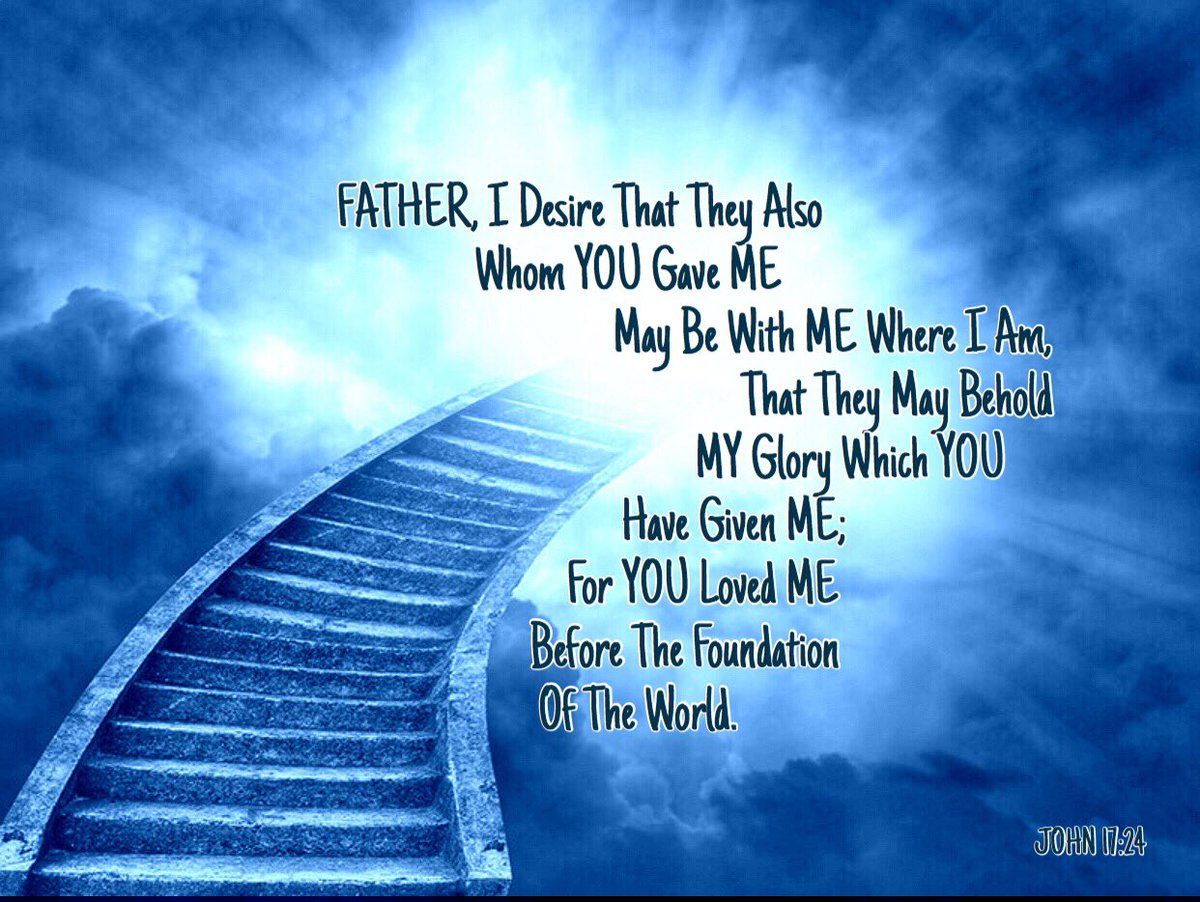
God the Father is the initiator of the Gospel message…

Jesus said, “No one can come to Me unless My Father who sent Me draws him—and I will raise him up on the last day” (John 6:44)…

Where Jesus declares that “no one can come to Me unless the Father who sent Me draws him, and I will raise him up at the last day, ” the Greek word translated “draw” is helkuo, which means “to drag” (literally or figuratively).

Clearly, this drawing is a one-sided affair. God does the drawing to salvation; we who are drawn have a passive role in the process.

There is no doubt that we respond to His drawing us, but the drawing itself is all on His part.

Helkuo is used in John 21:6 to refer to a heavy net full of fish being dragged to the shore.

In John 18:10 we see Peter drawing his sword, and in Acts 16:19 helkuo is used to describe Paul and Silas being dragged into the marketplace before the rulers.

Clearly, the net had no part in its being drawn to the shore,

Peter’s sword had no part in being drawn, and Paul and Silas did not drag themselves to the marketplace.

The same can be said of God’s drawing of some to salvation.

Some come willingly, and some are dragged unwillingly, but all eventually come, although we have no part in the drawing.

Why does God need to draw us to salvation?

Simply put, if He didn’t, we would never come.

Jesus explains that no man can come unless the Father draws him (John 6:65).

The natural man has no ability to come to God, nor does he even have the desire to come.

Because his heart is hard and his mind is darkened, the unregenerate person doesn’t desire God and is actually an enemy of God (Romans 5:10).

When Jesus says that no man can come without God’s drawing him, He is making a statement about the total depravity of the sinner and the universality of that condition.

So darkened is the unsaved person’s heart that he doesn’t even realize it:

“The heart is deceitful above all things and beyond cure.
Who can understand it?”
(Jeremiah 17:9)

Therefore, it is only by the merciful and gracious drawing of God that we are saved.

In the conversion of the sinner, God enlightens the mind (Ephesians 1:18), inclines the will toward Himself, and influences the soul, without which influence the soul remains darkened and rebellious against God.

All of this is involved in the drawing process.

When the Father draws us and we respond in faith, we then begin to have new desires.

He places within us a new heart that inclines toward Him, a heart that desires to know Him, obey Him, and walk in the “newness of life” (Romans 6:4) that He has promised.

Here’s the backstory to John 6:44:

John 6

A Deep Dive Into John Chapter 6

John 6 records the feeding of the five thousand followed by Jesus’ poignant sermon on the bread of life.

The chapter ends with the departure of some disciples and the rededication of the Twelve.

Jesus is the Bread of Life:

Water, food, and bread are metaphors that show how the spiritual appropriationment of the life which Jesus gives is absolutely necessary for our salvation.

The feeding of the five thousand is the only miracle of Jesus that is recorded in all four Gospels.

Jesus had crossed to the eastern shore of the Sea of Galilee at a time when the Jewish Passover feast was near.

If we accept John 5:1 as a Passover, the reference in 6:4 would be the third Passover observance recorded in this Gospel.

This is one of those several examples in John where we see the miracle-message method of Jesus’ ministry.

Paul told the Corinthians that Jews required a sign, and John reminded us that a great crowd of people followed Him because they saw the miraculous signs He had performed on the sick (6:2).

Some scholars estimate there may have been as many as seven thousand to ten thousand people, since verse 10 talks about five thousand men.

As we shall see, this chapter is about faith, but these people wanted food.

Jesus talked about spiritual relationship, but the crowds were interested in physical showmanship.

They focused on the lunch, not the love; on their bellies, not their beliefs.
Jesus first centers on people in need.

Starvation even in our time is a stark and unpleasant reality, as it was also in Jesus’ time.

Ten percent of the world’s babies today die before their first birthday, and one of every four children suffers from malnutrition.

Yet the problem of spiritual hunger is even more severe.

Like the people gathering on the mountainside in Galilee, millions today need the living bread that only Jesus can provide.

The introduction of the Passover is always significant in the chronological pattern of John’s Gospel.

He contrasted the rejection in Jerusalem at the end of chapter 5 with the magnificent scene of thousands coming to hear Jesus speak on the shore of the Sea of Tiberias.

This body of water actually has four names in Scripture:

The Sea of Galilee and the Sea of Tiberias both identified here in our text;

The Lake of Gennesaret in Luke 5:1; and the Sea of Kinnereth (Num. 34:11).

Today it is generally called Lake Kinneret, but students of the Bible have difficulty calling it anything other than the Sea of Galilee.

The bread-and-water connection has ancient Israeli roots in the manna of the desert and water from the rock.

The entire Exodus experience sets the historic basis for the Jewish Passover Feast.

In Israel’s history, stories of food and water are indelibly attached to faith.

From the tree of life in the garden, the rescue of Noah in the flood, and throughout their pilgrimage these two symbols are repeatedly rewoven into the fabric of God’s dealings with His people.

It is understandable then that Paul, thinking like a Jew, also linked these two symbols in his warnings to the Corinthians about their relationship with God (10:1-4).

Jesus was not annoyed when He saw the great multitude, thinking they would disturb His rest or His time with the disciples.

His first thought was to provide something for them to eat. And so He turned to Philip and asked where bread could be purchased to feed the multitude.

When Jesus asked a question, it was never for the purpose of adding to His own knowledge, but to teach others.

Jesus already knew what He was going to do, but Philip didn’t.

The Lord was going to teach Philip a very valuable lesson and test his faith.

Jesus Himself knew that He would perform a miracle to feed this great crowd of people. But did Philip realize that He was able to do this?

Was Philip’s faith great or was it small?

Apparently Philip’s faith did not rise to very great heights.

He made some quick calculations and decided that even two hundred denarii worth of bread would not be enough to provide even a little meal for everyone.

We do not know exactly how much bread could be purchased for two hundred denarii in that day, but it must have been a very great amount.

A denarius was a worker’s daily wage.

Andrew was Simon Peter’s brother, and they both lived in the vicinity of Bethsaida, along the shore of the Sea of Galilee.

Andrew also decided that it would be difficult to feed such a throng, and he noticed a little boy with five barley loaves and two small fish; but he felt that these would be almost useless in attempting to satisfy the hunger of so many.

This lad did not have very much, but he was willing to put it at the disposal of the Lord Jesus.

As a result of his kindness, this story was recorded in each of the four Gospels.

He did not do very much, but “little is much if God is in it,” and he has become famous throughout the world.

In making the people sit down (lit. “recline”), the Lord Jesus provided for their comfort. Notice He chose a place where there was much grass.

It was unusual to find such a place in that region, but the Lord took care that the crowd would eat in a clean, pleasant place.

It is recorded that there were thousands of men (Gk. “males”), so this means that there were women and children in addition.

The mention of the number five thousand is made to indicate what a mighty miracle was about to take place.

Jesus took the loaves and gave thanks for them.

If He did this before partaking of food or serving it, how much more should we pause to thank God before eating our meals.

Next He distributed the food to the disciples.

There is a real lesson for us in this.

The Lord Jesus did not do it all Himself. He enlisted the service of others.

It has been well said, “You do what you can do; I’ll do what I can do; and the Lord will do what we cannot do.”

By the time the Lord distributed the bread to the disciples, it had been wonderfully multiplied.

The exact moment when this miracle took place is not recorded, but we know that in a miraculous way those five loaves and two small fish became enough in the Lord’s hands to feed this great throng.

The disciples went about serving the bread and the fish to those sitting down.

There was no scarcity because it is distinctly stated that they gave them of the fish as much as they wanted.

This is a very beautiful touch. If Jesus had been a mere man He would never have bothered to think about the remaining fragments.

Any man who can feed five thousand does not worry about a few leftover crumbs!

But Jesus is God, and with God there must be no wasting of His bounties.

He does not want us to squander the precious things He has given to us, and so He takes care to instruct that the broken pieces which remained should be gathered up so that nothing might be lost.

Twelve baskets of bread were gathered up after the people had finished eating.

After all this, there can be only one conclusion, and that is that a mighty miracle had been performed.

The people themselves recognized that it was a miracle.

In fact, the people were so convinced that it was a miracle that they were willing to acknowledge that Jesus was the Prophet who would come into the world.

They knew from the OT that a prophet was coming, and they looked for him to deliver them from the control of the Roman Empire.

They were waiting for an earthly monarch, but their faith was not genuine.

They were not willing to admit that Jesus was the Son of God or to confess their sins and accept Him as Savior.

As a result of Jesus’ miracle, the people wanted to make Him king.

Again, if Jesus were only a man, He doubtless would have submitted readily to their request.

Men are only too anxious to be exalted and to be given a place of prominence.

But Jesus was not moved by such appeals to vanity and pride. He realized that He had come into the world to die as a Substitute for sinners on the cross.

He would do nothing to interfere with that objective.

He would not ascend the throne until first He had ascended the altar of sacrifice.

He must suffer, bleed, and die before He would be exalted.

In verse 16 it says that it was evening, and that Jesus had gone to the mountain by Himself.

The crowd doubtless returned to their homes, leaving the disciples by themselves.

And so the disciples decided to go down to the sea and prepare for their trip back across the Sea of Galilee.

As they went over the sea toward Capernaum, it was already dark.

Jesus was not with them.

Where was He?

He was up on the mountain praying.

What a picture of Christ’s followers today.

They are on the stormy sea of life. It is dark,and the Lord Jesus is nowhere to be seen.

But that does not mean that He is unaware of what is going on.

He is in heaven praying for those He loves.

The Sea of Galilee is subject to sudden and violent storms, and winds traveling down the valley of the Jordan River at a great speed.

When they hit the Sea of Galilee, they cause the waves to rise very high. It is not safe for small boats to be out on the sea at such a time.

The disciples had rowed about three or four miles.

From a human standpoint, they were in great danger.

At the right moment, they looked up and saw Jesus walking on the sea, and drawing near the boat.

Here is another marvelous miracle.

The Son of God was walking on the waters of the Sea of Galilee.

The disciples were afraid because they did not fully realize who this wonderful Person was.

Notice how simply the story is told.

The most amazing facts are being told to us, but John did not use big words to impress us with the greatness of what was taking place.

He used great restraint in setting forth the facts.

Then the Lord Jesus spoke wonderful words of comfort.

“It is I; do not be afraid.”

If He were only a man, they might well be afraid, but He is the mighty Creator and the Sustainer of the universe.

With such a One close at hand, there was no reason to fear.

He who made the Sea of Galilee in the first place could cause its waters to be calm in the second place, and could bring His fearful disciples safely to shore.

The words “It is I” are literally “I AM.”

So far this is the second time in John’s Gospel where Jesus used this name of Jehovah as applying to Himself.

When they realized that it was the Lord Jesus, they welcomed Him into the boat.

And the Bible says that as soon as Jesus entered the boat, Immediately they found themselves at their destination.

Here another miracle is stated, but not explained.

They did not have to row any farther. The Lord Jesus brought them to dry land instantly.

What an awesome Savior He is!

It is now the day after the one in which the five thousand were fed.

The multitude of people are still in the area northeast of the Sea of Galilee.

They had watched the disciples get into the small boat the previous evening, and they knew that Jesus had not gone with them.

Only one boat had been available at that time, and the disciples had taken it.

The following day, boats had come from Tiberias, near the place where the Lord Jesus had fed the multitude.

But the Lord could not have departed in one of these because they had just arrived.

But perhaps it was in these small boats that the multitude crossed over to Capernaum, as recorded in the following verses.

The people had watched Jesus very carefully. They knew that He had gone up into the mountain to pray.

They knew that He had not gone in the boat with the disciples across the lake.

Yet on the following day He was nowhere to be found. They decided to cross the sea to Capernaum, where the disciples were most likely to be.

They could not understand how Jesus could be there, but they decided to go and seek Him anyway.

Arriving at Capernaum, they found Him there. They could not conceal their curiosity, and asked Him when He had arrived.

Jesus answered their question indirectly.

He realized that they did not seek Him because of who He was but rather because of the food which He gave them.

They had seen Him perform a mighty miracle on the day before.

This should have convinced them that He was indeed the Creator and the Messiah.

But their interest was simply in food. They had eaten of the miracle loaves, and their hunger had been satisfied.

So Jesus first advised them not to labor for the food which perishes.

The Lord did not mean that they should not work for their daily living, but He did mean that this should not be the supreme aim in their lives.

Satisfying one’s physical appetite is not the most important thing in life.

Man consists not only of body, but of spirit and soul as well.

We should labor for the food which endures to everlasting life.

Man should not live as if his body were all.

He should not devote all his strength and talents to the feeding of his body, which in a few short years will be eaten by worms.

Rather, he should make sure that his soul is fed day by day with the Word of God.

“Man shall not live by bread alone, but by every word that proceeds out of the mouth of God.”

We should work tirelessly to acquire a better knowledge of the Word of God.

When the Lord Jesus said that God the Father had set His seal on Him, He meant that God had sent Him and approved Him.

When we set our seal to something, it means that we promise that it is true.

God sealed the Son of Man in the sense that He endorsed Him as One who spoke the truth.

The people now asked the Lord what they must do in order to work the works of God.

Man is always trying to earn his way to heaven.

He likes to feel that there is something he can do to merit salvation.

If he can somehow contribute to the saving of his soul, then he can find a ground for boasting; and this is very pleasing to him.

Jesus saw through their hypocrisy. They pretended that they wanted to work for God, and yet they did not want to have anything to do with the Son of God.

Jesus told them that the first thing they must do is accept the One whom God had sent.

So it is today. Many are seeking to earn their way to heaven by good works.

But before they can do good works for God, they must first believe on the Lord Jesus Christ.

Good works do not precede salvation; they follow it.

The only good work a sinner can do is to confess his sins and receive Christ as Lord and Savior.

We find in verse 30, when they asked Jesus, “What sign will You perform then, that we may see it and believe You – What work will You do” – this is a further proof of the wickedness that was in the hearts of this people.

One day previously, they had seen the Lord Jesus feed five thousand men with five loaves and two fish.

On the very next day, they came to Him and asked Him for some sign that would prove His claims to be the Son of God.

Like most unbelievers, they wanted to see first, and then they would believe.

“That we may see it, and believe You.”

But this is not God’s order. God says to sinners, “If you believe, then you will see.” Faith must always come first.

Going back to the OT, the Jews reminded Jesus of the miracle of the manna in the wilderness.

They seemed to be saying that Jesus had never done anything as wonderful as that.

They quoted from Psalm 78:24, 25, where it is written: “He gave them bread from heaven to eat.”

They implied that Moses called down food from heaven; the Lord was not as great as Moses, because He had only multiplied existing food!

The Lord’s answer conveys at least two thoughts.

First of all, it was not Moses who gave them the manna, but God.

Moreover, the manna was not the true spiritual bread from heaven.

The manna was literal food, designed for the physical body, but it had no value beyond this life.

The Lord Jesus was here speaking about the true, ideal, and genuine bread which God gives out of heaven.

It is bread for the soul and not for the body.

The words My Father are a claim by Christ to deity.

The Lord Jesus revealed Himself as the bread of God which came down from heaven and gives life.

He was showing the superiority of the bread of God to the manna in the wilderness.

The manna did not impart life but only sustained physical life.

It was not intended for the whole world but only for Israel.

The true bread comes down from heaven and gives life to men—not just to one nation but to all the world.

The Jews still did not realize that the Lord Jesus was speaking about Himself as the true bread, and so they asked Him for the bread.

They were still thinking in terms of a literal loaf. Unfortunately, there was no real faith in their hearts.

Now Jesus stated the truth simply and clearly.

He is the bread of life. Those who come to Him find enough in Him to satisfy their spiritual hunger forever.

Those who believe on Him find their thirst forever quenched.

Notice the words I am in this verse and recognize that the Lord was making a claim to equality with Jehovah.

It would be folly for a sinful man to utter the words of verse 35.

No mere man can satisfy his own hunger or thirst, much less satisfy the spiritual appetite of the whole world!

In verse 30, the unbelieving Jews had asked the Lord for a sign in order that they might see and believe.

Here Jesus said that He had already told them that they had seen Him—the greatest sign of all—and yet they did not believe.

If the Son of God could stand before them in perfect manhood and not be recognized by them, then it was doubtful that any sign He would perform would convince them.

The Lord was not discouraged by the unbelief of the Jews. He knew that all the Father’s purposes and plans would be fulfilled.

Even if the Jews to whom He was speaking would not accept Him, then He knew that all of those who were chosen by God would come to Him.

The realization of the invincibility of the eternal counsels of God always gives a calmness, a poise, a courage, and a perseverance which nothing else can.

This verse is very important because it states in a few words two of the most important teachings in the Bible.

The first is that God has given certain ones to Christ and that all those whom He has given will be saved.

The other is the teaching of man’s responsibility.

In order to be saved, a man must come to the Lord Jesus and accept Him by faith.

God does choose some people to be saved, but the Bible never teaches that He chooses some to be damned.

If anyone is saved, it is because of the free grace of God.

But if anyone perishes forever, it is his own fault.

All men are condemned by their own sinfulness and wickedness.

If all men went to hell, they would be receiving only what they deserve.

In grace, God stoops down and saves individual people out of the great mass of humanity.

Does He have the right to do this?

He certainly does. God can do as He chooses, and no man can deny Him this right.

We know that God will never do anything that is wrong or unjust, but just as the Bible teaches that God has elected certain persons to salvation, it also teaches that man is responsible to accept the gospel.

God makes a universal offer—that if a man will believe on the Lord Jesus Christ, he will be saved.

God does not save men against their will.

A person must come to Him in repentance and faith.

Then God will save him.

No one who comes to God through Christ will be cast out.

The human mind cannot reconcile these two teachings. However, we should believe them even if we cannot understand them.

They are Biblical teachings and are clearly stated here.

In verse 37, the Lord Jesus said that all of God’s plans would eventually be fulfilled with regard to the salvation of those who were given to Him.

Since this was the Father’s will, the Lord would personally undertake to bring it to pass, as His mission was to do the will of God.

“I have come down from heaven” said Christ, clearly teaching that He did not begin His life in the manger at Bethlehem.

Rather, He existed from all eternity with God the Father in heaven.

Coming into the world, He was the obedient Son of God.

He voluntarily took the place of a servant in order to carry out the will of His Father.

This does not mean that He did not have a will of His own, but rather that His own will was in perfect agreement with the will of God.

The will of the Father was that everyone who was given to Christ would be saved and kept until the resurrection of the just, when they would be raised and taken home to heaven.

Verse 39 says,

“This is the will of the Father who sent Me, that of all He has given Me I should lose NOTHING, but should raise IT up at the last day.

Please note that the words “nothing” and “it” refer to believers.

Here He was thinking not of individual believers but of the entire body of Christians who would be saved down through the years.

The Lord Jesus was responsible to see that not one member of the body would be lost but that the whole body would be raised up at the last day.

As far as Christians are concerned, the last day refers to the day when the Lord Jesus will come in the air, when the dead in Christ will rise first, when the living believers will be changed, and when all will be caught up to meet the Lord in the air, to be forever with the Lord.

To the Jews, it meant the coming of the Messiah in glory.

The Lord now went on to explain how a person became a member of the family of the redeemed.

God’s will is that EVERYONE who sees the Son and believes in Him may have everlasting life.

To see the Son here means not to see Him with the physical eyes but rather with the eyes of faith.

One must see or recognize that Jesus Christ is the Son of God and the Savior of the world.

Then, too, he must believe on Him.

This means that by a definite act of faith, he must receive the Lord Jesus as his own personal Savior.

All who do this receive everlasting life as a present possession and also receive the assurance that they will be raised at the last day.

The people were quite unprepared to accept the Lord Jesus, and they showed this by murmuring against Him.

He had claimed to be the bread which came down from heaven.

They realized that this was a claim of great importance.

To come down from heaven, one could not be a mere man or even a great prophet.

And so they complained about Him because they were not willing to believe His words.

They assumed that Jesus was the son of Joseph.

Here, of course, they were wrong.

Jesus was born of the Virgin Mary.

Joseph was not His father.

Rather, our Lord was conceived of the Holy Spirit.

Their failure to believe in the virgin birth led to their darkness and unbelief.

So it is today. Those who refuse to accept the Lord Jesus as the Son of God who came into the world through the womb of the virgin find themselves compelled to deny all the great truths concerning the Person and work of Christ.

Although they had not been speaking directly to Him, yet He knew what they were saying, and here Jesus told them not to murmur among themselves.

The following verses explain why their murmuring was useless and profitless.

The more the Jews rejected the testimony of the Lord Jesus, the more difficult His teachings became.

“Light rejected is light denied.”

The more they spurned the gospel, the harder it became for them to accept the gospel.

If the Lord told them simple things and they would not believe, then He would expound to them more difficult things and they would be thoroughly ignorant of what He was saying.

Man in himself is utterly hopeless and helpless.

He does not even have the strength to come to Jesus by himself.

Unless the Father first begins to work in his heart and life, he will never realize his terrible guilt and his need of a Savior.

Many people have difficulty with this verse.

They suppose that it teaches that a man may desire to be saved and yet might find it impossible.

This is not so. But the verse does teach in the strongest possible way that God is the One who first acted in our lives and sought to win us to Himself.

We have the choice of accepting the Lord Jesus or refusing Him.

But we never would have had the desire in the first place if God had not spoken to our hearts.

Again the Lord added the promise that He will raise every true believer up at the last day.

It is God, not people, who plays the most active role in salvation.

When someone chooses to believe in Jesus Christ as Savior, he or she does so only in response to the urging of God’s Holy Spirit.

God does the urging; then we decide whether to listen and believe.

Thus, no one can believe in Jesus without God’s help (see 6:65).

Jesus, in verse 45, was alluding to an Old Testament view of the messianic Kingdom, in which all people are taught directly by God (Isaiah 54:13; Jeremiah 31:31-34).

He was stressing the importance of not merely hearing but learning.

We are taught by God through the Bible, our experiences, the thoughts the Holy Spirit brings, and relationships with other Christians.

Are you open to God’s teaching?

The religious leaders frequently asked Jesus to prove to them why He was better than the prophets of the past.

Here Jesus refers to the manna that God had given their ancestors in the wilderness during Moses’ time (see Exodus 16).

This bread was physical and temporal.

The people ate it, and it sustained them for a day.

But they had to get more bread every day, and this bread could not keep them from dying.

Jesus, who is much greater than Moses, offers Himself as the spiritual bread from heaven that satisfies completely and leads to eternal life.

As used here, believes means “continues to believe.”

We do not believe merely once; we keep on believing in and trusting Jesus, following Him as our Lord and Savior day by day.

How can Jesus give us Himself as bread to eat?

To eat living bread means to accept Christ into our lives and become united with Him.

We are united with Him in two ways:

(1) By believing in His death (the sacrifice of his body, or flesh) and resurrection and

(2) By devoting ourselves to living as He requires, depending on His teaching for guidance and trusting in the Holy Spirit for power.

This was a shocking message—to eat flesh and drink blood sounded cannibalistic.

The idea of drinking any blood, let alone human blood, was repugnant to the religious leaders because the law forbade it (Leviticus 17:10-11).

Jesus was not talking about literal blood, of course. He was saying that His life had to become their own, but they could not accept this concept.

He was predicting His death and what it would mean to all believers.

The Gospel writers and the apostle Paul used the body and blood imagery in teaching about the Lord’s Supper (see 1 Corinthians 11:23-26).

The Holy Spirit gives spiritual life; without the work of the Holy Spirit, we cannot even see our need for new life (14:17).

All spiritual renewal begins and ends with God.

He reveals truth to us, lives within us, and then enables us to respond to that truth.

Why did Jesus’ words cause many of His followers to desert him?

(1) They may have realized that Jesus wasn’t going to be the conquering Messiah-King they expected.

(2) Jesus refused to give in to their self-centered requests.

(3) Jesus emphasized faith, not deeds.

(4) Jesus’ teachings were difficult to understand, and some of His words were offensive.

As we grow in our faith, we may be tempted to turn away because Jesus’ lessons are difficult.

Will your response be to give up, ignore certain teachings, or reject Him?

Instead, ask God to show you what His teachings mean and how they apply to you.

Then persist with courage to act on God’s truth.

After many of Jesus’ followers had deserted Him, He asked the 12 disciples if they were also going to leave.

Peter replied, “Lord, to whom would we go?”

In his straightforward way, Peter answered for all of us—there is no other way.

Though there are many philosophies and self-styled authorities, Jesus alone has the words of eternal life.

People today want to go their own way or no way at all.

They look to their own imaginations, instincts, or some intangible wisdom inside them.

People look everywhere for eternal life and miss Jesus, the only source of it.

Stay with Him, especially when you are confused or feel alone.

Jesus offers no middle ground. When He asked the disciples if they would also leave, He was showing that they could either accept or reject Him.

Jesus was not trying to repel people with His teachings. He was simply telling the truth and giving them a choice.

The more the people heard Jesus’ real message, the more they divided into two camps—the honest seekers who wanted to understand more and those who rejected Jesus because they didn’t like what they had heard.

In response to Jesus’ message, some people left; others stayed and truly believed; and some, like Judas, stayed but tried to use Jesus for a personal agenda.

Many people today turn away from Jesus.

Others pretend to follow Him, going to church for status, the approval of family and friends, or business contacts.

But only two real responses to Jesus are available—you either accept Him or reject Him.

How have you responded?

The Bible calls us to abide in Christ…

When you abide somewhere, you live there.

You grow familiar with the surroundings.

You don’t pull in the driveway and ask, “Where is the garage?”

You don’t consult the blueprint to find the kitchen.

To abide is to be at home. To abide in Christ’s love is to make His love your home.

Not a roadside park or hotel room you occasionally visit, but your preferred dwelling.

You rest in Him. Eat in Him.

When thunder claps, you step beneath His roof. His walls secure you from the winds. His fireplace warms you from the winters of life.

As John explained, “He who abides in love abides in God, and God in him” (1 John 4:16).
____

Come Thirsty

You abandon the old house of false love and move into His home of real love.

Adapting to this new home takes time.

First few nights in a new home you can wake up and walk into a wall. I did.

Not in a new home, but in a motel.

Climbed out of bed to get a glass of water, turned left, and flattened my nose.

The dimensions to the room were different.

The dimensions of God’s love are different too.

You’ve lived a life in a house of imperfect love.

You think God is going to cut you as the coach did, or abandon you as your father did, or judge you as false religion did, or curse you as your friend did.

He won’t, but it takes time to be convinced.

For that reason, abide in Him. Hang on to Christ the same way a branch clutches the vine.

According to Jesus, the branch models His definition of abiding.

“As the branch cannot bear fruit of itself, unless it abides in the vine, neither can you, unless you abide in Me” (John 15:4).

Does a branch ever release the vine?

Only at the risk of death.

Does the branch ever stop eating?

Nope. It receives nutrients twenty-four hours a day.

Would you say the branch is vine-dependent?

I would. If branches had seminars, the topic would be “Get a Grip: Secrets of Vine Grabbing.”

But branches don’t have seminars because attendance requires releasing the vine, something they refuse to do.

How well do you pass the vine test?

Do you ever release yourself from Christ’s love?

Go unnourished?

Do you ever stop drinking from His reservoir?

Do so at the certain risk of a parched heart. (From Come Thirsty by Max Lucado)

What is the source of your spiritual nourishment?

Movies, television, or music?

Do you need to change your diet so that Christ becomes the strongest force in your life?

You may do this by Bible reading, prayer, and by worship.

Selah (let us pause and calmly think about these things)
____

Come join the Adventure!

Skip 🕊️

Our Praises unto God puts us on the offensive against our enemies…

The best way to bring God down into our situation is to begin to praise Him, in the midst of our situation…

“God Inhabits the Praises of His People” (Psalm 22:3).

As happened with Paul and Silas, even in the deepest darkest rat infested dungeon, they made the decision to praise God, in the midst of their circumstances, and their praise became the means of their Deliverance.

Since the first sacrifice of Abel, our Lord has always looked with favor on those whose hearts were dedicated to Him.

When Cain and Abel offered their sacrifices, Abel offered the very best from His flocks, whereas Cain only offered a small portion of his crops.

God looked with favor on Abel’s sacrifice; in a sense, He inhabited the condition of Abel’s heart as a blessing and sign of His favor.

Later in Israel’s history, God instructed Moses to build a tabernacle, a traveling worship site that would carry the Ark of the Covenant and the altar upon which the priests would make their sacrifices for the people.

When the tabernacle was completed, a fiery cloud descended on the tent and rested over the Ark.

God inhabited that place of worship among His people.

When the Temple was built in Jerusalem by King Solomon, God spoke to him and said that the Temple was where He would choose to dwell.

His presence would again descend on the temple in the form of a cloud, which was another sign of the favor of God resting on His chosen city and kingdom.

Jesus Abides with us as We Abide in Him
The coming of Jesus Christ to earth as a human being ushered in a new era of God dwelling with man. God literally made His dwelling among human beings, sharing in our nature and our struggles. Jesus was the mouthpiece for the will of the Father, and it was Jesus that told His disciples that abiding with Him meant abiding with the Father.

He also teaches us that if we abide with the Father, the Father will also abide with us.

Today, we call this “asking God into our hearts.”

This draws a clear line to Jesus’ statement in the book of Revelation when He says that He stands at the door and knocks and that we should listen to His voice and let Him in.

The door He mentions should be metaphorically understood as the door to our hearts; if we allow God to enter in, He will inhabit our hearts and imbue us with the Holy Spirit.

What Does This Have to Do with Our Worship?

God seeks to have His way in every area of our lives. He does not do this to directly control our actions as if we have no free will; but when we yield our will to His, He has the freedom to work in us in ways we could never imagine.

Our praise is a primary way that God works His way into our hearts and minds.

When we worship, we are meant to turn all of our attention to God.

In simple terms, worship is ascribing worth to God in some way.

Today, most of us think of worship as music, and that is certainly one aspect of worship. However, it is much more than that.

True worship is lived out every minute of every day.

Paul tells us in Romans that we should give up our bodies in a sacrificial way, and let our minds be constantly renewed by the Holy Spirit.

He says that this is an acceptable act of worship.

Far greater than any song we could sing, wholehearted worship is a life that praises God for His mercy and grace, and that seeks to show others what that grace and mercy has done in our lives.

When we fully give ourselves to God’s purpose in our lives and give all the honor and praise to Him in our words and our actions, God’s might and power indwells itself in us and shines through to the rest of the world.

The Holy Spirit lives in our hearts when we become believers, and His power is shown in our thoughts, actions, and interactions.

Praise is the most effective spiritual weapon that will secure God’s Presence and bring God on the scene to clear out any barriers that would stop us from taking delivery of what belongs to us.

In other words, praise brings down the Presence of God from His Exalted Throne because He inhabits the praises of His people.

Whenever we come together to offer praises to the Almighty God, His Throne is set wherever His people are praising Him to give them the supernatural manifestation of His presence.

Isaiah 43:21 says “The people whom I formed for Myself will make known My praise.”

We are created to give the only thing God cannot give to Himself.

That is why God is always around those who praise and give HIM thanks all the time.

As believers, becoming addicted to praise, it opens up our destiny on its own accord and attracts God’s Presence.

When we are full of praise, the fullness of God emerges and when His fullness emerges, He causes us to become full of signs and wonders.

In the habitation of the Almighty, wonder-working power is present and breakthrough is commonplace.

Praise is one of the easiest ways to access the blessings of God.

It is the platform through which God intervenes in the affairs of our lives.

Praise to God is an indication of our absolute trust in Him. And as we praise Him, we show the extent of our faithfulness and trust in Him even in the midst of going through a challenge.

The power of our praise will determine the magnitude of our breakthrough.

Selah (let us pause and calmly think about these things)
____

Saturday, May 20
God At Eventide
by Two Listeners

SPIRIT WAVES

You have been told to end all prayer upon a note of praise.

That note of praise is not only faith rising up through difficulties to greet Me. It is even more.

It is the Soul’s recognition that My Help is already on the way.

It is the echo in your heart of the sound borne on Spirit Waves.

It is given to those who love and trust Me to sense this approach.

So rejoice and be glad, for truly your redemption draweth nigh.

Now unto Him who is able to keep you from stumbling, and to make you stand in the presence of His glory blameless with great joy, to the only God our Savior, through Jesus Christ our Lord, be glory, majesty, dominion and authority, before all time and now and forever. Amen. Jude 1:24-25
____

Come join the Adventure!

Skip 🕊️

As Disciples of Christ, we must learn to walk as Jesus walked (see 1 John 2:6)…

Jesus taught about the demands of discipleship…

Matthew 18

Chapter 18 has been called the discourse on greatness and forgiveness.

It outlines principles of conduct that are suitable for all those who claim to be subjects of Christ the King.

Jesus weaves three themes throughout His discourse on the ethics of Christian relationships—humility, purity, and mercy.

Those who are humble will be the greatest in the kingdom.

The Father protects his “little ones,” and will make every effort to restore those who stray.

Christians must mercifully forgive their sinning brothers and sisters.

Have you ever made a fool of yourself?

We all have at one time or another. And it often happens when we have not been paying much attention to our surroundings.

It is sometimes called “sleeping on the job.”

I remember hearing this story of this one Bible student, who was in Bible college.

It seems that he held a night job and always found it difficult to stay awake during his early morning, first-hour class.

In fact, one day he fell asleep in his seat before the beginning of class.

The other students arrived and took their seats.

The instructor walked in, opened his notes, and began teaching.

Virtually no one noticed our sleepy friend. . . until a student nudged him and whispered,

“Quick—the professor just asked you to lead in prayer!”

Reacting to what his brain had barely registered, the sleeping student snapped straight up in his seat and began praying.

Of course, all this was to the complete surprise of everyone in the room.

It was an unforgettable moment, prompting every person in the room to ask, “Where have you been?”

Jesus likely felt like asking the same question of His disciples on more than one occasion.

As Matthew 18 opens, the disciples had evidently been sleeping on the job.

They were out of touch with their surroundings and their Master.

Chapter 18 opens with the disciples asking Jesus a question.

The fact that they asked this particular question indicates they still did not understand the heart of Christ’s instruction and the appropriate relationships in His kingdom.

Like the groggy student, they were “asleep on the job” and spouting off the wrong questions at the wrong time.

The disciples asked, “Who is the greatest in the kingdom of heaven?”

Jesus spent the rest of the Matthew 18 discourse telling them, “You are asking the wrong question.”

In our interpersonal relationships, including conflicts and disagreements with our brothers and sisters, we should not need a court of appeals beyond responsible leaders in the church.

Ideally, the church’s decisions will be guided by God and based on discernment of principles found in His Word.

Believers have the responsibility, therefore, to bring their problems to the church, and the church has the responsibility to use God’s guidance in seeking to resolve conflicts.

Handling problems God’s way will have an impact now and for eternity.

Jesus looked ahead to a new day when He would be present with His followers not in body but through His Holy Spirit.

In the body of believers, the church, the sincere agreement of two people in prayer is more powerful than the superficial agreement of thousands because Christ’s Holy Spirit is with them.

Two or more believers, filled with the Holy Spirit, will pray according to God’s will, not their own; thus, their requests will be granted.

The rabbis taught that people should forgive those who offend them—but only three times.

Peter, trying to be especially generous, asked Jesus if seven (the “perfect” number) was enough times to forgive someone.

But Jesus answered, “Seventy times seven,” meaning that we shouldn’t even keep track of how many times we forgive someone.

Always forgive those who are truly repentant, no matter how many times they ask.

Judge yourself: How are you being Jesus’ disciple?

While it can be demanding, Jesus basically calls us to love God and love our neighbor as yourself—it’s really not that complex at all.

The question is: Is your heart hard?

Take it to your Father. You’re only a prayer away from tenderness.

We live in a hard world, but we don’t have to live with a hard heart.
____

Friday, May 20
Pursuit of His Presence

NO WHINING, PLEASE
by Kenneth Copeland

Then Peter came to Jesus and asked, “Lord, how many times shall I forgive my brother when he sins against me? Up to seven times?” Jesus answered, “I tell you, not seven times, but seventy-seven times.”
— Matthew 18:21-22

We need to face the fact that we can’t walk with God and be even a little unforgiving or a little offended.

If we’re going to walk with God, we must allow His love to drive out every trace of any kind of unforgiveness.

“But you just don’t know how badly they treated me!”

“Has God forgiven your sin?”

“Yes.”

Then you forgive them. Period. End of discussion.

Quit crying and whining about how hurt you are.

Maybe you have been mistreated, but if so – get over it!

Everybody has been mistreated in some form or another.

The reason I can talk so straight to you about this is that God has already said these things to me.

I remember one day when I was moping around at home. I’d just come in from preaching on the road and it seemed that as soon as I got there, I had to start fighting the devil. I was whining about it when Gloria said something to me I didn’t like.

“Oh, she doesn’t care about me anyway.” I muttered in self-pity.

Right then, the Lord spoke up in my heart and said, “It isn’t any of your business whether she cares for you or not. It’s your business to care for her.”

Then He added something I’ll never forget. He said, “I’m the One Who cares whether you hurt or not. Your hurts mean everything in the world to Me, but they ought to mean little or nothing to you.”

As the Church, we need to learn that today. We need to quit paying so much attention to our own hurts and cast them over on God. We need to take a lesson from the pioneers of the faith.

People like Peter and John and those Pentecostal old-timers years ago would walk into the very jaws of hell.

They’d go through persecutions that make the things we face look like child’s play.

They didn’t come out crying about how they’d been hurt either. They came out saying,

“Glory to God! We’re getting an opportunity to suffer for His Name. What a privilege!”

When you have that attitude, it’s not hard to forgive because your focus isn’t on yourself. It’s on God and His purposes, God and His love.

If you want to discover the secret to real forgiveness, that’s where your focus has to be – on God.

We are instructed to forgive others in the same way, or on the same basis, that God has forgiven us.

Speak the Word: I forgive others, as God for Christ’s sake has forgiven me. (Eph. 4:32)
____

Come join the Adventure!

Skip 🕊️

The importance of our standing in the fear, reverence, and awe of God…

As covenant children of God, the fear of the Lord engenders in us absolute reverence, respect and awe for God…

Rather than causing us to be afraid of Him, a proper “fear of the Lord” should lead us into greater intimacy with Him and to love Him more.

If we knew that all of our secret thoughts, words, and actions would be displayed publicly so that everyone could watch them and evaluate them, it would make a profound difference in the way we live!

And just so you know, part of being omniscient means that God already knows the inner motives and secrets of each of our hearts.

The problem is we seem to care more about what others think of us and how they will judge us, than we do for God.

If we have this much concern over what other men and women think of us and our actions, how much more should we be concerned about God’s evaluation of our thoughts, words, actions, attitudes, and motives?

Acts chapter 5 opens up with a husband and wife who learned this lesson the hard way.

As we look at chapter 5, we find that it falls into two distinct parts—

The sin and judgment of Ananias and Sapphira and the second appearance of the apostles before the Sanhedrin.

Luke continues his witnessing theme and ends the chapter on a mountain top:

They never stopped teaching and proclaiming the good news that Jesus is the Christ; and when God empowered the apostles to perform miracles and amazing signs, the disciples caught the attention of the jealous and skeptical religious leaders.

However even some Pharisees came to believe in Jesus.

Acts 5

When God is working in power, Satan is always on hand to counterfeit, corrupt, and contend.

But where there is real spiritual power, deceit and hypocrisy will be readily exposed.

Ananias and Sapphira were apparently moved by the generosity of Barnabas and others.

Perhaps they desired to receive the praise of men for some similar act of kindness, so they sold a possession and gave a portion of the proceeds to the apostles.

Their sin was in professing to give all, while only giving some.

No one had asked them to sell the property. After it was sold, they were not obligated to give it all.

But they pretended a total dedication, while actually they held some back.

Peter charged Ananias with lying to the Holy Spirit and not just to men.

In lying to the Holy Spirit, he lied to God, since the Holy Spirit is God.

At this point, Ananias fell down dead, and was carried out by the young men to be buried.

This was a solemn act of God’s chastening hand on the early church.

It does not at all affect the question of Ananias’ salvation, of his eternal security.

Rather, it was a case of God showing His displeasure at this first eruption of sin in His church.

As one commentator put it,

”Either Ananias or the Spirit must go –
Such was the white-hot purity of that early Christian fellowship that a lie of that kind couldn’t live within it.”

About three hours later, when Sapphira appeared, Peter charged her with collaborating with her husband in putting the Spirit of the Lord to the test.

He told her of her husband’s fate and predicted the same for her.

Immediately she collapsed and died, and was carried out for burial.

Peter’s ability to pronounce judgment on this couple is an example of the special miraculous powers given to the apostles.

Perhaps it was a fulfillment of the Lord’s promise,

“If you retain the sins of any, they are retained” (John 20:23).

It is further seen by Paul’s ability to deliver an offending Christian to Satan for the destruction of the flesh (1 Cor. 5:5).

One can imagine the sense of awe that swept over the church, indeed over all who heard the news of these two deaths.

After the death of Ananias and Sapphira, the apostles continued to perform miracles as the people gathered around them in Solomon’s Porch.

So vivid was the sense of God’s presence and power that men did not lightly associate with them or make glib professions of faith.

And yet the common people esteemed them highly, many taking their place as believers in the Lord Jesus.

The people carried their sick out into the streets on beds and mattresses so that Peter’s shadow might fall on some of them as he passed by.

Anyone could see that there was reality and power in the lives of the apostles, and that they were channels through whom God was blessing others.

From the suburbs came the sick and the demon-possessed, and they were all healed.

True Holy Spirit ministry invariably leads to conversion on the one hand and bitter opposition on the other.

So it was here. The high priest (probably Caiaphas) and his Sadducean friends were furious that these fanatical disciples of Jesus were wielding such influence among the people.

They resented any threat to their exclusive role as religious leaders, and especially despised preaching concerning bodily resurrection, which they, of course, utterly denied.

Unable to cope with the apostles other than by force, they had them arrested and imprisoned.

That night an angel of the Lord led the apostles out of the prison and told them to return to the temple and speak to the people all the words of this life.

Luke records the miraculous intervention of the angel without any expression of surprise or wonder. If the apostles themselves were shocked, there is no indication in the narrative.

The angel aptly referred to the Christian faith as this life.

It is not just a creed or set of doctrines, but a Life—the resurrection life of the Lord Jesus imparted to all who trust Him.

At daybreak the apostles were teaching at the temple. In the meantime, the high priest met in solemn conclave with the council (the Sanhedrin) and the senate (all the elders), and waited for the prisoners to be brought before them.

The bewildered officers had to report to the court that everything at the prison was in good order—except that the prisoners were gone!

The doors were properly locked, and the guards were all at their stations, but the occupants were missing.

A distressing report indeed!

“Where will it all end?” mused the captain of the temple and the chief priests.

“How far will this popular movement go?”

Then their questions were interrupted by a messenger announcing that the escaped prisoners were back at their old stand in the temple—teaching the people!

We must admire the apostles’ courage, and we too must regain this capacity of the early church to follow and obey God and also to be willing to suffer for our convictions at any cost.

“Only he who believes is obedient; only he who is obedient believes.”
— Dietrich Bonhoeffer

The Temple at daybreak was a busy place.

Many people stopped there to pray and worship at sunrise.

On this day, the apostles were already there, ready to tell everyone the Good News of new life in Jesus Christ.

Also at daybreak, the high council of the leaders of Israel was gathering, preparing to question the apostles.

This would be no small trial. The religious leaders would do anything to stop these apostles from challenging their authority, threatening their secure position, and exposing their hypocritical motives to the people.

The apostles, on the other hand, knew their priorities.

While we should try to live at peace with everyone (Romans 12:18), conflict with the world and its authorities is sometimes inevitable for a Christian (John 15:18).

In some situations, we won’t be able to obey both God and human authority.

At those times we must obey God and trust His Word as the ultimate truth.

Let Jesus’ words in Luke 6:22 encourage you:

“What blessings await you when people hate you and exclude you and mock you and curse you as evil because you follow the Son of Man.”
____

Thursday, May 19
God’s Holy Fire

‘WITNESSES’

Peter and the apostles before the Sanhedrin:

“The God of our ancestors raised Jesus from the dead after you killed him by hanging him on a cross.

Then God put him in the place of honor at his right hand as Prince and Savior.

He did this so the people of Israel would repent of their sins and be forgiven.

We are witnesses of these things and so is the Holy Spirit, who is given by God to those who obey him.”
— Acts 5:30-32 NLT

Key Thought
An incredible amount of truth is compacted into these few verses.

In “God’s Holy Fire” today, we want to recognize the role of the Holy Spirit in this truth:

The Holy Spirit is the witness to God’s work in Jesus, our Prince and Savior, crucified, raised from the dead, and put in the place of honor.

Not only is the Holy Spirit the heavenly witness to these truths, but also the Spirit has been given to all who obey God.

The witness lives inside us as a witness to us.

John also describes the Holy Spirit as the anointing we have received that remains in us, and Jesus says that the Spirit teaches us and guides us into all truth (1 John 2:18-27; John 16:12-15).

What incredible gifts and promises to those of us who obey God!

Today’s Prayer
O Father, it surely feels like I live in a time when belief in the truth of the good news of Jesus is under constant attack.

I thank you for your holy presence, the Holy Spirit, whom you have given me and who lives within me.

I thank you for the Spirit’s witness to the truth about Jesus that is found in the Scriptures and that resides within me through the Spirit’s presence.

I offer my thanks for this great gift in the name of Jesus, my Prince and Savior. Amen.
____

Come join the Adventure!

Skip 🕊️
Seeking God’s direction, His will and His purpose for our life…

Always our access to God is contingent upon the propitious sacrifice and poured out blood of Jesus Christ on Calvary’s Cross…

The Truth about the Gospel and Christ

“It is not until a man finds his faith opposed and attacked that he really begins to think out the implications of that faith. It is not until the Church is confronted with some dangerous heresy that she begins to realize the riches and the wonder of orthodoxy.”
— William Barclay

Colossians 1

In Colossians chapter 1, Paul tells the Colossian believers:

Hello, Colossians.

Timothy and I are pleased to hear from Epaphras that the gospel which is growing all over the world is bearing fruit in your lives as well.

Because of this, we constantly pray that you stay focused on God’s will so that your lives will be pleasing to Him.

Remember that Jesus, our Creator and Reconciler, deserves absolute supremacy in absolutely everything.

I endure suffering and hard work on behalf of Jesus and His church to bring believers to maturity.

Here’s the backstory:

From a prison cell in the year A.D. 60, a man who wore both the mantle of an apostle and the shackles of a prisoner wrote a letter to a group of believers he had never met.

Paul wrote the Colossians the truth so they would not be the victims of false teaching.

While Paul was in prison, Epaphras, one of his most faithful coworkers, visited him and brought him a report on the congregation at Colosse.

In many ways the report was good, and for this Paul was thankful (1:3-8).

As we read the letter carefully, we detect a sharp note of alarm and concern as well.

This letter is written as a piercing rebuttal to the alluring enticements of theological and practical heresy.

The heresy running rampant in Colosse attacked and undermined the identity and sufficiency of Jesus the Christ.

Knowing the truth about the power of the gospel and the person of Jesus Christ is the believer’s best protection against deception.

God’s grace and peace in a person’s life comes from knowing the power of the gospel.

The city of Colosse was 100 miles east of Ephesus on the Lycus River.

It was not as influential as the nearby city of Laodicea, but as a trading center it was a crossroads for ideas and religions.

Colosse had a large Jewish population—many Jews had fled there when they were forced out of Jerusalem under the persecutions of Antiochus III and IV, almost 200 years before Christ.

The church in Colosse had been founded by Epaphras (1:7), one of Paul’s converts.

Paul had not yet visited this church nor met these people. His purpose in writing was to refute heretical teachings about Christ that had been causing confusion among the Christians there and to show how new life in Christ should affect people living in the Roman Empire.

After Paul’s initial introduction, after having greeted these saints in terms which have become the watchword of Christianity, the apostle does something else which is very characteristic of him—he falls to his knees in thanks and prayer.

It seems that the apostle always began his prayer with praise to the Lord, and this is a good example for us to follow.

His prayer is addressed to the God and Father of our Lord Jesus Christ.

Prayer is the unspeakable privilege of having audience with the Sovereign of the universe.

But it may be asked: “How could a mere man dare to stand in the awful presence of the infinitely high God?”

The answer is found in our text.

The glorious and majestic God of the universe is the Father of our Lord Jesus Christ.

The One who is infinitely high has become intimately nigh.

Because as believers in Christ we share His life, God is our Father also (John 20:17).

We can draw near through Christ.

Praying always for you.

Taken by itself, this expression does not seem remarkable, but it takes on new meaning when we remember that this describes Paul’s interest in people he had never met.

We often find it difficult to remember our own relatives and friends before the throne of grace, but think of the prayer list the Apostle Paul must have kept!

He prayed not only for those he knew but also for Christians in faraway places whose names had been mentioned to him by others.

Truly Paul’s untiring prayer life helps us to understand him better.

He had heard of the Colossians’ faith in Christ Jesus and of their love to all the saints.

He first mentions their faith in Christ Jesus.

That is where we must always begin.

There are many religious people in the world today who are constantly talking about their love for others.

But if you question them, you find that they do not have any faith in the Lord Jesus.

Such love is hollow and meaningless.

On the other hand, there are those who profess to have faith in Christ, yet you look in vain for any evidence of love in their lives.

Paul would likewise question the sincerity of their faith.

There must be true faith in the Savior, and this faith must be evidenced by a life of love to God and to one’s fellow man.

Paul speaks of faith as being in Christ Jesus.

It is very important to notice this.

The Lord Jesus Christ is always set forth in Scripture as the Object of faith.

A person might have unbounded faith in a bank, but that faith is only valid as long as the bank is reliable.

The faith itself will not insure the safety of one’s money if the bank is poorly managed.

So it is in the spiritual life.

Faith in itself is not sufficient.

That faith must be centered in the Lord Jesus Christ.

Since He can never fail, no one who trusts Him will ever be disappointed.

The fact that Paul had heard of their faith and of their love shows that they certainly were not secret believers.

In fact, the NT gives little encouragement to anyone who seeks to go on as a secret disciple.

The teaching of the Word of God is that if a person has truly received the Savior, then it is inevitable that he will make public confession of Christ.

The love of the Colossians went out to all the saints. There was nothing local or sectarian about their love.

They did not love only those of their own fellowship, but wherever they found true believers, their love flowed out freely and warmly.

This should be a lesson to us that our love should not be narrow or limited to our own local fellowship, or to missionaries from our own country.

We should recognize the sheep of Christ wherever they are found, and manifest our affection to them wherever possible.

It is said of Paul that from the first time he had heard about these dear saints at Colosse and their faith, love, and hope, the apostle had made it his practice to pray for them.

First, he prayed that they might be filled with the knowledge of God’s will in all wisdom and spiritual understanding.

He did not ask that they should be satisfied with the boasted knowledge of the Gnostics.

He would have them enter into the full knowledge of God’s will for their lives as revealed in His word.

This knowledge is not of a worldly or carnal nature; it is characterized by spiritual wisdom and spiritual understanding—wisdom to apply the knowledge in the best way, and understanding to see what agrees and what conflicts with God’s will.

There is a very important connection between verse 10 and verse 9.

Why did the Apostle Paul want the Colossians to be filled with the knowledge of God’s will?

Was it so they might become mighty preachers or sensational teachers?

Was it so they might attract large followings to themselves, as the Gnostics sought to do?

No, the true purpose of spiritual wisdom and understanding is to enable Christians to walk worthy of the Lord, fully pleasing Him.

Here we have a very important lesson on the subject of guidance.

God does not reveal His will to us in order to satisfy our curiosity.

Neither is it intended to cater to our ambition or pride.

Rather the Lord shows us His will for our lives in order that we might please Him in all that we do.

Being fruitful in every good work.

Here is a helpful reminder that although a person is not saved by good works, he most certainly is saved for good works.

Sometimes in emphasizing the utter worthlessness of good works in the salvation of souls, we may create the impression that Christians do not believe in good works.

Nothing could be further from the truth!

We learn in Ephesians 2:10 that “we are His workmanship, created in Christ Jesus for good works.”

Again, Paul wrote to Titus:

“This is a faithful saying, and these things I want you to affirm constantly, that those who have believed in God should be careful to maintain good works” (Tit. 3:8).

Not only did Paul want them to bear fruit in every good work, but also to increase in the knowledge of God.

How is this done?

First of all, it is done through the diligent study of God’s word.

Then it is also found in obeying His teachings and serving Him faithfully.

(The latter seems to be the prominent thought here.)

As we do these things, we enter into a deeper knowledge of the Lord.

“Then shall we know, if we follow on to know the Lord (Hos. 6:3 KJV).

Notice the repetition of words dealing with knowledge in chapter 1 and realize that there is a definite advance in thought with each use.

In verse 6, they “knew the grace of God.”

In verse 9, they had “the knowledge of His will.”

In verse 10, they were “increasing in the knowledge of God.”

Perhaps we could say that the first refers to salvation, the second to study of the Scriptures, and the third to service and Christian living.

To sum it up, sound doctrine should lead to right conduct, which expresses itself in obedient service.

Let us each day put on the Mind of Christ and give Him permission to use us as His conduit, so that He may channel His love and His light into all the dark places of the world.

It’s through the Gospel message, God provides salvation for anyone who will take it.

God doesn’t require that we know hidden secrets or certain inside information to accept Christ’s message and enjoy eternal life.
____

When God chose to reveal Himself, He did so through a human body.

The tongue that called forth the dead was a human one.

The hand that touched the leper had dirt under its nails.

The feet upon which the woman wept were calloused and dusty.

And His tears . . . oh, don’t miss the tears . . . they came from a heart as broken as yours or mine ever has been.

So, people came to Him.

My, how they came to Him!

They came at night; they touched Him as He walked down the street; they followed Him around the sea; they invited Him into their homes and placed their children at His feet.

Why?

Because He refused to be a statue in a cathedral or a priest in an elevated pulpit.

He chose instead to be Jesus. . . . There were those who revered Him.

But there was not one person who considered Him too holy, too divine, or too celestial to touch.

There was not one person who was reluctant to approach Him for fear of being rejected.

Remember. It is man who creates the distance. It is Jesus who builds the bridge. (From God Came Near by Max Lucado)
____


Wednesday, May 11
Kenneth Copeland Ministry Blog

HOW TO GET THE DIRECTION YOU NEED FROM GOD
by Kenneth Copeland

Do you need direction from the Lord concerning a specific situation but don’t know how to receive it?

Do you desire to hear the Lord answer you whenever you pray?

The good news is that you can have the answers you need and the rewarding prayer life you desire.

When you pray, you can be confident that you will be able to identify the Holy Spirit’s voice and that you will receive the answers to your prayers.

Colossians 1:9-10 reminds us that a rich prayer life is possible:

“So we have not stopped praying for you since we first heard about you.

We ask God to give you complete knowledge of His will and to give you spiritual wisdom and understanding. Then the way you live will always honor and please the Lord, and your lives will produce every kind of good fruit.

All the while, you will grow as you learn to know God better and better.”

The Apostle Paul wrote this passage to the church at Colossae to tell them exactly how he was praying for them. He wanted them to experience the same depth and richness that he and other believers experienced. He asked that they would have:

Complete knowledge of God’s will
Spiritual wisdom
Understanding

Prayer is one of the best ways to receive these spiritual treasures.

In Jeremiah 33:3, God promised,

“Ask me and I will tell you remarkable secrets you do not know about things to come.”

Those “remarkable secrets” are “complete knowledge of His will, and spiritual wisdom and understanding.”

Gaining these spiritual treasures requires tenacity. It takes more than simply bowing your head before your meals or sending up a quick prayer when things get tough.

It requires seeking the Lord continually.

Below are three habits to help you receive the direction you need every day.

1. Set Aside a Designated Prayer Time

This means keeping regular prayer times and studying the Word habitually.

Setting aside daily prayer times allows you to focus on the Lord and your relationship with Him.

Instead of simply coming to Him with a list of demands, you develop a relationship, and studying the Word helps strengthen that relationship.

Through His Word, you begin to understand God’s will and His ways better as you strengthen your faith.

You also allow Him to speak to you through His Word.

So often, people want to hear from the Holy Spirit without spending time developing that relationship.

They want to treat God like a spiritual ATM. They’d like to drive up, punch in what they want, grab it and be on their way.

But relationships take time. As you begin to commune with the Lord regularly, you begin to recognize the Holy Spirit’s voice more easily and hear Him more clearly.

If you want to develop your prayer life, begin by setting aside a designated prayer time.

If you keep a calendar, then make an appointment with yourself.

In addition to thanking and praising God for allowing you to come boldly before Him in prayer (Hebrews 4:16), begin praying Colossians 1:9-10 over yourself.

Ask the Lord to “give you complete knowledge of His will and to give you spiritual wisdom and understanding” so that you “will always honor and please [Him]” and that your life “will produce every kind of good fruit…”as you learn to know [Him] better and better.”

2. Spend Time Reading God’s Word

During your appointed time, spend time in God’s Word.

Read a chapter or two and stand in faith, believing that God will give you the revelation you need.

Slow down, listen and tune in to what the Holy Spirit may be saying to you.

This isn’t a time to rush. This is a time to focus on the Lord and listen to the Holy Spirit.

3. Pray in Faith

After you read the Word, pray for a while in the Spirit and with your understanding (1 Corinthians 14:15).

Pray in other tongues, and ask God to give you the interpretation.

He’ll do it if you ask Him in faith.

You might not always get the interpretation immediately, but if you will pray with expectation, it will come eventually.

It might come as you’re driving to work or while you are at work. Or it might come gradually to your spirit over a matter of weeks, but one day you will have the answer to the situation you’ve been praying about.

Mark 11:24 promises,

“I tell you, you can pray for anything, and if you believe that you’ve received it, it will be yours.”

As you begin praying in faith for the direction you need, it will come.

Trust God that His Word is true!
____

Come join the Adventure!

Skip 🕊️
How Can We Know That Christ’s Return Is Near?

It seems that Christians throughout history have commonly believed that Christ would return during their lifetime…

The early New Testament apostles believed this until it became clear to them that His return would not occur that quickly.

So how can we know when Christ will return?

The answer is found in the prophecies that are in the Bible, which is our Operations Manual for Life.

We find in the Book of Revelation one of the most challenging books in the Bible, yet well worth the effort to study and comprehend.

Unlike all other New Testament books, Revelation is a prophetic book concerning the events of the last days, before Christ’s return to Earth.

The name recognition comes from the Greek term apokalypsis, meaning “unveiling” or “revelation.”

Unveiled in the book are the invisible forces and spiritual powers at work in the world and in the heavenly realms, including forces at war against the church.

Although unseen, these powers control future events and realities.

The unveiling comes to the Apostle John through a series of magnificent visions.

The visions unfold like a vivid science fiction novel.

The strange language, imagery, and symbolism in Revelation were not quite as foreign to first-century Christians as they are to us today.

The numbers, symbols, and word pictures John used held political and religious significance to believers in Asia Minor.

These followers were familiar with the Old Testament prophetic writings of Isaiah, Ezekiel, Daniel, and other Jewish texts.

Today, we often need help deciphering these images.

To further complicate the book of Revelation, John saw visions of both his present world and of events yet to take place in the future.

At times John witnessed multiple images and different perspectives of the same event.

These visions were active, evolving, and challenging to the imagination.

In the Bible we learn that angels are messengers from God…

Dorothy Sayers’ moving cycle of radio plays on the life of Jesus may be the most penetrating account of His words and deeds written in the twentieth century.

The following excerpt gives us a taste of her imaginative reenactment:

“Salome: The Master’s body stolen!—what will His mother say?—

And John! (in sudden alarm)

Oh, Mary! Those two men there, in white.

Mary Cleophas: They don’t seem like robbers.

Salome: They seem more like—I am afraid of them.

Gabriel: There is nothing to be afraid of.

Mary Cleophas: Sirs, whether you are angels or men—

Raphael: Why look for the living among the dead?

Salome: Alas, sir, we were looking—

Gabriel: I know. You are looking for Jesus of Nazareth, whom they crucified.

He is risen; He is not here.

Behold the place where they laid Him.

Salome: He is risen?

Raphael: As He said. Go now and tell His disciples—and Peter—that He has gone before them, to lead them as of old into Galilee.

Gabriel: There shall you see Him . That is the message we were charged to deliver.”
— Dorothy Sayers,

In the above radio drama, we find angels of God doing what they were created to do — as their name means “messenger.”

In Revelation 10 we meet the most extraordinary “Angel,” often portrayed in the Old Testament as the Angel of the Lord.

His description leads many to believe that He is in fact the Lord Jesus, and His message is as pertinent to us today as it was to John and the first readers of Revelation.

The sounding of the seventh trumpet will bring about the full completion of God’s judgment plan, and His word is both sweet and bitter to those for whom He gives it.

After the first six seals were broken in Revelation 6, we were expecting immediately to move on to the seventh seal.

Instead, we were held up by the two-part interlude recorded in chapter 7.

“Interlude A” was about the 144,000 sealed on earth before the Great Tribulation;

“Interlude B” concerned the great multitude in heaven after the Tribulation.

This heightened our desire to learn what happened when the Lamb at last broke the seventh seal.

Now the pattern repeats.

We are held up by a two-part interlude.

“Interlude A” takes up all of chapter 10.

Attention is on the prophetic Word of God in the first century (as experienced by John the prophet).

“Interlude B” takes up Revelation 11:1-13.

There the focus is the prophetic Word of God during the final tribulation.

In the opening act of chapter 10, we see a mighty Angel appeared with an open book and announced that time would end.

The Angel announces the final universal judgment, and this glorious Angel descends and shouts, and “the thunders” replied with a judgment message that John was not allowed to record.

In chapter 11, we read that the mystery of God would be fulfilled during the time of the seventh trumpet.

The mystery of God has to do with God’s plan to punish all evildoers and to usher in the kingdom of His Son.

John was commanded to eat the little book, that is, he was to read and meditate on the judgments recorded in it.

The prophet Ezekiel also had a vision in which he was told to eat a scroll, this one filled with judgments against the nation of Israel (Ezekiel 3:1-27).

The taste was sweet in his mouth, but the scroll’s contents brought destruction—just like the small scroll John was told to eat.

God’s Word tastes sweet to us as believers because it brings encouragement, but it sours our stomach because we have to warn unbelievers of the coming judgment.

The reality of judgment and hell is foreign to our culture, but it is often talked about in the Bible.

One phrase summarizes the horror of hell. “God isn’t there.”

In hell, there’s no one to comfort you and no music to soothe you.

It’s a place where poets don’t write of love and minstrels don’t sing of hope, for love and hope were passengers on the last ship.

The final vessel has departed, and the anthem of hell has only two words:

“if only.”

According to Jesus hell knows only one sound, the “weeping and gnashing of teeth” (Matthew 22:13).

From hell comes a woeful, unending moan as its inhabitants realize the opportunity they have missed.

What they would give for one more chance. But that chance is gone (Hebrews 9:27).

Hell is a place where you will spend eternity separated from God.

So what is hell like?

Well let me just start by saying it’s a place where you wouldn’t want to see your worst enemy go to.

Before I go on, I’d like you to listen to this man’s testimony.

Bill Wiese (a California real estate agent) on November 23, 1998 had an experience where God allowed him to experience hell for 23 minutes, as he was taken out of his body by God and found himself “traveling, journeying, and falling” (these are his words) 3700 miles to the near-center of the earth into a rock walled prison cell containing 13 foot reptilian like demons with human forms.

There are several voices like Bill, we’re God has allowed these people to have this experience in order that they may warn people of the reality of hell, so that they would not go there.

I’m going to include a condensed version of Bill’s testimony here, because I think it’s very important that we understand that EVERYTHING the Bible says is true, and that there is a heaven to gain and a hell to shun.

The Bible contains God’s instructions and road map, not only on how to live your life, but most importantly how to gain heaven.

And so the B.I.B.L.E. = Basic Instructions Before Leaving Earth?

We are instructed, in the Bible, to meditate on God’s Word day and night, which means we are to internalize it and get it deep within our spirit.

Proverbs 4:20-22
New King James Version

20 My son, give attention to my words;
Incline your ear to my sayings.
21 Do not let them depart from your eyes;
Keep them in the midst of your heart;
22 For they are life to those who find them,
And health to all their flesh.

Selah (let us pause and calmly think about these things)
____

Tuesday, May 17
The Winning Walk
by Dr Ed Young

AN ACQUIRED TASTE

“And I went to the angel, telling him to give me the little book. And he said to me, ‘Take it, and eat it; and it will make your stomach bitter, but in your mouth it will be sweet as honey.’”
— Revelation 10:9

When the angel appeared to him, John got out his notebook and planned to record what the angel said.

But the angel told him to put down the pen, and to take the little book out of his hands.

Then the angel said, “Eat this book.” Salt? Pepper? A little catsup?

That’s not it, is it? He is saying that we are to take the Word of the Living God.

We are not just to study it for facts, or insight, or out of a sense of duty.

We are to take this book and consume it, and let it nourish us, let it refresh us, let it feed us, let it give us life.

If you really want to develop a Christian personality, that is what it takes.

You don’t have to eat a whole chapter at a time. Just take a verse and eat it. Then, let it feed you, and nourish you – and change your life.
____

Come join the Adventure!

Skip 🕊️

It’s time for us to get out of the boat and Trust Jesus…

Jesus in our trials and tribulations is inviting us to step out of the boat...

Those big Naval frigates, destroyers, submarines, and aircraft carriers have always amazed me, and I love it when I have an opportunity to take a tour on one.

You know those big Naval vessels are not made for safe harbors, they’re made to be out on the Open Sea; and that is also true of us, as Jesus’ disciples.

We’re not made for safe harbors either, and if we’re going to be used of the Lord we have to learn to cast our faith out into the deep, because that’s where Jesus is.

This means we have to learn to take a risk and face our fears, and not let them paralyze us, or cause us to run in the opposite direction.

God tells us in 2 Timothy 1:7,

“For God has not given us a spirit of fear, but of POWER and of LOVE and of a SOUND MIND.”

God is always about trying to give us experiential knowledge, learned from experience, instead of just head knowledge.

All too often, as we read the Bible, we’re reading about the Miracles that happened long ago and we believe in them, but we have never actually experienced them in our own lives.

In the same way you can’t learn to swim just by reading a book, eventually you have to take a risk, conquer your fears, and jump into the deep end of the pool.

Christianity is not a spectator sport, it requires our participation; and so eventually we have to get off of our butts, get out in the field, and learn how to play the game.

Quite often the trials and tribulations we face in life are but a test, where Jesus is testing the mettle of our faith, in order to give us this experiential knowledge, and to make us stronger.

Matthew 14:22-33
The Message

Walking on the Water
22-23 As soon as the meal was finished, he insisted that the disciples get in the boat and go on ahead to the other side while he dismissed the people.

With the crowd dispersed, he climbed the mountain so he could be by himself and pray. He stayed there alone, late into the night.

24-26 Meanwhile, the boat was far out to sea when the wind came up against them and they were battered by the waves.

At about four o’clock in the morning, Jesus came toward them walking on the water.

They were scared to death. “A ghost!” they said, crying out in terror.

27 But Jesus was quick to comfort them. “Courage, it’s me. Don’t be afraid.”

28 Peter, suddenly bold, said, “Master, if it’s really you, call me to come to you on the water.”

29-30 He said, “Come ahead.”

Jumping out of the boat, Peter walked on the water to Jesus. But when he looked down at the waves churning beneath his feet, he lost his nerve and started to sink. He cried, “Master, save me!”

31 Jesus didn’t hesitate. He reached down and grabbed his hand. Then he said, “Faint-heart, what got into you?”

32-33 The two of them climbed into the boat, and the wind died down.

The disciples in the boat, having watched the whole thing, worshiped Jesus, saying, “This is it! You are God’s Son for sure!”
____

Here’s the backstory:

This event happened right after Jesus had miraculously multiplied the five loaves of bread and two fish in order to feed over 5,000 people.

Here in these next several verses, we see Jesus demonstrating His power over the laws of nature, first when He fed the five thousand and then when He walked on the water.

After feeding the 5,000, Jesus sent His disciples on ahead in the boat while He went up into the mountain alone to pray, where He stayed until late in the evening.

Seeking solitude was an important priority for Jesus (see also 14:13).

He made room in His busy schedule to be alone with the Father.

Spending time with God in prayer nurtures a vital relationship with Him and equips us to meet life’s challenges and struggles.

We need to each develop the discipline of spending time alone with God, and when you do, don’t do all the talking.

Take time to keep silent and listen for what God has to say.

Jesus probably intended the feeding of the five thousand to be primarily a lesson in faith for His disciples.

Here, on the heels of the first lesson of the day comes the second lesson.

God always appreciates our baby steps of faith, but as we grow He expects more than baby steps.

The disciples had demonstrated no confidence in Jesus’ ability to feed the crowd, but at least Peter began to show the first flicker of true faith.

With much yet to learn, the disciples came closer than ever to an understanding of who Jesus was (14:33).

The feeding of the 5000 assured the disciples that they were following One who could abundantly provide for their needs. Now they learn that this One can also protect and empower them as well.

In verse 28, Peter was not putting Jesus to the test, something we are told not to do (4:7).

Instead, he was the only one in the boat to react in faith.

When Jesus told Peter to “Come on” and jump out of the boat, that was the only invitation he needed.

Peter didn’t have to be told twice. It’s not every day that you walk on water through waves that are taller than you are…

His spontaneous request led him to experience an unusual demonstration of God’s power.

The first few steps go well. But a few strides out onto the water, and he forgets to look to the One who got him there in the first place, and down he plunges.

Peter then started to sink because he took his eyes off Jesus and focused on the strong wind and high waves around him.

[Note that on the Sea of Galilee the waves have been known to reach heights of 20 ft and higher]

His faith wavered when he realized how vulnerable he was.

The message is clear. As long as Jesus is one of many options, He is no option.

As long as you can carry your burdens alone, you don’t need a burden bearer.

As long as your situation brings you no grief, you will receive no comfort.

And as long as you can take Him or leave Him, you might as well leave Him, because He won’t be taken half-heartedly.

We might not walk on water, but we do walk through tough situations.

If we focus on the wind and waves of difficult circumstances around us without looking to Jesus for help, we, too, may despair and sink.

To maintain our faith when situations are difficult, we need to focus on Jesus’ power rather than on our own inadequacies.

Although we start out with good intentions, sometimes our faith falters.

This doesn’t necessarily mean we have failed.

When Peter’s faith faltered, he reached out to Jesus, the only one who could help.

He was afraid, but he still cried out to Jesus.

When fear piles up against you in waves, causing you to doubt whether Jesus is near or willing to help you, remember that He is always with you and is the only One who knows how to help you.
____

Monday, May 16
From Faith to Faith

STEP OUT OF THE BOAT
by Kenneth Copeland

“And Peter answered him and said, Lord, if it be thou, bid me come unto thee on the water. And he said, Come. And when Peter was come down out of the ship, he walked on the water…”
— Matthew 14:28-29

It’s easy to be so afraid of making a mistake that you never get around to stepping out on faith.

You can spend all your time wondering, Is this faith? Or is it presumption?

What if I exercise my faith for something and find out later I’ve missed God’s will?

Don’t worry. God can handle any mistake you can make.

I know because I’ve made plenty of them.

When I did, I’d just go to the Lord and He’d tell me, Stay on the Word, son.

Together we’ll overcome this thing. And we always did.

If you act on the Word out of the sincerity of your heart and you steadfastly stay with the Word, Jesus will never let you down…no matter how many dumb mistakes you make.

He proved that the night Peter jumped out of the boat in the middle of the lake.

Have you ever stopped to think about that incident?

Peter hadn’t been praying or seeking God’s will before he did that. On impulse he just blurted out, “Lord, if it’s You, bid me come.”

What was Jesus supposed to say?

He couldn’t very well say, “It’s not Me.”

I suppose He could have said, “Wait a minute now. You don’t have the faith to get out here. You’d better stay in that boat or you’re going to drown for sure.”

But He didn’t say that to Peter—and He won’t say it to you.

If you want to get out and walk by faith, He’ll get out there with you and pick you up when you start sinking.

He’ll walk you back to the boat if He has to.

It’s better to risk being presumptuous than to waste your life in the boat of unbelief!

If you have to, just dive into the water and say, “God, help me!”

Don’t let fear keep you from taking that step of faith. Come on, get out of the boat today!

Scripture Reading: Matthew 14:22-33
____

Come join the Adventure!

Skip 🕊️

The Wisdom of This World Is Foolishness With God…

Has not God chosen the weak things of the world to confound the wisdom of the world…

One example of how God chooses the weak things of the world to confound the so-called wise of the world can be found in the Old Testament, in the Book of Esther, in how this lone obscure young woman was used of God to save the Jewish people from utter annihilation and thereby guaranteed the lineage through which our Messiah and Savior would come.

The Apostle Paul invited the Corinthians to remember their condition when God first called them. From a worldly point of view, they had been utterly foolish to believe in Christ as the way of salvation.

The cross challenges human values because no one expects to find freedom through capital punishment.

Unlike most of the thousands who faced crucifixion before and after Jesus, He was clearly not a criminal.

God uses this contradiction to reveal His power and wisdom:

Jesus has offered Himself to death and has been raised to life to bring liberation to others.

Those who truly follow this crucified king do not seek power and authority through the normal patterns of the world; they offer themselves in loving sacrifice for others.

That is where God’s transforming power is truly revealed in the church.

1 Corinthians 1:26-30
The Voice

25 You can count on this: God’s foolishness will always be wiser than mere human wisdom, and God’s weakness will always be stronger than mere human strength.

26 Look carefully at your call, brothers and sisters. By human standards, not many of you are deemed to be wise. Not many are considered powerful. Not many of you come from royalty, right?

27 But celebrate this: God selected the world’s foolish to bring shame upon those who think they are wise; likewise, He selected the world’s weak to bring disgrace upon those who think they are strong.

28 God selected the common and the castoff, whatever lacks status, so He could invalidate the claims of those who think those things are significant.

29 So it makes no sense for any person to boast in God’s presence.

30 Instead, credit God with your new situation: you are united with Jesus the Anointed. He is God’s wisdom for us and more. He is our righteousness and holiness and redemption.
____

Who was Esther and how did God use her?

The Book of Esther tells how a Jewish girl became the queen of Persia and saved her people from a plot to destroy them. She is assisted in this by Mordecai, her cousin and guardian.

Esther was written to explain the origin of the Feast of Purim and to ensure that it would be observed by all future generations of the Jewish people (Esther 9:28).

It has clearly achieved this purpose, since Jews have continued to observe Purim to the present day.

The book of Esther is read as part of the celebration of Purim.

Esther is part of a much larger story that runs all the way from Abraham to Christ and, through Him, to the church.

If Haman had succeeded, the Jewish people as a whole would have been destroyed, and the story of God’s saving work in and through Abraham’s descendants would have come to an end.

There would have been no fulfillment in Christ, and therefore no gospel and no Christian church.

Christians should read the book of Esther, not just as a story about the Jews but as part of their own heritage.

Christians are not obliged to observe the Feast of Purim, but they are to take to heart the truth that God providentially watches over His own (Rom. 8:28).

ONE NIGHT WITH THE KING (Esther the Bible Movie)

Sunday, May 15, 2022
Anchor devotional

THE ADVOCATE

“On the third day Esther put on her royal robes and stood in the inner court of the palace, in front of the king’s hall. The king was sitting on his royal throne in the hall, facing the entrance.”
— Esther 5:1

There is something awe-inspiring about the way Queen Esther left her doubts and insecurities behind and took up the mantle of advocate on behalf of her people.

She gained favor in the eyes of her earthly king because she was favored in the eyes of her heavenly King.

The God of her people was with her and was adorning her in profound wisdom.

Esther knew that King Xerxes loved fancy banquets and good wine. She knew he would not tolerate direct defiance (as with the previous queen, Vashti).

But she also knew he could be easily swayed by persuasive advisors, like Haman.

Esther patiently and carefully worked to undo the malevolence of Haman and rescue God’s people.

Meanwhile, the only thing God’s people would see at that time were the gallows Haman constructed for Mordecai.

They would have to trust in God and His appointed advocate despite the terror they beheld with their eyes.

So must we! We cannot comprehend the mind of our God or the timing of His salvation, but we trust in His care which has never failed us yet.
___

Amen to that… God NEVER fails and His promises in His Word will never return void!

Isaiah 55:10-11
New King James Version

10 “For as the rain comes down, and the snow from heaven,
And do not return there,
But water the earth,
And make it bring forth and bud,
That it may give seed to the sower
And bread to the eater,

11 So shall My word be that goes forth from My mouth;
It shall not return to Me [a]void,
But it shall accomplish what I please,
And it shall prosper in the thing for which I sent it.

Selah (let us pause and calmly think about these things)
—-

Come join the Adventure!

Skip 🕊️

Learning to wait upon the Lord in troubling times…

Be Still and Know God—wait upon Him, for He alone is our ever-present help in our time of trouble…

“The quieter you become the more you can hear.”
— Ram Doss

God…sometimes there is just too much noise! There’s just too much going on around me. I just want to run away and hide!

Do you ever feel like that?

As Americans, we live in a fast-paced, high pressure hectic world, filled with busy schedules and lives that seem to move at lightning speed.

In these times and under these pressures, it is so easy for us to get so caught up in this hectic work-a-day world that we find ourselves taking our great and mighty God for granted, when we don’t take the time to be still and know Him… and to listen to His still small voice.

Isaiah 40:31

“But those who wait on the Lord
Shall renew their strength;
They shall mount up with wings like eagles,

They shall run and not be weary,
They shall walk and not faint.”

God’s Word alone gives us the secret to weather the storms of our life.

TO KNOW HIM IS TO LOVE HIM

The first step in our obtaining this sort of relationship with God is that we have to be born-again.

Do you believe Christ died on the cross for you?

Have you asked Him to forgive you of your sins and come to live in your heart?

Once you do this, you will experience His love, grace, mercy, and peace.

Then you will begin to understand and “know” His ways.

Someone once said that, “It’s impossible to know God and not love Him and it’s equally impossible to love Him and not want to serve Him.”

The first thing we need to do is get in right relationship with God, by being born-again (John 3:7), meaning we receive forgiveness of our sins and are reconciled back into God’s family, through the propitious sacrifice and shed blood of Jesus on Calvary’s Cross.

The Bible tells us that when we become a Christian, “…old things are passed away and behold all things are made new” (2 Cor 5:17).

As Christians, we are a new creation in Christ, and we now recognize that our lives are no longer our own, but that we have been bought with a price.

Paul put it this way,

“I have been crucified with Christ; it is no longer I who live, but Christ lives in me; and the life which I now live in the flesh I live by faith in the Son of God, who loved me and gave Himself for me” (Gal 2:20).

In order for Christ to be our Savior, He must first be our Lord, and this means we no longer are living for ourselves, but rather we are now disciples (followers) of Christ.

And the Apostle John says in his epistle,

“He who says he abides in Him (Jesus) ought himself also to walk just as He walked” (1 John 2:6).

Being a Christian is not about following a bunch of do’s and don’t, as you would have in a religion; but rather it is about our having a personal relationship with our Creator.

Augustine said, as Christians (having loved God with all of our heart, mind and strength), that we can do as we please.

This in no way means that we have a license to sin, that as long as we love God, we can go ahead and do pretty much anything we want.

This was not what Augustine was saying, rather what he was saying is that if you love God and if you have God’s Holy Spirit dwelling inside of you and are abiding by His Word, then whatever it pleases you to do will be the correct thing to do.

We now have a love relationship with our Abba-Father, that has been made possible through the blood of Christ, and now as Bond Servants of the Most High, after all that Christ has done for us, we would never want to grieve the Holy Spirit.

Religion tries to earn something that the Bible says we cannot earn.

The Bible says, “For by grace (unmerited favor) you have been saved through faith, and that not of yourselves; it is the gift of God, not of works, lest anyone should boast” (Eph 2:8-9).

This is a love relationship (after having a circumcised heart), and if you truly love God, then it should automatically follow that you will do what is ethically correct, according to God’s will and His Word, as you are now living by faith.

LET THE WORRIES FADE AWAY

Have you ever wondered how some Christians can go through pain and suffering and still have joy?

It’s because they are being still.

As a Christian God teaches us to put all our worries in His hands.

Instead of listening to the noise of your worries, listen to the voice of the Lord.

We are not to let our joy come from our circumstances, because our circumstances can change in an instance.

Our God does not change. Stop worrying about your joy and your happiness and let Him fight for you.

“The Lord will fight for you; you need only to be still” (Ex 14:14).

HAVE NO FEAR

The Lord remains the same, today, yesterday and forever, and as Christians, we know He can fight our battles, but we still seem consumed with fear.

Fear of the unknown? Fear of failure? Fear of the future?

Did you know the Devil can use these fears against us? He loves to distract us with our worries and our fears because they can distance us from God.

2 Timothy 1:7

“For God has not given us a spirit of fear, but of power and of love and of a sound mind.”

And in Psalm 46:1-2 it says,

“God is our refuge and strength, a very present help in trouble. Therefore will not we fear, though the earth be removed, and though the mountains be carried into the midst of the sea.”

God has proven time and again that He can work within us and through us.

Sometimes He allows trials to come into our lives, so we can learn to depend more upon Him.

Remember, God is always in control. Stop worrying and just be still.

WAIT

Waiting is hard and sometimes waiting can hurt.

It is in our human nature to want to control every situation.

Sometimes it can feel like God is not answering our prayers or does not seem to understand the urgency of our situation.

But, if we give in to those thoughts we are saying God is not in control or He is not being fair.

Be still because God is worth waiting for.

He is often at work behind the scenes in ways we cannot fathom.

We should be still and discover what God is trying to teach us while we are waiting.

“Wait on the Lord; be of good courage, And He shall strengthen your heart; wait, I say, on the Lord” (Ps 27:14).

CHOOSE

We have to choose to be still and wait on the Lord in our present circumstances, as an act of our will.

This is a scripture that I often refer to,

Isaiah 50:10-11

10 “Who among you fears the Lord?
Who obeys the voice of His Servant?

Who walks in darkness
And has no light?

Let him trust in the name of the Lord
And rely upon his God.

11 Look, all you who kindle a fire,
Who encircle yourselves with sparks:
Walk in the light of your fire and in the sparks you have kindled—

This you shall have from My hand:
You shall lie down in torment.”

When everything around us seems to be going to hell in a handbasket, as is the case of Psalm 46.

David is telling us in the midst of all that chaos and confusion to be still (v. 10).

What Isaiah 50:10-11 is saying, at times like this, when you don’t have a clue what the heck is going on, and you are walking in darkness, to take a time out and be still, in the midst of the confusion, and ask God to illuminate your present situation, by the light of His understanding.

And following the sparks of your limited understanding, means that you will lie down in torment.

Jesus tells us to let not your heart be troubled (John 14:1), and so this is something we do as an act of our will.

We have to learn to face our fears and not run from them.

There is a quote from an old John Wayne movie that I always like, and it says:

“All wars are filled with brave men, who are afraid and would rather be somewhere else.”

We have to choose to discover what God wants us to learn in every storm we face.

Instead of worrying and fretting, we choose to listen to the voice of our Lord, and not the noise of our worries and fears.

And so we choose joy; we choose life; and we choose love.
____

Wednesday, May 11
Daily Meditation
by Henri Nouwen

BE STILL AND WAIT

Maybe I have been living much too fast, too restlessly, too feverishly, forgetting to pay attention to what is happening here and now, right under my nose.

Just as a whole world of beauty can be discovered in one flower, so the great grace of God can be tasted in one small moment.

Just as no great travels are necessary to see the beauty of creation, so no great ecstasies are needed to discover the love of God.

But you have to be still and wait so that you can realize that God is not in the earthquake, the storm, or the lightning, but in the gentle breeze with which he touches your back.
____

Come join the Adventure!

Skip 🕊️

The Lord’s Peace surrounds His people…

Jerusalem the City of Peace…

This city has always, and especially in these last days, been a city of conflict and anything but peace.

And yet God has highlighted this city, above all cities, where He desires to dwell.

A lesson we learn from the life and ministry of Jesus, on this Earth, is that He carried God’s Shalom-peace with Him, wherever He went, even in the midst of turmoil.

It is God’s desire that’s His Shalom-peace would permeate each one of us, from the inside out, and that His peace would be with us throughout our lives, to guide us through whatever trials, tribulations or storms we might face.

This is something each of us can only learn through experience, having experienced the cruel realities of this world, that God is truly faithful.

He never promises to keep us from the fiery trials, but as happened with Shadrach, Meshach, and Abednego, He was with them in the fire (see Dan 3:16-28).

Psalms 122

Joyful Arrival

Quote
“How lovely is the sanctuary in the eyes of those who are truly sanctified!”
— Matthew

Eager joy should always fill the hearts of God’s people as they make their way into God’s house.

In the company of like-minded worshippers, their hungry souls are satisfied as they sit under the exposition of Scripture.

Their spirits are lifted as God is exalted, but never as man is entertained.

What a treasured privilege it is to be with God’s people as they gather in God’s house to hear God’s Word.

Word-inspired worship is never a drudgery but a delight; never a burden but a blessing.

It is in this spirit that believers should gather together with much anticipation, excitement, and enthusiasm for the holy things of God.

Such corporate worship serves as a preview of what awaits the redeemed in heaven, a foretaste of glory above.

It is with this joy that the saints should always assemble together in God’s house.

This is the very joy expressed by the psalmist in Psalm 122 as he arrives in Jerusalem, the holy city, to enter God’s house.

He is filled with exuberance at this long-awaited prospect of gathering together with fellow believers in the house of the Lord.

Psalm 122 is the third of the songs of ascents (Pss. 120-134), a small group of fifteen psalms that captures the progression of worshippers traveling to the city of God for one of their religious festivals.

The psalmist, designated in the superscription as David, recalled his delight in going up to Jerusalem to worship God.

Compiled later and strategically placed into the Psalter here, it became one of the worship songs sung as believers made their pilgrimage to Jerusalem, the nation’s spiritual center.

In Psalm 120, the singers are in a foreign land, beginning their journey toward the city of God.

In Psalm 121, they appear to have sighted the city.

Here, in Psalm 122, their feet actually stand within the city gates (v. 2), preparing to enter God’s house.

David expresses exuberance upon arriving in Jerusalem in order to enter God’s house and calls upon everyone to pray for its peace.

Going to God’s house can be a chore or a delight.

For the writer, it was a delight.

As a pilgrim attending one of the three great religious festivals, he rejoiced to worship with God’s people in God’s house.

We will likely find worship boring or undesirable when we are living with unconfessed sin or when our love for God has cooled.

But if we are close to God and desire His presence, we will be eager to worship and praise Him.

Our present relationship with God will determine our zest for worshiping Him.

The “thrones where judgment is given” are the courts of justice located by the town gate.

In Bible times, the elders in a town would sit to hear cases and administer justice at the gate (see Ruth 4:1-2).

Sometimes the king himself would sit at the gate to meet his subjects and make legal decisions (see 2 Samuel 19:8).

Speeches and prophecies were also made at the town gate (see Nehemiah 8:1; Jeremiah 17:19-20).

The psalm writer was not praying for his own peace and prosperity but for that of his family and friends in Jerusalem.

This is intercessory prayer, prayer on behalf of others.

Too often we are quick to pray for our own needs and desires but neglect interceding for others.

Theresa Briones is a tender, loving mother. She also has a stout left hook that she used to punch a lady in a coin laundry.

Why’d she do it?

Some kids were making fun of Theresa’s daughter, Alicia.

Alicia is bald. Her knees are arthritic. Her nose is pinched. Her hips are creaky. Her hearing is bad.

She has the stamina of a seventy-year-old. And she is only ten.

“Mom,” the kids taunted, “come and look at the monster!”

Alicia weighs only twenty-two pounds and is shorter than most preschoolers.

She suffers from progeria—a genetic aging disease that strikes one child in eight million.

The life expectancy of progeria victims is twenty years.

There are only fifteen known cases of this disease in the world.

“She is not an alien. She is not a monster,” Theresa defended.

“She is just like you and me.”

Mentally, Alicia is a bubbly, fun-loving third grader.

She has a long list of friends.

She watches television in a toddler-sized rocking chair.

She plays with Barbie dolls and teases her younger brother.

Theresa has grown accustomed to the glances and questions. She is patient with the constant curiosity.

Genuine inquiries she accepts.

Insensitive slanders she does not.

The mother of the finger-pointing children came to investigate.

“I see ‘it,’” she told the kids.

“My child is not an ‘it,’”

Theresa stated. Then she decked the woman.

Who could blame her?

Such is the nature of parental love.

Mothers and fathers have a God-given ability to love their children regardless of imperfections.

Not because the parents are blind. Just the opposite.

They see vividly.

Theresa sees Alicia’s inability as clearly as anyone.

But she also sees Alicia’s value.

So does God. God sees us with the eyes of a Father.

He sees our defects, errors, and blemishes. But He also sees our value…

What did Jesus know that enabled Him to do what He did?

Here’s part of the answer. He knew the value of people. He knew that each human being is a treasure.

And because He did, people were not a source of stress, but a source of joy.

(From In the Eye of the Storm by Max Lucado)

Genesis 1:26 tells us,

“Then God said, ‘Let us make mankind in our image, in our likeness, so that they may rule over the fish in the sea and the birds in the sky, over the livestock and all the wild animals, and over all the creatures that move along the ground.’ “

God took great care when making the world and everything in it, including people.
___

I think this is where the rubber meets the road for all believers, why do bad things happen to good people… even to Christians?

Let me share another story with you:

“God Never Makes a Mistake!”
From an article by Vaneetha Rendall Risner

I vividly remember those words, a chapter title in Evelyn Christenson’s book What Happens When Women Pray.

Honestly, when I first read them, I was cynical.

They sounded trite and naive.

I arrogantly assumed that the author hadn’t struggled much in her life, or else she wouldn’t have made such a bold claim.

In my mind, God was good and all-powerful, but to say that he never made mistakes had sweeping implications that seemed inconsistent with the massive evil and suffering in the world.

Christenson’s statement so annoyed me I was tempted to stop reading.

As I read her book, I had just been through the fallout of a marital crisis while also pregnant with our oldest daughter.

I was grateful we had put our marriage back together, but to say that God didn’t make a mistake seemed far-fetched.

My life had been difficult on many fronts already. I had lived in and out of the hospital after contracting polio as an infant.

I had been bullied throughout grade school. I had recently suffered three miscarriages.

I had a hard time imagining that God hadn’t made a mistake somewhere in my trials.

All My Suffering?

While I struggled to believe he had never made a mistake, I did believe that God had been in at least some of my early suffering.

“God had not made a mistake in making my son, in giving him to us for a time, and in taking him back to himself.”

When I came to Christ, even at sixteen, I was already beginning to see God’s purpose in my disability.

I had happened upon John 9, where Jesus tells his disciples that the blind man’s condition was not because of any sin, but so that his life could glorify God.

When I read that, I knew that God was speaking directly to me.

He reassured me that my suffering had a purpose, which changed how I viewed my life and my struggles.

Still, even though I had seen God use my physical challenges for good, I doubted that principle applied to all my suffering.

What God Says About Sovereignty?

Despite my skepticism, since I was leading the discussion on Christenson’s book at church,

I had to keep reading it. I pored over the Bible before our meeting, asking God for wisdom and guidance, and was drawn to passages on God’s sovereignty and purpose.

I grabbed a concordance and made a list of Scriptures that stuck out to me, like these:

“Are not two sparrows sold for a penny? And not one of them will fall to the ground apart from your Father. But even the hairs on your head are numbered.”
(Matthew 10:29–30)

“I know that you can do all things, and that no purpose of yours can be thwarted.” (Job 42:2)

“Many are the plans in the mind of a man, but it is the purpose of the Lord that will stand.” (Proverbs 19:21)

“My counsel shall stand, and I will accomplish all my purpose. . . . I have spoken and I will bring it to pass; I have purposed, and I will do it.”
(Isaiah 46:10–11)

I kept rereading these verses even though they made no sense to me.

Truth I Could Not Shake

As the discussion began, everyone had an opinion on the same line that had arrested me:

“God never makes a mistake.”

Some people decidedly disagreed. It angered them.

“Of course, hard things happen in the world,” they insisted, “but we shouldn’t attribute them to God.”

Others shared their painful experiences and struggles with loss.

Someone said (rather matter-of-factly),

“But we know Romans 8:28 says, ‘All things work together for good, for those who love the Lord and are called according to his purpose,’ which means that God is in control of everything and will use it all for our good.”

Her cool words felt more like a platitude or cliché than the truth as they hung in the air.

Her detached insistence on this doctrine, apparently without sympathy or understanding, tempted me to defend the other perspective.

Yet somehow, I couldn’t do that.

Somehow, after reading the Bible carefully, I couldn’t dismiss the idea that God never makes a mistake.

Somehow, deep inside me, I knew that the author’s words aligned with Scripture.

Somehow, I believed this was life-changing truth. And so, I proclaimed my convictions to the group, even while I did not yet fully understand them.

A few weeks later, I was asked to put my words to the test.

At a routine 20-week ultrasound, we learned that our unborn baby, Paul, had a life-threatening heart problem that would require surgery.

I told myself and others that God never makes a mistake.

I repeated those words until they became part of my vocabulary.

In an inexplicable way, God’s peace came while I declared those words, words that enveloped me throughout the pregnancy.

Paul had a successful surgery at birth and was thriving.

But almost two months later, he died unexpectedly because of a doctor’s inattention.

Though we were numb, my husband and I spoke at Paul’s funeral, reiterating that God never makes a mistake.

We’d been helping each other find hope in the Lord through those words.

At the time, I meant those words sincerely, but weeks after Paul’s funeral, those same words once again seemed hollow and trite.

Why did Paul die? Why did God permit this?

This was because of a doctor’s negligence — hadn’t God made a mistake this time?

Theology — all of it — seemed empty and wooden to me.

None of it made sense. The words would ricochet inside my mind and land nowhere.

I didn’t know what to think or how to pray. So I didn’t. And I drifted from God.

Months later, God graciously drew me back to himself.

While sobbing in my car, I encountered the radical love of God and I saw the rock-solid truth in the words I had pushed away.

They were words I could build my life on. Words that could carry me through the darkest days.

God had not made a mistake in making Paul, in giving him to us for a time, and in taking him back to himself.

All of Paul’s life was filled with divine purpose.

God’s Plan A

After Paul’s death, I read Joni Eareckson Tada’s book When God Weeps, which further helped me see the importance of believing in God’s sovereignty. Joni says,

“Either God rules, or Satan sets the world’s agenda and God is limited to reacting.

In which case, the Almighty would become Satan’s clean-up boy, sweeping up after the devil has trampled through and done his worst, finding a way to wring good out of the situation somehow.

But it wasn’t his best plan for you, wasn’t plan A, wasn’t exactly what he had in mind.

In other words, although God would manage to patch things up, your suffering itself would be meaningless.”

“My suffering had meaning. All of it. I was living God’s plan A.”

Like Christenson’s chapter title, Joni’s words hit me hard.

My suffering had meaning. All of it.

I was living God’s plan A. Embracing and understanding her words changed my perspective on life, giving me strength to press on through the darkest trials, looking for God’s hand, grateful that my pain had a divine purpose.

Even In My Nightmares

God never makes a mistake. The phrase has shaped and reshaped my life and has anchored me through many storms.

I clung to it when I was diagnosed with post-polio syndrome. And I kept repeating it after my first husband left us.

I needed the assurance that God was with me in my trials.

The assurance that even when my nightmares came true, God had not made a mistake.

He would use even my most dreaded outcomes for my good and his glory. Christenson says,

This is the place you reach when after years and years of trials and difficulties, you see that all has been working out for your good, and that God’s will is perfect.

You see that he has made no mistakes.

He knew all of the “what if’s” in your life.

When you finally recognize this, even during the trials, it’s possible to have joy, deep down joy.

I didn’t have a category for that kind of faith or perspective when I first read those words years ago.

But now, over twenty years later, I am grateful for them.

Grateful that the same God who walked with Evelyn Christenson through the various trials in her life, and taught her how to pray, has walked with me and taught me as well.

Most of all, I’m grateful to know that Jesus, who died that we might live, who loves us with an everlasting love, and who cares about every minute detail of our lives, will never make a mistake.
____

Most of you know the story of Corrie Ten Boom and the movie about her life called The Hiding Place.

There’s another woman you may not know and her name was Darlene Rose.

After listening to both of these women’s testimonies, I remember one thing that they both said, and that is they wouldn’t want to go through their experience again, but at the same time they said that they wouldn’t have traded their experience for anything in this world.

What they were saying is that, though they went through hell through these heart-wrenching trials and tribulations in their life, the consequence of those experiences caused them to come to know the love and faithfulness of God in a way very few people do.

Question:
Do you know someone who stirs up trouble?

Do you see people who ridicule others?

What can you do to step in?

How can you show the value God places on all people?

God didn’t make any disposable people!

So the question is, will you intercede for someone in need today?

When we look at all the many verses in the Bible where God promises His Covenant children His Shalom-peace, the peace that He is talking about in these verses means much more than the mere absence of conflict.

The truth of the matter is bad things do happen to good people, even to God’s people; and the reason is this world is in a state of War between Darkness and Light.

God’s Shalom speaks of completeness, health, justice, prosperity, and protection, the world cannot provide this peace.

Real peace comes from faith in God, because He alone embodies all the characteristics of peace.

To find peace of mind and peace with others, even in the midst of earth-shattering trials and tribulations, you must find peace with God — Surrender Your Life to Him and trust that He will make a way.

——————————————————

Wednesday, May 11
Today in the Word
I Lift Up My Eyes
(A study in Psalms book 5)

CITY OF PEACE

Psalm 122
The Voice

A song [of David] for those journeying to worship.

[This is a Davidic psalm celebrating the grandeur and significance of Jerusalem and its temple. It is ironic that Jerusalem means “city of peace” since more battles have been fought over it than over any other city.]

1 I was so happy when my fellow pilgrims said,

“Let’s go to the house of the Eternal!”

2 We have made the journey, and now we are standing
within your gates, O Jerusalem.

3 Jerusalem! What a magnificent city!
Buildings so close together, so compact.

4 God’s people belong here. Every tribe of the Eternal
makes its way to Jerusalem—

Just as God decreed for Israel
to come together and give thanks to the Eternal.

5 In Jerusalem, justice is the order of the day because there sit the judges
and kings, the descendants of David.

6 Ask heaven to grant peace to Jerusalem:

“May those who love you prosper.

7 O Jerusalem, may His peace fill this entire city!

May this citadel be quiet and at ease!”

8 It’s because of people—my family, friends, and acquaintances—
that I say, “May peace permeate you.”

9 And because the house of Eternal One, our God, is here, know this:
I will always seek your good!
____

For thousands of years Jews and Christians have made pilgrimages to Jerusalem.

It is easy to understand why. Jerusalem plays a central role in both the Old and New Testaments.

It is the place where Abraham was called to sacrifice Isaac, where David brought the ark of the covenant, where the Temple was built, where Jesus was crucified, and where Pentecost took place.

In the Old Testament it was the place where God chose to dwell (Deut. 12:4–5; Ps. 135:21).

Three times a year, Israelites were to make a pilgrimage to Jerusalem to worship at the Temple.

These times were a high point in their lives,

“I rejoiced with those who said to me, ‘Let us go to the house of the LORD.” (v. 1).

To become close to the presence of the Lord was a privilege and a joy.

Part of the reason for Israel’s joy was the unity brought by worshiping together.

David describes Jerusalem as a city “closely compacted together” (v. 3).

That might sound like urban congestion to us, but it was a positive image for him.

God’s people were united in Jerusalem to “praise the name of the LORD” in obedience to His Word (v. 4).

The psalm ends with a prayer for peace.

This is a play on the name “Jerusalem,” which means “city of peace.”

Peace in Hebrew means more than just the absence of conflict. It is a rich concept that means things are the way they should be.

Our relationship with God, one another, and the world is as it was designed to be.

It is a prayer for wholeness, abundance, and integrity.

Are you longing for a fresh infusion of hope?

This psalm looks forward to a time when all things will be made new.

We will be in the very presence of God in the New Jerusalem and there will be “no more death or mourning or crying or pain” (Rev. 21:4). Amen, come Lord Jesus.

PRAY WITH US
Today we pray for Your blessing on the modern city of Jerusalem; may Your will be done in the Holy Land.

We rejoice in the promise of the New Jerusalem, from which we draw hope!
____

Come join the Adventure!

Skip 🕊️