The Suffering Servant Saves…

The Transforming Power of Sacrificial Love…

Isaiah 52:13 – 53:12

Isaiah 52-53 brings to a climax the teaching about God’s servant.

God calls Jerusalem to wake up and be ready for His redemption.

No longer will peoples and nations blaspheme His name.

Instead, they will know that He is the only one who foretells historical events.

The messengers of good news, peace, and salvation are praised as they come to proclaim God’s victory over the nations.

He calls Israel to leave exile and return home under God’s protection.

Then God introduces anew His Servant who was so scarred and ugly that His appearance was appalling.

God promises to exalt Him.

The insignificant, rejected Servant knew human sorrow and suffering. But His suffering had purpose, because He bore punishment for our sins to bring us peace.

Every one of us strayed off like sheep, but God put our punishment on Him.

He endured it all without complaint.

He endured the death penalty even though He was innocent.

All of this fulfilled God’s purpose, making the Servant an offering to cover our guilt.

Death and burial do not complete the story. He will live anew and receive a magnificent portion from God.

Why?

Because he bore the sins of many and made intercession for transgressors.

When we consider all that Christ has done for us, what should be our reasonable response?

Paul answers that question in…

Romans 12:1-2
J.B. Phillips New Testament

We have seen God’s mercy and wisdom: how shall we respond?

1-2 With eyes wide open to the mercies of God, I beg you, my brothers, as an act of intelligent worship, to give Him your bodies, as a living sacrifice, consecrated to Him and acceptable by Him.

Don’t let the world around you squeeze you into its own mould, but let God re-mould your minds from within, so that you may prove in practice that the plan of God for you is good, meets all His demands and moves towards the goal of true maturity.

And so, let us put on the mind of Christ every day…

Philippians 2:1-11
New King James Version

Unity Through Humility
1 Therefore if there is any consolation in Christ, if any comfort of love, if any fellowship of the Spirit, if any affection and mercy, 2 fulfill my joy by being like-minded, having the same love, being of one accord, of one mind.

3 Let nothing be done through selfish ambition or conceit, but in lowliness of mind let each esteem others better than himself.

4 Let each of you look out not only for his own interests, but also for the interests of others.

The Humbled and Exalted Christ

5 Let this mind be in you which was also in Christ Jesus, 6 who, being in the form of God, did not consider it robbery to be equal with God,

7 but made Himself of no reputation, taking the form of a bondservant, and coming in the likeness of men.

8 And being found in appearance as a man, He humbled Himself and became obedient to the point of death, even the death of the cross.

9 Therefore God also has highly exalted Him and given Him the name which is above every name,

10 that at the name of Jesus every knee should bow, of those in heaven, and of those on earth, and of those under the earth,

11 and that every tongue should confess that Jesus Christ is Lord, to the glory of God the Father.

SELAH (let us pause and calmly think about these things)
____

Monday, May 27
Worthy Brief

LEARN SACRIFICIAL LOVE!

“For He shall grow up before Him as a tender plant, And as a root out of dry ground.

He has no form or comeliness; And when we see Him, There is no beauty that we should desire Him.

He is despised and rejected by men, A Man of sorrows and acquainted with grief.

And we hid, as it were, our faces from Him;

He was despised, and we did not esteem Him.

Surely He has borne our griefs And carried our sorrows;

Yet we esteemed Him stricken, Smitten by God, and afflicted.

But He was wounded for our transgressions, He was bruised for our iniquities;

The chastisement for our peace was upon Him, And by His stripes we are healed.

All we like sheep have gone astray; We have turned, every one, to his own way; And the Lord has laid on Him the iniquity of us all.”
— Isaiah 53:2-6

This pivotal passage of scripture, Isaiah 52 and continuing into Isaiah 53, profiles a suffering servant whom the nation of Israel would not recognize. The spiritual leaders of Yeshua’s (Jesus) day were blinded to the messianic passages which pointed to the messiah’s role as a humble servant and bearer of sins.

Expecting a conquering king who would vanquish the Romans and set up a restored Davidic kingdom, they completely missed and ultimately rejected the lowly servant that God sent, an unpretentious carpenter’s Son from a not-so-respectable town who was virtually unknown until He was about thirty.

Yeshua of Nazareth did perfectly fulfill God’s messianic qualifications even though He arrived in Jerusalem riding on a donkey and not a majestic horse. [Zechariah 9:9; Matthew 21:7]

One wonders what might have happened if he had been recognized and received, since He did come proclaiming that the Kingdom of God was at hand.

Since it was absolutely necessary that the Son of God would die for sins to restore the spiritual plight of the entire world which was separated from God, before He could restore the Kingdom to Israel, Yeshua came preaching repentance and righteousness.

He drew large crowds, demonstrating His uniqueness among all of Israel’s prophets by performing many amazing miracles and signs by the power of the Spirit, and delivering unprecedented, authoritative teaching which surpassed everything that had ever been heard before.

Yet while His ministry was growing, so was His opposition, and His awareness that He was destined for suffering and death.

This suffering also surpassed anything we can begin to imagine as the iniquity of the entire world was laid upon Him and He bore it willingly.

Yeshua exemplified and revealed the profound connection between serving and suffering by becoming a suffering servant to all mankind.

Later testifying that there was no greater love than that a man lay down his life for his friend,

He made it clear that love, the deepest love, involves sacrifice.

We say that we want to be like Him.

If so, we will be learning and practicing a lifestyle of sacrifice, not caring who sees or knows what we are going through for His sake, because we really just want to make Him happy, because we love Him and are infinitely grateful and full of admiration for Him.

It’s true for most of us that we naturally seek the spotlight, and are hungry for attention.

But if we’re truly honest we must admit that the praise of men is a hopelessly futile addiction that we need deliverance from.

God’s praise is the best praise, and His pleasure in us, the only really lasting kind.

Yeshua pleased His Father by suffering for us. We can afford a little discomfort to make Him happy. Don’t you think?

Shabbat Shalom and have a blessed weekend!

Your family in the Lord with much agape love,

George, Baht Rivka, Obadiah and Elianna (Missouri)
(Baltimore, Maryland)
____

Come join the Adventure!

Skip 🕊️
The biggest obstacle we face every day is what we see first thing in the morning, when we look in the mirror…

The Gospel delivers us from the Curse of the Law

“When it is a question of our justification, we have to put away all thinking about the Law and our works, to embrace the mercy of God alone, and to turn our eyes away from ourselves and upon Jesus Christ alone.” — John Calvin

In Romans 6, Paul proved that grace is not a license to sin.

In chapter 7, he proves that law is not a synonym for sin.

To the contrary, law is a good thing as it reveals the sinfulness of the capacity that resides in every person.

Deliverance from the sinful condition that the law reveals is found in Jesus Christ.

Paul taught the Romans that the law could never guarantee eternal life.

He proved again that ONLY our faith in Jesus’ in His propitious sacrifice and shed blood on Calvary’s Cross could save us!

The Bible teaches us how sinful we are, but that only Jesus Christ and the Holy Spirit can provides us the power for us to overcome sin.


In chapter 7, Paul shows that the law is powerless to save a sinner (7:7-14), someone who diligently keeps the law (7:15-22), or even the person with a new nature who has begun to follow Christ (7:23-25).

The sinner stands condemned by the law; the lawkeeper ultimately can’t live up to it; and the person with the new nature finds his or her obedience to the law sabotaged by the effects of the old nature.

Once again, Paul declares that salvation cannot be found by obeying the law.

No matter who we are, only Jesus Christ can set us free.

Paul uses marriage to illustrate our relationship to the law.

When a spouse dies, the law of marriage no longer applies.

Because we have died with Christ, the law can no longer condemn us.

Since we are united with Christ, his Spirit enables us to produce good fruit for God.

We now serve God, not by obeying a set of rules, but out of renewed hearts and minds that overflow with love for him.

When a person dies to the old life and now belongs to Christ, a new life begins.

Those who don’t follow Christ have only their own self-determination as their source of power.

By contrast, God becomes the center of a Christian’s life.

God supplies the power for the Christian’s daily living.

Believers find that their whole way of looking at the world changes when they come to know and depend on Jesus.

Some people try to earn their way to God by keeping a set of rules (obeying the Ten Commandments, attending church faithfully, or doing good deeds), but all they earn for their efforts is frustration and discouragement because they can never do any of those things perfectly.

However, Christ’s sacrifice has opened the way to God, and we can become his children simply by putting our faith in him.

No longer trying to reach God by keeping rules through our own efforts, we can become more and more like Jesus as we live for him day by day.

Let the Holy Spirit turn your eyes away from your own performance and toward Jesus.

He will free you to serve him out of love and gratitude.

This is “living in the Spirit.”

Keeping the rules, laws, and customs of Christianity doesn’t save us.

Even if we could keep our actions pure, we would still be doomed because our hearts and minds are perverse and rebellious.

Like Paul, we can find no relief in the synagogue or church until we look to Jesus Christ himself for our salvation—which he gives us freely.

When we do come to Jesus, we are flooded with relief and gratitude.

Will we keep the rules any better?

Most likely, but we will be motivated by love and gratitude, not by the desire to get God’s approval.

We will not be merely submitting to an external code, but we will willingly and lovingly seek to do God’s will from within.

God’s law makes people realize that they are sinners doomed to die, yet it offers no long-term remedy.

Sin is real, and it is dangerous.

Imagine a sunny day at the beach. You plunge into the surf; then you notice a sign on the pier:

No swimming. Sharks in water.

Your day is ruined.

Is it the sign’s fault?

Are you angry with the people who put it up?

The law is like the sign. It is essential, and we are grateful for it—but it doesn’t get rid of the sharks.

Sin deceives people by misusing the law.

The law is holy, expressing God’s nature and will for people and showing them how to love God and treat each other.

In the Garden of Eden, the serpent deceived Adam and Eve by taking their focus off the freedom God had given them and putting it on the one restriction God had made (Genesis 3).

Ever since then, we have all been rebels.

Sin looks good to us precisely because God has said it is wrong.

When we are tempted to rebel, we need to look at the law from a wider perspective—in the light of God’s grace and mercy.

If we focus on his great love for us, we will understand that he only restricts us from actions and attitudes that ultimately will harm us.

Paul shares three lessons that he learned in struggling with his sinful desires:

(1) Knowledge of the rules does not make it easier to obey them (7:9).

(2) Self-determination and self-improvement cannot change our hearts (7:15).

(3) Becoming a Christian does not stamp out all sin and temptation from a person’s life (7:22-25).

Being born again happens in a moment of faith, but becoming like Christ is a LIFELONG process.

Paul compares Christian growth to a strenuous race or fight (1 Corinthians 9:24-27; 2 Timothy 4:7).

Thus, as Paul has been emphasizing since the beginning of this letter, no one in the world is innocent; no one deserves to be saved—not the pagan who doesn’t know God’s laws, nor the person who knows them and tries to keep them.

All of us must depend totally on what Jesus Christ has done for our salvation.

We cannot earn it by our good behavior.

This is more than the cry of one desperate man—it describes the experience of anyone struggling against sin or trying to please God by keeping rules and laws without the Spirit’s help.

We must never underestimate the power of sin.

We must never attempt to fight it in our own strength.

Instead of trying to overcome sin with human willpower, we must take hold of the tremendous power of Christ that is available to us.

Satan manipulates and deceives.

As a crafty tempter, he arrogantly tried to tempt Jesus.

He succeeded with Adam and Eve, and he tries with us.

We have an amazing ability to make excuses, so be alert to temptation.

This is God’s provision for victory over sin:

He sends the Holy Spirit to live in us and give us power.

And when we fall, he lovingly reaches out to help us up.

We may say,

“The devil made me do it.”

Which sounds like a lame excuse, but there is some truth in it.

Without Jesus’ help, sin is stronger than we are, and sometimes we are unable to defend ourselves against its attacks.

That is why we should never try to stand up against sin on our own.

Jesus Christ, who has conquered sin once and for all, promises to fight by our side. If we look to him for help, we do not have to give in to sin.

SELAH (let us pause and calmly think about these things)
____

Sunday, May 26
The Winning Walk
by Dr Ed Young

IT’S EASY AND…

“For the good that I wish, I do not do; but I practice the very evil that I do not wish.”
— Romans 7:19

I don’t know about you, but when I became a Christian I said, “This is the easiest thing in the world.

What a deal!” I walked down the aisle of our country church, said “I believe in Jesus,” was baptized, and hence, my Christian life began.

I somehow had the idea that I could live just as I had been living, and when (not if!) I did something wrong, I could ask God to forgive me, and all would be well.

If I died prematurely, as a member of God’s family, I would most certainly go right to heaven.

I had this Christianity thing licked!

But then a Bible study teacher named Mr. Alexander exploded my ease.

He taught the Bible to us straight and clear.

He ran a shoe store, but he was an anointed teacher who made me realize that receiving Christ was easy, but living the Christian life was not.

In fact, many times it was downright hard.

Finally, as I began to study the word on my own, I came to the conclusion that the Christian life was not hard…it was impossible!

I could completely identify with Paul when he said he did what he did not wish to do, and did not do what he wished to do!

If Paul struggled, what hope was there for me?

Then I discovered I could not live the Christian life under my own power any more than I could get right with God on my own merit.

I began to understand the work of the third person of the Trinity, the Holy Spirit.

As He fills my life, He enables me to live and walk in victory.

So I came full circle.

The Christian life is easy. The Christian life is hard. The Christian life is impossible.

The empowered Christian life is exciting…and that power comes from the Holy Spirit Himself.
____

Come join the Adventure!

Skip 🕊️
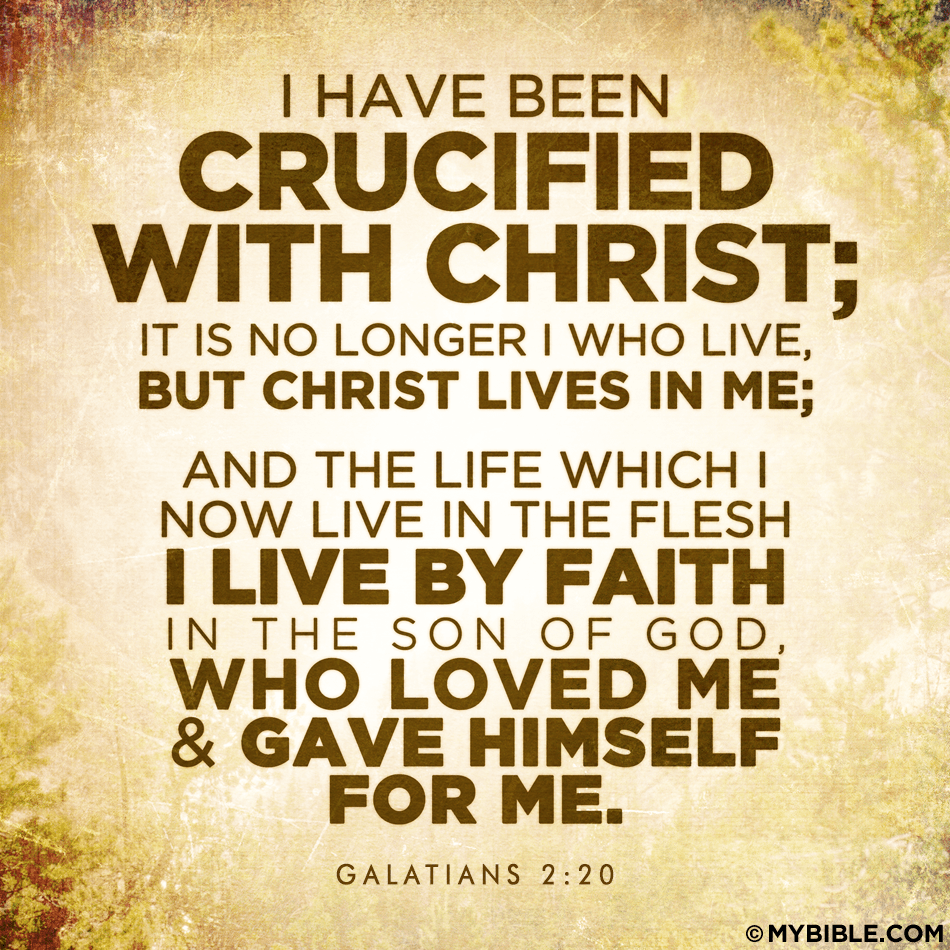
The importance of our learning to pick up our cross daily and follow Christ…

Once we’re born-again our lives no longer belong to us, and we are to pick up our cross every day and follow Christ…

Which means we no longer continue in sin?

Our confidence is based on the fact that the risen Christ will never die again.

Death no longer has dominion over Him.

Death did have dominion over Him for three days and nights, but that dominion is forever passed.

Christ can never die again!

When the Lord Jesus died, He died to the whole subject of sin once for all.

He died to sin’s claims, its wages, its demands, its penalty.

He finished the work and settled the account so perfectly that it never needs to be repeated.

Now that He lives, He lives to God.

In one sense, of course, He always lived to God. But now He lives to God in a new relationship, as the Risen One, and in a new sphere, where sin can never enter.

The general subject is sanctification—God’s method for holy living.

As to our standing before God, we are seen as having died with Christ and having risen with Him.

This is pictured in baptism.

Our death with Christ ends our history as men and women in Adam.

God’s sentence on our old man was not reformation but death.

And that sentence was carried out when we died with Christ.

Now we are risen with Christ to walk in newness of life.

Sin’s tyranny over us has been broken, because sin has nothing to say to a dead person.

Now we are free to live for God.

Paul has described what is true of us positionally. Now he turns to the practical outworking of this truth in our lives.

We are to RECKON ourselves to be dead to sin, but alive to God in Christ Jesus our Lord.

To reckon here means to accept what God says about us as true and to live in the light of it.

It means believing what God says in Romans 6:6 and knowing it as a fact in one’s own personal salvation.

“… knowing this, that our old man was crucified with Him, that the body of sin might be done away with, that we should no longer be slaves of sin.”

This demands a definite act of faith, which results in a fixed attitude toward “the old man.”

We will see him where God sees him—on the Cross, put to death with Christ.

Faith will operate continuously to keep him where grace placed him.

This involves us very deeply, for it means that our hearty consent has been given to God’s condemnation of and judgment upon that old “I” as altogether unworthy to live and as wholly stripped of any further claims upon us.

The first step in a walk of practical holiness is this reckoning upon the crucifixion of “the old man.”

We reckon ourselves dead to sin when we respond to temptation as a dead man would.

One day Augustine was accosted by a woman who had been his mistress before his conversion.

When he turned and walked away quickly, she called after him,

“Augustine, it’s me! It’s me!”

Quickening his pace, he called back over his shoulder,

“Yes, I know, but it’s no longer me!”

What he meant was that he was dead to sin and alive to God.

A dead man has nothing to do with immorality, lying, cheating, gossiping, or any other sin.

Now we are alive to God in Christ Jesus.

This means that we are called to holiness, worship, prayer, service, and fruitbearing.

SELAH (let us pause and calmly think about these things)
____

Friday, April 12
My Utmost for His Highest
by Oswald Chambers

MORAL DOMINION

Death no longer has mastery over him. . . . The life he lives, he lives to God.

In the same way, count yourselves dead to sin but alive to God in Christ Jesus. — Romans 6:9-11

When Jesus Christ walked among us, the life he exhibited was eternal life.

Eternal life is not a gift from God. It is the gift of God—the gift God makes of himself to his children.

This same life, not a copy of it, is manifested in us when we are born of God.

“You will receive power when the Holy Spirit comes on you” (Acts 1:8).

The power we receive isn’t a gift from the Holy Spirit; the power is the Holy Spirit.

The energy and the power which were manifested in Jesus will be manifested in us by the sheer sovereign grace of God once we’ve made the moral decision about sin.

The life that was in Jesus is made ours by means of the cross when once we make the decision to be identified with him.

As soon as we do make the decision, we receive the full life of God.

Jesus came to give us endless supplies of life:

“That you may be filled to the measure of all the fullness of God” (Ephesians 3:19).

Eternal life has nothing to do with time.

It isn’t life but Life, and its only source is the Lord Jesus Christ.

The weakest among us can experience the power of Jesus Christ if we are willing to let go.

If instead we cling to our own power, we will blur the life of Jesus inside us.

We have to keep letting go, keep identifying with him.

Slowly and surely, the great full life of God will invade us in every part of our being, and those we meet will sense that we have been with Jesus.
—-

Come join the Adventure!

Skip 🕊️

Peace in the Midst of Trouble… 

God is our Source in every area of life…

“Most Christians are being crucified on a cross between two thieves: yesterday’s regret and tomorrow’s worries.” Warren Wiersbe

Philippians 4 presents timeless lessons on living in harmony, finding true contentment, the importance of focused thought, and the assurance of God’s provision.

Paul here encourages us to focus our minds on what is good, to remain steadfast in our faith, to strive for unity, and to depend on God in ALL circumstances.

Regardless of the trials we face, we can find peace and contentment through Christ who strengthens us.

In these verses, PAUL is admonishing the Philippian Christians: DO NOT WORRY about the future, but pray about your concerns.

Only think about good things, and God will give you peace.

In EVERY circumstance, God is with us, offering grace, peace, and provision.

In verses 10-14, Paul is dealing with our learning contentment in every situation.

In these verses Paul acknowledges the Philippians’ concern for him and commends them for reviving their concern.

He also shares his secret to being content in all circumstances, whether well-fed or hungry, whether living in plenty or in want, through the strength he receives from Christ.

Philippians 4:10-14
The Message

Content Whatever the Circumstances
10-14 Paul speaking: I’m glad in God, far happier than you would ever guess—happy that you’re again showing such strong concern for me.

Not that you ever quit praying and thinking about me. You just had no chance to show it.

Actually, I don’t have a sense of needing anything personally.

I’ve learned by now to be quite content whatever my circumstances.

I’m just as happy with little as with much, with much as with little.

I’ve found the recipe for being happy whether full or hungry, hands full or hands empty.

Whatever I have, wherever I am, I can make it through anything in the One who makes me who I am.

I don’t mean that your help didn’t mean a lot to me—it did. It was a beautiful thing that you came alongside me in my troubles.
____

He goes on to say that the expressions of love from fellow believers encourage us, but contentment comes not from physical circumstances but from relying on divine strength.

Paul shows his attitude of gratitude by expressing joy over their gifts which Epaphroditus had delivered to him (Phil. 2:25), gifts which continued a long history of the Philippian church’s supporting Paul (see 4:16; 2 Cor. 11:8-9).

The gifts provided a problem for Paul.

He consistently refused to accept payment for his ministerial work, not wanting to burden the churches (1 Cor. 4:8-13; 9:1-18; 2 Cor. 11:7-10; 1 Thess. 2:5-12; 2 Thess. 3:7-12).

Thus he never used the term thank you as he wrote the Philippians, and he delayed using the term gift until verses 17-18.

He concentrated instead on the attitude of the Philippians and the relationship the gift represented.

He used a unique verb to express the freshness of their concern for him, saying it had blossomed afresh like a flower in springtime.

Paul makes clear that he was not hinting for another gift.

He has solved his economic problems. How?

Not with new resources but with a new attitude.

He is content no matter what his circumstances.

What is such contentment?

It is a term apparently taken over from Stoic philosophers describing an inner spirit of freedom and discipline, the ability to conquer circumstances and situations rather than be conquered by them.

Such an attitude is the exact opposite of worry and anxiety.

Paul spoke from experience. He had been through the extremes: surplus and poverty.

He knew how to weather the dangers of both.

This was his secret. Greek and Roman religions had secret initiation rites.

Some religions and philosophies prided themselves on secret knowledge.

Paul had a different kind of secret. His secret was his reliance on Christ, a reliance gained through his Christian experience.

Stoics relied on personal will to gain contentment.

Paul did not claim such personal inner strength. His strength came from Jesus living in him.

Paul was in Christ and thus content no matter what his circumstances. J. Vernon McGee writes:

“Whatever Christ has for you to do, He will supply the power.

Whatever gift He gives you, He will give the power to exercise that gift.

A gift is a manifestation of the Spirit of God in the life of the believer.

As long as you function in Christ, you will have power.

He certainly does not mean that he is putting into your hand unlimited power to do anything you want to do.

Rather, He will give you the enablement to do all things in the context of His will for you (McGee, Thru the Bible, V:327-8).

The Christian life is not only difficult; it is also impossible unless we acquire the power to live it through Christ.

To be sure, this truth does not come naturally to us but must be learned.

Paul was content because he could see life from God’s point of view.

He focused on what he was supposed to do, not what he felt he should have.

Paul had his priorities straight, and he was grateful for everything God had given him.

Paul had detached himself from the nonessential so that he could concentrate on the eternal.

Often the desire for something more or better indicates a longing to fill an empty place in a person’s life.

To what are you drawn when you feel empty inside?

How can you find true contentment? The answer lies in your perspective, your priorities, and your source of power.

Can we really do everything?

We receive all the power we need in union with Christ when we do his will and face the challenges that arise from our doing it.

He does not grant us superhuman ability to accomplish anything we can imagine without regard to his interests.

As we contend for the faith, we will face troubles, pressures, and trials.

What does God want you to do?

Step out in faith and do it, trusting him for the strength you will need.

The Philippians shared in Paul’s financial support while he was in prison.

They provided the means for him to get food and likely the materials he needed to write his letters, but in all these things Paul recognized that God himself is his Source.

SELAH (let us pause and calmly think about these things)
_____

Mon February 5, 2024
Faith Food Devotions

I CAN

“I can do all things through Christ which strengthens me.”
— Philippians 4:13

Many years have come and gone since I cast my cares upon the Lord, and although I will confess that I’ve been sorely tempted, I have not worried.

I have not fretted. I have not had the blues.

I have not been discouraged, no matter what.

(Some people said I didn’t have enough sense to worry. But, thank God, I had too much Bible-sense to worry!)

Worry was the most difficult sin for me to give up.

Worry is the greatest temptation you will ever face too. But you can resist it. And you must.

Your worst enemy is the flesh!

The flesh and natural human reasoning would limit you to your own ability.

You look at the circumstances, influences, problems, cares, tests, storms, and winds, and you say, “I can’t.”

The language of doubt, the flesh, the senses, and the devil is, “I can’t.

I don’t have the ability, the opportunity, or the strength. I’m limited.”

But the language of faith says, “I can do all things through Christ who strengthens me.”

Confession: I can! I can do all things through Christ who strengthens me.

Source: Faith Food Devotions by Kenneth E. Hagin.
____

Come join the Adventure!

Skip 🕊️
Jesus is the Hope for our future…

Colossians 1:27 is a powerful verse

“God has chosen to make known among the Gentiles the glorious riches of this mystery, which is Christ in you, the hope of glory.”

The apostle Paul here is writing to believers in Jesus Christ—the “you” whom he addresses. He calls them “the Lord’s people” in the previous verse (Colossians 1:26).

In the Old Testament, the Holy Spirit came upon certain people to empower them for service, but then He would leave again.

New Testament believers have a different experience, as the Spirit indwells us permanently. The permanent indwelling of the Holy Spirit given to New Testament believers was a “mystery” to the Old Testament saints.

After Jesus ascended to heaven, He sent the Holy Spirit to live within us, never to leave (John 14:16–17; 16:7).

Jesus told His disciples, “On that day you will realize that I am in my Father . . . and I am in you” (John 14:20).

The Holy Spirit seals us for the day of redemption (Ephesians 4:30).

In other words, the Spirit’s presence in our hearts guarantees our ultimate salvation.

Though we are in this world, we are not of it (John 17:16).

God will continue to work in us until He is finished perfecting us (see Philippians 1:6).

The beginning of a new year can bring many feelings – uncertainty, anxiousness, excitement, joy, and longing, just to name a few.

There’s no better place to turn for inspiration in the year ahead than the Bible!

Millions will start the year with resolutions and goals for change and better living – healthy eating, better financial planning, or better time management.

What if your resolution was to know God better and walk in His plan for your life?

God is the author of new beginnings and it’s never too late for Him to change your life!

Scripture is full of amazing guidance for transforming your life with a fresh start.

Because of the life Jesus lived and His sacrifice for us, the free gift of salvation and new life in Him is ours.

The Bible tells us that we are a new creation, be inspired throughout the New Year as you meditate on the promises of God in the Bible.

We are secure in Jesus, who is our ONLY Ark of SAFETY, in these troubling times.

Psalm 125:2

“As the mountains surround Jerusalem,
So the Lord surrounds His people
From this time forth and forever.”

Heavenly Father, as we stand on the threshold of a new year, we want to express our deepest gratitude for the past year’s blessings.

Thank you for your faithfulness, your love, and your constant presence in our lives.

We acknowledge your sovereignty over the days gone by and the days yet to come.

For it is in You alone that we place our trust!

May the Lord make your New Year a happy one…

Not by shielding you from sorrow and pain, but by strengthening you to bear it if it comes.

Not by making your path easy, but by making you sturdy enough to tread any path.

Not by taking hardship from you, but by taking all cowardice and fear from your heart as you meet hardships.

Not by granting you unbroken sunshine, but by keeping your face bright even in the shadows.

Not by making your life always pleasant, but by showing you where men and Jesus’ cause needs me most and by making me zealous to be there and to help…

God, make my year a happy one, as I surrender my life totally and completely into Your hands!

My prayer is that 2024 will be a blessed and Prosperous New Year for all of us!

Shalom shalom,

Skip 🕊️

The Christmas Story…

This is the reason for the season…

“For unto us a child is born, unto us a son is given, and the government will be upon His shoulders. And He will be called Wonderful Counselor, Mighty God, Everlasting Father, Prince of Peace.” (Isaiah 9:6)

The Messanger – The Chosen

(movie starts at 2:21 minutes in)

Luke 2:1-20
Contemporary English Version

The Birth of Jesus
(Matthew 1.18-25)

1 About that time Emperor Augustus gave orders for the names of all the people to be listed in record books

2 These first records were made when Quirinius was governor of Syria.

3 Everyone had to go to their own hometown to be listed.

4 So Joseph had to leave Nazareth in Galilee and go to Bethlehem in Judea.

Long ago Bethlehem had been King David’s hometown, and Joseph went there because he was from David’s family.

5 Mary was engaged to Joseph and traveled with him to Bethlehem.

She was soon going to have a baby,

6 and while they were there, 7 she gave birth to her first-born son.

She dressed him in baby clothes and laid him on a bed of hay, because there was no room for them in the inn.

The Shepherds
8 That night in the fields near Bethlehem some shepherds were guarding their sheep.

9 All at once an angel came down to them from the Lord, and the brightness of the Lord’s glory flashed around them.

The shepherds were frightened.

10 But the angel said,

“Don’t be afraid! I have good news for you, which will make everyone happy.

11 This very day in King David’s hometown a Savior was born for you.

He is Christ the Lord.

12 You will know who he is, because you will find him dressed in baby clothes and lying on a bed of hay.”

13 Suddenly many other angels came down from heaven and joined in praising God. They said:

14 “Praise God in heaven!
Peace on earth to everyone
who pleases God.”

15 After the angels had left and gone back to heaven, the shepherds said to each other,

“Let’s go to Bethlehem and see what the Lord has told us about.”

16 They hurried off and found Mary and Joseph, and they saw the baby lying on a bed of hay.

17 When the shepherds saw Jesus, they told his parents what the angel had said about him.

18 Everyone listened and was surprised.

19 But Mary kept thinking about all this and wondering what it meant.

20 As the shepherds returned to their sheep, they were praising God and saying wonderful things about him.

Everything they had seen and heard was just as the angel had said.
____

Luke in chapter 2 ties the earthly and the heavenly natures and missions of Jesus closely together while continuing His theme of God using earth’s lowest to do God’s highest.

Heaven’s angels join earth’s shepherds to announce the birth of the One who would change history for Jew and Gentile alike.

The young lad knew his place in his Father’s house and in his father’s home.

He grew in earthly wisdom and heavenly grace.

The Romans ruled the civilized world at this time.

By contrast, Joseph controlled very little.

Against his better judgment and political convictions, he complied with the Roman order to make a long trip just to pay his taxes.

His fiancée, who had to go with him, was about to give birth.

The Romans maintained control by exerting military and economic power. But the Romans did not recognize the limits of their power.

In reality, God controls the world.

In all times and places, He works out His will.

As a result of the decree of Emperor Augustus, Jesus was born in the very town prophesied for his birth (Micah 5:2), even though His parents did not live there.

Joseph and Mary were both descendants of David.

The Old Testament is filled with prophecies that the Messiah would be born in David’s royal line (see, for example, Isaiah 11:1; Jeremiah 33:15; Ezekiel 37:24; Hosea 3:5).

Rome made this decree just as God intended.

Luke is the only Gospel writer to relate the events he recorded to world history.

His account was addressed to a predominantly Greek-speaking audience who would have been interested in and familiar with the political situation.

Palestine was under the rule of the Roman Empire with Caesar Augustus, the first Roman emperor, in charge.

The Roman rulers, considered to be like gods, stood in contrast to the tiny baby in a manger who was truly God in the flesh.

Sometimes we can think, I’m being obedient to God, so why aren’t things going better?

We face discomfort or inconvenience and immediately think either that we have misread God’s will or that God has made a mistake.

But watch this quiet couple as they head toward Bethlehem.

God did not soften Joseph’s bumpy road but strengthened him.

God did not provide a luxurious inn for Joseph and Mary but brought His Son into the world in humble surroundings.

When we do God’s will, we are not guaranteed comfortable lives; however, we are promised that even our discomfort and inconvenience have meaning in God’s plan.

He will guide you and provide all you need.

Like Joseph, live each day by faith, trusting that God is in charge.

In verse 7, Luke 2:7, this mention of the manger is the basis for the traditional belief that Jesus was born in a stable.

Stables were usually caves with stone feeding troughs (mangers) carved into the rock walls.

Despite popular Christmas card pictures, the surroundings were dingy, dark, and dirty.

This was not the atmosphere the Jews expected as the birthplace of the Messiah-King.

They thought their promised Messiah would be born in royal surroundings.

We should not limit God by our expectations.

He is at work wherever He is needed in our sin-darkened and dirty world.

Although our first picture of Jesus is as a baby in a manger, it must not be our last.

The Christ child in the manger is the subject of a beautiful Christmas scene, but we must not leave him there.

This tiny, helpless baby lived an amazing life, died for us, ascended into heaven, and will return to earth as King of kings.

Jesus Christ will rule the world and judge all people according to their decisions about Him.

Do you still picture Jesus as a baby in a manger—or is He your Lord?

Make sure you don’t underestimate Jesus. Let Him grow up in your life.

What a birth announcement! The shepherds were terrified, but their fear turned to joy as the angels announced the Messiah’s birth.

First the shepherds ran to see the baby; then they spread the word.

Jesus is your Messiah, your Savior.

Do you look forward to meeting Him in prayer and in His Word?

Have you discovered a Lord so wonderful that you can’t help sharing your joy with your friends?

God continued to reveal the news about His Son, but not to those we might expect.

Luke records that Jesus’ birth was first announced to shepherds in the fields.

These may have been the same shepherds who supplied the lambs for the Temple sacrifices that were performed for the forgiveness of sin.

Here the angels invited these shepherds to greet the Lamb of God (John 1:36), who would take away the sins of the world forever.

The greatest event in history had just happened!

The Messiah had been born!

For ages the Jews had waited for this, and when it finally occurred, the announcement came to humble shepherds.

The Good News is that Jesus comes to all, including the plain and the ordinary.

He comes to anyone with a heart humble enough to accept him.

Whoever you are, whatever you do, you can have Jesus in your life.

Don’t think you need extraordinary qualifications—He accepts you as you are.

Don’t put off another day what you know you should have done yesterday…

Isaiah put it this way:

“Ho! Everyone who thirsts,
Come to the waters;
And you who have no money,
Come, buy and eat.

Yes, come, buy wine and milk
Without money and without price.

Why do you spend money for what is not bread,
And your wages for what does not satisfy?

Listen carefully to Me, and eat what is good,
And let your soul delight itself in abundance.

Incline your ear, and come to Me.
Hear, and your soul shall live;
And I will make an everlasting covenant with you—
The sure mercies of David.
(Isaiah 55:1-3)

Merry Christmas Everyone!

I love this song…

Skip 🕊️


Everyone’s destiny is to be fruitful and to fulfill his or her purpose in life…

Who better to know your destiny and purpose in life, than the One who created you and Authored your life

We Must Abide in Christ

John 15:1-8
Contemporary English Version

Jesus Is the True Vine
15 Jesus said to his disciples:

I am the true vine, and my Father is the gardener.

2 He cuts away every branch of mine that doesn’t produce fruit. But he trims clean every branch that does produce fruit, so that it will produce even more fruit.

3 You are already clean because of what I have said to you.

4 Stay joined to me, and I will stay joined to you.

Just as a branch cannot produce fruit unless it stays joined to the vine, you cannot produce fruit unless you stay joined to me.

5 I am the vine, and you are the branches. If you stay joined to me, and I stay joined to you, then you will produce lots of fruit. But you cannot do anything without me.

6 If you don’t stay joined to me, you will be thrown away. You will be like dry branches that are gathered up and burned in a fire.

7 Stay joined to me and let my teachings become part of you.

Then you can pray for whatever you want, and your prayer will be answered.

8 When you become fruitful disciples of mine, my Father will be honored.

SELAH (let us pause and calmly think about these things)

____________________________

Thursday, Dec 7
Hope of the World
by Jonathan Cahn

LESSONS FROM THE LEMON TREE

If you put a lemon tree on a hill, in a valley, city, countryside, or next to an apple tree, it still produces lemons.

It’s our nature to focus on our circumstances, personal life, work life, or financial life, but Messiah doesn’t focus on those things.

Your circumstance has little to do with the walk God called you to.

Salvation is unconditional.

Messiah won’t ask you about your circumstances on the Day of Judgment.

He came that you might bear fruit.

If you abide in Him, you’ll bear fruit, and that’s God’s will for your life.

It doesn’t matter if you’re on the mountain or in the valley, if people love you or hate you.

You bear fruit not because of what’s around you, but because of what’s inside of you.

This world, with all its circumstances – good and bad – can’t stop you from bearing fruit.

Learn from the lemon tree: bear your fruit no matter what, because He loves you.

His love is unconditional, so your fruit should be unconditional.

Fruit doesn’t come because of circumstance, it comes because of the tree.

TODAY’S MISSION

Today, practice bearing the fruit of the Spirit in every place, time, situation, and circumstance unconditionally.

[From Message #639 – Bananas, Pineapples, & Nuts, by Jonathan Cahn]
____

Come join the Adventure!

Skip 🕊️

The Lord is your constant protector, He never tires of watching over you…

It is said that David Livingstone, who became the great missionary explorer of Africa, during the nineteenth century, that upon completing his medical studies, he immediately set out for the “dark continent” of Africa.

With only one night to spend with his godly parents at their home in Blantyre, Scotland, he spoke earnestly with them about the great needs in Africa.

Rising at 5:00 on the morning of November 17, 1840, Livingstone led his parents in a final devotion before his departure.

He would never see his dear father again.

That morning Livingstone read Psalms 121 and 135, concerning both God’s protection and His majesty.

Then he departed for a life and ministry that would inspire thousands of Christians even to this day.

SELAH (let us pause and calmly think about these things)

Don’t you know that same God is also watching over you?

Psalm 121 (He Watches Over You) – The Psalms Project

Psalm 121
Contemporary English Version
(A song for worship.)

The Lord Will Protect His People
1 I look to the hills!
Where will I find help?

2 It will come from the Lord,
who created heaven and earth.

3 The Lord is your protector,
and he won’t go to sleep
or let you stumble.

4 The protector of Israel
doesn’t doze
or ever get drowsy.

5 The Lord is your protector,
there at your right side
to shade you from the sun.

6 You won’t be harmed
by the sun during the day
or by the moon[a] at night.

7 The Lord will protect you
and keep you safe
from all dangers.

8 The Lord will protect you
now and always
wherever you go.
____

This song expresses assurance and hope in God’s eternal protection, day and night.

He not only made the hills but all of heaven and earth as well.

We should never trust a lesser power than God himself or believe that answers to life’s deepest questions can be found in nature or this world’s wisdom.

Not only is God all-powerful, but He also watches over us.

He watches us like a sentinel or shepherd, alert to danger and ready to help with our needs.

Nothing diverts or deters Him. We are safe.

Let us welcome God’s caring and untiring watch over our lives.

Whatever you’re going through, wherever you go, God is already there before you (Ps 139:5), so take comfort in the knowledge that you are in good hands.

So take God’s Shalom-peace with you today, and have a wonderfully blessed day in Jesus!

Skip 🕊️

The only hope for the world today is Jesus… 

The Bible is God’s Instruction Manual to give us wisdom and instructions for life; and the Gospel Message shows us the way home…

Today we will be examining Paul’s letter to the Colossians.

Colossians 1:1-29

Paul’s letter to the Colossians was possibly the first of Paul’s prison epistles.

The church at Colosse was not founded nor visited by Paul, but was probably founded by Epaphras.

The letter was written to encourage a group of believers who were growing spiritually.

The letter was also written to warn a group of believers who were being confronted with false teaching, which undermined the supremacy and sufficiency of Jesus.

From Max Lucado
In chapter 1, in summary Paul tells the Colossian believers:

“Hello, Colossians,

Timothy and I are pleased to hear from Epaphras that the gospel which is growing all over the world is bearing fruit in your lives as well.

Because of this, we constantly pray that you stay focused on God’s will so that your lives will be pleasing to Him.

Remember that Jesus, our Creator and Reconciler, deserves absolute supremacy in absolutely everything.

I endure suffering and hard work on behalf of Jesus and His church to bring believers to maturity.”

In this letter, Paul gives tribute to the power and glory of Christ.

While commending the Colossians for their actions, he reminded them that Christ’s power comes not from what we know, but who we know—Jesus Christ.

God provides salvation for anyone who will take it.

God doesn’t require that we know hidden secrets or certain inside information to accept Christ’s message and enjoy eternal life.

When God chose to reveal Himself, He did so (surprise of surprises) through a human body.

The tongue that called forth the dead was a human one.

The hand that touched the leper had dirt under its nails.

The feet upon which the woman wept were calloused and dusty. And His tears . . . oh, don’t miss the tears . . . they came from a heart as broken as yours or mine ever has been.

So, people came to Him. My, how they came to Him!

They came at night; they touched Him as He walked down the street; they followed Him around the sea; they invited Him into their homes and placed their children at His feet.

Why? Because He refused to be a statue in a cathedral or a priest in an elevated pulpit.

He chose instead to be Jesus. . . .

There were those who revered Him. But there was not one person who considered Him too holy, too divine, or too celestial to touch.

There was not one person who was reluctant to approach Him for fear of being rejected.

Remember. It is man who creates the distance.

It is Jesus who builds the bridge.

(From God Came Near by Max Lucado)

Christianity is all about our having a relationship with the Source and Author of our life; it’s about knowing Jesus and serving Him intimately and personally; it’s about our submission and obedience to Him and facilitating His will in the Earth as it is in Heaven.

Jesus is the only One who has the power to recycle men and women’s lives and make all things new!

SELAH (let us pause and calmly think about these things)

____________________________

Tuesday, Dec 5
The Spirit Filled Believer
by Dick Mills

A NEW SONG

“He has delivered us from the power of darkness and translated us into the kingdom of the Son of His love”
— Colossians 1:13

In the Greek, this word is translated as methistemi (meth-is’- tay-mee) meaning “to transpose, transfer, remove from one place to another.”

Our conversion literally lifted us out of the quicksand of sin and placed us on the solid rock of truth.

One of the most impressive features of this translation from darkness to light is the suddenness of it all.

I remember a testimony I heard in a Christian drug recovery unit.

The young man was 26 years old. For 13 of those years, or half his life, he had been a heroin addict.

Now he was an outstanding leader in the drug program.

He was giving his testimony to a narcotics agent who seemingly could not comprehend the translation from addiction to deliverance.

The officer asked him, “How long did all this take?”

The answer came back, “It only took about two minutes.

When Jesus came in, the drugs went out.”

We cannot argue a person into change.

We cannot nag, harangue, pressure, or even manipulate anybody into a transformation of his whole life.

The good news is that Jesus is still translating thousands of lives every day.

Every time a new convert comes into the kingdom of God, a genuine translation takes place.

Another word for translate is transpose.

In music to transpose is “to change to another key.”

Before salvation we were in a minor key and our life’s song was a sad one.

Now we are in a major key and our song is one of joy.

The transposing of our life gives us a different tune to sing!

The Bible calls it a new song! (Rev. 5:9).

Source: The Spirit-Filled Believer’s Daily Devotional by Dick Mills
____

Come join the Adventure!

Skip 🕊️

Our faith in God will always make a way through whatever wilderness we travel… 

In Psalm 23 David tells us that the Lord is Our Shepherd and we shall not want…

God is our source and supplier of everything that we need in life!

Just Give Me Jesus

In the following Psalm David reiterates this point:

Psalm 16
The Message

1-2 Keep me safe, O God,
I’ve run for dear life to you.

I say to God, “Be my Lord!”
Without you, nothing makes sense.

3 And these God-chosen lives all around—
what splendid friends they make!

4 Don’t just go shopping for a god.
Gods are not for sale.

I swear I’ll never treat god-names
like brand-names.

5-6 My choice is you, God, first and only.

And now I find I’m your choice!

You set me up with a house and yard.
And then you made me your heir!

7-8 The wise counsel God gives when I’m awake
is confirmed by my sleeping heart.

Day and night I’ll stick with God;
I’ve got a good thing going and I’m not letting go.

9-10 I’m happy from the inside out,
and from the outside in, I’m firmly formed.

You canceled my ticket to hell—
that’s not my destination!

11 Now you’ve got my feet on the life path,
all radiant from the shining of your face.

Ever since you took my hand,
I’m on the right way.
____

In the New Testament Jesus tells us to pick up our cross daily and follow Him.

The cross is the symbol of our death to self and one of the main paradoxes given in the Bible is that in order to live as a Christian and follow Christ, you must die to self.

The Apostle Paul put it this way:

Galatians 2:20

“I have been crucified with Christ; it is no longer I who live, but Christ lives in me; and the life which I now live in the flesh I live by faith in the Son of God, who loved me and gave Himself for me.”

No one is ready to live until he is first ready to die.

Only in facing the reality of death with a living faith in God is a person prepared to live boldly and courageously for Him, even in the face of troubling adversity.

This was true in the life of David as recorded in Psalm 16 as he faced another life-threatening trial.

This psalm is a song of confident trust in God in which the psalmist was able to live life to the fullest because he was gripped with a living hope in God beyond the grave.

Psalm 16 was written at an unknown time when David was hard-pressed, perhaps when he faced threats to his life in the wilderness or severe opposition to his reign as king.

David boldly declared that God had been his portion in life, so he would trust Him even in death.

No matter what David faced, his trust was anchored in the Lord, and this caused his heart to rejoice.

David was gripped by a resolute reliance on God in the face of death.

He looked beyond this life to the glories of the resurrection and glorification to come.

This psalm is a miktam, the meaning of which is uncertain.

Verses 8-11 were quoted by Peter on the day of Pentecost (Acts 2:25-28), and verse 10b was cited by Paul at Antioch (Acts 13:35-37); both were used in reference to the resurrection of Jesus Christ.

In Psalm 16, David’s prayers revealed his trust in and reliance upon God, both in this life and in the life to come.

Jesus never sinned — never missed the mark!

Equally amazing, He never distances Himself from those who do.

Just read the first verse of Matthew’s Gospel.

Jesus knew David’s ways. He witnessed the adultery, winced at the murders, and grieved at the dishonesty.

But David’s failures didn’t change Jesus’ relation to David.

David blew it. Jesus knew it. But He claimed David anyway.

Faith boils down to our willingness to cast the total of our RELIANCE and TRUST on the reliability and trustworthiness of God in His Word, in spite of any and all contradictory evidence that we may feel or see.

Faith requires our willingness to persevere through any problem we face, in the knowledge that God will direct us and see us through.

To quote Joni Eareckson Tada:

The Bible tells us our God is so trustworthy that we are to throw our confidence on Him, not leaning on our own understanding (Proverbs 3:5).

God has already proved how much His love can be trusted by sending Christ to die for us.

Wasn’t that enough?

Not for me. I always wanted to be on the inside looking out—sitting with the Lord up in the control tower instead of down on the confusing ground level.

He couldn’t be trusted unless I was there to oversee things!

What a low view of my Master and Creator I had held all these years!

How could I have dared to assume that almighty God owed me explanations!

Did I think that because I had done God the “favor” of becoming a Christian, He must now check things out with me?

Was the Lord of the universe under obligation to show me how the trials of every human being fit into the tapestry of life?

Had I never read Deuteronomy 29:29, “There are secrets the Lord your God has not revealed to us” (LB)?

What made me think that even if He explained all His ways to me I would be able to understand them?

It would be like pouring million-gallon truths into my one-ounce brain.

(From A Step Further by Joni Eareckson Tada)

Peter instructions us to cast ALL of our cares upon Christ because He cares for us (1 Peter 5:7).

This of necessity will require that we humble ourselves, and that we TRUST and LOVE our Abba Father, as a child, with all of our heart, mind and strength.

SELAH (let us pause and calmly think about these things)
____________________________

Sunday, Dec 3
The Spirit Filled Believer
by Dick Mills

“The lines have fallen to me in pleasant places; Yes, I have a good inheritance”
— Psalms 16:6 (NKJV)

How many truly contented people do you know?

How many of your friends or acquaintances seem to be satisfied with their lot in life?

Listen to the man David as he begins to write the sixteenth Psalm:

“The lines have fallen to me in pleasant places….”

This statement has all the indications of an expression of great contentment.

It evokes an image of surveying boundary lines and measuring off a person’s inheritance.

David seems to be saying that his allotted territory is a source of satisfaction to him.

This poem is called a michtam psalm, a title given to six of the psalms of David.

In Hebrew the word michtam has to do with etching, engraving, and inscribing.

Having a familiarity with gold and etching, Bible scholars saw this as a “golden text.”

The King James Version labels it “a michtam of David.”

James Moffatt describes it as “a golden ode of David.”

This could mean that this psalm needs to be etched in the mind and recorded there as a message worth remembering.

…Yes, I have a good inheritance.

“Life has been good to me,” David seems to be saying.

“My father left me this property and I am quite content with it.

The view is good. The brooks are clean and cool, and the meadows are green and lush.

The land is well situated. My heritage is truly pleasing, indeed!”

Can you say this about your heritage – your home, job, neighborhood, church, town, station in life?

David could! So can we, when our heart is at peace with God.

Source: The Spirit-Filled Believer’s Daily Devotional by Dick Mills
____

Come join the Adventure!

Skip 🕊️